It feels like every day there’s a new headline about AI doing something amazing, and healthcare is no exception. Google, in particular, is making big waves with its work in medical diagnosis. They’re using advanced technology to help doctors spot problems faster and more accurately. Think of it like giving doctors a super-powered assistant that can sift through tons of information and images to find what matters most. This isn’t about replacing doctors, but about giving them better tools to do their jobs and, ultimately, help us all stay healthier.
Key Takeaways
- Google AI is helping doctors improve how they diagnose illnesses by analyzing medical images and patient data with advanced algorithms.
- This technology can lead to care that’s more suited to each person’s specific health needs.
- AI tools are being developed to predict potential health issues before they become serious, allowing for earlier action.
- Google’s approach aims to support doctors with technology, making healthcare delivery more efficient and potentially more affordable.
- Real-world uses include spotting eye diseases and speeding up the analysis of scans, showing how google ai medical diagnosis is already changing things.
Revolutionizing Medical Diagnosis With Google AI
It feels like just yesterday that AI in medicine was a far-off concept, but now, it’s really starting to change how doctors work and how patients get care. Google’s work in this area is a big part of that shift, making diagnoses more accurate and care more personal.
Enhanced Diagnostic Accuracy Through AI Algorithms
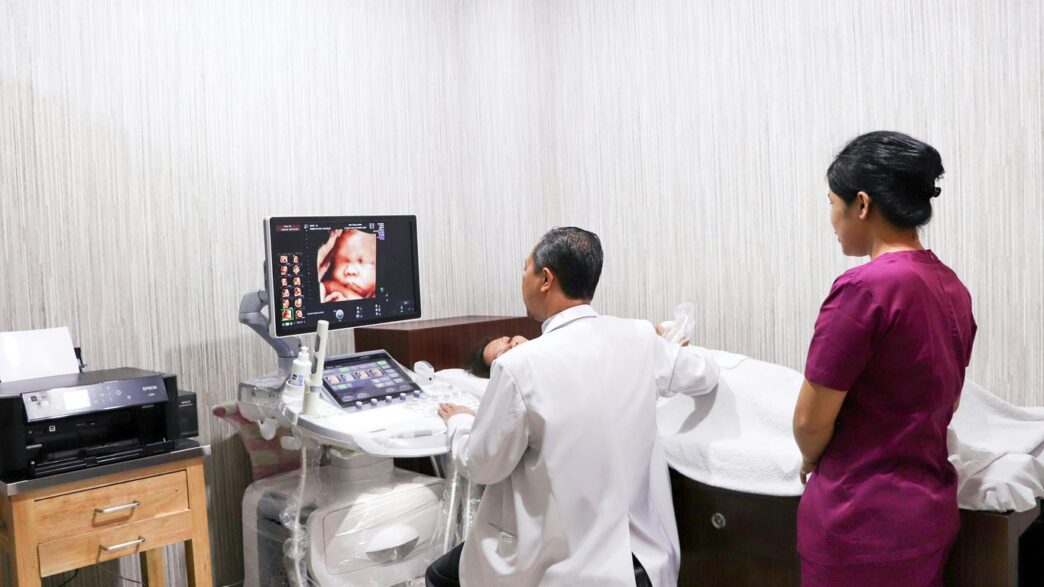
One of the most exciting parts of Google’s AI in medicine is how it’s helping doctors spot diseases earlier and more accurately. Think about medical images – X-rays, CT scans, MRIs. These are packed with information, but sometimes, tiny details can be missed, especially when a doctor is looking at hundreds of scans a day. AI algorithms, like those Google is developing, can be trained on massive datasets of these images. They learn to identify patterns that might be too subtle for the human eye to catch consistently.
- Pattern Recognition: AI can sift through images to find anomalies that might indicate early-stage disease.
- Speed and Consistency: AI doesn’t get tired. It can analyze images at a consistent pace, reducing the chance of errors due to fatigue.
- Second Opinion: AI can act as a helpful assistant, flagging potential issues for a doctor to review, adding an extra layer of confidence to the diagnosis.
This isn’t about replacing doctors, but giving them super-powered tools. For example, AI has shown great promise in identifying conditions like pneumonia on chest X-rays or classifying skin lesions from clinical photos. It’s like having a tireless, highly trained assistant who’s an expert in spotting specific visual clues.
The goal is to make sure that every patient benefits from the most precise and timely diagnosis possible, no matter where they are or who their doctor is.
Personalized Care Tailored to Individual Health Profiles
Beyond just spotting diseases, AI is also making healthcare more about the individual. We’re all different, and our health needs are too. AI can take in a lot of information about a person – their medical history, genetic makeup, lifestyle, and even data from wearable devices – to help create a care plan that’s just for them. This means treatments can be more effective because they’re designed for a specific person’s biology and circumstances.
- Treatment Customization: AI can help predict how a patient might respond to different treatments, allowing doctors to choose the best option from the start.
- Risk Assessment: By analyzing a patient’s unique profile, AI can help identify individuals at higher risk for certain conditions, allowing for preventative measures.
- Proactive Health Management: AI can provide personalized recommendations for diet, exercise, and lifestyle changes to help people stay healthier.
Predictive Analytics for Proactive Health Interventions
This is where things get really interesting. Instead of just reacting to illness, AI can help us predict when someone might get sick or when a condition might worsen. By looking at trends in patient data, population health statistics, and even environmental factors, AI can flag potential health issues before they become serious problems. This allows healthcare systems to intervene early, potentially preventing hospitalizations and improving overall health outcomes. It’s a shift from treating sickness to actively promoting wellness.
| Area of Prediction | Potential Impact |
|---|---|
| Disease Outbreaks | Early warning systems for epidemics |
| Chronic Disease Progression | Identifying patients at risk of worsening conditions |
| Hospital Readmissions | Predicting which patients are likely to need re-admission |
| Individual Health Risks | Alerting individuals to potential future health issues |
Transforming Healthcare Delivery With Advanced Technology
Healthcare systems globally are facing some pretty big challenges. Think about it: aging populations, more people dealing with long-term illnesses, and costs just keep climbing. Plus, we’ve seen firsthand how stretched our medical staff can get, and not everyone has the same access to care. This is where technology, especially AI, starts to look like a real game-changer.
Improving Patient Outcomes and Experiences
AI is helping to make healthcare more about the individual. Instead of a one-size-fits-all approach, AI can look at a person’s unique health data – things like their genes, lifestyle, and medical history – to suggest treatments or preventative measures that are just right for them. This means fewer side effects and better results. It also means patients might spend less time waiting for appointments or tests, and get clearer information about their health.
- Personalized treatment plans: AI analyzes vast amounts of data to tailor therapies.
- Faster diagnoses: AI can help spot issues earlier, sometimes even before symptoms become obvious.
- Better communication: AI-powered tools can help explain complex medical information in simpler terms for patients.
Streamlining Clinical Workflows and Efficiency
Doctors and nurses spend a lot of time on paperwork and repetitive tasks. AI can take over some of this, freeing them up to focus on what really matters: patient care. Imagine AI systems that can sort through medical images, help write reports, or manage patient records more quickly. This isn’t about replacing healthcare professionals, but giving them better tools to do their jobs.
The goal is to use AI to handle the high-volume, time-consuming tasks, allowing medical staff to dedicate more attention to complex cases and direct patient interaction. This shift can lead to a more focused and effective healthcare environment.
Reducing Healthcare Costs Through Optimization
When healthcare runs more smoothly, it often costs less. AI can help identify areas where resources are being wasted or where processes can be made more efficient. For example, AI can predict when certain equipment might need maintenance, preventing costly breakdowns. It can also help optimize hospital staffing to match patient needs, avoiding over- or under-staffing. By making things more efficient, AI can contribute to making healthcare more affordable in the long run.
The Impact of Google AI Medical Diagnosis on Imaging
Automated Classification of Medical Images
AI is really changing the game when it comes to looking at medical images. Think X-rays, CT scans, MRIs – the whole lot. Before, it was all about a radiologist carefully going through each one, which takes a lot of time and skill. Now, AI algorithms can look at these images and spot things that might be hard for the human eye to catch, or at least do it much faster. It’s like having a super-powered assistant who never gets tired.
- AI can identify patterns that might indicate diseases like pneumonia on chest X-rays.
- It’s being used to classify skin lesions, helping dermatologists make quicker assessments.
- In pathology, AI can analyze tissue slides to find cancer cells, which is a huge help for pathologists.
This technology is proving to be as good as, and sometimes even better than, human experts in spotting certain conditions. It’s not about replacing doctors, but giving them tools to be more effective.
AI’s Role in Radiology and Pathology
Radiology is one of the areas where AI is making a big splash. We’re seeing AI models that can help sort through scans, flag potential issues, and even help generate initial reports. This means radiologists can focus their attention on the most complex cases. Similarly, in pathology, AI is being trained to look at slides and identify abnormalities, speeding up the process of diagnosis. It’s a big shift from how things were done just a few years ago.
The development of AI models that can understand both images and text is opening up new avenues. These models can help explain what’s seen in an image in plain language, which is a big step forward for communication between doctors and patients, and even for training new medical professionals.
Improving Precision in Radiotherapy Planning
Planning radiotherapy is a really detailed process. Doctors have to carefully outline the areas that need treatment and the areas that need to be protected. This manual outlining, or segmentation, can take a significant amount of time. Google’s InnerEye technology, for example, uses AI to speed up this segmentation process dramatically, cutting down the time needed by as much as 90% for certain types of cancer. This means patients can start their treatment sooner, which is obviously a good thing when you’re dealing with serious illnesses. It’s a clear example of how AI can directly impact patient care by making complex processes more efficient.
Google’s Vision for AI-Augmented Healthcare
Empowering Doctors with Assistive Technologies
Google sees AI not as a replacement for doctors, but as a powerful assistant. The idea is to build tools that can handle some of the more time-consuming, repetitive tasks, freeing up medical professionals to focus on what they do best: patient care and complex decision-making. Think of it like a super-smart intern who can quickly sift through vast amounts of data, spot subtle patterns, and flag potential issues. This approach aims to make doctors more effective, not obsolete. The goal is to augment human capabilities, not to automate them away.
The Role of Cloud Computing in AI Innovation
Making advanced AI work in healthcare requires serious computing power. That’s where cloud computing comes in. It provides the infrastructure needed to process massive datasets quickly and affordably. Unlike older systems that were stuck on local servers, cloud platforms allow for faster analysis and easier scaling of AI models. This means new AI tools can be developed and deployed more rapidly, getting them into the hands of clinicians sooner. It’s the backbone that supports the complex calculations needed for AI to function effectively in a medical setting.
Ethical AI Practices and Responsible Deployment
Building AI for healthcare comes with a big responsibility. Google is focused on developing AI in a way that is safe, fair, and transparent. This means paying close attention to how data is used, making sure the AI’s decisions can be understood (explainability), and complying with all the necessary regulations. It’s about building trust with both patients and healthcare providers. The aim is to create AI systems that are not only innovative but also ethically sound and deployed with care.
The development of AI in medicine is moving fast. It’s important that we build these tools thoughtfully, keeping patient well-being and fairness at the forefront. This means careful testing, clear communication about how the AI works, and a commitment to addressing any biases that might arise.
Real-World Applications of Google AI in Medicine
It’s pretty amazing to see how Google’s AI is actually being used in hospitals and clinics right now. It’s not just theoretical stuff anymore; it’s making a real difference.
Diabetic Retinopathy Screening Advancements
One of the most talked-about uses is in screening for diabetic retinopathy. This is a serious eye condition that can lead to blindness if not caught early, especially for people with diabetes. Google developed an AI system that can look at images of the back of the eye and spot signs of this disease. This technology can help doctors identify patients who need further attention much faster than before. It’s especially useful in places where there aren’t many eye specialists.
Here’s a quick look at how it works:
- Image Capture: A special camera takes pictures of the patient’s retina.
- AI Analysis: The AI algorithm analyzes these images for specific signs of diabetic retinopathy.
- Referral: If the AI detects potential issues, the patient is referred to an eye doctor for a full examination.
This system has been shown to be quite accurate, sometimes even matching or beating human experts in initial screenings.
AI-Powered Radiology Report Generation
Radiology is another area where AI is stepping in. Think about all the X-rays, CT scans, and MRIs doctors look at. AI can help speed up the process of creating reports based on these images. Instead of a radiologist having to type out every detail, AI can help draft parts of the report by identifying abnormalities and describing them. This doesn’t replace the radiologist, but it can make their job more efficient.
AI can help by automatically flagging potential issues in scans, like a nodule on a lung X-ray or a fracture. This allows the radiologist to focus their attention on confirming these findings and adding their expert interpretation, rather than spending time on the more routine parts of report writing.
Enhancing Medical Research Through Data Interpretation
Beyond direct patient care, Google’s AI is also a powerful tool for medical research. Analyzing huge amounts of patient data can be incredibly time-consuming. AI can sift through this data much more quickly, identifying patterns and correlations that might be missed by human researchers. This can lead to new discoveries about diseases, potential treatments, and how different factors affect health outcomes. For example, AI can help researchers understand genetic links to diseases or track the effectiveness of new drugs across large patient populations.
Future Directions for Google AI Medical Diagnosis
Advancements in Personalized and Precision Medicine
Google’s AI is really pushing the envelope when it comes to tailoring treatments. We’re moving beyond one-size-fits-all approaches. Think about it: your unique genetic makeup, your lifestyle, even your specific health history – AI can crunch all that data to figure out what treatment will work best for you. This isn’t just about picking the right drug; it’s about fine-tuning dosages, predicting how you’ll respond, and even designing therapies from scratch based on your individual biology. It’s a huge step towards truly personalized care.
The Rise of Wearable Devices and Remote Monitoring
Remember when fitness trackers were just for counting steps? Now, they’re becoming sophisticated health monitors. Google is integrating AI with wearable tech to keep an eye on things like heart rate, sleep patterns, and activity levels. These devices can spot subtle changes that might signal a problem long before you even feel sick. This constant stream of data, analyzed by AI, allows for early detection and proactive interventions, meaning potential health issues can be caught and managed much sooner, often from the comfort of your own home.
Virtual Health Assistants for Patient Support
Imagine having a health assistant available 24/7. That’s the direction virtual health assistants are heading. These AI-powered tools can answer your health questions, remind you to take medications, help you schedule appointments, and even offer support for managing chronic conditions. They’re designed to make healthcare more accessible and convenient, providing guidance and information outside of traditional doctor’s visits. It’s like having a knowledgeable guide for your health journey, right in your pocket.
The integration of AI with everyday devices and virtual platforms is set to transform how we interact with our health. It’s about making healthcare more accessible, proactive, and deeply personal, moving from reactive treatment to continuous well-being management.
Looking Ahead
So, what does all this mean for the future? Google’s work with AI in medicine, like Med-GEMMA, is really showing us a new path. It’s not about replacing doctors, but giving them better tools. Think of it like a super-smart assistant that can help spot things faster and more accurately. While there are still hurdles to clear, like making sure everything is safe and fair for everyone, the potential is huge. This technology could help make healthcare better and more available, no matter where you live. It’s an exciting time, and we’re just starting to see what’s possible when smart tech meets the world of health.