
It’s kind of wild to think about, but artificial intelligence, or AI, isn’t just science fiction anymore. It’s here, and it’s changing things all around us, pretty much every single day. From how we work to how we get our news, AI is quietly, and sometimes not so quietly, reshaping our world. This isn’t just about fancy robots; it’s about the tools and systems that are already part of our lives, and how they’re making things different. So, how has AI impacted society? Let’s take a look at some of the big shifts.
Key Takeaways
- AI is making big changes in many different work areas like health care, banking, and even how farms work. It helps businesses run smoother and come up with new ideas.
- Our jobs are changing because AI can do some tasks on its own. This means people might need to learn new skills for different kinds of work.
- How we get information, especially on social media, is different now thanks to AI. It also plays a role in keeping us safe and making our shopping experiences more personal.
- We need to think carefully about how AI is built and used. Things like fairness, privacy, and making sure we know how AI makes decisions are important.
- Looking ahead, AI could change how we travel, learn, and even how the world’s economy works, bringing both new chances and challenges.
Transforming Industries Through Artificial Intelligence
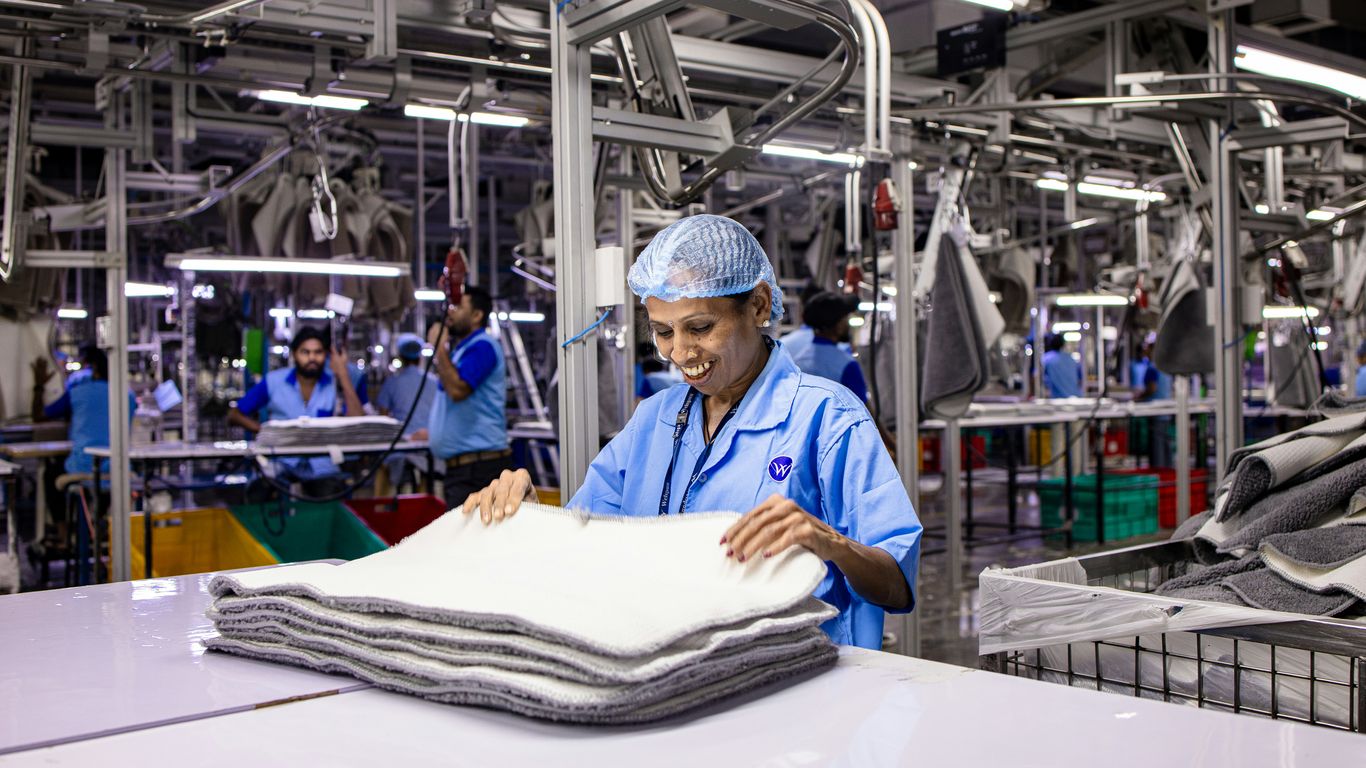
It’s pretty wild how much AI is changing the way businesses work, right? It’s not just some futuristic idea anymore; it’s here, and it’s making a real difference across the board. Think about it: companies are using AI to get things done faster, make better choices, and even come up with new ideas. This isn’t just about a few big tech companies either; AI’s influence is spreading everywhere.
Revolutionizing Healthcare Diagnostics and Treatment
Healthcare is one area where AI is making a huge splash. Doctors and researchers are using AI tools to spot diseases earlier and more accurately than ever before. For instance, AI can look at medical images, like X-rays or scans, and point out things that might be missed by the human eye. This means patients can get diagnosed sooner, which often leads to better treatment outcomes. Plus, AI is helping to create more personalized treatment plans. Instead of a one-size-fits-all approach, AI can look at a patient’s specific health data and suggest the best course of action. It’s also showing up in surgery, with robots guided by AI performing incredibly precise movements, making procedures less invasive and helping people recover faster. Even simple things like scheduling appointments or answering basic health questions are being handled by AI chatbots, freeing up medical staff for more critical tasks.
Enhancing Efficiency in Finance and Retail Operations
In the world of finance, AI is like a super-powered detective. It’s fantastic at sifting through massive amounts of transaction data in real-time to catch fraud before it becomes a big problem. This protects both the banks and their customers. AI algorithms can spot unusual patterns that might signal a scam, something that would be nearly impossible for a person to do at that speed and scale. Beyond fraud, AI is also being used in trading, where it can analyze market trends and make decisions much faster than humans. It’s also helping banks manage risk better by looking at financial data to predict potential issues. In retail, AI is all about making shopping better for us. Ever wonder how online stores seem to know exactly what you might want to buy next? That’s AI analyzing your past purchases and browsing habits to suggest products. This personalization makes shopping more enjoyable and helps stores sell more. AI is also a big help behind the scenes, managing inventory so stores don’t run out of popular items or end up with too much stock. And those chatbots you sometimes interact with on retail websites? They’re often powered by AI, providing quick answers to common questions 24/7.
Driving Innovation in Manufacturing and Agriculture
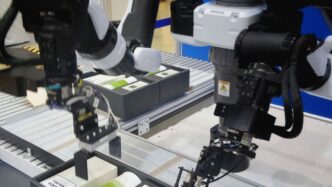
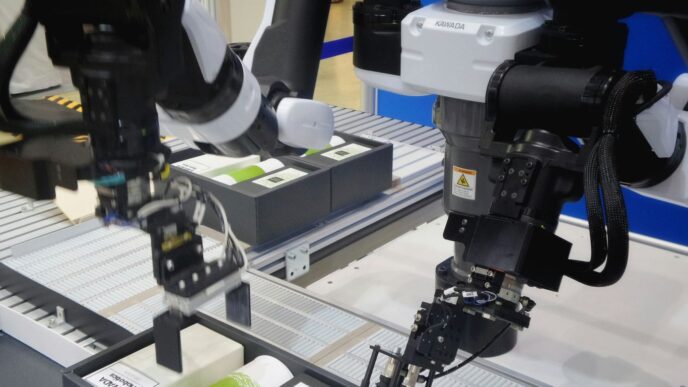
Manufacturing has seen some serious upgrades thanks to AI. One big win is predictive maintenance. AI systems can monitor factory machines and predict when they’re likely to break down. This means companies can fix things before they stop working, avoiding costly downtime and keeping production lines running smoothly. AI-powered robots are also becoming more common, handling repetitive and precise tasks on assembly lines with incredible speed and accuracy. These robots often work alongside people, making the whole process more efficient. AI is also helping to optimize the entire supply chain, from predicting how much of a product will be needed to adjusting production schedules on the fly. This cuts down on waste and makes better use of resources. In agriculture, AI is leading to what’s called precision farming. Think sensors in fields and drones flying overhead, all collecting data. AI can then analyze this information to tell farmers exactly where and when to water, fertilize, or treat crops. This means using fewer resources like water and chemicals, leading to healthier crops and a more sustainable way of farming. It’s all about making farming smarter and more productive.
AI’s Influence on the Modern Workforce
It’s pretty wild how much AI is changing the game for jobs, right? It feels like just yesterday we were talking about robots taking over, and now, well, it’s happening, but maybe not exactly how we pictured it. AI isn’t just some far-off sci-fi idea anymore; it’s actively reshaping how we work, what skills are important, and even the very nature of employment itself.
Automating Repetitive Tasks and Augmenting Human Capabilities
One of the most obvious ways AI is making its mark is by taking over those tedious, repetitive tasks that nobody really enjoys. Think data entry, basic customer service queries, or even some assembly line work. AI systems can churn through these jobs with speed and accuracy that humans just can’t match. But it’s not all about replacement. AI is also acting like a super-powered assistant for many professionals. Doctors can use AI to help analyze scans, lawyers can sift through mountains of legal documents faster, and designers can use AI tools to generate initial concepts. This augmentation means people can spend less time on the grunt work and more time on the creative, strategic, and complex parts of their jobs. It’s like having a really efficient intern who never sleeps, but for specific tasks.
Shifting Job Roles and Demanding New Skill Sets
Because AI is handling some tasks, the jobs that remain are changing. We’re seeing a move away from roles that are easily automated and towards positions that require human judgment, creativity, and emotional intelligence. This means there’s a growing demand for people who can work with AI, manage AI systems, and interpret the data AI provides. Skills like data analysis, AI ethics, and even prompt engineering (figuring out how to best ask AI to do things) are becoming more important. It’s not just about knowing how to do a job; it’s about knowing how to adapt and learn new skills as technology evolves. The landscape is shifting, and staying relevant means being open to continuous learning. For instance, while AI can help with legal research, attorneys are still needed for negotiation and courtroom advocacy [ba52].
Addressing Concerns of Job Displacement and Inequality
Of course, all this change brings up some big questions. What happens to the people whose jobs are automated? There’s a real concern about job displacement, especially for those in lower-skilled positions. Reports suggest that millions of manufacturing workers could be affected by automation in the coming years. This isn’t just an economic issue; it’s a social one. If large numbers of people are left behind, it could lead to increased inequality. Businesses and governments are grappling with how to manage this transition. This includes investing in retraining programs, exploring new social safety nets, and thinking about how to distribute the benefits of AI more broadly. It’s a complex puzzle, and finding solutions that work for everyone is going to be a major challenge as AI continues to integrate into our working lives.
Societal Shifts Driven by AI Integration
It’s pretty wild how much AI is changing the way we live, not just at work, but in our everyday lives too. It’s not just about fancy robots or self-driving cars anymore; AI is quietly weaving itself into the fabric of how we get our news, how safe our streets are, and even how companies try to sell us stuff.
Reshaping Information Consumption on Social Media
Think about your social media feed. You know, the endless scroll on TikTok, Instagram, or whatever platform you’re on? AI is the puppet master behind what you see. These algorithms are designed to keep you hooked, showing you more of what they think you’ll like. This can be great for finding new hobbies or connecting with people who share your interests. But, it’s also a big reason why misinformation can spread like wildfire. If an algorithm thinks a sensational or controversial post will get more clicks, it’ll push it out to more people, sometimes without much regard for whether it’s true. It’s like being in a room where everyone’s shouting their opinions, and the loudest ones get heard the most.
Here’s a quick look at how it works:
- Content Curation: AI picks posts, videos, and ads based on your past activity.
- Engagement Focus: Algorithms prioritize content that gets likes, shares, and comments, even if it’s divisive.
- Echo Chambers: This can lead to users only seeing viewpoints that confirm their existing beliefs, making it harder to understand different perspectives.
Enhancing Public Safety and Criminal Justice Systems
AI is also making its way into how we try to keep communities safe. Tools like facial recognition are being used to identify people in crowds or on security footage. Some police departments are even using AI to try and predict where crimes might happen, based on historical data. The idea is to put resources where they’re needed most. On the flip side, though, there are some serious questions being asked. Is facial recognition always accurate? Could it lead to people being wrongly identified? And if AI is predicting crime hotspots, are we just sending more police to certain neighborhoods, potentially leading to unfair targeting? It’s a tricky balance between using technology to help and making sure everyone’s rights are protected.
Personalizing Consumer Experiences and Behavior
Ever feel like companies know exactly what you want to buy before you do? That’s AI at work. When you shop online, AI is analyzing your browsing history, what you’ve bought before, and even what other people like you are buying. This allows companies to show you ads and product recommendations that are super specific to your tastes. It can make shopping feel more convenient, like a personal shopper is guiding you. However, it also means that companies have a really detailed picture of your habits and preferences. This level of personalization can sometimes feel a bit intrusive, and it raises questions about how much our choices are actually our own versus being subtly influenced by algorithms trying to get us to buy something.
Here’s a breakdown of how personalization works:
- Data Collection: AI gathers information from your online activity.
- Pattern Recognition: It identifies trends in your behavior and preferences.
- Targeted Marketing: You receive ads and suggestions tailored to what AI predicts you’ll like or buy.
Ultimately, AI’s integration into these areas is changing how we interact with information, perceive safety, and make purchasing decisions, often in ways we don’t even fully realize.
Ethical Considerations in AI Development and Deployment
As AI gets more involved in our daily lives, we really need to stop and think about the right way to build and use these tools. It’s not just about making them work well; it’s about making sure they’re fair and don’t cause harm. This is where the ethical side of AI comes into play, and it’s a big deal.
Navigating Bias, Privacy, and Transparency Concerns
One of the biggest headaches with AI is bias. AI learns from the data we give it, and if that data has existing prejudices – which, let’s be honest, a lot of it does – the AI can end up making unfair decisions. Think about it: if an AI is trained on old hiring data that favored men, it might keep doing that, even if it’s not a good idea today. This can make existing problems even worse for certain groups.
Then there’s privacy. AI systems often need huge amounts of information to do their job. This means collecting and storing personal data, which can be risky. We need to be super careful about how this data is handled to stop it from being misused or falling into the wrong hands. It’s like having a super-powered assistant who knows everything about you – you want to make sure they’re trustworthy.
Transparency is another tricky part. A lot of AI works like a black box. We see what goes in and what comes out, but the steps in between are a mystery. This makes it hard to figure out why an AI made a certain choice, or if that choice was fair. If we can’t understand how it works, it’s tough to trust it, especially when it’s making important decisions.
Ensuring Accountability in AI Decision-Making
So, what happens when an AI messes up? Who’s on the hook? This question gets complicated fast. If a self-driving car causes an accident, or an AI loan application system unfairly rejects someone, who is responsible? Is it the programmer, the company that deployed it, or the AI itself? We need clear rules about this. It’s not enough to just say “the algorithm did it.” There needs to be a way to assign responsibility so that people and organizations are held to account for the outcomes of the AI they create and use.
Promoting Responsible AI Adoption for Societal Benefit
Ultimately, the goal is to use AI in ways that help everyone. This means thinking ahead and putting good practices in place from the start. It’s about building AI that aligns with human values and doesn’t create new problems while trying to solve old ones. We need to be mindful of how AI affects people’s jobs, their privacy, and their overall well-being. It’s a balancing act, for sure, but one that’s necessary if we want AI to be a force for good in the world.
The Future Landscape of AI’s Societal Impact
So, what’s next for AI and us? It’s not just about smarter gadgets or faster computers anymore. We’re looking at some pretty big shifts that could change how we live, work, and get around.
Opportunities in Autonomous Transportation and Smart Cities
Think about your commute. What if it was completely different? Autonomous vehicles, or self-driving cars, are getting closer to being a regular thing. This could mean fewer accidents caused by human error, less traffic because cars can communicate with each other, and maybe even a chance to actually relax or get some work done on your way to the office. It’s not just cars, either. We’re talking about self-driving buses, delivery trucks, and even drones.
And then there are smart cities. Imagine a city where traffic lights adjust in real-time to ease congestion, where energy use is optimized based on demand, and where public services are more efficient because they’re managed by AI. It sounds a bit like science fiction, but the building blocks are already being put in place.
Advancements in Personalized Education and Learning
Remember struggling with a subject in school and wishing the teacher could spend more time with you? AI could make that a reality for everyone. Personalized learning platforms are already starting to pop up. These systems can figure out where you’re strong and where you need more help, then tailor the lessons just for you.
This means:
- Students can learn at their own pace, without feeling rushed or bored.
- Teachers can get better insights into each student’s progress, allowing them to focus their attention where it’s needed most.
- Learning materials can be adapted to different learning styles, making education more accessible and effective for a wider range of people.
It’s about making education more engaging and effective, moving away from a one-size-fits-all approach.
The Evolving Role of AI in Global Economic Structures
AI is already a massive economic force, and that’s only going to grow. Some estimates suggest AI could add trillions to the global economy in the coming years. This isn’t just about big tech companies; it’s about how countries and regions will compete and collaborate.
Here’s a quick look at how it might play out:
| Region | Potential GDP Increase by 2030 (Trillions USD) |
|---|---|
| China | $7.0 |
| North America | $3.7 |
| Northern Europe | $1.8 |
| Africa & Oceania | $1.2 |
| Rest of Asia | $0.9 |
| Southern Europe | $0.7 |
| Latin America | $0.5 |
This kind of growth means new industries, new jobs, and potentially new economic divides. Countries that invest heavily in AI research and adoption, like China, are positioning themselves for significant gains. It’s going to be interesting to see how this reshapes global trade and development. The key will be figuring out how to share these economic benefits broadly, so everyone gets a piece of the pie.
Looking Ahead: The Ongoing AI Journey
So, where does all this leave us? AI isn’t just a passing trend; it’s woven into the fabric of our lives now, changing how we work, how we get information, and even how we interact with each other. We’ve seen how it can speed things up, make complex tasks simpler, and even help in areas like health. But it’s not all smooth sailing. We’ve also touched on the tricky parts, like making sure AI is fair, keeping our information private, and figuring out what happens to jobs. The big picture is that AI is a powerful tool, and like any tool, it’s up to us to use it wisely. As this technology keeps growing, we’ll all need to keep paying attention, asking questions, and working together to make sure it helps society move forward in a good way.
Frequently Asked Questions
What is AI and how is it changing things?
AI, or Artificial Intelligence, is like teaching computers to think and learn, similar to how humans do. It’s already changing many parts of our lives, from how businesses work to the kinds of jobs people do. Think of it as a super-smart tool that helps us do things faster and better.
How is AI making businesses better?
AI helps businesses in many ways. It can handle boring, repetitive tasks automatically, like sorting information or answering simple customer questions. This means people can focus on more interesting and creative work. AI also helps companies understand what customers want and make smarter decisions.
Will AI take away jobs?
That’s a big question! AI can do some jobs that humans used to do, especially those that are very repetitive. But it also creates new jobs, often in areas like managing AI systems or using AI tools. The key is that people will need to learn new skills to work alongside AI.
Is AI fair to everyone?
Sometimes AI can be unfair if the information it learns from is biased. For example, if an AI learns from old data that shows unfair patterns, it might make unfair decisions. That’s why it’s super important for people to be careful when building and using AI, making sure it’s fair and treats everyone equally.
How does AI affect what we see online?
AI is a big reason why you see certain videos or posts on social media. The AI tries to guess what you’ll like and shows you more of that. This can be fun, but it also means we might only see one side of things or even get shown wrong information.
What’s next for AI and society?
AI is going to keep growing and changing things. We’ll likely see more self-driving cars, smarter cities, and new ways to learn in school. It’s exciting, but we also need to keep thinking about how to use AI in ways that help everyone and don’t cause problems.