
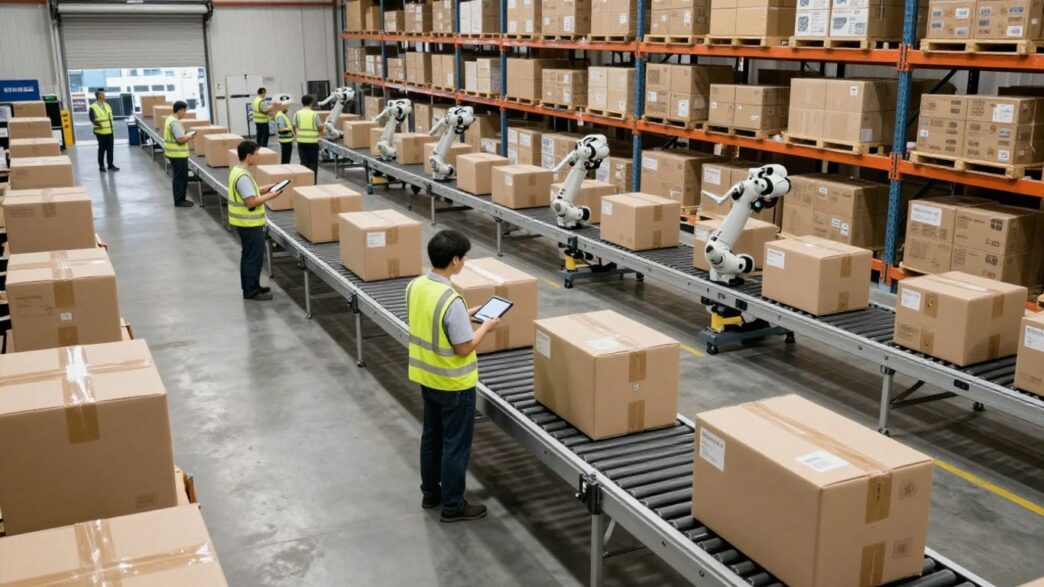
Right, so by 2026, online shopping is going to be even bigger than it is now. That means businesses need to get their act together when it comes to actually getting products to people. It’s not just about taking the order anymore; it’s about the whole journey from click to doorstep. This is where something like salesforce order management really comes into play. It’s designed to sort out all the mess that comes with selling stuff online, especially as things get more complicated with more sales channels and customers expecting things faster. We’ll look at how it helps businesses handle everything from stock levels to getting orders out the door, and even dealing with returns, all while keeping the customer happy.
Key Takeaways
- Salesforce order management connects different parts of your business, like sales and customer service, to make sure customers have a smooth experience.
- It gives you a clear picture of your stock across all your selling points, stopping you from selling things you don’t have.
- Automating tasks like sending orders to the right place and handling returns saves time and cuts down on mistakes.
- Using smart tools helps predict what customers will want and how well things are selling, so you can plan better.
- It helps businesses manage sales in different countries, using different money, and follow all the rules.
Reimagining Ecommerce Operations with Salesforce Order Management
Transforming ecommerce workflows in 2026 means breaking away from the clunky, patchwork systems people used to juggle. Salesforce Order Management is bringing everything together on one platform, so teams don’t have to scramble across different screens or tools. Brands want smoother, simpler shopping and service, and that’s where this system stands out.
Connecting Commerce and Service for Seamless Experiences
It used to be a headache keeping customer support in the loop with the latest order information—sometimes you’d spend ages just finding someone’s shipping update. With Salesforce, commerce and service talk to each other live. That means customers get straight answers about their orders, and support teams don’t have to chase details. Customers can even use self-service features to cancel or change orders whenever they want—without calling in.
- Orders flow into customer service, so support sees updates instantly
- Automated support options answer frequent questions, speeding up resolutions
- Customers cancel, update, or check orders themselves, any time
Keeping all teams on the same page means shoppers leave with fewer headaches and brands see repeat business.
Centralising Data Across Channels
Ecommerce rarely happens in one place now—it’s your online store, a marketplace or two, maybe even pop-up events on the side. Salesforce Order Management collects everything into one hub, so you’re not hunting for details spread over five systems. Whether it’s purchases, returns, or inventory numbers, it all lives in the same database.
Here’s what centralising looks like:
| Data Source | Managed In Salesforce | Synced Regularly |
|---|---|---|
| Website Orders | ✅ | ✅ |
| Mobile App Orders | ✅ | ✅ |
| Marketplace Sales | ✅ | ✅ |
| In-Store Pickup Requests | ✅ | ✅ |
Centralising gives you real-time inventory and better order accuracy—plus it helps teams work faster and avoid confusion. The 2026 retail predictions highlight how these unified systems balance great shopper experiences with profitability.
Automating Workflows from Purchase to Delivery
I’ll bet almost everyone remembers a time when a simple order kicked off a string of back-and-forth emails, manual warehouse checks, and random spreadsheet updates. Automation finally cuts these slow steps. With Salesforce Order Management, you set up rules: orders route automatically to the right fulfilment centre, payments get processed instantly, and low stock triggers alerts for your team. That reduces delays and mistakes.
- Purchase triggers payment and warehouse notification without manual steps
- Orders route based on stock levels and shipment distance
- Low-stock alerts keep shelves from running empty
You can build automated flows tailored to any brand’s needs, whether you ship globally or only local. This is how ecommerce operations keep up—and it’s a welcome change from endless spreadsheets and missed updates.
Enhancing Inventory and Fulfilment Efficiency
Efficient inventory and fulfilment processes make the difference between keeping customers happy and losing them to a competitor. By 2026, platforms like Salesforce Order Management have changed how we handle stock, route orders, and solve the constant headache of low inventory. Let’s walk through what’s different now and why it matters for modern retailers.
Real-Time Inventory Visibility
You can’t manage what you can’t see. These days, Salesforce gives retailers full visibility of stock, wherever it sits across warehouses or even stores. Live tracking means you’ll spot low inventory before customers do. Here’s why this matters:
- No more awkward ‘out-of-stock’ moments during checkout
- Accurate counts make stock transfers between locations a breeze
- Helps avoid unnecessary overstocking (which ties up money)
| Feature | Benefit |
|---|---|
| Live stock updates | Prevent overselling |
| Centralised dashboard | Easy multi-location tracking |
| Automated replenishment | Less manual checking |
Teams now spend much less time tracking products by hand and more time focusing on customers instead of spreadsheets.
Intelligent Order Routing Solutions
Say you get orders from all over: how do you decide which warehouse (or even physical store) should ship what? That’s where intelligent order routing comes in—picking the best fulfilment route based on stock, location, cost, and even shipping speed.
- Faster delivery to customers regardless of their location
- Optimised shipping costs because orders travel shorter distances
- Reduces split shipments, making it simpler for everyone
You can check out what’s happening in conversational shopping trends as businesses adjust to new commerce demands.
Automated Low-Stock Alerts and Management
Running out of bestsellers is a common pain. In 2026, the order management system spots low stock and kicks off reordering automatically—sometimes before you even notice.
A typical low-stock automation looks like this:
- Detects low inventory based on set thresholds
- Notifies the purchasing team or auto-generates a supplier order
- Updates reorder status so nobody gets left in the dark
- Keeps warehouses replenished without guesswork
- Reduces missed sales opportunities
- Boosts cash flow by avoiding excess
With these improvements, you’re not just keeping up—you’re making your operations smarter, and that means happier customers and a better bottom line.
Personalising Customer Journeys Post-Purchase
It’s easy to think selling ends once someone clicks ‘Order,’ but if you’ve run any kind of shop (big or small), you’ll know what really matters—what happens after that. Let’s break down how Salesforce Order Management changes up those crucial post-purchase moments in 2026.
Self-Service Order Tracking Capabilities
If you’ve ever had customers bombarding you with "Where’s my order?" emails, you know how much time that eats up. Now, shoppers jump online and get real-time updates through their own dashboards—no need to pick up the phone or wait for a response.
- Order status is updated instantly, so buyers see progress as soon as it happens.
- Customers can request changes (like delivery date tweaks) themselves before an item ships.
- Notifications pop up for key events (shipping, out for delivery, delayed). They’re not left guessing.
That five-minute scroll to find a tracking number is gone. Self-service order tracking does not just cut back on customer anxiety; it gives time back to support reps too.
Proactive Customer Support Integration
Salesforce Order Management lets support teams jump in before problems snowball. With every order, full context is linked right there in the customer’s record. If there’s a hiccup (like a shipping delay), agents see it and can reach out—before the buyer even knows something’s wrong.
Key support features include:
- Unified view of orders, messages, and resolutions in one place
- Automated workflows trigger support cases if systems flag issues (like missing tracking data)
- Agents can offer discounts, refunds, or alternatives all from the same interface
Here’s a quick look at what improves for support teams:
| Before Salesforce OMS | With Salesforce OMS |
|---|---|
| Manual ticket creation | Auto-generated support cases |
| Juggling systems | One integrated dashboard |
| Slow issue resolution | Proactive, faster responses |
Streamlined Cancellations and Returns Processes
Anyone who’s ever tried cancelling an online order knows how painful it can be when systems aren’t talking. With Salesforce OMS, the whole flow is simpler for both sides.
- Customers self-initiate a cancellation or return from their account—no emails needed.
- Stock and refund updates happen automatically.
- Rules make sure only qualifying orders get processed, so there’s less risk of mistakes.
These changes mean customers have more control, and staff aren’t buried in manual fixes for things that should take seconds. It’s smoother for everyone.
Personalisation after checkout sounds flashy, but really it’s all about practical steps that make a customer’s life easier—and keep them coming back.
Leveraging AI and Analytics for Predictive Insights

Salesforce Order Management isn’t just about processing orders—it quietly runs in the background, using AI to spot patterns and bring helpful information right where you need it. With real-time data and predictive models, businesses are less likely to get caught off guard. When you have predictive insights, you’re no longer simply reacting to problems—you’re spotting opportunities before they become urgent.
Embedding AI Recommendations in Fulfilment
AI in Salesforce Order Management quietly reviews huge amounts of data: what’s in stock, what’s selling fast, and even customer behaviour. Here’s how its recommendations show up in regular workflows:
- Prioritises shipping for items at risk of stockouts
- Suggests alternative products if inventory is low
- Offers delivery recommendations based on traffic and carrier data
- Identifies patterns for split shipments that might save money or time
This means teams no longer manually trawl through dashboards—these tips appear automatically in the fulfilment workspace.
Using CRM Analytics for Performance Tracking
Embedded dashboards take performance tracking off boring spreadsheets and put them right inside the system. You can break down:
| Metric | What You See | Why It Matters |
|---|---|---|
| Orders Fulfilled Per Day | 2,500 | Speed of operations |
| Late Shipments | 1.8% | Identify bottlenecks |
| Items Returned | 4.3% | Spot product issues |
| Revenue by Channel | £320k (website), £192k (marketplace) | Where to focus next |
- All departments work from the same data source
- No one waits for a report or builds their own spreadsheet
- Everyone sees the latest metrics, not yesterday’s news
Forecasting Demand and Optimising Operations
Forecasting isn’t as mysterious as it sounds when the right data is all in one place. Salesforce uses models to estimate:
- Which products will go out of stock soon
- When a carrier might get overloaded
- Upcoming demand spikes (think: pre-holiday, flash sales)
Teams are able to respond to changes in sales or supply faster, so customers don’t run into out-of-stock messages or late deliveries.
In short, Salesforce turns complex data into helpful hints and simple decisions, making it easier for teams to keep ahead of demand, reduce waste, and grow revenue without any guesswork.
Supporting Global Ecommerce Expansion
The pressure to sell to new markets and keep up with demand everywhere at once isn’t going away in 2026. Businesses want to make the most of global opportunities, but that usually means coming up against a messy mix of currencies, fulfilment partners, platforms, and compliance headaches. Salesforce Order Management is changing the game by putting all these moving parts in one organised space, so brands aren’t making things up as they go along.
Managing Multi-Currency and Multi-Region Fulfilment
Handling money in multiple countries can get tricky fast. With Salesforce Order Management, you can:
- Automatically convert currencies at the time of order
- Set up tax rules by country or region
- Group orders by fulfilment location for faster delivery
| GBP | EUR | USD | |
|---|---|---|---|
| Exchange rate updates | Yes | Yes | Yes |
| Tax configuration | Flexible | Flexible | Flexible |
| Regional warehouse assignment | Auto | Auto | Auto |
Brands no longer have to worry about getting orders, prices, and stock wrong just because their customers are overseas. The system makes sure everything lines up as it should, even when selling across borders or on different local storefronts.
For businesses, this means there are fewer hiccups and fewer manual adjustments every time an order comes in from a new part of the world.
Integrating with Payment and ERP Systems
It doesn’t take long for finance to get messy if your payment software, bank, and accounting app don’t talk. Salesforce can link with a huge range of payment gateways and enterprise resource planning (ERP) tools, making life much easier at scale:
- Sync sales orders and invoices instantly
- Automate tax collection and remittance
- Reconcile payments across storefronts and currencies
Connecting these systems is key for tracking everything as you grow, and helps keep financial reporting clean for investors and regulators. Having all data lines up reduces duplicate entries and annoying admin. For more background on why expanding global ecommerce matters and how brands succeed, see access to new markets and revenue streams.
Ensuring Compliance across Borders
Regulations can change overnight. Customs paperwork for one region might not work for the next one, and data privacy rules aren’t the same everywhere. With Salesforce Order Management, businesses can:
- Set country-specific compliance and privacy workflows
- Trigger alerts for new regulatory updates
- Manage document submissions for customs automatically
A few steps for staying on the safe side:
- Set compliance templates for every major region.
- Update documentation when local rules adjust.
- Use automated reminders for licence renewals or tax changes.
For any brand, this built-in support for local rules is a big relief – you won’t get caught off guard when you start shipping to a new country.
Expanding globally can sound overwhelming, but getting fulfilment, payments, and compliance sorted in advance means brands spend less time firefighting and more time growing.
Enabling Scalability for B2B and Direct-to-Consumer Brands
Scaling up for both B2B and direct-to-consumer (D2C) brands isn’t something you just stumble into—especially by 2026, with expectations for fast delivery, custom pricing, and complex bulk ordering. Salesforce Order Management gives brands the backbone needed to keep up with both huge business orders and individual consumer demands without breaking stride. Here’s how things play out in the real ecommerce world:
Managing Bulk Orders and Special Configurations
B2B buyers don’t shop like regular consumers. Imagine a customer ordering thousands of parts in one go, all needing specific configuration and delivery to several locations. Salesforce makes this much simpler with:
- Mega carts for huge B2B transactions (not the three-items-and-out shopping carts you see elsewhere)
- Advanced approval workflows so large purchases get routed up the right chain and tracked every step
- Custom product configurators, allowing even really tricky products to be ordered without massive back-and-forth emails
| Feature | How It Helps B2B | How It Helps D2C |
|---|---|---|
| Bulk Ordering | Handles mega orders efficiently | Quick checkout for large and small carts |
| Configurators | Supports custom builds | Lets consumers personalise orders |
| Approval Routing | Automates multi-level signoff | N/A |
When a manufacturer balances B2B and D2C, they’re not just selling more—they’re building a system that can flex to whatever challenge comes next.
Implementing Flexible Pricing and Catalogue Management
Instead of one-size-fits-all pricing, Salesforce lets you mix it up. Contract pricing, discounts by volume, and catalogues that only show certain products to certain accounts make a big difference when you’ve got both business and consumer buyers.
Some key strategies:
- Contract rates for B2B, public pricing for D2C
- Volume discounts stack automatically
- Special bundles or hidden products for specific customers
- Catalogues tailored by account—showing each customer only what makes sense for their relationship
This flexibility means a buyer from a massive distributor and a consumer both get what they expect when it comes to options and price.
Supporting Hybrid Commerce Strategies
Hybrid models—where businesses run both B2B and D2C channels in parallel—are getting more common every year. You don’t want channel conflicts, pricing slip-ups, or inventory shortages getting in your way. Salesforce helps brands avoid these headaches by:
- Integrating commerce apps that connect B2B and D2C touchpoints
- Keeping inventory and order data central so nothing gets oversold
- Allowing separate but connected storefronts for biz customers and end-consumers
Key steps to make it work:
- Map out workflows for each buyer type early on
- Tackle MVP product catalogues first—start small and build out
- Train teams on the new processes so they don’t revert to old habits
It might sound involved, but with the right foundation, B2B brands breaking into D2C—or vice versa—can actually enjoy the ride instead of just surviving it.
Wrapping Up: The Future of Fulfilment is Here
So, as we look ahead to 2026, it’s pretty clear that getting your orders out the door efficiently is more important than ever. Salesforce Order Management isn’t just another bit of software; it’s like the central nervous system for your whole ecommerce operation. It helps sort out all the messy bits, from when someone clicks ‘buy’ right through to that package arriving on their doorstep. By bringing everything together, it means fewer mistakes, happier customers, and a business that can actually keep up with demand. It’s about making things work smoothly, so you can focus on growing your business instead of wrestling with fulfilment headaches.
Frequently Asked Questions
What is Salesforce Order Management and how does it help ecommerce businesses?
Salesforce Order Management is a system that helps online shops handle everything from taking orders to delivering products. It puts all order details in one place, so businesses can see what’s going on at every step. This makes it easier to keep track of stock, send orders to the right places, and quickly fix any problems that come up.
How does Salesforce Order Management make inventory management easier?
With Salesforce Order Management, you always know how much stock you have because it updates in real time. The system can warn you when items are running low, so you don’t run out. It also helps you manage stock in different warehouses and makes sure orders are sent from the best location.
Can customers track their orders using Salesforce Order Management?
Yes, customers can track their orders themselves. They get updates on where their order is and when it will arrive. This makes customers feel more in control and reduces the number of questions your support team gets.
Does Salesforce Order Management use AI to improve order fulfilment?
Yes, the system uses AI to suggest the best ways to send out orders and manage stock. It can also look at past sales to help you guess what products you’ll need more of in the future. This helps you avoid running out or having too much of something.
Is Salesforce Order Management good for businesses that sell in different countries?
Absolutely. It can handle different currencies and tax rules, and it works with payment and shipping systems from around the world. This makes it easier for businesses to sell to customers in other countries without getting mixed up by different rules.
Can Salesforce Order Management help with both B2B and direct-to-consumer sales?
Yes, Salesforce Order Management is flexible enough for both business-to-business (B2B) and direct-to-consumer (D2C) sales. It can manage large orders, special price lists, and even different ways of selling, all in one system.