
It feels like everywhere you look, technology is changing things, and hospitals are no exception. From the way doctors figure out what’s wrong with you to how they keep an eye on you after you go home, a lot is different now. This isn’t just about fancier machines; it’s about making care better, faster, and more personal. We’re seeing AI help read scans, robots assisting in surgery, and even ways to get care without leaving your house. It’s a big shift, and it’s reshaping what we expect from our healthcare.
Key Takeaways
- Artificial intelligence is making a big difference in spotting illnesses and figuring out the best treatments, even helping create new medicines.
- Wearable gadgets and online doctor visits mean patients can be monitored and cared for from anywhere, making healthcare more accessible.
- Robots are now part of the hospital scene, helping with surgeries, moving things around, and even aiding in patient recovery.
- New tools like 3D printing and virtual reality are improving medical procedures and how we train healthcare workers.
- Smart use of data and secure systems are making hospitals more efficient and helping predict what patients might need.
Artificial Intelligence Enhancing Diagnostics and Treatment
It’s pretty wild how much artificial intelligence is changing the game in healthcare, especially when it comes to figuring out what’s wrong with people and how to fix it. Think about it – AI can look at medical images, like X-rays or MRIs, and spot things that might be easy for a human eye to miss. This means doctors can catch problems like cancer or heart issues much earlier.
AI-Powered Medical Image Analysis
This is a big one. AI programs are getting really good at sifting through scans. They can analyze things like CT scans, MRIs, and even regular X-rays with incredible speed and accuracy. This helps doctors make faster, more confident diagnoses, which is super important when time is critical. It’s not about replacing doctors, but giving them a powerful tool to help them see more clearly. Imagine an AI flagging a tiny spot on a lung scan that might indicate early-stage cancer. That’s the kind of thing that can make a huge difference.
Personalized Treatment Plans Through AI
We’re all different, right? So why should our treatments be the same? AI is helping to change that. By looking at a patient’s unique medical history, lifestyle, and even genetic makeup, AI can help doctors figure out the best treatment plan for that specific person. This means treatments are more likely to work and have fewer side effects. It’s like having a super-smart assistant that considers all the angles to tailor care.
Accelerating Drug Discovery with AI
Developing new medicines takes ages and costs a fortune. AI is speeding this up significantly. It can analyze vast amounts of data to identify potential drug candidates and predict how they might work. This means researchers can focus on the most promising options, cutting down the time it takes to bring new treatments to patients. It’s a complex process, but AI is making it more efficient.
Revolutionizing Patient Monitoring and Engagement
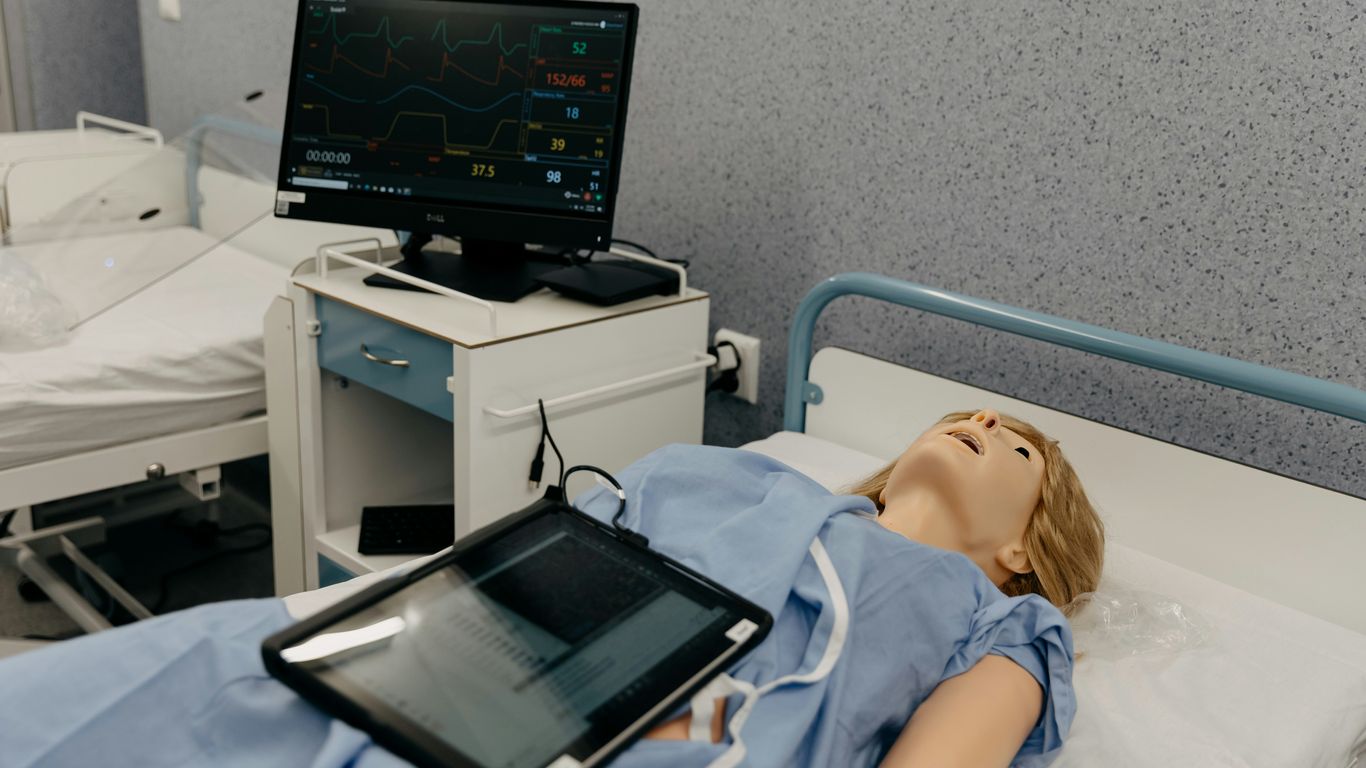
It feels like just yesterday we were waiting weeks for test results or relying on yearly check-ups to tell us how we were doing health-wise. Now, things are changing fast, and it’s all about keeping a closer eye on our well-being, day in and day out. This shift is making us more involved in our own health journeys, which is pretty cool.
Wearable Devices for Real-Time Health Tracking
Think about those smartwatches and fitness trackers everyone seems to be wearing. They’re not just for counting steps anymore. These gadgets are becoming mini health hubs, constantly collecting information about our heart rate, sleep patterns, activity levels, and even things like blood oxygen. This continuous stream of data gives doctors a much clearer picture of our health between appointments. It means they can spot potential problems much earlier, sometimes before we even feel sick. For example, if a device notices a consistent irregular heartbeat, it can flag it for a doctor to check out, potentially preventing a more serious issue down the line. It’s like having a personal health assistant on your wrist, always on the lookout.
Telemedicine and Remote Patient Monitoring
Remember when seeing a doctor meant a trip to the clinic, often involving a long wait? Telemedicine has changed that. Now, you can have a video call with your doctor from your living room. This is a huge help for people who live far from medical centers or have trouble getting around. But it goes beyond just video calls. Remote Patient Monitoring (RPM) is a big part of this. It uses technology to keep tabs on patients outside the hospital. Doctors can check in on patients with chronic conditions, like diabetes or heart problems, without them needing to come in. Devices can send readings like blood pressure or glucose levels directly to the healthcare team. This allows for quick adjustments to treatment plans if something looks off. It’s about making healthcare more accessible and responsive.
Here’s a look at how RPM can help:
- Early Detection: Spotting changes in vital signs that might indicate a worsening condition.
- Convenience: Patients can manage their health from home, saving time and travel.
- Better Management: Healthcare providers can fine-tune treatments based on real-time data.
- Reduced Hospital Visits: Preventing complications that might otherwise require hospitalization.
Patient Portals and Digital Health Records
Another big step forward is how we access our own health information. Patient portals are online platforms where you can see your medical history, view test results, schedule appointments, and even communicate with your doctor’s office. Having your health records digitized and easily accessible puts you in the driver’s seat. You can keep track of your medications, understand your diagnoses, and be a more active participant in your care. It’s a move away from the old system where all your information was locked away in a doctor’s file. Now, it’s becoming a shared resource between you and your care team, leading to more informed conversations and better health decisions for everyone involved.
Robotics and Automation in Healthcare Settings
It’s pretty wild how robots are showing up in hospitals now, doing all sorts of jobs. Honestly, it feels like something out of a sci-fi movie, but it’s happening. These machines aren’t just for show; they’re actually helping out in big ways, especially when things get really busy or when a task needs super precise handling. The integration of robots is changing how surgeries are done, how patients are cared for, and even how hospitals run their day-to-day operations.
Robotic Assistance in Surgical Procedures
When you think about surgery, you probably picture a surgeon with a scalpel. But now, robots are part of the team. These aren’t autonomous robots operating on their own, mind you. Instead, they’re sophisticated tools that a surgeon controls. Think of it like a super-powered extension of the surgeon’s hands. They allow for incredibly precise movements, often through tiny incisions. This means less trauma for the patient, less blood loss, and usually a much faster recovery time. It’s a big step up from traditional methods for many types of operations.
Here’s a quick look at some benefits:
- Smaller incisions
- Reduced bleeding
- Faster healing
- Higher precision
Automating Hospital Logistics and Support Tasks
Beyond the operating room, robots are tackling the less glamorous but equally important tasks that keep a hospital running smoothly. They can deliver medications, transport lab samples, and even help with cleaning. This frees up nurses and other staff to spend more time directly with patients, which is what they got into healthcare to do in the first place. Imagine a robot bringing a patient their dinner tray or taking used linens away – it might sound simple, but it adds up to a lot of saved time and effort for the human staff.
Some of the tasks robots are taking over include:
- Delivering supplies and medications
- Transporting lab specimens
- Assisting with cleaning and disinfection
- Managing inventory
Robots for Rehabilitation and Patient Mobility
Robots are also stepping in to help patients recover. For people undergoing physical therapy after an injury or surgery, robotic systems can provide consistent, targeted assistance. These machines can guide limbs through specific movements, track progress with great accuracy, and provide a level of support that might be difficult for a human therapist to maintain for extended periods. They can help patients regain strength and mobility more effectively. Some robots are even designed to help patients move around more easily, offering support and stability.
Consider these roles in rehabilitation:
- Assisting with physical therapy exercises
- Providing consistent and precise movements
- Monitoring patient progress during recovery
- Aiding in patient mobility and transfers
Advanced Technologies for Medical Procedures and Education
It’s pretty wild how much new tech is changing how doctors do their jobs and how we learn medicine these days. Think about 3D printing, for example. It’s not just for making toys anymore. In hospitals, it’s being used to create custom implants and prosthetics that fit people perfectly. This means better outcomes for patients needing replacements or artificial limbs. It’s also a game-changer for surgical planning, allowing surgeons to practice on realistic models before the actual operation. This kind of personalization was barely imaginable a decade ago.
Then there’s virtual and augmented reality. These aren’t just for video games. Medical schools are using VR to give students a safe space to practice complex procedures. Imagine learning to perform surgery in a virtual operating room – you can make mistakes without any real-world consequences. This helps build confidence and skill. We’re also seeing VR used directly with patients, like for pain management. By immersing someone in a virtual world, it can distract them from discomfort, which is a pretty neat trick. It’s amazing how these tools can improve both medical training and patient comfort. The ability to get hands-on experience with new equipment, like advanced imaging systems, is also being improved with donations for better training tools.
Here’s a quick look at what these technologies are bringing to the table:
- 3D Printing:
- Custom implants and prosthetics
- Realistic anatomical models for surgical practice
- Faster prototyping of medical devices
- Virtual and Augmented Reality:
- Simulated surgical training environments
- Pain distraction and management for patients
- Visualizing complex medical data in 3D
These advancements are really pushing the boundaries of what’s possible in healthcare, making procedures more precise and education more effective.
Data Analytics and Security in Modern Hospitals
Modern hospitals are swimming in data, and figuring out what to do with it all is a big deal. It’s not just about collecting patient records anymore; it’s about making sense of that information to actually help people get better and keep things running smoothly. This shift towards using data smartly is changing how healthcare works from the ground up.
Leveraging Big Data for Healthcare Insights
Think about all the information generated in a hospital every single day: patient histories, lab results, doctor’s notes, even data from those wearable fitness trackers people are using. Big Data Analytics (BDA) is the process of sifting through these massive amounts of information to find patterns and connections that wouldn’t be obvious otherwise. It’s like finding a needle in a haystack, but the needle could help predict an outbreak or identify a patient at high risk for a certain condition.
Here’s how it’s making a difference:
- Predicting Patient Needs: By looking at past patient data, hospitals can get better at anticipating what patients might need next, like more staff on a particular ward or specific medications.
- Improving Treatment Effectiveness: Analyzing outcomes from thousands of patients can show which treatments work best for specific conditions and patient types.
- Spotting Trends: Public health officials can use aggregated data to track disease spread and identify areas needing more resources.
Blockchain for Secure Health Data Management
Now, all this data is super sensitive. Patient privacy is a huge concern, and keeping health records safe and sound is non-negotiable. That’s where blockchain technology comes in. You might have heard of it with cryptocurrencies, but it’s also got serious potential in healthcare.
Basically, blockchain creates a secure, unchangeable record of transactions. In healthcare, this means:
- Tamper-Proof Records: Once a piece of data is added to the blockchain, it’s incredibly difficult to alter or delete, which helps maintain the integrity of patient information.
- Controlled Access: Patients could potentially have more control over who sees their health data, granting specific permissions to doctors or researchers.
- Secure Sharing: It allows for safer sharing of medical records between different healthcare providers, reducing errors and improving care coordination.
Smart Hospitals and Predictive Analytics
Putting it all together, we’re moving towards ‘smart hospitals.’ These are facilities that use technology, including data analytics and AI, to operate more efficiently and provide better patient care. Predictive analytics, a part of BDA, is key here. It uses historical data to forecast future events.
Imagine:
- Predicting Equipment Failures: Sensors on medical equipment could predict when a machine is likely to break down, allowing for maintenance before it causes a problem.
- Forecasting Patient Flow: Hospitals can better manage staffing and resources by predicting how many patients will arrive and what their needs might be.
- Early Disease Detection: Analyzing subtle changes in patient data over time could flag potential health issues much earlier than traditional methods.
Addressing Healthcare Disparities with Technology
It’s a tough reality that not everyone gets the same level of medical attention. Sometimes it’s about where you live, other times it’s about language barriers or just not having the right information. But technology is starting to change that picture, making things fairer.
Improving Access in Underserved Areas
Think about folks living way out in the country or in neighborhoods that don’t have many doctors. Getting to appointments can be a whole ordeal, taking up a whole day and costing money for travel. That’s where things like telemedicine really step in. Instead of driving hours, you can have a video call with a doctor right from your home. This isn’t just for quick check-ins; it can be for managing ongoing conditions, getting prescriptions, and even some types of therapy. It’s like bringing the clinic to your living room, which is a huge deal for people who might otherwise go without care.
- Virtual Consultations: Patients can connect with specialists they wouldn’t normally have access to.
- Remote Monitoring: Devices can send health data back to doctors, so they can keep an eye on things without needing an in-person visit.
- Reduced Travel Burden: Saves time and money for patients, especially those with mobility issues or limited transportation.
Enhancing Patient-Clinician Communication
Sometimes, the biggest hurdle isn’t getting to the doctor, but actually understanding what they’re saying or being able to express your own concerns. This is especially true for people who don’t speak English fluently or have trouble with complex medical terms. Technology can bridge this gap. Think about apps that can translate conversations in real-time, or patient portals that offer health information in simpler language and different languages. Having clear communication means patients can make better decisions about their health.
Equitable Healthcare Through Health IT
Beyond just access and communication, health information technology (IT) is being used to level the playing field in other ways. Electronic health records, for example, can help spot patterns in care that might show bias or gaps. When doctors and hospitals use these tools right, they can make sure everyone, no matter their background, is getting the recommended screenings and treatments. It’s about using data to make sure care is fair and consistent for all.
Looking Ahead
So, it’s pretty clear that technology is really changing how hospitals work and how we get care. From AI helping doctors spot problems faster to robots handling simple tasks, things are moving quickly. Plus, with tools like telemedicine and wearables, we’re seeing more personalized and accessible healthcare than ever before. It’s not just about fancy gadgets; it’s about making things work better for everyone involved, from the patient to the medical staff. As these tools keep getting better, we can expect even more improvements, making healthcare more efficient and focused on what really matters – our well-being.
Frequently Asked Questions
How is AI helping doctors find sicknesses faster?
AI, which is like a super-smart computer program, can look at medical pictures, like X-rays or scans, much quicker than a person. It can spot tiny signs of sickness that might be hard for the human eye to see, helping doctors figure out what’s wrong sooner.
What are wearable devices and how do they help with health?
Wearable devices are things like smartwatches or fitness trackers that you wear on your body. They can keep an eye on your heart rate, how much you move, and even your sleep. This information is sent to your doctor, who can see if everything is okay or if you need attention, helping to catch problems early.
Can robots help in surgeries?
Yes, robots can help surgeons! They are often controlled by the surgeon and can make very small, precise movements. This means surgeries can be less invasive, leading to quicker healing and fewer problems for the patient.
What is telemedicine?
Telemedicine is like having a doctor’s appointment without going to the clinic. You can talk to your doctor through a video call on your computer or phone. This is especially helpful for people who live far away from hospitals or have trouble traveling.
How does 3D printing help in medicine?
3D printing can create special parts for the body, like artificial limbs or parts for bones, that are made just for one person. It can also be used to make models of organs to help surgeons plan difficult operations before they even start.
Why is technology important for making healthcare fair for everyone?
Technology can help people who don’t have easy access to doctors, like those in rural areas, by using things like telemedicine. It can also help doctors understand patients better by providing information in different languages or easier-to-understand formats, making sure everyone gets good care.