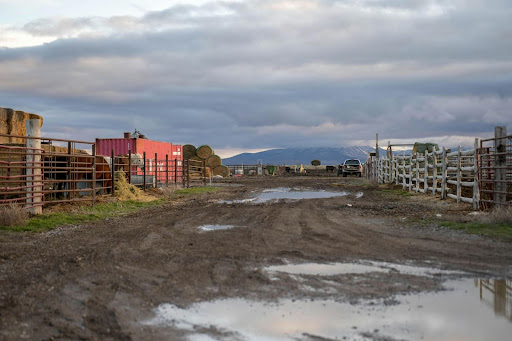
The agricultural landscape is undergoing a shift toward more precise resource management, driven by a need for increased operational visibility. One of the organizations facilitating this transition is Ranchbot Monitoring Solutions, whose global leadership includes Andrew Coppin, as Founder and CEO. Operating at the intersection of Agritech, HaaS (Hardware as a Service), and IoT, the company is focused on a mission to solve water challenges while safeguarding the long-term availability of natural resources.
Addressing the Limitations of Manual Monitoring
Traditional water management practices have remained largely unchanged for a century, often lacking real-time visibility or predictive capabilities. Ranchers frequently rely on instinct or memory to monitor consumption trends and are required to manually check water sources, leaving them at the mercy of volatile weather patterns. When an infrastructure failure occurs, it can take several days to identify the issue, which may lead to the loss of thousands of gallons of water and significant livestock stress.
To mitigate these risks, modern systems utilize proprietary IP hardware to transmit data to a centralized SaaS platform. This provides users with near real-time SMS and email alerts regarding water levels and storage trends. By integrating these insights, land managers can use predictive analytics to improve resource allocation and general production management.
Technical Accessibility and Global Reach
A key factor in the adoption of these tools is the simplification of the installation process. The hardware is designed as an “out of the box” solution that can be installed by the user in approximately 15 minutes, requiring no specialized technicians or the construction of additional network towers. To ensure functionality in isolated areas, the technology is “communication agnostic,” utilizing partnerships with global satellite and cellular providers to maintain connectivity regardless of local infrastructure.
This approach has allowed the technology, originally tested in the rigorous environments of Australia, to scale globally. The system currently supports a community of over 12,000 users with more than 28,000 sensors installed, growing by approximately 450 new units each month.
Water Intelligence as a Strategic Input
As adoption increases, water monitoring is beginning to shift from a reactive operational task to a strategic input within broader agricultural decision-making. Historically treated as a background utility, water is now being reframed as a measurable, optimizable variable that directly impacts productivity, cost control, and risk management.
With continuous data capture across dispersed assets, producers can start to correlate water availability and consumption with livestock performance, pasture conditions, and seasonal variability. This introduces a more systems-level approach to ranch management, where water data is not viewed in isolation but as part of an interconnected operational model. Over time, this can support more precise stocking decisions, earlier intervention during drought conditions, and improved long-term land stewardship.
Additionally, the ability to aggregate data across properties and regions creates opportunities for benchmarking and pattern recognition at scale. This has implications not only for individual operators but also for insurers, lenders, and supply chain stakeholders seeking greater transparency into agricultural risk profiles.
As these capabilities mature, the role of water monitoring systems may expand beyond infrastructure oversight into a foundational layer of agricultural intelligence, informing both day-to-day operations and longer-term strategic planning.
Formal Recognition in the Agricultural Industry
The technology has been recognized in several industry contexts over recent years, including at the 2025 NCBA Tradeshow in San Antonio, as well as through programs such as Viasat ELEVATE in 2024 and the Technology Scale-Up Awards in 2021. These acknowledgments provide some indication of its visibility within the sector.
More broadly, they coincide with a growing interest across industries in the use of IoT-based approaches to monitor and manage critical natural resources. As organizations explore more data-driven methods to improve efficiency and oversight, such technologies are increasingly being evaluated as part of this shift. In some cases, efforts have been made to lower barriers to adoption through more accessible cost structures. However, long-term uptake will likely depend on how well these solutions integrate into existing operations and whether they can deliver reliable, actionable insights over time.