Innovations Driving the AI in Healthcare Conference 2022
This year’s AI in Healthcare Conference really highlighted how much things are changing, and fast. It wasn’t just talk; we saw some pretty concrete examples of AI making a real difference right now. The big theme? Making healthcare smarter, faster, and more personal for everyone.
Revolutionizing Diagnostics and Disease Identification
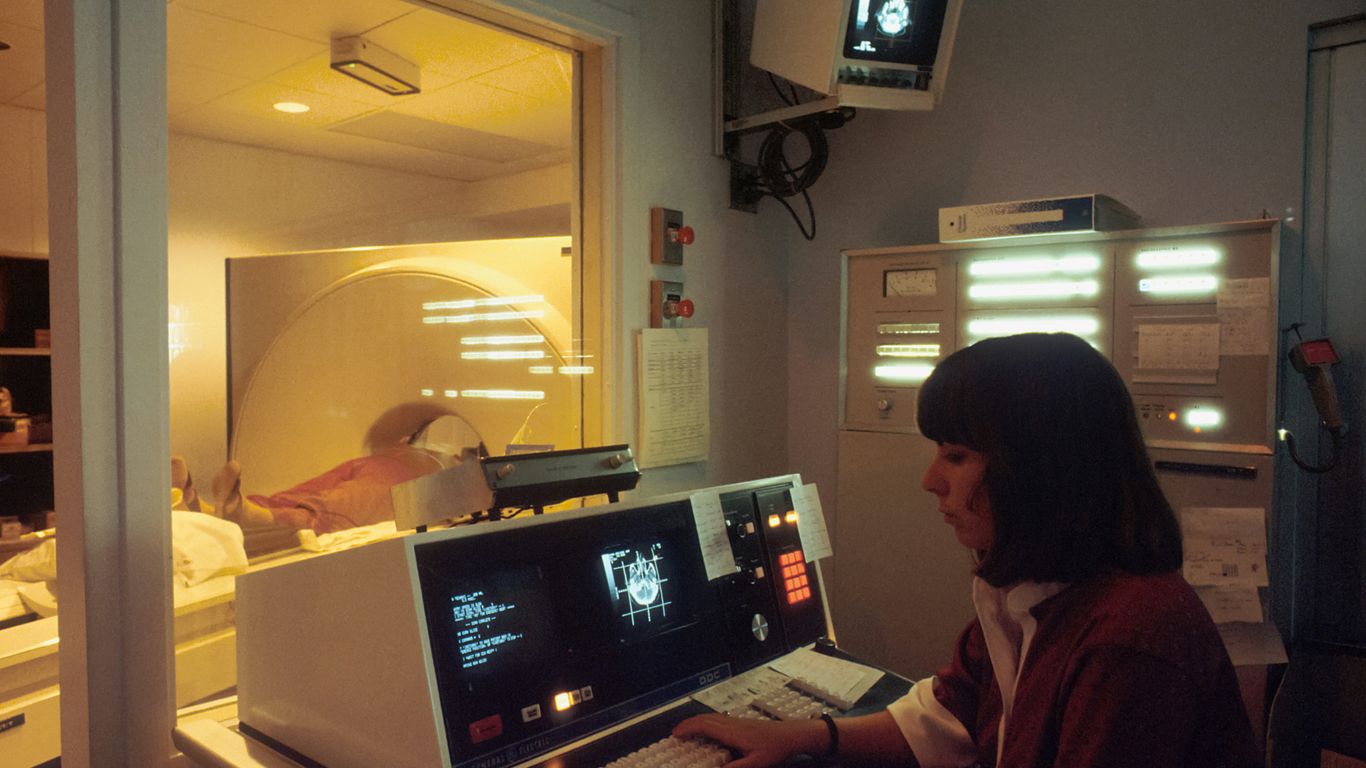
This is where AI is really showing its muscle. Think about spotting diseases earlier and more accurately than ever before. AI tools are getting incredibly good at looking at medical images – like X-rays, CT scans, and MRIs – and finding things that might be missed by the human eye. It’s not about replacing doctors, but giving them super-powered assistants.
- Early Cancer Detection: AI algorithms are being trained on massive datasets of scans to identify subtle signs of cancer, sometimes at stages where it’s much easier to treat.
- Heart Disease Prediction: By analyzing patient data, including EKG readings and medical history, AI can flag individuals at higher risk for heart problems, allowing for preventative measures.
- Neurological Disorder Identification: AI is showing promise in detecting early indicators of conditions like Alzheimer’s or Parkinson’s through analyzing brain scans and even speech patterns.
The speed and precision with which AI can sift through complex data is truly changing the game for early diagnosis.
Enhancing Patient Engagement Through AI Chatbots
Remember when getting basic health info meant waiting on hold or for an appointment? AI chatbots are changing that. They’re becoming more sophisticated, acting as a first point of contact for patients. They can answer common questions, help schedule appointments, provide medication reminders, and even offer basic health advice. This frees up human staff for more complex issues and makes information more accessible for patients, anytime.
Personalized Treatment Planning with Predictive Analytics
This is another area where AI is making waves. Instead of a one-size-fits-all approach, AI can look at a patient’s unique genetic makeup, lifestyle, and medical history to predict how they might respond to different treatments. This means doctors can create plans that are much more tailored to the individual.
Here’s a look at how it works:
- Data Analysis: AI systems process vast amounts of patient data, including genetic information, previous treatments, and outcomes.
- Predictive Modeling: Algorithms forecast the likely effectiveness and potential side effects of various treatment options for a specific patient.
- Treatment Recommendation: Based on the predictions, AI can suggest the most suitable course of action, helping clinicians make informed decisions.
This level of personalization has the potential to significantly improve treatment success rates and reduce adverse reactions.
Emerging AI Technologies Shaping Healthcare’s Future
Beyond the current applications, a new wave of AI technologies is on the horizon, promising to tackle some of healthcare’s toughest challenges. These aren’t just incremental improvements; they represent shifts in how we can develop and deploy AI safely and effectively.
Federated Learning for Enhanced Data Privacy
One of the biggest hurdles in healthcare AI is data. We need massive amounts of patient data to train powerful models, but patient privacy is paramount. Federated learning offers a clever solution. Instead of bringing all the data to one central place, the AI model travels to the data. Think of it like this:
- Local Training: AI models are sent to individual hospitals or clinics.
- On-Site Learning: The models learn from the local patient data without that data ever leaving the institution.
- Aggregated Insights: Only the learned patterns, not the raw data, are sent back to a central server to improve the global model.
This approach means we can build more robust AI tools by learning from diverse datasets across many institutions, all while keeping sensitive patient information secure and private. It’s a game-changer for collaboration.
Explainable AI for Building Trust in Clinical Decisions
For AI to be truly useful in healthcare, doctors and patients need to trust its recommendations. This is where Explainable AI (XAI) comes in. Traditional ‘black box’ AI models can give an answer, but they can’t tell you why they arrived at that conclusion. XAI aims to change that.
- Transparency: XAI methods help reveal the reasoning behind an AI’s prediction or diagnosis.
- Auditability: Clinicians can review the AI’s thought process, much like they would review a colleague’s assessment.
- Bias Detection: Understanding how an AI works can help identify and correct potential biases in the data or algorithm.
By making AI decisions understandable, XAI builds the confidence needed for its widespread adoption in critical medical settings.
Reinforcement Learning in Optimizing Treatment Pathways
Reinforcement Learning (RL) is another exciting area. Unlike other AI methods that learn from static datasets, RL learns through trial and error, much like a human learning a new skill. In healthcare, this can be applied to complex, dynamic situations like treatment planning.
Imagine an AI system that can:
- Observe Patient State: Continuously monitor a patient’s condition and response to treatment.
- Take Actions: Suggest adjustments to medication, dosage, or therapy.
- Receive Rewards/Penalties: Learn from the outcomes – positive results are rewarded, negative ones are penalized.
Over time, the RL agent can discover optimal treatment strategies that adapt to individual patient needs and evolving conditions, potentially leading to more effective and personalized care plans. It’s like having a tireless assistant constantly refining the best course of action based on real-world results.
The Evolving Role of AI in Healthcare Business
It’s pretty clear that AI isn’t just for the tech giants anymore, especially in healthcare. We’re seeing a big shift towards making healthcare smarter and more efficient, and AI is right at the center of it. Think about it: AI is helping to sort through all the paperwork and administrative tasks that can bog down hospitals and clinics. This frees up people to focus more on actual patient care, which is what really matters, right?
Streamlining Administrative Processes with AI
This is where AI really shines for the business side of things. It’s not the flashy stuff you see in sci-fi movies, but it’s making a real difference. AI tools are getting good at handling things like scheduling appointments, managing patient records, and even processing insurance claims. This means fewer errors and a lot less time spent on tasks that don’t directly involve treating people. It’s like having a super-organized assistant who never gets tired.
- Automating appointment scheduling to reduce no-shows.
- Processing insurance claims faster and more accurately.
- Managing patient data and medical histories with greater efficiency.
- Optimizing hospital resource allocation, like bed management.
The Symbiotic Relationship Between AI and Clinicians
Some folks worry that AI will replace doctors and nurses. Honestly, that’s not really what’s happening. Instead, AI is becoming a partner. It’s like giving clinicians superpowers, helping them make better decisions faster. AI can analyze vast amounts of patient data, spot patterns that a human might miss, and present that information in a way that’s easy to understand. This doesn’t take away from the doctor’s judgment; it adds another layer of information to help them do their job even better. It’s a team effort, with AI handling the heavy data lifting and humans providing the empathy and critical thinking.
Data-Driven Healthcare Practices
We’re moving away from just guessing what works best. AI allows healthcare providers to look at real data and figure out the most effective ways to treat patients and run their operations. This means treatments can be tailored more to individuals, and hospitals can operate more smoothly. It’s all about using the information we have to make smarter choices for everyone involved, from the patient to the person managing the budget.
Market Dynamics and Investment Trends in Healthcare AI
It’s pretty clear that money is flowing into AI for healthcare, and the numbers are pretty wild. We’re talking about a market that was around $11.2 billion in 2023 and is expected to balloon to over $427 billion by 2032. That’s a huge jump, showing just how much people believe in this tech. This growth isn’t just happening out of nowhere; it’s being pushed by a few big things.
First off, everyone wants better healthcare, and AI seems to be a big part of that. Think about how much data is generated in hospitals every day. AI can actually make sense of all that information, helping doctors make better choices and hopefully leading to better results for patients. Plus, with more people dealing with long-term illnesses, AI tools that can spot problems early, tailor treatments, and keep an eye on patients are becoming super useful.
Here’s a quick look at the projected market growth:
| Year | Market Size (USD Billions) |
|---|---|
| 2023 | 11.2 |
| 2032 | 427.5 |
This massive growth is attracting a lot of attention from investors. We’re seeing governments, private companies, and even healthcare systems themselves putting serious cash into developing and using AI. This funding is key to pushing new ideas forward and making sure these AI tools can actually be used in hospitals and clinics.
Some of the big players you’ll see in this space include companies like:
- Microsoft
- IBM
- Siemens Healthineers
- GE Healthcare
- Medtronic
It’s not just the US, either. While North America has been a leader, places like the Asia-Pacific region, especially China and India, are seeing a lot of development thanks to government support and tech advancements. The sheer amount of investment signals a strong belief in AI’s ability to reshape how we approach health.
Future Trends and Societal Impacts of AI in Healthcare
Looking ahead, AI isn’t just a tool; it’s becoming a core part of how we’ll approach health. We’re seeing AI move beyond just helping with tasks to actually becoming a partner in making medical choices. This shift means better, faster diagnoses and treatments that are tailored just for you. It’s pretty exciting to think about how this could change things for the better.
AI’s Indispensable Role in Medical Decision-Making
AI is starting to feel like a second opinion for doctors, but one that can sift through mountains of data in seconds. Think about it: AI can spot patterns in scans or patient histories that a human might miss, especially when things are subtle. This isn’t about replacing doctors, though. It’s more about giving them super-powered insights so they can make the best calls. The goal is to combine human expertise with AI’s analytical power for improved patient outcomes.
Potential Societal and Economic Impacts
So, what does all this AI in healthcare mean for us as a society and for the economy? On the bright side, we could see a healthcare system that’s more efficient and maybe even less expensive. People might get better care, and that’s a huge win. But we also need to be smart about this. There are questions about fairness – will everyone have access to these AI-powered tools? And what about jobs? Some roles might change, and we need to think about that. It’s a balancing act, for sure.
The Rise of Preventive Care Through AI
One of the most promising areas is how AI can help us stay healthy before we get sick. Predictive analytics, powered by AI, can look at your health data and flag potential issues early on. This means you could get advice or treatment to prevent a serious problem from developing in the first place. It’s a move from treating sickness to actively promoting wellness, which could really change how we think about long-term health.
Navigating Challenges in AI Healthcare Adoption

So, AI in healthcare sounds pretty amazing, right? But getting it into hospitals and clinics isn’t exactly a walk in the park. There are some pretty big hurdles we need to clear before AI can really do its thing everywhere.
Addressing Data Security and Privacy Concerns
This is a huge one. AI systems gobble up massive amounts of patient data – think medical histories, test results, all that sensitive stuff. Naturally, people are worried about this data falling into the wrong hands. We’ve seen reports of thousands of healthcare data breaches happening every year, and AI just adds another layer of risk. Current rules like HIPAA and GDPR weren’t really built with AI in mind, so they don’t always cover the unique risks AI brings, like algorithms being misused. Making sure patient information stays locked down tight is absolutely critical. We need super strong security measures and constant vigilance to keep data safe and private.
Overcoming Resource Limitations and Budget Constraints
Let’s be real, implementing advanced AI isn’t cheap. It requires serious computing power, huge datasets, and folks who really know their stuff – data scientists and AI specialists. Smaller hospitals, especially those in less wealthy areas, might not have the cash or the infrastructure to even get started. It’s tough to justify the big spending when budgets are already stretched thin. We’re seeing a push for more affordable, scalable AI solutions, like apps that run on phones or cloud-based services, which could help, but it’s still a major barrier for many.
The Need for Robust Legal and Regulatory Frameworks
Things get murky when it comes to who’s responsible if an AI makes a mistake. The laws and regulations around AI in healthcare are still catching up. There’s a lot of uncertainty about liability and accountability, which makes healthcare providers hesitant. We need clear rules of the road. Think about it:
- Clear Guidelines: What happens when an AI diagnostic tool gets it wrong?
- Liability Standards: Who is accountable – the developer, the doctor, the hospital?
- Ethical Oversight: How do we make sure AI is used fairly and doesn’t worsen existing health disparities?
Without these solid legal and regulatory structures, widespread adoption will continue to be a slow and cautious process. Collaboration between tech folks, medical professionals, and lawmakers is key to building trust and making sure AI is used safely and effectively.
Wrapping Up: What’s Next for AI in Healthcare?
So, looking back at the AI in Healthcare Conference 2022, it’s pretty clear this technology isn’t just a passing trend. We saw how AI is already making a real difference, from helping doctors spot problems earlier to making patient communication smoother. It’s not about replacing people, but more about giving them better tools to do their jobs. The future looks like AI becoming even more woven into how we get healthcare, with smarter diagnostics and treatments made just for you. Of course, there are still hurdles to jump, like making sure data stays private and that everyone benefits fairly. But the energy and the ideas shared at the conference show a strong push forward. It’s going to take everyone – doctors, tech folks, and even us patients – working together to make sure AI helps healthcare get better for all of us.