The world of electric vehicles is changing fast. It feels like every week there’s something new happening with batteries, which is pretty much the heart of any EV. We’re talking about cars that can go further, charge quicker, and cost less. Plus, the way we make and recycle these batteries is getting a serious upgrade. Let’s check out the latest ev battery news and see what’s coming down the road.
Key Takeaways
- New battery types like LFP and sodium-ion are showing up, using materials that are easier to get and cheaper, moving away from cobalt and nickel.
- Battery parts are getting better, with new connectors and cooling systems to make them safer, last longer, and work more efficiently.
- Solid-state batteries are a big deal on the horizon, promising more miles, faster charging, and better safety, though they still have some production challenges.
- Charging is getting a major speed boost thanks to new battery designs and 800-volt systems, plus more fast chargers are being put in place.
- Recycling batteries is becoming a bigger focus, with new methods to recover materials and digital ‘passports’ to track their history, aiming for a more circular economy.
Revolutionary EV Battery Chemistries Emerge
The Rise of Lithium-Iron-Phosphate and Sodium-Ion
It feels like just yesterday we were talking about how expensive EVs were, and now, things are really changing. A big part of that shift is happening right inside the battery. We’re seeing a move away from the standard lithium-ion setups, especially with the growing popularity of Lithium Iron Phosphate (LFP) batteries. These guys are already in a lot of the Teslas and BYDs you see around. Why the buzz? Well, they tend to last longer, are a bit cheaper to make, and are generally considered more stable. That means less worry about fires and a battery that can handle more charge cycles.
But the innovation doesn’t stop there. Keep an eye on sodium-ion batteries. Think about it: sodium is everywhere, unlike lithium, which is a bit harder to come by. This makes sodium-ion batteries a really attractive option for making EVs more affordable and, frankly, more eco-friendly. They’re not quite as energy-dense as some lithium-ion types yet, but for certain applications, like smaller city cars or large fleet vehicles where cost and durability are king, they’re looking pretty good.
Reducing Reliance on Scarce and Costly Materials
Remember when everyone was worried about cobalt and nickel? Those materials are key to many current EV batteries, but they come with a hefty price tag and sometimes raise ethical questions about where they’re mined. The good news is that battery makers are actively working to dial back their use. LFP batteries, for instance, don’t use cobalt at all. Other research is focusing on manganese-rich cathodes, which can boost energy storage without needing as much cobalt. The push is on to find materials that are not only effective but also readily available and less problematic to source. This is a huge step towards making EVs accessible to more people.
Affordability and Sustainability Through New Elements
It’s all about making EVs work for everyone, right? And that means tackling the cost. By moving towards chemistries like LFP and sodium-ion, manufacturers are finding ways to bring down the price of battery packs. We’ve already seen lithium-ion battery prices drop significantly over the last decade, making EVs more affordable. Now, these newer chemistries promise to continue that trend. Imagine an EV that’s not only better for the planet but also easier on your wallet. That’s the goal. Plus, using more abundant elements means we’re not putting as much strain on limited resources, which is a win for long-term sustainability. It’s a complex puzzle, but the pieces are starting to fit together.
Advancements in Battery Components and Management

Beyond just the chemistry inside the battery cells, a lot of work is happening to make the whole battery pack better, safer, and last longer. Think of it like upgrading the engine and the cooling system in a car – it’s not just about the fuel, but how everything works together.
Improving Safety and Efficiency with Advanced Connectors
One area getting a lot of attention is how electricity gets in and out of the battery. High-voltage connectors and contactors are being developed to handle the power needed for fast charging without losing too much energy or getting too hot. Some new plating materials, like a silver-graphite composite, are showing up that are really good at conducting electricity and holding up over time. Plus, some of these new processes for making these parts are cutting down on pollution during manufacturing, which is a nice bonus.
Optimizing Performance with Sophisticated Thermal Systems
Keeping a battery at the right temperature is super important for its health and how well it works. Too hot, and it degrades faster; too cold, and it doesn’t perform as well. That’s where advanced thermal management systems come in. These systems use things like cooling loops, heat pumps, and lots of sensors to make sure the battery stays in its happy temperature zone. This helps avoid issues like needing to swap out entire battery packs and generally keeps things running smoothly.
Enhancing Reliability Through Intelligent Battery Management
Then there’s the brain of the operation: the Battery Management System (BMS). This isn’t just a simple circuit board anymore. Modern BMS are getting really smart. They’re constantly monitoring the battery’s condition, figuring out how much life is left, and predicting when maintenance might be needed. They also play a big role in preventing problems like overheating by controlling how the battery is charged and discharged. All these little improvements add up to batteries that last longer and make owning an EV a more reliable experience.
The Solid-State Battery Horizon
Okay, so let’s talk about solid-state batteries. This is the stuff that gets a lot of people really excited about the future of electric cars. Instead of using that liquid stuff inside current lithium-ion batteries, solid-state uses a solid material. Think of it like replacing a leaky water pipe with a solid rod – way more stable, right?
Promising Longer Life, Faster Charging, and Enhanced Safety
So, what’s the big deal? Well, these solid batteries are supposed to be safer. That liquid electrolyte in today’s batteries can be a fire risk, and nobody wants that. Solid-state batteries are much less likely to catch fire. Plus, they’re expected to last longer, meaning you won’t have to worry about replacing your battery as often. And get this – they could charge up way faster. Imagine plugging in your EV and being ready to go in, like, 10 minutes. That’s the dream, anyway. Some companies are already working on this, like Factorial and POSCO, who are collaborating on all-solid-state electric vehicle batteries. This advanced battery technology is expected to offer substantial enhancements in driving range and charging speeds for EVs.
Achieving Higher Energy Densities for Extended Range
Another huge advantage is energy density. Basically, it means they can pack more power into the same amount of space, or even a smaller space. This could mean EVs that can go much, much further on a single charge. We’re talking about potentially hundreds of miles more than what we have now. Some reports suggest a solid-state battery could give you over 600 miles of range. That’s pretty wild when you think about it. It could make range anxiety a thing of the past for a lot of drivers.
Overcoming Hurdles to Commercial Deployment
Now, it’s not all sunshine and rainbows just yet. Making these solid-state batteries is still pretty tricky and expensive. Getting them into mass production, the kind where they can actually put them in cars you can buy without taking out a second mortgage, is the main challenge. Automakers are aiming for some limited releases between 2026 and 2028, so we’re getting closer, but there are still kinks to work out. It’s a bit like trying to bake a really complicated cake for the first time – you know what it should be like, but getting all the ingredients and steps just right takes practice and a lot of trial and error.
Innovations in EV Charging Technology
So, charging up your electric car is getting way easier, and honestly, a lot faster. It used to be that stopping to charge felt like a big deal, a real interruption to your trip. But things are changing, and fast. We’re seeing some pretty cool tech roll out that makes plugging in feel more like filling up with gas, maybe even better.
Next-Generation Batteries for Ultra-Fast Charging
One of the biggest game-changers is how batteries themselves are being designed. They’re not just about storing power anymore; they’re built to take a serious charge, really quickly. Think about it: some new battery designs can handle charging speeds that used to be unthinkable. This means you might be able to add hundreds of miles of range in the time it takes to grab a coffee. It’s all about making sure the battery can handle the heat and the sheer amount of electricity being pushed into it.
- Improved thermal management systems are key to preventing batteries from overheating during these rapid charging sessions.
- Battery designs are evolving to support 800-volt architectures, which are becoming more common in newer EVs like the Porsche Taycan. This higher voltage allows for faster power transfer.
- We’re also seeing advancements in anode materials, like silicon, which help lithium ions move more quickly, speeding up the whole charging process.
The Role of 800-Volt Architectures and Advanced Anodes
Speaking of those 800-volt systems, they’re a big deal. They allow for more power to flow into the battery pack more efficiently. It’s like upgrading from a garden hose to a fire hose – you get more water (or electricity) where you need it, faster. This is a big step up from the older 400-volt systems. And those advanced anodes? They’re the unsung heroes, working behind the scenes to make sure those ions can zip back and forth without a fuss. It’s this combination that’s really pushing the limits of how quickly we can charge up. This technology is helping to alleviate range anxiety for many drivers, making EVs a more practical choice for longer journeys. By 2026, we’re expecting to see charging speeds that could add 1,000 km of range in just minutes [09a9].
Expanding DC Fast Charging Networks and Plug Standardization
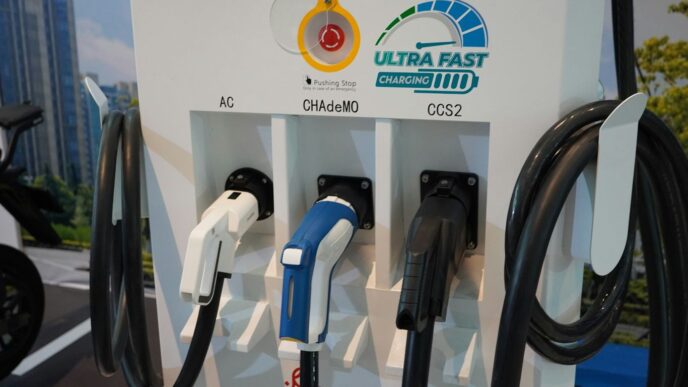
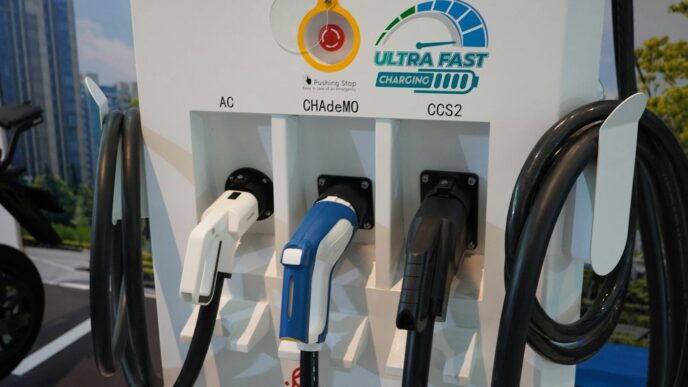
It’s not just about the car and the battery; the charging stations themselves are getting a serious upgrade. The number of DC fast chargers out there is growing all the time. You can find them in more places, making road trips much more doable. Plus, there’s a big push for standardization. You might have noticed that more car companies are starting to use the same type of plug, like the North American Charging Standard (NACS). This means you don’t have to worry as much about whether the charger will work with your car. It’s all about making the experience as simple and convenient as possible, so you can just plug in and go, without a second thought.
Sustainable EV Battery Lifecycles
So, we’ve talked a lot about what goes into EV batteries and how they perform, but what happens when they’re done? It’s a big question, and thankfully, there are some really smart people working on making sure EV batteries don’t just end up as junk.
Direct-to-Battery Recycling for Material Recovery
Instead of just smashing old batteries up and melting everything down, which can be pretty energy-intensive, there’s a move towards more direct recycling. Think of it like carefully taking apart a complex toy to get the best pieces back. This method aims to pull out valuable materials like lithium, cobalt, and nickel in a purer form, ready to be used again without losing too much quality. It’s a bit like getting a second life for the raw stuff. This approach is key to reducing our need to dig up more resources from the earth. It’s a step towards making the whole process much cleaner.
Battery Passports for Enhanced Transparency
Ever wonder where your battery came from or how it’s been treated? That’s where battery passports come in. Imagine a digital ID card for every battery. This passport would track its entire life story: what materials are inside, where they were sourced, how many charge cycles it’s been through, and its overall health. This kind of transparency is a game-changer. It helps ensure ethical sourcing and gives consumers and manufacturers a clear picture of a battery’s history. It also makes it easier to figure out the best way to reuse or recycle a battery when its time in a car is up. This information is vital for assessing the viability of reusing components [3dc6].
Closed-Loop Systems for a Circular Economy
This is where things get really interesting. A closed-loop system means that materials from old EV batteries are used to make new ones. It’s like a continuous cycle. Automakers are looking at ways to take batteries out of retired EVs and process them so the materials can go straight back into manufacturing new battery packs. This creates a circular economy for batteries, meaning less waste and a more stable supply chain for battery materials. It’s a big shift from the old ‘take-make-dispose’ model. The goal is to keep valuable resources in use for as long as possible, making the whole EV ecosystem much more sustainable in the long run.
Future EV Battery Design and Integration
Lightweight and Flexible Battery Designs
We’re starting to see batteries that aren’t just big, heavy blocks anymore. Companies are working on making battery packs lighter, which is a big deal for electric car efficiency and how they handle on the road. Think about it: a lighter car needs less energy to move, meaning you can go further on a single charge. Plus, lighter cars are just more fun to drive, right? Some designs are even exploring flexible battery packs. This could open up all sorts of new possibilities for how car interiors are laid out, maybe allowing for more passenger space or different seating arrangements. It’s all about making EVs more practical and appealing.
Structural Batteries Integrated into Vehicle Chassis
This is where things get really interesting. Instead of just sticking a battery pack under the floor or in the trunk, engineers are looking at building the battery into the car’s structure itself. Imagine the battery pack being a part of the car’s frame, like the chassis. This approach has a couple of big advantages. For starters, it can make the car safer in a crash because the battery is more protected. It also means you don’t need as much separate material just to house the battery, which can save weight and reduce manufacturing waste. It’s a smarter way to build cars, making them stronger and more efficient.
Modular Platforms for Versatile EV Architectures
Car manufacturers are increasingly using what they call ‘modular platforms’ for their electric vehicles. Basically, this means they design a basic chassis and underlying electrical system that can be used for many different types of vehicles. So, one platform could underpin a small city car, a family SUV, or even a pickup truck. This is a huge shift from how cars used to be designed, where each model was pretty much built from the ground up. Using these modular platforms speeds up development, cuts down on costs, and makes it easier to produce a wider range of EVs. It’s a key strategy for getting more electric cars into people’s hands faster and at a better price point.
The Road Ahead
So, it’s pretty clear that the world of EV batteries is moving fast. We’re seeing new types of batteries pop up, like solid-state and sodium-ion, that promise longer drives, quicker charges, and maybe even lower prices. Plus, companies are getting smarter about how they build and recycle these things, which is good for the planet and our wallets. It feels like we’re on the edge of some big changes, making electric cars more practical for everyone. The future looks pretty bright for electric driving, and batteries are right at the center of it all.
Frequently Asked Questions
What are the new types of batteries coming out for electric cars?
Besides the usual lithium-ion batteries, new kinds like lithium-iron-phosphate (LFP) and sodium-ion are becoming popular. LFP batteries are cheaper and last longer, while sodium-ion batteries use common salt ingredients, making them more affordable and better for the environment. We’re also hearing a lot about solid-state batteries, which could make cars go much farther, charge super fast, and be safer.
Are electric car batteries getting cheaper?
Yes, they are! The cost of making battery packs has dropped a lot over the years. This makes electric cars more affordable for more people. New battery materials and better ways of making them are helping to bring prices down even further.
How do companies make EV batteries safer and last longer?
Engineers are adding special parts to battery packs. These include better connectors that don’t lose much energy or get too hot, and smart cooling systems that keep the battery at the right temperature. Also, special computer programs help manage the battery’s performance, predict when it needs care, and stop it from overheating, all of which helps the battery last longer and work better.
What does ‘solid-state battery’ mean, and why is it important?
Solid-state batteries are a new type that uses solid materials instead of liquids to move energy around inside. This makes them safer because they’re less likely to catch fire. They can also store more energy, meaning electric cars can travel much farther on a single charge. Plus, they can charge up really quickly, almost as fast as filling a gas tank!
How are electric car batteries being recycled or reused?
Companies are finding better ways to recycle old EV batteries to get valuable materials back. They’re also creating ‘battery passports,’ which are like digital IDs that track a battery’s history, making it easier to know its condition. Some companies are even using materials from old batteries to build new ones, creating a cycle that’s good for the planet and reduces the need to mine for new resources.
Can electric cars charge without plugging them in?
Yes, wireless charging is being developed! Imagine parking your car, and it starts charging on its own. Some systems use special pads on the floor, and future ideas include charging while driving on certain roads. Also, your electric car could potentially send power back to your house or the electric grid when you’re not using it.