It’s been a busy time for space news lately! From new rockets taking off to scientists figuring out how to grow food way out there, there’s a lot going on. We’ve got updates from the International Space Station, some cool stuff happening with telescopes, and even a look at what might be going on under the ice on other planets. Let’s catch up on the latest news in space travel.
Key Takeaways
- SpaceX and Rocket Lab are keeping busy with satellite launches, sending new tech and internet services into orbit.
- Artemis IV is getting ready for the Moon, with scientists picking the tools astronauts will use when they land.
- New ideas are popping up for how spacecraft can travel, including using AI to make engines better and thinking about antimatter for super long trips.
- Life on the International Space Station continues with crews arriving and departing, and even some personal care items like menstrual cups being tested.
- We’re learning more about our solar system and beyond, from studying old comets to watching for moon impacts and exploring strange physics on icy moons.
Latest News In Space Travel: Rocket Launches And Missions
It’s been a busy week for rocket launches, with companies pushing the boundaries of how quickly they can get payloads into orbit. SpaceX, for instance, managed to launch its Falcon 9 rocket carrying 29 Starlink satellites from California just a short time after its previous mission from the same location. This rapid turnaround really shows how much the launch industry has matured.
We also saw Rocket Lab preparing for a launch on December 8th, sending up a Japanese satellite designed to test new technologies in space. It’s always exciting to see these smaller, more specialized rockets getting their payloads to orbit.
On the human spaceflight front, NASA has been busy selecting the science instruments for the Artemis IV mission. These will be deployed by astronauts on the lunar surface, helping us learn more about the Moon. The selection of these instruments is a big step towards establishing a long-term human presence on the Moon.
Here’s a quick look at some of the recent launch activity:
- SpaceX Falcon 9: Launched 29 Starlink satellites on December 7th.
- Rocket Lab: Scheduled launch on December 8th with a Japanese technology satellite.
These missions are not just about getting satellites up; they’re about building the infrastructure for future exploration and communication. You can keep up with all the upcoming launches on Space.com’s rocket launch blog.
Advancements In Spacecraft Technology And Propulsion
AI Enhances Spacecraft Propulsion Efficiency
Artificial intelligence is starting to play a bigger role in how we design and operate spacecraft. One area where it’s making a difference is in making rocket engines work better. Think of it like a really smart mechanic who can fine-tune an engine for peak performance. AI systems can analyze tons of data from test firings and actual flights to figure out the best ways to control fuel flow, combustion, and thrust. This means rockets can use less fuel for the same job, or go faster and farther. This kind of optimization is key for making space travel more affordable and practical. It’s not just about current rockets, either. Some researchers are looking at how AI could help develop entirely new types of propulsion, like advanced nuclear systems, by managing their complex operations.
Antimatter: The Future of Interstellar Travel
We’ve come a long way with chemical rockets, getting us to the Moon and planets in our solar system. But if we ever want to visit other star systems, we’ll need something way more powerful. That’s where antimatter comes in. It’s basically the opposite of regular matter, and when they meet, they annihilate each other, releasing a huge amount of energy. It’s the most potent energy source we know of. The challenge, of course, is making and storing antimatter safely. It’s incredibly difficult and expensive right now. But scientists are working on it. Imagine a spacecraft powered by antimatter – it could potentially reach speeds close to the speed of light, making interstellar journeys a possibility within a human lifetime, not thousands of years.
New Models Explain Giant Planet Jet Streams
Looking at the giant planets in our solar system, like Jupiter and Saturn, you’ll notice these incredible, fast-moving bands of clouds – the jet streams. For a long time, scientists weren’t totally sure how these massive atmospheric features worked. But recently, new models have been developed that do a much better job of explaining them. These models take into account complex fluid dynamics and the unique conditions found deep within these gas giants. By understanding these jet streams, we learn more about how these planets formed and how they evolve over time. This knowledge isn’t just for our solar system; it helps us understand exoplanets too, giving us clues about planets orbiting other stars.
Human Spaceflight And International Space Station Updates
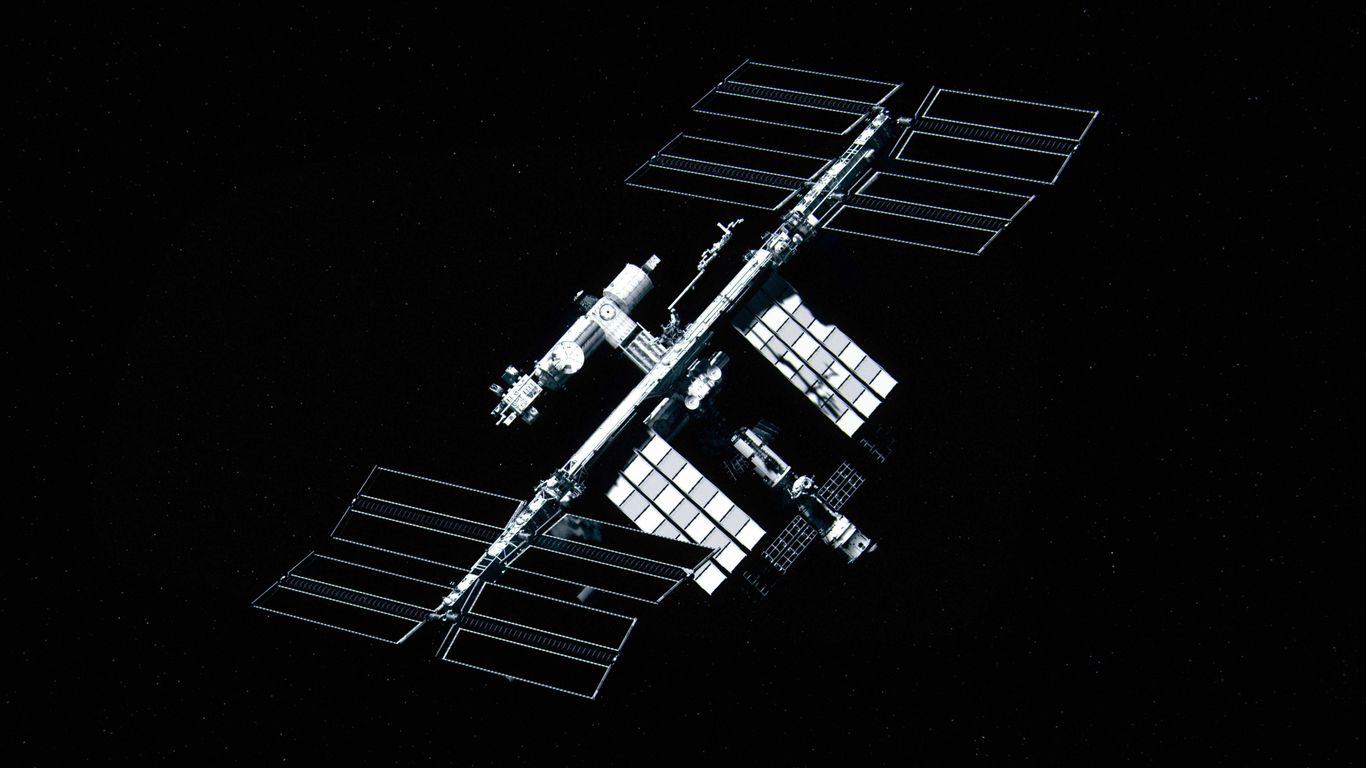
Astronauts Settle In For Expedition 73
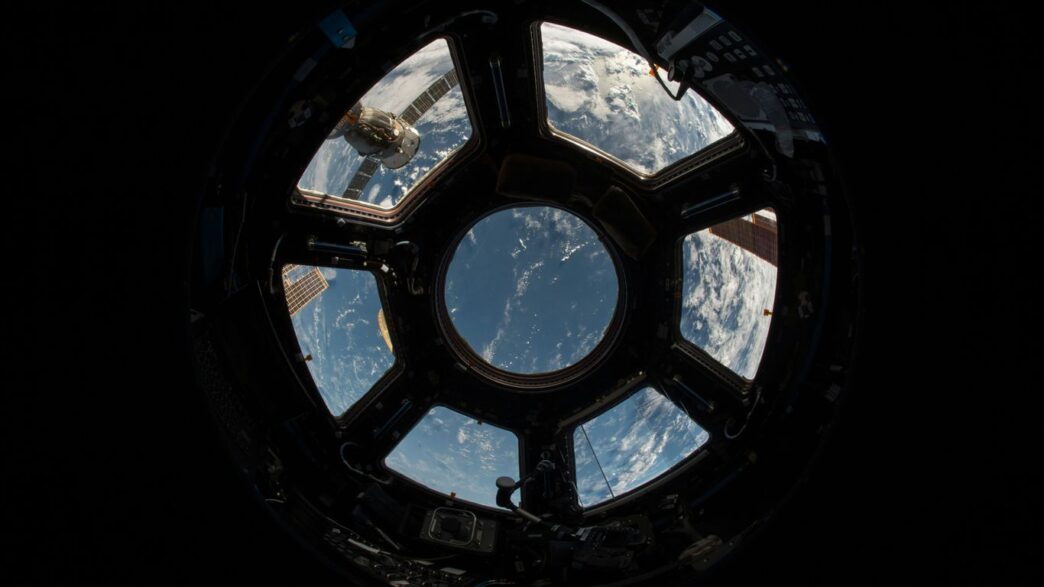
Things are busy up on the International Space Station (ISS) as the current crew, Expedition 73, gets settled. It’s a bit like moving into a new apartment, but with a lot more paperwork and a much better view. Three astronauts recently arrived and are now getting used to life in orbit, learning the ropes and making sure everything is running smoothly. They’re busy with all sorts of science experiments, from studying how our bodies react to being in space to checking on plant growth. It’s not all work, though; they also have to keep the station in tip-top shape, which is a constant job.
Crew Prepares for Departure from the ISS
On the flip side, another group of three astronauts is getting ready to pack their bags and head back to Earth. Their time on the ISS is wrapping up, and they’re making final preparations for their return journey. This usually involves finishing up any last-minute experiments and ensuring all their personal belongings are accounted for. It’s always a bit of a bittersweet moment, leaving the unique environment of space after months away. They’ll be undocking soon, and once they’re clear, the next phase of Expedition 73 officially begins.
Menstrual Cup Successfully Tested in Space
This is a pretty interesting development for female astronauts. For a long time, managing menstruation in space has been a challenge, often requiring astronauts to use hormonal treatments to pause their cycles. However, a recent test has shown that a standard menstrual cup can work just fine in microgravity. This is a big deal because it offers more options and could make long-duration space missions more comfortable and practical for a wider range of crew members. It’s a small step, but it’s one that could have a significant impact on future human space exploration.
Exploring Our Solar System And Beyond
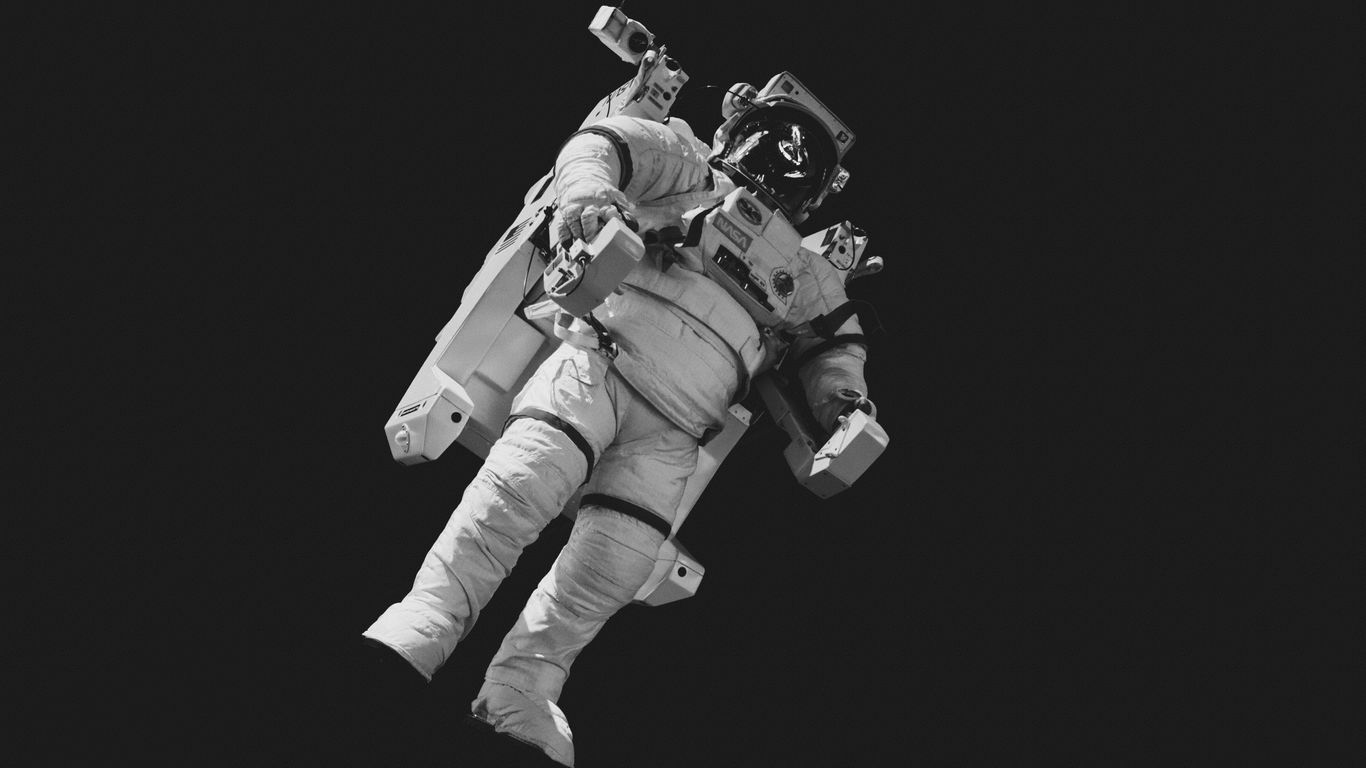
It’s pretty wild how much we’re learning about our cosmic neighborhood and what’s out there. Scientists are looking at everything from old space events to what might be happening under the ice on distant moons.
Hubble Telescope Revisits Interstellar Comet
Remember that comet, 3I/ATLAS, that zipped through our solar system from another star system? Well, astronomers are still keeping tabs on it. Using data from the ExoMars Trace Gas Orbiter, which is orbiting Mars, scientists have gotten a much better fix on where this visitor is headed. It’s amazing how we can use one mission to help track something from way out in interstellar space.
Hong Kong’s Mission to Monitor Lunar Bombardment
Get this: Hong Kong is planning its first-ever lunar orbiter, set to launch in 2028. But it’s not just about mapping rocks. This mission’s main job is to watch the Moon get hit by meteoroids. These impacts happen all the time, and with plans for lunar bases, knowing about this constant bombardment is super important for keeping future astronauts safe. It’s like setting up a cosmic weather report for the Moon.
Strange Physics Beneath Icy Moons
We’re finding out that some of the icy moons in our solar system might be way more interesting than we thought. Take Saturn’s moons, for example. A new study suggests that under their frozen shells, hidden oceans could actually boil, not from heat, but from pressure changes as ice melts from below. This could explain weird geological features on moons like Miranda and Mimas. It makes you wonder what else is going on in these far-off water worlds, and where else we might find life.
Scientific Discoveries And Astronomical Events
This section covers some of the latest happenings and findings from our cosmic neighborhood and beyond. It’s amazing what we’re learning just by looking up!
Ancient Supernova’s Impact on Earth Studied
Scientists are looking back about 10 million years to understand how the remnants of an ancient supernova might have interacted with our own planet. It sounds like something out of a sci-fi movie, but this research could help us figure out how celestial events influence Earth and maybe even other worlds that could support life. It’s a good reminder that we’re all connected to the wider universe, even if we don’t always see it. This kind of study helps us get a better picture of our place in the cosmos.
Geminid Meteor Shower Peaks
Get ready for a dazzling display! The Geminid meteor shower is expected to reach its peak soon, offering a fantastic opportunity to see shooting stars. Unlike many meteor showers caused by comets, the Geminids come from an asteroid called 3200 Phaethon. This means the debris particles are denser, often resulting in brighter meteors. For the best viewing experience, try to find a spot away from city lights and give your eyes about 20 minutes to adjust to the dark. It’s a yearly event, but always worth catching if you can.
Jupiter Shines Near Waning Gibbous Moon
Keep an eye on the night sky for a beautiful celestial pairing: Jupiter will be visible near the waning gibbous moon. This is a great chance to spot the largest planet in our solar system. Even with binoculars, you might be able to see some of its larger moons. Jupiter’s presence in the sky is always a highlight, and seeing it alongside the moon makes for a particularly nice view. Check your local astronomy listings for the best times to observe this event. For more on what’s happening in space, check out Space.com.
Other Interesting Findings:
- Electric Sparks on Mars: The Perseverance rover has detected electrical discharges on Mars for the first time. These are like static shocks generated within Martian dust devils, which could help explain mysteries about methane in the atmosphere and have implications for future human missions.
- Early Galaxies: The James Webb Space Telescope continues to surprise us, recently finding a fully-formed spiral galaxy just 1.5 billion years after the Big Bang. This discovery is making scientists rethink our understanding of the early universe’s timeline.
- Exomoon Hunt: Researchers are developing new methods to confirm the existence of exomoons, which are moons orbiting planets outside our solar system. While none have been definitively confirmed yet, the search is ongoing and exciting.
- Planetary Tectonics: New models have classified six distinct types of planetary tectonic systems, offering a unified theory for the geological evolution of rocky planets like Earth and Venus.
Future Of Space Exploration And Research
So, what’s next for us out there among the stars? It’s a big question, and honestly, the answers are getting more exciting by the day. We’re not just talking about sending more probes to Mars or looking at distant galaxies anymore. We’re talking about actually living and working in space for extended periods, and that means we need to figure out a lot of practical stuff.
One of the biggest hurdles is keeping people healthy and fed. NASA is actually looking for people who can manage "space gardens." Imagine that – growing lettuce and strawberries on the Moon or Mars! It’s not just about having fresh food, though. These plants could help recycle air and water, maybe even produce medicines, and honestly, just having something green to look at could do wonders for morale on those super long trips. They’re aiming to have the first lunar greenhouse running by 2027, which is pretty wild to think about.
Then there’s the whole issue of getting around. Chemical rockets have gotten us pretty far, but for really long journeys, like to other star systems, we’re going to need something way more powerful. Scientists are looking at things like antimatter. It sounds like science fiction, but it’s a real possibility for future interstellar travel because it packs a serious punch in terms of energy.
We’re also learning a lot from studying our own solar system and even our planet’s past. For instance, scientists are using worms to study how the human body reacts to being in space. It might seem a bit odd, but these little guys can give us big clues about how astronauts will cope with long missions. They’re even sending a crew of worms to the International Space Station in 2026 to help with this research.
And it’s not just about the biology. We’re getting a better handle on how planets form and behave. New models are helping us understand the complex jet streams on giant planets like Jupiter and Saturn. Plus, researchers have figured out how to classify different types of planetary "tectonic regimes" – basically, how planets move and change geologically. This helps us understand not just Earth, but other planets too, and maybe even find places that could support life.
Here’s a quick look at some of the key areas driving future exploration:
- Sustainable Living: Developing ways for humans to grow food and manage resources in space for long-duration missions.
- Advanced Propulsion: Researching and developing new technologies, like antimatter, for faster and more efficient travel across vast distances.
- Biological Research: Using model organisms like worms to understand the effects of spaceflight on living beings.
- Planetary Science: Improving our models for understanding planet formation, geology, and atmospheric dynamics, both in our solar system and beyond.
- Resource Utilization: Figuring out how to use local resources on other celestial bodies to support human presence.
Looking Ahead
So, it’s pretty clear space travel is moving fast. We’ve got new rockets launching all the time, and even AI is getting involved in how we build them. Plus, there’s always something cool happening on the International Space Station, and scientists are still figuring out how to live and work out there for longer stretches. It feels like we’re on the edge of some really big things, from going back to the Moon with Artemis to maybe even finding ways to travel further out. It’s an exciting time to keep an eye on the stars.
Frequently Asked Questions
What are the latest exciting things happening in space travel?
Space exploration is buzzing with activity! SpaceX is launching its Starlink satellites, and Rocket Lab sent a Japanese technology satellite into orbit. Plus, NASA is getting ready for the Artemis IV mission by choosing special tools for astronauts to use on the Moon.
How is technology changing space travel?
Scientists are using artificial intelligence to make rocket engines work better, which could even lead to super-fast nuclear-powered rockets someday. We’re also exploring wild ideas like using antimatter for travel between stars, which is much more powerful than current rocket fuel.
What’s new with astronauts and the International Space Station (ISS)?
A new crew has arrived at the ISS and is settling in for their mission. Meanwhile, another group of astronauts is getting ready to head back home to Earth. It’s also interesting to know that a menstrual cup was successfully tested in space, showing how we’re finding solutions for all astronauts.
Are we discovering new things about our solar system and beyond?
The Hubble telescope is taking another look at a comet that came from outside our solar system. Scientists are also planning a mission from Hong Kong to keep an eye on meteoroids hitting the Moon. And there are intriguing ideas about strange physics happening under the icy surfaces of moons in our solar system.
What amazing space discoveries have been made recently?
Researchers are studying the effects of an ancient supernova explosion on Earth, which helps us understand how space events impact our planet. The Geminid meteor shower is expected to put on a great show, and stargazers can look forward to seeing Jupiter shining brightly near the Moon.
What does the future hold for space exploration?
NASA is looking for people to help grow plants on the Moon and Mars, which is crucial for long space trips. Tiny worms are also going to space to help us learn how space affects living things. Plus, scientists are developing new ways to understand how planets form and change over time.