Latest Space News: Missions and Discoveries
Artemis II Mission: Astronauts to Orbit the Moon
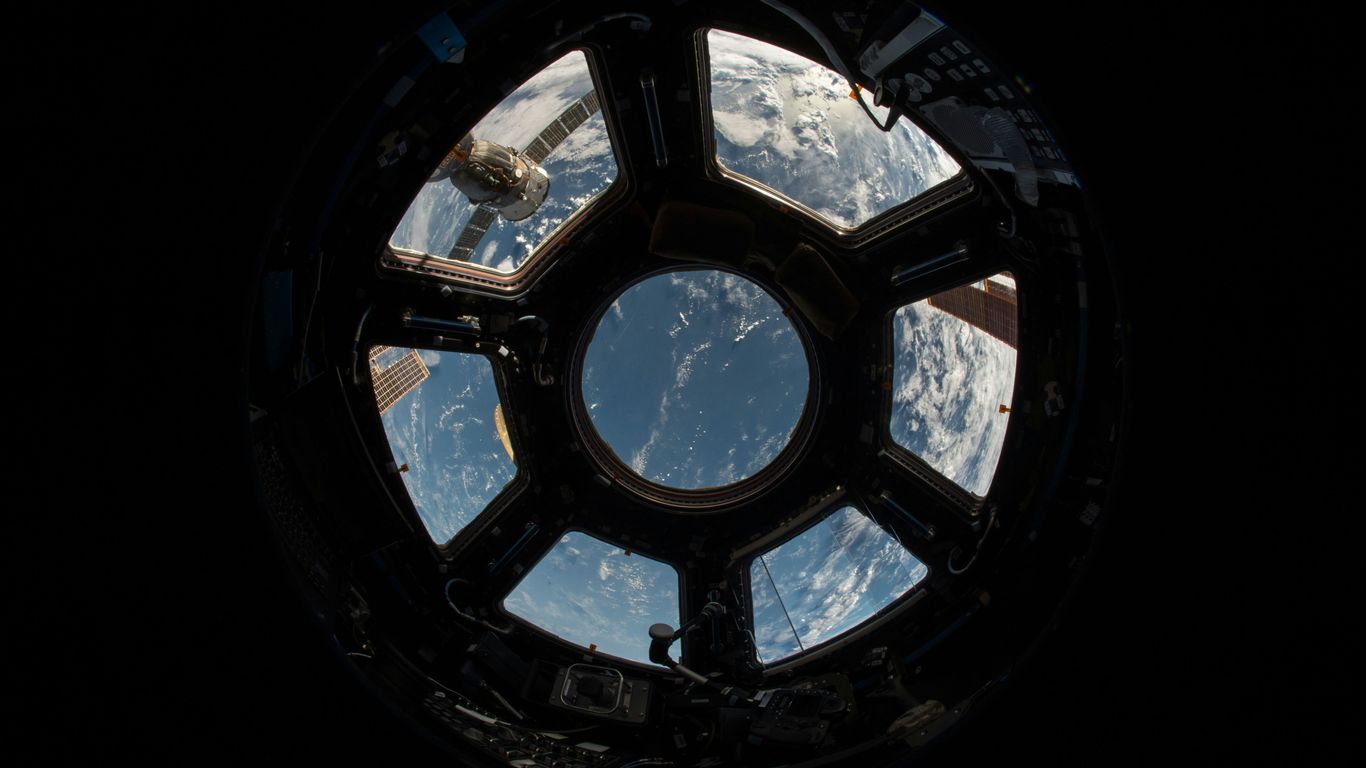
Get ready, space fans! NASA’s Artemis II mission is gearing up to send four astronauts on a journey around the Moon. This isn’t a landing mission, mind you, but it’s a huge step towards getting humans back to the lunar surface. The crew will orbit our celestial neighbor, testing out systems and gathering data. It’s been a long time since humans last orbited the Moon, and this mission is a big deal for future exploration, including potential trips to Mars.
NASA’s Mars Sample Return Mission Faces Uncertainty
Things are a bit up in the air for NASA’s ambitious Mars Sample Return mission. This project aims to bring back rock and soil samples collected by the Perseverance rover from the Red Planet. However, recent budget discussions and reviews have cast a shadow of doubt over its future. The mission is complex and costly, and it seems there are some tough decisions ahead about how and when these precious Martian samples will make their way back to Earth for scientists to study.
Chinese Astronauts Return Amidst Space Debris Concerns
China’s Shenzhou-20 astronauts have safely returned to Earth after a mission to their space station. Their trip home was delayed a bit, reportedly due to concerns about space debris. It sounds like their spacecraft might have had a close call or even a minor impact. This incident highlights a growing problem in orbit: the increasing amount of junk floating around that could pose a risk to active spacecraft and future missions. It’s a reminder that keeping space clean is becoming just as important as exploring it.
Exploring Our Solar System: Planets and Comets
Our solar system is a busy place, and there’s always something new to learn about our planetary neighbors and the icy visitors that pass through. Let’s take a look at what’s been happening.
Interstellar Comet 3I/ATLAS Journey Documented
We’ve been tracking Comet 3I/ATLAS, and its journey through our cosmic backyard is quite the story. This is only the third time we’ve confirmed an object coming from outside our solar system making a visit. It’s a fascinating reminder of how vast space is and how much is out there beyond our usual celestial residents. Scientists have been sharing amazing photos of its progress, giving us a rare glimpse of an object from another star system.
Jupiter Reaches Opposition for 2026
If you’ve been looking up at the night sky recently, you might have noticed a particularly bright ‘star.’ That’s Jupiter, and it’s currently at opposition. This means it’s directly opposite the Sun in our sky, making it appear at its brightest and largest. It’s a great time for anyone with a telescope to get a good look at the King of the Planets. It’ll be high in the sky, making it easy to spot.
New Insights into Mars’ Past Water and Climate
Mars continues to surprise us with clues about its watery past. New research suggests that liquid water might have existed on the Red Planet’s surface, not in vast oceans, but under seasonal ice sheets, much like we see in Antarctica today. This could help explain how liquid water persisted on Mars, even when its climate was different from what we see now. It’s a complex puzzle, and scientists are piecing together more of the story about ancient Martian weather and water.
The Search for Extraterrestrial Life
The big question, "Are we alone?" keeps scientists looking up. It’s a topic that sparks imagination, and lately, some of the most exciting possibilities have been centered around places in our own solar system and the exoplanets we’re finding.
Europa’s Habitability Questioned by New Research
For a long time, Jupiter’s moon Europa has been a top candidate for hosting life. The idea was that its icy shell hides a vast ocean, and maybe, just maybe, there are hydrothermal vents on the seafloor spewing out the chemicals life needs. Think of it like Earth’s deep-sea vents, where all sorts of weird and wonderful creatures thrive without sunlight. However, recent studies are casting some doubt on this. It turns out, the kind of geological activity needed to create those life-sustaining vents might not be happening on Europa. Without those active seafloor faults, the nutrients that life would depend on might just not be there. So, while the ocean is likely still there, the conditions for life as we know it might be missing.
Potential Biosignature on K2-18 b Debunked
Remember that buzz about finding signs of life on exoplanet K2-18 b? It was pretty exciting stuff. Scientists thought they detected a gas called dimethyl sulfide (DMS) in its atmosphere. On Earth, DMS is mostly produced by marine life, so it was a big deal. But, as often happens in science, further analysis has put a damper on that discovery. New research suggests that the initial detection of DMS was likely a false alarm. It’s a good reminder that science is a process of checking and rechecking, and sometimes exciting initial findings don’t hold up under closer scrutiny. It’s not a failure, though; it’s just how we get closer to the truth.
Stellar Habitability in Our Cosmic Neighborhood Assessed
When we talk about finding life elsewhere, we often look at exoplanets. But the star a planet orbits plays a huge role too. Scientists are taking a closer look at stars that are a bit like our own Sun, but also quite different. These are K-type stars. They’re smaller, cooler, and dimmer than our Sun, but they have a really long lifespan – we’re talking tens of billions of years. This long, stable period could give life on orbiting planets plenty of time to develop. Researchers are studying these stars and their planets to figure out just how common potentially habitable worlds might be right in our galactic backyard.
Unveiling the Universe’s Mysteries: Dark Matter and Galaxies
X-Ray Spectra May Reveal Dark Matter in Galaxy Clusters
Scientists are always looking for new ways to spot the universe’s hidden stuff, and dark matter is a big one. It doesn’t give off light, so it’s hard to see directly. But a recent study is suggesting that we might be able to find it by looking at X-rays coming from galaxy clusters. The idea is that if dark matter particles are decaying, they could be producing specific X-ray signals. Researchers are checking the X-ray data from these massive collections of galaxies for these unusual lines. It’s like listening for a faint whisper in a noisy room, but if they find it, it could tell us a lot about what dark matter is made of.
New Study Suggests Dark Matter and Neutrinos Interact
Here’s another interesting tidbit: some new research hints that dark matter and neutrinos might actually be talking to each other, in a way. Neutrinos are tiny particles that zip around pretty much unimpeded, and dark matter is that mysterious substance that makes up most of the universe’s mass. If they’re interacting, even in a small way, it could give us a new angle to study both. It’s a bit like finding out two people you thought were strangers actually know each other – it changes how you see them both. This could open up a whole new avenue for understanding the cosmos.
Earliest Barred Spiral Galaxy Observed
Talk about looking back in time! Astronomers have spotted a barred spiral galaxy that existed just a couple of billion years after the Big Bang. This is pretty significant because barred spiral galaxies, like our own Milky Way, are quite common now. Finding one so early in the universe’s history suggests that these structures formed much sooner than we previously thought. It’s like finding an ancient artifact that changes our timeline of history. This discovery helps us piece together how galaxies evolved from the early universe into the complex structures we see today.
Milky Way’s Black Hole Activity Revealed
We often think of the supermassive black hole at the center of our Milky Way, Sagittarius A*, as being pretty quiet. It’s not actively gobbling up tons of material like some black holes in distant galaxies. However, new observations from the XRISM X-ray telescope show that it wasn’t always so calm. It seems Sagittarius A* had at least one significant flare-up relatively recently in cosmic terms. This tells us that even seemingly quiet black holes can have periods of intense activity, and it gives us more clues about the behavior of these extreme objects in our own galactic backyard.
Cosmic Phenomena and Celestial Events
Get ready for some amazing sights in the sky! This weekend, the Geminid meteor shower is expected to put on a show. If the skies are clear, you might see up to 120 meteors per hour. It’s one of the most reliable meteor showers we get each year, so try to catch it if you can.
And speaking of celestial events, the last supermoon of the year is also on its way. A supermoon happens when the Moon is full and closest to Earth in its orbit. It makes the Moon appear a bit bigger and brighter than usual. Keep an eye out for that one!
We’ve also got some cool news about things happening further out. NASA recently shared some new pictures of the interstellar comet 3I/ATLAS. This comet is pretty special because it’s only the third object ever confirmed to have come from outside our solar system. It’s on a long journey through our cosmic neighborhood, and scientists are documenting its path.
On a planetary note, Jupiter is getting ready for its opposition in 2026. This is when Jupiter will be directly opposite the Sun in the sky from Earth’s perspective. It means the planet will be at its brightest and largest in our night sky, making it a great time for stargazing.
Finally, NASA has released some incredible video footage of the remnant left behind by Kepler’s Supernova. It’s a look at the aftermath of a star’s explosive death, showing the beautiful and powerful forces at play in the universe.
The Formation and Evolution of Planets
It’s pretty wild to think about how planets actually come to be, right? We’re talking about everything from the rocky worlds in our own solar system to the super-Earths we’re finding around other stars. Scientists are piecing together this cosmic puzzle, and it’s fascinating stuff.
Super-Earths’ Formation Process Detailed
So, these "super-Earths" – planets bigger than Earth but smaller than Neptune – have a particularly interesting origin story. New research suggests they start out as these really big, puffy things with low densities. Think of them like giant, airy cotton balls in space. But over millions of years, their atmospheres get stripped away, likely by the intense radiation from their host stars. What’s left are the denser, rocky cores that we detect orbiting close to their stars. It’s a process of shedding the outer layers to reveal the solid planet within.
Understanding How Common Planets Are Created
Figuring out how planets form is a big deal, and astronomers are looking at young star systems to get clues. By observing systems at different stages of development, they can see the steps involved. For example, a system just 30 million years old has been found with a bunch of "cotton candy" planets, showing some of the earliest stages of planet formation we’ve ever witnessed. It’s like watching a cosmic nursery in action.
K-Type Stars and Habitable Zones Studied
When we talk about planets that might host life, we often think about stars like our Sun. But there’s a lot of interest in K-type stars too. These stars are smaller, cooler, and dimmer than our Sun, but they have a really long lifespan – many tens of billions of years. This long-term stability is a big plus for any potential life trying to get a foothold. New surveys are looking at these stars to better understand their habitable zones and how likely they are to support life over vast stretches of time.
Here’s a quick look at what makes K-type stars interesting for habitability:
- Long Lifespans: They stay stable for incredibly long periods, giving life ample time to develop.
- Habitable Zone: While dimmer, their habitable zones are closer in, meaning planets there receive enough warmth.
- Less Intense Radiation: Compared to more active stars, K-types can offer a more gentle environment, potentially reducing atmospheric stripping.
Fundamental Physics and the Universe
Is the Universe Made of Math?
This question has been rattling around in physicists’ heads for ages. It’s like asking if the code behind a video game is the game itself. Some thinkers, like Roger Penrose, have even come up with ideas like the "Triangle of Reality," which sounds pretty out there, honestly. The basic idea is that maybe the physical world we experience is just a reflection of a deeper mathematical structure. It’s a wild thought, and it makes you wonder if all the complex stuff we see – stars, planets, us – is just a really elaborate equation playing out. It’s not a new idea, either; people have been pondering this for centuries. It’s hard to wrap your head around, but it’s a fascinating way to look at everything.
Does Free Will Exist in a Chaotic Universe?
This is a mind-bender. Most of physics seems to be built on the idea that everything happens for a reason, a kind of cause-and-effect chain. If that’s true, then where does free will fit in? It’s like trying to decide what to have for breakfast when, in reality, your choice was already set in motion by events long before you were even born. Some scientists are exploring this by looking at chaos theory. In chaotic systems, tiny changes at the start can lead to huge, unpredictable differences later on. So, maybe our choices aren’t predetermined in a simple way, but they’re also not entirely free. It’s a real head-scratcher, and honestly, I’m not sure anyone has a solid answer yet.
The Concept of Emergence in Physics
Emergence is another concept that pops up when we talk about free will and the universe. Think about it like this: a single water molecule isn’t wet, right? But put a bunch of them together, and suddenly you have wetness. That wetness is an emergent property – something new that appears when simpler things combine. In physics, this means that complex behaviors or properties can arise from the interactions of simpler components, even if those simpler components don’t have those properties themselves. It’s like how consciousness might emerge from the complex network of neurons in our brains. This idea helps explain how order and complexity can arise in the universe without needing a direct, step-by-step instruction manual for everything. It suggests that the whole can be more than just the sum of its parts.
Wrapping Up
So, that’s a quick look at what’s been going on out there in space. From new galaxies spotted to questions about life on other planets, it’s always something, isn’t it? The universe is a pretty big place, and we’re still figuring out so much of it. It’s pretty cool to think about all the discoveries still waiting for us. Keep looking up, I guess!