Thinking about getting into the internet of things course scene for 2026? It’s a big field, and honestly, it can feel a bit overwhelming at first. You’ve got devices talking to each other, data flying everywhere, and all sorts of tech making things ‘smart’. This guide is here to break down what you really need to know for your internet of things course, covering the basics and pointing you toward what’s next. We’ll look at what makes these connected things tick, the skills you’ll want to pick up, and how to actually use this stuff. Let’s get you ready for what’s coming.
Key Takeaways
- Understand the basic building blocks of the internet of things ecosystem, including devices, communication, and data.
- Learn about the core skills needed for an internet of things course, such as programming embedded systems and analyzing data.
- Explore advanced topics like cloud and edge computing for managing and processing IoT information.
- Get hands-on with practical applications, from connecting sensors to deploying full IoT solutions.
- Discover how major cloud platforms like AWS and Azure fit into your internet of things course journey.
Foundational Internet of Things Course Concepts
So, you’re looking to get a handle on the Internet of Things, huh? It’s a pretty big topic, but it all starts with understanding the basics. Think of IoT as a giant network, but instead of just computers and phones, it’s a whole bunch of everyday objects connected and talking to each other. This connection lets them share information and, honestly, makes them a lot smarter.
Understanding the Internet of Things Ecosystem
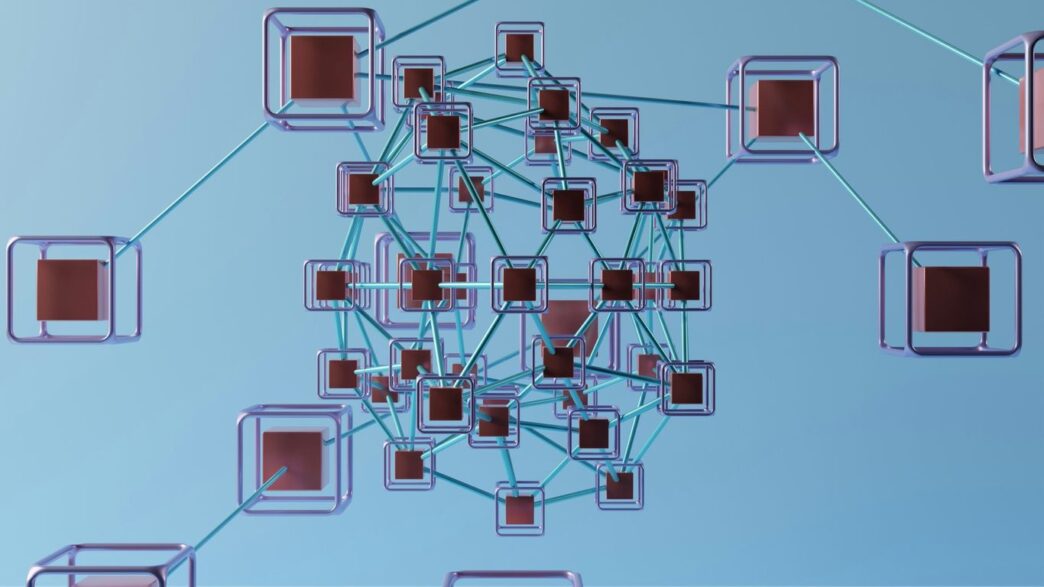
At its core, the IoT ecosystem is about devices, connectivity, data, and applications. You’ve got your physical devices, like smart thermostats or fitness trackers, embedded with sensors and software. These devices need a way to communicate, which is where connectivity comes in – think Wi-Fi, Bluetooth, or cellular networks. All the information these devices collect gets sent somewhere, usually to the cloud, for processing and analysis. Finally, applications are what let us interact with this data, whether it’s an app on your phone to control your lights or a dashboard showing factory performance.
- Devices: The physical objects with sensors and software.
- Connectivity: How devices talk to each other and the internet.
- Data Processing: Where and how the collected information is analyzed.
- User Interface: How humans interact with the IoT system.
Key Components of IoT Devices
When you break down an IoT device, you’ll usually find a few main parts. There’s the sensor, which is like the device’s eyes and ears, gathering information from its surroundings – temperature, motion, light, you name it. Then there’s the microcontroller or microprocessor, which is the device’s brain, processing the sensor data and making decisions. You also need a way for it to communicate, so there’s a communication module (like a Wi-Fi chip). And of course, it needs power, usually from a battery or a power adapter.
| Component | Function |
|---|---|
| Sensor | Gathers data from the environment |
| Microcontroller | Processes data and controls device functions |
| Communication Module | Enables data transmission |
| Power Source | Provides energy for operation |
Exploring IoT Communication Protocols
How do all these devices actually talk to each other? That’s where communication protocols come in. They’re like the languages devices use to exchange information. For short-range stuff, you might see Bluetooth or Zigbee. For longer distances or when you need lower power, protocols like LoRaWAN are used. Then there are the internet staples like Wi-Fi and cellular. For sending messages between devices and servers, lightweight protocols like MQTT and CoAP are super popular because they don’t hog resources. Understanding these different ways devices communicate is pretty important for building any IoT system.
Essential Skills for Your Internet of Things Course
So, you’re looking to get into the Internet of Things (IoT) world? That’s cool. But it’s not just about plugging things in and hoping for the best. You’ll need some solid skills to really make things work. Think of it like learning to cook – you can’t just throw ingredients together and expect a gourmet meal. You need to know what you’re doing.
Embedded Systems Programming for IoT
This is where the magic happens, at least the hardware magic. Embedded systems programming is basically telling tiny computers, often called microcontrollers, what to do. These are the brains inside your smart thermostat or that connected coffee maker. You’ll be writing code that directly interacts with the physical world – reading sensors, controlling motors, blinking LEDs. It’s not like writing a standard app; you have to be really mindful of how much power you’re using and how fast your code runs. Getting this right is key to making your IoT devices actually function.
Here’s a quick rundown of what you’ll likely encounter:
- Microcontrollers and Microprocessors: Understanding the difference and when to use which. Think of microcontrollers as the all-in-one solution for simpler tasks, while microprocessors are more powerful and suited for complex jobs.
- Sensor Integration: Learning how to connect different types of sensors (temperature, motion, light) to your microcontroller and pull data from them. This is how your device understands its surroundings.
- Low-Level Programming: Often involves languages like C or C++ to get the most performance and control over the hardware.
Data Analytics and Machine Learning in IoT
Okay, so your devices are collecting data. Now what? That’s where data analytics and machine learning come in. It’s about making sense of all that information. You don’t want to just have a giant pile of numbers; you want to find patterns, predict things, and make smart decisions. For example, analyzing energy usage data from smart meters could help predict peak demand times. Or, machine learning could help a security camera identify unusual activity. It’s about turning raw data into useful insights.
Cybersecurity for Connected Devices
This one’s a biggie. When you connect devices to the internet, you open them up to potential threats. Think about it: if someone hacks into your smart home system, they could potentially control your locks or cameras. So, learning about cybersecurity is super important. You need to know how to protect devices from unauthorized access, how to keep data private, and how to secure the communication channels between devices. It’s not just an afterthought; it needs to be built in from the start.
Advanced Internet of Things Course Specializations
So, you’ve got a handle on the basics of IoT, huh? That’s great. But to really make a mark in this field, you’ll want to look into some more specialized areas. These advanced topics are where the real innovation happens and where you can really set yourself apart. Think of them as the next level, the deep dive into making IoT systems truly powerful and efficient.
Cloud Computing for IoT Solutions
This is all about how you manage and process the massive amounts of data that IoT devices churn out. Cloud platforms provide the infrastructure to store, analyze, and act on this data. You’ll learn how to connect your devices to cloud services, set up data pipelines, and use cloud-based tools for analytics. It’s like building a central brain for all your connected gadgets. Courses here often cover how to scale your solutions, manage costs, and ensure your data is secure in the cloud. You’ll get hands-on experience with services that help you manage device fleets and process information in near real-time. Learning about cloud integration is key for building robust IoT systems.
Edge Computing for Real-Time Processing
Sometimes, sending all your data to the cloud just isn’t fast enough. That’s where edge computing comes in. Instead of relying solely on a distant data center, you process data closer to where it’s generated – right on the device or a local gateway. This is super important for applications where split-second decisions matter, like in autonomous vehicles or industrial automation. You’ll explore how to deploy processing power at the ‘edge’ of the network, reducing latency and bandwidth usage. It’s a bit like giving your devices more local intelligence.
IoT Platform Management and Deployment
Once you’ve built your IoT solution, you need to manage it. This specialization focuses on the practicalities of deploying and maintaining IoT platforms. You’ll learn about device provisioning, monitoring device health, updating firmware remotely, and managing user access. It covers the entire lifecycle of an IoT deployment, from getting devices online to keeping them running smoothly over time. Think of it as becoming the conductor of a large, complex orchestra of connected devices. Key areas include:
- Device Onboarding: Getting new devices securely connected to your platform.
- Monitoring and Diagnostics: Keeping an eye on device performance and troubleshooting issues.
- Firmware Updates: Pushing out software updates to devices remotely.
- Security Management: Ensuring the ongoing security of your deployed devices and data.
- Scalability Planning: Preparing your platform to handle more devices as your project grows.
Practical Application in Internet of Things Courses
So, you’ve been learning about the theory behind IoT, the fancy protocols, and the hardware. That’s great, but how do you actually do anything with it? This section is all about getting your hands dirty and making things work in the real world. It’s where the concepts you’ve studied start to come alive.
Sensor Integration and Data Acquisition
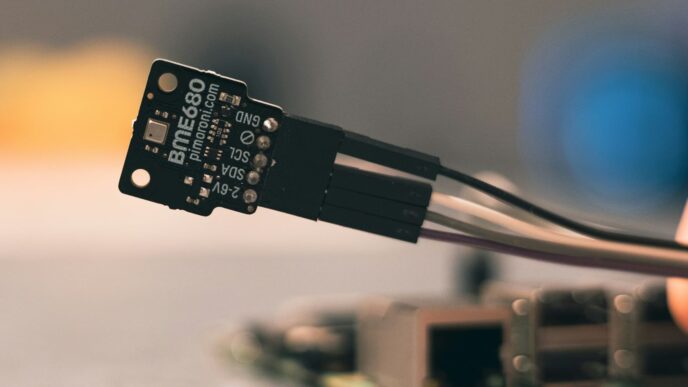
Think of sensors as the eyes and ears of your IoT system. They’re the bits that actually measure things – temperature, light, motion, you name it. Learning how to connect these sensors to your microcontroller or processing unit is a big step. It’s not just about plugging them in; you need to understand how they send data and what format that data is in. This often involves working with different communication interfaces like I2C or SPI.
Here’s a quick look at common sensor types and what they do:
- Temperature Sensors: Measure ambient or object temperature. Useful for everything from weather stations to industrial monitoring.
- Humidity Sensors: Detect the amount of water vapor in the air. Great for agriculture or climate control systems.
- Motion Sensors (PIR): Detect movement using infrared radiation. Common in security systems and automated lighting.
- GPS Modules: Provide location data. Essential for tracking assets or creating location-aware applications.
Getting this data flowing correctly is the first hurdle. You’ll learn to write code that reads these sensor values and prepares them for further processing or transmission. It’s a bit like learning a new language, but instead of words, you’re dealing with voltage levels and data packets.
Real-Time Operating Systems for IoT
Many IoT devices don’t run on a full-blown operating system like your laptop. They often use Real-Time Operating Systems (RTOS). Why? Because they need to respond to events instantly. Imagine a self-driving car; it can’t afford to wait for a regular OS to get around to processing a stop sign. An RTOS guarantees that critical tasks are handled within a specific timeframe. Learning about RTOS involves understanding concepts like tasks, scheduling, and inter-task communication. It’s about making sure your device does what it needs to do, exactly when it needs to do it. This is a big part of building reliable IoT applications.
Developing and Deploying IoT Solutions
This is where it all comes together. You’ve got your sensors, you’ve got your processing, and you’ve got your communication. Now, you need to build a complete solution and get it out there. This involves several stages:
- Prototyping: Building a working model to test your ideas. This often involves breadboards, development kits, and lots of trial and error.
- Software Development: Writing the firmware for your devices and the backend software that collects and processes the data.
- Testing: Making sure everything works as expected, under various conditions.
- Deployment: Getting your solution installed and running in its intended environment.
- Maintenance: Keeping the system running smoothly and updating it as needed.
It’s a cycle, and understanding each part helps you build better, more robust IoT systems. You’ll learn about the tools and methodologies used to take a project from a simple idea to a functional product.
Leveraging Cloud Platforms in Your Internet of Things Course

So, you’re diving into IoT, and you’ve probably heard a lot about the cloud. It’s not just a buzzword; it’s where a lot of the heavy lifting happens for connected devices. Think of it as the central hub that collects, stores, and processes all the data your IoT gadgets are sending your way. Without it, managing a bunch of devices and making sense of their information would be a real headache.
Amazon Web Services for IoT
Amazon Web Services, or AWS, has a whole suite of tools specifically for IoT. It’s pretty popular, and for good reason. You’ll learn how to connect your devices securely, manage them, and then analyze the data they produce. They have services like AWS IoT Core, which acts as a gateway for your devices to talk to the cloud. You’ll also get hands-on with services for storing and processing that data, like S3 for storage and Lambda for running code without thinking about servers.
Microsoft Azure IoT Hub Integration
Microsoft’s Azure is another big player in the cloud space for IoT. Azure IoT Hub is their main offering, and it’s designed to connect, monitor, and manage millions of IoT devices. It handles device-to-cloud and cloud-to-device communication, which is pretty neat. You’ll likely explore how to set up device twins, which are virtual representations of your physical devices, and how to use Azure’s analytics tools to get insights from your data. It’s all about making that data work for you.
Cloud Architecture and Data Management
Beyond specific platforms, understanding cloud architecture is key. This means knowing how different cloud services fit together and how your IoT devices interact with them. You’ll look at things like:
- Service Models: What’s the difference between IaaS (Infrastructure as a Service), PaaS (Platform as a Service), and SaaS (Software as a Service) and when you’d use each for an IoT project.
- Data Storage: How to store the massive amounts of data coming from devices. This could be in databases, data lakes, or other specialized storage solutions.
- Data Processing: Techniques for cleaning, transforming, and analyzing that data so you can actually use it to make decisions or trigger actions.
- Scalability: How cloud platforms allow your IoT solution to grow as you add more devices or handle more data without breaking a sweat. This ability to scale is a major reason cloud platforms are so central to modern IoT.
Future-Proofing Your Internet of Things Course Journey
So, you’ve been learning all about IoT, from the basic building blocks to how to connect everything. That’s great! But the tech world moves fast, right? What’s cutting-edge today might be old news tomorrow. To really make your IoT knowledge last, you need to look at what’s coming next. Thinking about AI and how devices understand us is a big part of that.
Artificial Intelligence and Computer Vision in IoT
Artificial Intelligence (AI) is already changing how IoT devices work. Think about smart cameras that can tell the difference between a person and a car, or systems that can predict when a machine might break down before it actually happens. That’s AI in action. Computer Vision, a part of AI, lets devices ‘see’ and interpret images or videos. This is huge for things like security systems, self-driving cars, and even quality control in factories. Learning how AI and Computer Vision work with IoT data can open up a lot of new possibilities.
Natural Language Processing for Smart Devices
Ever talked to your smart speaker? That’s Natural Language Processing (NLP) at work. NLP allows machines to understand, interpret, and generate human language. For IoT, this means devices can become more interactive and user-friendly. Imagine a smart home system that understands complex commands or industrial equipment that can report its status in plain English. Courses focusing on NLP will teach you how to build these kinds of conversational interfaces, making IoT technology more accessible to everyone.
Project Management for IoT Initiatives
Building and managing IoT projects isn’t just about the tech itself. You’ve got hardware, software, data, and often a whole team of people involved. That’s where project management comes in. Knowing how to plan, organize, and keep an IoT project on track is super important. This includes things like:
- Agile Methodologies: Using flexible approaches like Scrum or Kanban to manage tasks and adapt to changes quickly.
- Risk Management: Figuring out what could go wrong and having a plan to deal with it.
- Resource Allocation: Making sure the right people and tools are available when needed.
Good project management means your IoT ideas actually get built and work the way they’re supposed to, without a ton of delays or going over budget. It’s a skill that applies to almost any tech field, but it’s especially useful when dealing with the complex nature of IoT.
Wrapping Up Your IoT Journey
So, we’ve covered a lot of ground, right? From understanding what the Internet of Things actually is to figuring out what skills you’ll need to get ahead in 2026. It’s a big field, and honestly, it can feel a little overwhelming at first. But remember, you don’t have to learn everything at once. Pick a starting point, maybe one of those beginner courses we talked about, and just get going. The tech world moves fast, so the best thing you can do is keep learning and stay curious. You’ve got this!
Frequently Asked Questions
What exactly is the Internet of Things?
Think of the Internet of Things, or IoT, as a giant network where everyday objects can talk to each other and share information over the internet. It’s like giving a voice to things like your fridge, your watch, or even a factory machine, allowing them to send and receive messages without you needing to do anything.
Why is learning about IoT important for my future?
Learning about IoT is super important because it’s changing how we live and work! It helps make things smarter, more efficient, and can even create new kinds of jobs. By understanding IoT, you’ll be ready for the future of technology, which is all about connected devices.
What kind of jobs can I get if I know about IoT?
If you learn about IoT, you can get some really cool jobs! You could become an IoT developer who builds these connected devices, a data analyst who figures out what all the information means, or even a security expert who keeps everything safe. There are many exciting roles opening up.
Do I need to be a super-genius programmer to learn IoT?
Not at all! While programming is part of it, IoT courses start with the basics. You’ll learn about how devices connect, how they share information, and how to keep them secure. Many courses are designed for beginners, so you can learn step-by-step.
Can I learn about IoT without spending a lot of money?
Yes, you can! Many great courses and learning materials about IoT are available for free or through free trials. You can often get started with basic concepts and even build simple projects without paying anything.
What are some of the main things I’ll learn in an IoT course?
In an IoT course, you’ll learn how devices talk to each other using special internet rules, how to collect information from sensors, how to store and understand that information using computers, and how to make sure everything is safe from hackers. You’ll also learn about using big cloud services to manage it all.