Building a PC can seem pretty intimidating, right? All those parts, the wires, making sure everything fits. It’s easy to get lost before you even start. But what if you could practice without spending a dime or breaking anything? That’s where a pc build simulator comes in. Think of it as a digital sandbox for your dream machine. You get to pick parts, put them together, and see how it all works, all from your computer screen. It’s a great way to learn the ropes and get a feel for the process before you commit to buying actual hardware. This guide will walk you through using a pc build simulator to get your next build sorted.
Key Takeaways
- A pc build simulator lets you pick virtual parts like CPUs and graphics cards to plan your computer.
- You can practice putting components together, checking for compatibility, and managing cables in the simulator.
- Learn how to cool your PC and test its speed using the simulator’s tools.
- Explore fancy features like custom water cooling and RGB lights in the virtual environment.
- Use your simulator experience to make better choices and save money when building a real PC.
Choosing Your Virtual Components

Alright, let’s get down to business with the heart of our virtual PC build: picking the parts. This is where the fun really starts, and honestly, it’s like building with digital LEGOs, but way more powerful. You get to play around with all the latest tech without actually spending a fortune or worrying about breaking something.
Selecting The Right CPU For Your Build
The CPU, or central processing unit, is basically the brain of your computer. For gaming, you want something that can keep up with demanding titles. For everyday tasks or work, you might prioritize efficiency or more cores for multitasking. Think about what you’ll actually be doing with this machine. Are you mostly gaming, or will you be editing videos or running complex simulations? The choices can seem overwhelming, with different brands and series, but the simulator helps you see how they stack up.
- Core Count: More cores generally mean better multitasking.
- Clock Speed: Higher clock speeds can mean faster performance in single-threaded tasks, like many games.
- Integrated Graphics: Some CPUs have built-in graphics, which can be a lifesaver if you’re not using a dedicated graphics card right away.
Graphics Card Options For Gaming Performance
This is probably the most exciting part for gamers. The graphics card, or GPU, is what makes your games look good and run smoothly. You’ll want to match your GPU to your monitor’s resolution and refresh rate to get the best experience. A super-powerful GPU paired with a basic monitor is a bit of a waste, and vice-versa. The simulator lets you see how different cards perform in various scenarios. You can check out benchmarks and see which cards fit your budget and performance goals. It’s a good idea to check out resources like Pangoly’s custom PC builder to get a feel for what’s out there.
| GPU Model | VRAM | Target Resolution | Typical Price Range |
|---|---|---|---|
| RTX 4070 Super | 12GB | 1440p | $600 – $700 |
| RX 7800 XT | 16GB | 1440p | $500 – $550 |
| RTX 4060 Ti | 8GB | 1080p | $400 – $450 |
Memory And Storage Considerations
RAM, or random access memory, is your computer’s short-term memory. More RAM means your computer can handle more tasks at once without slowing down. For most gaming rigs these days, 16GB is a good starting point, but 32GB is becoming the sweet spot for future-proofing and heavy multitasking. Storage is where your operating system, games, and files live. You’ve got two main types to think about:
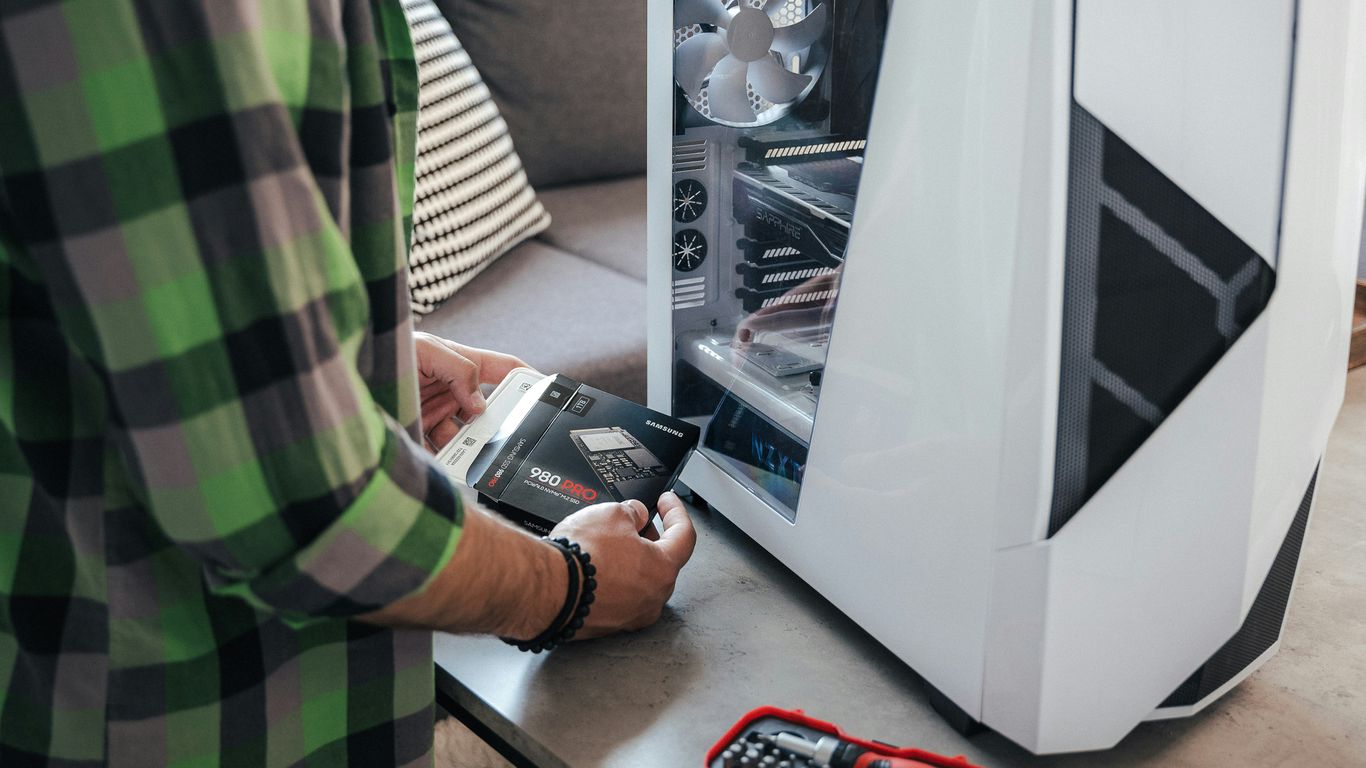
- SSDs (Solid State Drives): These are super fast and make your computer boot up and load games in a flash. NVMe SSDs are even faster than standard SATA SSDs.
- HDDs (Hard Disk Drives): These are slower but offer much more storage space for the money, making them good for storing large media files or less-played games.
Most people go for a combination: a fast SSD for the operating system and frequently used programs, and a larger HDD for everything else. The simulator will show you how much RAM your chosen components can support and help you plan your storage setup.
Assembling Your PC Build Simulator Project
Alright, so you’ve picked out all your virtual parts. Now comes the fun part: putting it all together in the simulator. It’s not quite like wrestling with actual hardware, but it still takes some thought. Getting the motherboard right is your first big step, because everything else has to connect to it.
Motherboard Compatibility Checks
This is where the simulator really shines. You can’t just shove any CPU into any motherboard, right? The simulator will usually flag these issues, but it’s good to know what to look for yourself.
- CPU Socket Type: Make sure the CPU socket on the motherboard (like LGA 1700 or AM5) matches the socket type of your chosen processor. They have to be the same.
- Chipset Compatibility: Different chipsets on motherboards are designed for specific generations of CPUs. The simulator will often show a compatibility warning if they don’t match.
- RAM Slots and Speed: Check that the motherboard supports the type of RAM you picked (DDR4 or DDR5) and its speed. Some boards have more RAM slots than others, too.
Installing Components Virtually
Once your motherboard is set, you start slotting everything else in. It’s a bit like a puzzle, but with more wires.
- CPU Installation: This is usually the first component you place onto the motherboard. Be careful with the pins!
- RAM Modules: They click into the slots. Make sure they’re seated properly.
- Graphics Card: This goes into the long PCIe slot. It’s often the biggest component.
- Storage Drives: SSDs and HDDs connect to specific ports and power connectors.
- Power Supply Unit (PSU): This provides juice to everything. You’ll connect its cables to the motherboard, GPU, and drives.
Cable Management Techniques
Even in a simulator, messy cables can look bad and, in real life, can actually mess with airflow. The simulator lets you practice routing cables neatly.
- Use Tie-Down Points: Most virtual cases have spots to zip-tie or velcro cables. Use them!
- Route Behind the Motherboard Tray: This is a common trick. Most cases have space behind the motherboard for cables. It makes the main view look super clean.
- Bundle Similar Cables: Grouping SATA cables or fan cables together can make things tidier. The simulator might even have tools for this.
It’s all about making it look good and, if this were a real build, helping with airflow. The simulator gives you a low-stakes way to get this right.
Optimizing Performance In The Simulator
So you’ve got your virtual rig all put together. Looks pretty sweet, right? But just slapping parts together in the simulator isn’t the whole story. To really get the most out of it, and to make sure your actual build runs like a dream, you gotta tweak things. It’s like tuning up a car – you want it to perform its best.
Understanding Thermal Management
Heat is the enemy of computer parts. When things get too hot, they slow down to protect themselves, or worse, they can get damaged. In the simulator, you can see how well your chosen cooling solutions are doing their job. Are you using the stock cooler that came with the CPU, or did you spring for a beefier air cooler or even a liquid cooling setup? The simulator will show you the temperatures under load. Keeping your CPU and GPU temps below 80°C is generally a good target.
Here’s a quick look at common cooling types:
- Air Coolers: These use a heatsink and fan to dissipate heat. They’re usually simpler and cheaper.
- All-In-One (AIO) Liquid Coolers: These have a pump, radiator, and fans. They can offer better cooling but are more complex.
- Custom Water Cooling: This is the most involved, with separate blocks, pumps, radiators, and tubing. It offers the best performance but requires a lot of setup and maintenance.
Benchmarking Your Virtual System
How do you know if your build is actually fast? You gotta test it! Benchmarking tools are your best friend here. They run demanding tasks and give you scores or frame rates. This helps you compare your virtual build against others and see if you’re getting the performance you paid for (virtually, of course).
Some popular benchmarks you might find in simulators include:
- CPU-intensive tests: These push your processor to its limits.
- GPU-intensive tests: Great for seeing how your graphics card handles games and demanding visual tasks.
- Combined tests: These simulate real-world scenarios where both CPU and GPU are working hard.
Running these tests before and after making changes helps you see what actually makes a difference. It’s a good way to get your virtual PC gaming performance up to par. You can find more tips on optimizing gaming performance here.
Troubleshooting Common Issues
Even in a simulator, things can go wrong. Maybe your PC is running slower than expected, or perhaps you’re getting weird errors. The simulator often has built-in diagnostic tools or error logs that can point you in the right direction. Common problems include:
- Component conflicts: Sometimes, parts just don’t play nice together, even if they’re technically compatible.
- Overheating: As we talked about, this is a big one. Check your fan speeds and cooler mounting.
- Driver issues: While less common in simulators, sometimes software glitches can mimic real-world driver problems.
Don’t get discouraged if you hit a snag. Figuring out why something isn’t working is part of the learning process. The simulator is a safe space to make mistakes and learn how to fix them before you spend real money.
Exploring Advanced PC Build Simulator Features
So, you’ve got the basics down, huh? That’s great. But the PC Build Simulator doesn’t stop there. It’s got some pretty cool advanced stuff that lets you really go wild with your virtual machine. Think of it as the difference between building a basic sedan and a souped-up race car.
Custom Water Cooling Setups
Forget those noisy fans for a minute. Water cooling is where it’s at for serious builders. The simulator lets you play around with different loop configurations. You can pick out radiators, pumps, reservoirs, and all the tubing. Getting the flow right is key to keeping your components frosty. It’s a bit fiddly, sure, but the payoff in terms of quiet operation and overclocking potential is huge. You can even try out different coolant colors, which is just for looks, but hey, it’s your dream rig!
RGB Lighting And Aesthetics
Who doesn’t love a bit of bling? The simulator lets you go nuts with RGB lighting. You can add RGB fans, RGB strips, and even RGB RAM. Then, you get to control the colors and effects. Want a pulsing red theme? Go for it. Prefer a calming blue wave? No problem. It’s all about making your build look as good as it performs. You can even sync up all the lighting so it works together. It’s a fun way to personalize your build without any actual wiring headaches.
Modding Your Virtual Rig
This is where things get really interesting. Modding goes beyond just picking parts. You can actually change the look of the case itself. Think custom paint jobs, window cutouts, or even adding extra fan mounts where they don’t normally go. Some simulators even let you mess with the internal layout a bit. It’s like having a digital workshop where you can try out any crazy idea you have. If you’re thinking about making some real-world case mods later, this is a fantastic place to plan your modifications.
Here’s a quick look at what you might consider when planning advanced features:
- Cooling: Air vs. Custom Water Cooling
- Lighting: Standard vs. Addressable RGB
- Aesthetics: Case panels, paint, custom elements
- Performance: Overclocking potential with advanced cooling
Playing with these advanced features can really change how you think about PC building. It’s not just about slapping parts together; it’s about crafting a unique machine.
Real-World Application Of Simulator Knowledge
So, you’ve spent hours tweaking your virtual rig, making sure every fan spins just right and the RGBs are perfectly synced. That’s awesome! But what does it all mean when you’re actually standing in front of a pile of real PC parts, ready to build?
Translating Virtual Builds To Physical
Think of the simulator as your practice space. You’ve learned how components fit together, which ones need specific slots, and maybe even how to route cables so they don’t look like a bird’s nest. This hands-on virtual experience makes the real build feel way less intimidating. You’ll already have a mental map of the process. For instance, you know the CPU cooler might be a tight squeeze after the motherboard is in, or that the graphics card needs a specific power connector. It’s like practicing a dance routine before the actual performance – you’re less likely to step on toes (or short-circuit something).
Budgeting For Your Actual PC
The simulator is also a fantastic tool for figuring out costs. You can swap out parts, see the price change instantly, and get a feel for where your money goes. Building a PC isn’t just about the big-ticket items like the CPU and GPU. You’ve got to remember the smaller stuff too:
- Case Fans: Sometimes stock fans aren’t enough, especially if you’re aiming for quiet operation or better cooling.
- Thermal Paste: You’ll need this to transfer heat from the CPU to its cooler. Some coolers come with it pre-applied, but not all.
- Extra Cables/Adapters: Occasionally, you might need a specific cable for your power supply or motherboard, or an adapter for a unique setup.
- Operating System: Don’t forget the software! You’ll need Windows or another OS to get your PC running.
By playing around with different configurations in the simulator, you can create a realistic budget that accounts for everything, preventing sticker shock when you’re at the checkout.
Avoiding Costly Mistakes
We’ve all heard horror stories of people buying parts that don’t fit together or forgetting a vital component. The simulator helps you sidestep these pitfalls. You can check compatibility between motherboards and CPUs, see if a massive CPU cooler will actually fit in your chosen case, or if your power supply has enough juice for that high-end graphics card you’ve been eyeing. It’s a safety net. You might discover that the fancy RGB RAM you wanted won’t clear the heatsink on your CPU cooler, or that a specific motherboard doesn’t have enough USB ports for your needs. These are the kinds of things that can lead to returns, delays, and extra spending if you’re not careful. The simulator lets you make these discoveries without spending a dime.
Wrapping Up Your Build Journey
So, that’s the lowdown on using a PC build simulator. It’s a pretty neat way to get a feel for putting a computer together without actually spending any money or breaking anything. You can try out different parts, see how they fit, and figure out what works best for your needs, whether you’re gaming or just need a solid work machine. It takes a lot of the guesswork out of the process, which, let’s be honest, can be pretty intimidating when you’re first starting. Think of it as a practice run before the real thing. You’ll feel way more confident when you’re actually buying parts and assembling your rig. Happy building!
Frequently Asked Questions
What’s the main point of using a PC build simulator?
Think of a PC build simulator like a virtual sandbox for computer parts. It lets you pick out all the pieces for a computer – like the brain (CPU), the graphics card for games, and memory – and put them together on your screen without actually buying anything. This way, you can learn how everything fits and works before you spend your real money.
How do I know if my parts will work together in the simulator?
Most simulators have built-in checks. When you try to put a part in, it will usually tell you if it’s not compatible. This is super helpful because, in real life, some parts just don’t play nicely with others, especially the motherboard and the CPU. The simulator acts like a helpful friend pointing out potential problems.
Can I learn about cooling my computer with these simulators?
Absolutely! Many simulators show you how heat builds up and how different cooling solutions, like fans or even fancy water cooling, can help. You can experiment with different fan placements and see how it affects the computer’s temperature, which is a big deal for keeping your PC running smoothly.
Will using a simulator help me build a real PC faster?
Definitely! By practicing in the simulator, you get a feel for how to connect cables, where parts go, and what to watch out for. This makes the actual building process much less intimidating and quicker because you’ve already walked through it virtually. It’s like practicing a video game level before trying it for real.
Can I make my virtual PC look cool with lights and stuff?
Yes, many simulators let you play around with the looks! You can add colorful LED lights (RGB) and choose cases that show off your components. It’s a fun way to design a PC that not only runs well but also looks awesome, letting your creativity shine through.
What if I mess up in the simulator? Will it cost me money?
Not at all! The best part about a simulator is that there are no real-world consequences for mistakes. You can try putting parts in the wrong place, disconnect things, or even try to put in incompatible components, and nothing bad happens. You just reset and try again, learning from each virtual oopsie without losing any cash.