Understanding Core Robotics Concepts
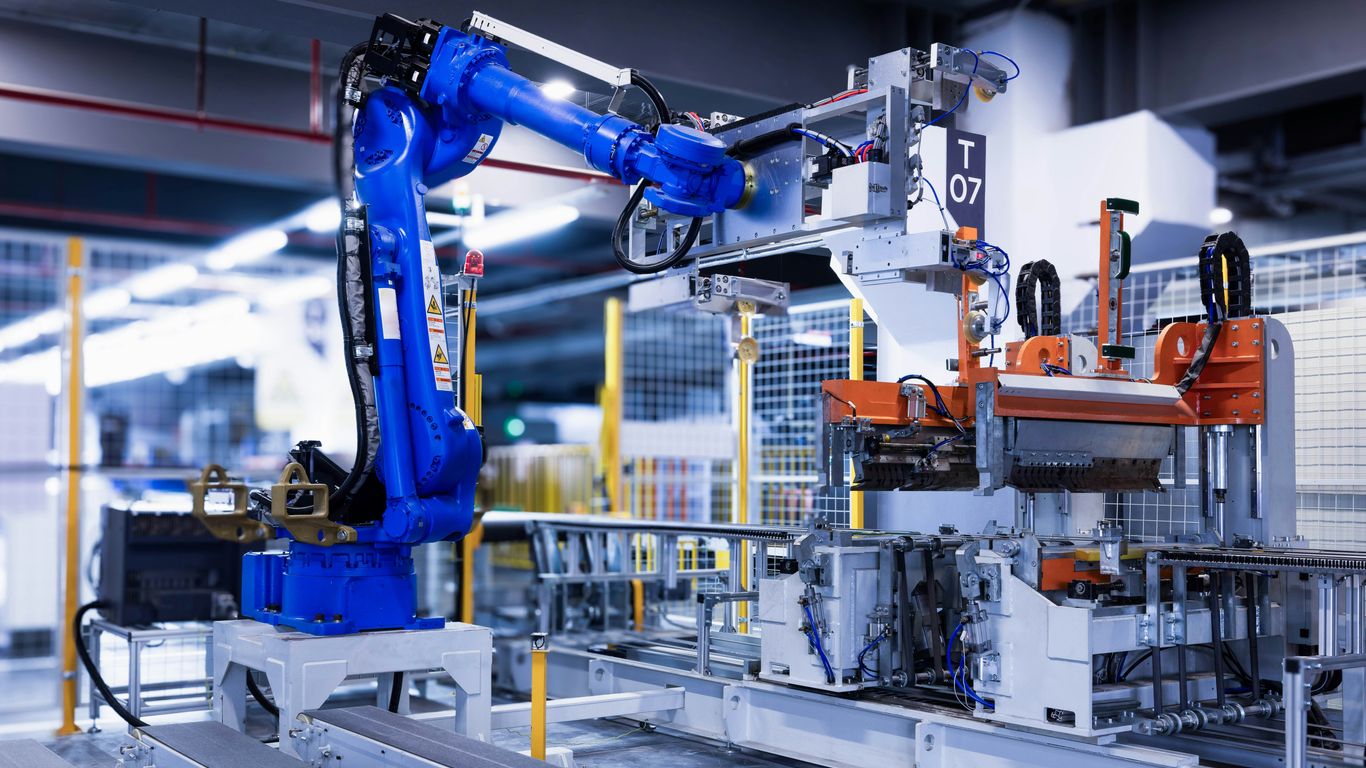
So, what exactly is robotics? At its heart, it’s the field that combines computer science and engineering to build machines that can do things on their own. Think about it – robots are designed to sense their surroundings, make decisions, and then act on those decisions. This isn’t just about fancy factory arms, though. Robotics touches everything from the self-driving cars we see on the road to the tiny surgical robots helping doctors, and even the drones delivering packages.
Defining Robotics and Its Applications
Robotics is essentially the creation and use of robots. A robot is a machine, especially one programmable by a computer, capable of carrying out a complex series of actions automatically. The applications are incredibly broad and growing every day. We see robots in manufacturing, logistics, healthcare, exploration (like Mars rovers!), and even in our homes.
Here’s a quick look at some areas where robots are making a big impact:
- Manufacturing: Automating repetitive tasks, improving precision, and increasing production speed.
- Healthcare: Assisting in surgeries, patient care, and drug discovery.
- Logistics: Warehouse automation, package delivery, and inventory management.
- Exploration: Operating in dangerous or inaccessible environments like deep space or the ocean floor.
- Domestic Use: Cleaning robots, personal assistants, and entertainment.
Key Algorithms in Robotics
Robots don’t just magically know what to do. They rely on a set of clever algorithms to function. These are the step-by-step instructions that tell the robot how to process information and make choices. Some of the most common ones you’ll encounter include:
- Search Algorithms: These help robots find the best path from point A to point B, like the A* algorithm. It’s like a super-smart GPS for robots.
- Filtering Algorithms: Robots often deal with noisy sensor data. Algorithms like Kalman Filters and Particle Filters help them make sense of this imperfect information to estimate their state (like position or velocity).
- Mapping Algorithms: Robots need to understand their environment. Algorithms like SLAM (Simultaneous Localization and Mapping) allow them to build a map of an unknown area while simultaneously figuring out where they are within that map.
The Role of AI in Robotics
Artificial Intelligence (AI) is what gives robots their ‘brains’. While not all robots use advanced AI, the field of AI is what allows robots to learn, adapt, and make more complex decisions. AI techniques enable robots to:
- Perceive their environment: Using computer vision and sensor fusion to understand what’s around them.
- Make intelligent decisions: Planning actions, predicting outcomes, and adapting to unexpected situations.
- Learn from experience: Improving their performance over time through machine learning.
Essentially, AI is the engine that drives the intelligence and autonomy of modern robots, allowing them to tackle increasingly sophisticated tasks.
Navigating Robotics Interview Questions
So, you’re looking to break into the world of robotics, huh? That’s awesome! But before you can start building the next big thing, you’ve got to get past the interviews. And let me tell you, they can be a bit of a maze. It’s not just about knowing the theory; they want to see how you think, how you solve problems, and if you can actually put that knowledge to work. Think of it like this: you wouldn’t just read a cookbook and expect to be a chef, right? You need to get your hands dirty. The same goes for robotics interviews.
Common Beginner Robotics Questions
When you’re just starting out, the questions tend to focus on the basics. They want to make sure you’ve got a solid grasp of what robotics even is and why it matters. You’ll probably get asked things like:
- What is robotics? This is your chance to define it in your own words. It’s more than just robots; it’s about the design, construction, operation, and application of robots. Think about how they interact with the physical world.
- What are some everyday examples of robots you see or use?
- Can you explain the difference between hardware and software in a robot?
- What’s a sensor, and why do robots need them?
They’re looking for clear, straightforward answers here. Don’t overcomplicate it. Just show you understand the building blocks.
Intermediate Robotics Challenges
Once you’ve shown you know the basics, they’ll start to dig a little deeper. This is where you’ll see questions that require a bit more thought, maybe involving some simple algorithms or how different parts of a robot work together. For instance:
- How would you make a robot avoid an obstacle? Describe the steps.
- Explain the concept of a feedback loop in robot control.
- What’s the difference between open-loop and closed-loop control systems?
Here, they might present a scenario and ask you to walk them through your thought process. It’s less about having the perfect answer and more about showing you can break down a problem logically. Sometimes, they might even ask you to sketch out a simple control flow or algorithm on a whiteboard.
Advanced Robotics Scenarios
If you’re aiming for more senior roles or specialized positions, the questions get pretty intense. They’ll be testing your ability to handle complex systems, deal with uncertainty, and maybe even design parts of a robot’s brain. Expect questions that might involve:
- Describe how you would implement Simultaneous Localization and Mapping (SLAM) for a mobile robot in an unknown environment.
- How do you handle sensor noise and data uncertainty in a robot’s perception system?
- Discuss the trade-offs between different motion planning algorithms (e.g., A*, RRT) for a robot arm.
These questions often don’t have a single right answer. They’re designed to see how you approach complex, real-world problems. Your ability to articulate your reasoning, discuss trade-offs, and justify your design choices is what really matters here. It’s about demonstrating that you can think critically and creatively about robotics challenges.
Exploring Robot Localization and Mapping
So, how does a robot actually know where it is in the world? And how does it build a map of its surroundings if it doesn’t have one already? These are the big questions we’re tackling in this section: localization and mapping.
Understanding Robot Location
Imagine you’re dropped into a new city without a map or GPS. You’d probably look for familiar landmarks, try to remember which way you came from, and piece together where you are. Robots do something similar, but with sensors and math. They use things like wheel encoders to track how far they’ve moved, cameras to see objects, and sometimes even lidar to measure distances. The goal is to figure out the robot’s position and orientation within its environment. This isn’t just about knowing "I’m in the living room"; it’s about knowing "I’m 3.5 meters from the couch, facing the window." This is super important because a robot can’t do much if it doesn’t know where it’s starting from.
Kalman Filters and Particle Filters
Now, sensors aren’t perfect. A wheel might slip, a camera might get confused by glare, or lidar readings can be a bit noisy. This is where probabilistic methods come in. Two big ones you’ll hear about are Kalman Filters and Particle Filters.
- Kalman Filters are great for systems where the uncertainty can be described by a bell curve (a Gaussian distribution). They’re really good at predicting where the robot will be next and then updating that prediction with new sensor data. Think of it like constantly adjusting your guess based on new clues.
- Particle Filters, on the other hand, are more flexible. They use a bunch of random
Mastering Motion Planning and Control
When you start working with robots, getting them to move where you want, how you want, is no small feat. It’s not just about telling a machine, "go over there"—it’s about figuring out a whole strategy for making it happen safely and smoothly. This section gets into the practical nuts and bolts behind robot movement, covering search algorithms, the basics of PID control, and how robots make decisions on the fly.
Search Algorithms for Movement
Robots need paths to follow, especially when there’s clutter in the way. That’s where search algorithms take the stage. A good search algorithm finds a path from point A to point B, considering all the possible twists and turns.
Some common algorithms include:
- A (A-star):* Popular for its ability to quickly find the shortest path, especially when you have a map.
- Breadth-First Search (BFS): Good for exploring all possible directions, step by step, until you hit your goal.
- Dijkstra’s Algorithm: Think of it as similar to A*, but without the fancy heuristics—it just looks for the lowest cost path, no matter what.
These tools power everything from robotic vacuums mapping your living room to drones weaving through forests. It’s worth trying small coding exercises to get a feel for how these search methods behave.
PID Control Fundamentals
Once a robot knows where it’s headed, it still has to control its wheels, arms, or whatever is doing the moving. That’s where PID (Proportional, Integral, Derivative) control jumps in.
What does a PID controller do?
- Proportional: Reacts to the current error (how far off the robot is).
- Integral: Adds up past errors to smooth out its movements—handy for ironing out little mistakes.
- Derivative: Looks at how quickly the error is changing and slows things down if it’s getting wild.
| Component | Purpose |
|---|---|
| Proportional | Immediate correction |
| Integral | Corrects long-term drift |
| Derivative | Dampens rapid changes |
Tuning these values takes some trial and error—turn one up too much, and your robot might start shaking or overshooting its goal. Start with small adjustments and watch what happens.
Decision Making in Robotics
Planning and control get a robot moving, but real-world situations demand quick, reliable decisions. Robots need to pick actions based on their current state, destination, and anything unexpected that shows up (like a cat suddenly blocking the hallway).
Here are some approaches used:
- Finite State Machines: The robot follows a simple list of states (for example: search, move, avoid obstacle) and switches based on triggers.
- Rule-Based Systems: Think of these as if-then lists the robot follows.
- Probabilistic Decision Models: For more uncertainty, like not being sure of its position, robots can use probabilities to choose the best action (like Markov Decision Processes).
Dealing with the messy real world means your robot will never have perfect info or perfect control—so keep your solutions flexible and simple when possible. Try one method, see where it breaks, and tweak it until the robot does what you want, most of the time.
Practical Aspects of Robotics Development
So, you’ve got a handle on the theory, the algorithms, and maybe even some fancy AI stuff. That’s great! But building actual robots, or even just simulating them, involves a bunch of real-world considerations that can trip you up if you’re not ready. It’s not all just code and math; there’s a practical side to this whole robotics gig.
Python in Robotics Projects
When it comes to coding robots, Python is a pretty common choice, and for good reason. It’s got a ton of libraries that make life easier. Think about libraries like NumPy for number crunching, SciPy for scientific computing, and OpenCV for anything related to computer vision. Plus, there are specific robotics libraries like ROS (Robot Operating System) that provide a framework for writing robot software. It’s generally easier to pick up than some other languages, which is a big plus when you’re juggling a lot of complex ideas.
- Ease of Use: Python’s syntax is pretty straightforward, making it quicker to get your ideas into code.
- Extensive Libraries: A vast collection of pre-built tools for everything from math to vision.
- Community Support: Lots of people use Python for robotics, so finding help or examples is usually not too hard.
Handling Uncertainty in Robotics
Robots rarely operate in a perfect world. Sensors aren’t always accurate, the environment can change unexpectedly, and actuators might not perform exactly as planned. Dealing with this uncertainty is a big part of robotics. You’ll often use probabilistic methods to represent and manage this fuzziness. This means instead of saying ‘the robot is at position X’, you might say ‘there’s a 70% chance the robot is at position X, a 20% chance it’s at Y, and a 10% chance it’s at Z’. It sounds complicated, but it’s how robots make sense of a messy reality.
- Sensor Noise: Real-world sensors have errors. You need ways to filter out the bad data.
- Environmental Changes: Obstacles can appear, or the ground might be uneven. Robots need to adapt.
- Actuator Imperfections: Motors might not turn exactly the specified amount, leading to small errors that can add up.
Leveraging Outside Resources
Let’s be honest, no one knows everything, and robotics is a huge field. You’re going to hit walls where the course material just doesn’t quite explain something clearly enough, or you need a different perspective. That’s where outside resources come in. Don’t be afraid to look things up! Textbooks, online tutorials, academic papers, and even forums can be lifesavers. Sometimes, just seeing a concept explained in a different way, or seeing a practical example, can make all the difference. It’s not about memorizing everything; it’s about knowing how to find the information you need when you need it.
- Online Courses & Tutorials: Platforms like Coursera, edX, or even YouTube have tons of content.
- Academic Papers: For deeper dives into specific algorithms or research areas.
- Community Forums: Places like Stack Overflow or robotics-specific forums can help with coding problems.
Preparing for Robotics Assessments
So, you’ve been studying robotics, maybe for a class, an interview, or just for fun. Now it’s time to see what you’ve learned. Assessments, whether they’re exams, coding challenges, or even project reviews, can feel a bit daunting. But honestly, they’re just a way to check if you’re on the right track and to help you figure out where you might need to brush up.
The Importance of Foundational Knowledge
Look, you can’t build a skyscraper on sand, right? The same goes for robotics. A solid grasp of the basics is super important. This means really knowing your stuff when it comes to things like:
- Basic Kinematics: How robots move, their joints, and how that translates to end-effector position. Think forward and inverse kinematics.
- Control Systems: Understanding how to make a robot do what you want it to do. PID controllers are a classic example here, and knowing how they work is a big plus.
- Sensors and Perception: How robots ‘see’ and ‘feel’ the world. This includes cameras, lidar, sonar, and how you process that data.
- Algorithms: The logic behind robot actions. This covers path planning, localization, and decision-making.
Without these building blocks, trying to tackle more complex topics is like trying to run before you can walk. It’s better to spend time making sure you understand these core ideas than to skim over them.
Balancing Theory and Practical Application
Robotics isn’t just about math equations on a whiteboard, and it’s not just about hacking away at code either. It’s the mix of both that really counts. When you’re preparing for an assessment, think about how the theory you’re learning applies to real-world problems.
For example, if you’re studying path planning algorithms like A*, don’t just memorize the steps. Think about how you’d use it to get a robot from point A to point B in a cluttered room. What are the potential issues? How would you represent the environment? This kind of thinking bridges the gap between abstract concepts and actual robot behavior.
Here’s a quick look at how theory and practice often connect:
| Theoretical Concept | Practical Application | Potential Challenges |
|---|---|---|
| PID Control | Robot arm movement, drone stabilization | Tuning parameters, dealing with noise |
| SLAM Algorithms | Autonomous navigation in unknown environments | Computational cost, sensor drift |
| Sensor Fusion | Combining lidar and camera data for object detection | Calibration, data synchronization |
Effective Study Strategies for Robotics
Okay, so how do you actually get ready for these assessments? It’s not just about cramming the night before. Here are a few ideas that tend to work:
- Work Through Examples: Don’t just read about algorithms; try to implement them, even in a simplified way. If you’re studying Kalman filters, try to simulate one with some noisy data. If it’s a coding assignment, make sure you understand why the provided solution works, not just that it does.
- Teach Someone Else (or Pretend To): Explaining a concept out loud, even to an empty room or a pet, forces you to organize your thoughts and identify gaps in your own understanding. If you can explain it clearly, you probably know it well.
- Review Past Projects and Assignments: Often, assessment questions are related to problems you’ve already tackled. Go back through your old work. What did you learn? What mistakes did you make? How did you fix them?
- Use Online Resources Wisely: There are tons of great tutorials, forums, and documentation out there. If you’re stuck on a concept, look for different explanations. But be careful not to get lost down rabbit holes; stick to resources that help you understand the core material for your assessment.
Wrapping Up
So, we’ve gone through a bunch of common questions people ask about robotics. It can seem like a lot at first, especially with all the different parts and ideas involved. But hopefully, breaking it down like this makes it feel more manageable. Remember, the field is always changing, so staying curious and keeping up with new developments is key. Whether you’re just starting out or looking to deepen your knowledge, understanding these basics is a solid step. Keep exploring, keep asking questions, and you’ll be well on your way.