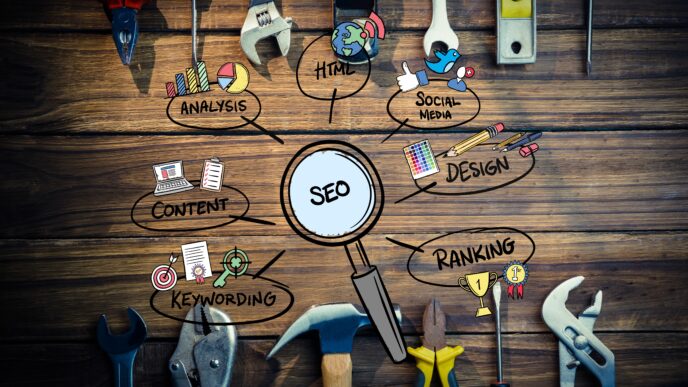

Thinking about how to get your eBook noticed? It’s not just about writing a great book anymore. You’ve got to help people find it, and that’s where Search Engine Optimization, or SEO, comes in. For anyone putting an eBook out there, understanding SEO is pretty important. It’s like putting up a clear sign for your digital shop. We’re going to look at how to make your seo ebooks show up when people are actually searching for what’s inside. It’s about making your work visible and connecting with readers who are looking for it. Let’s get into it.
Key Takeaways
- Search engines help people find information, and SEO helps your eBook get found by people searching for its topic.
- Using the right words (keywords) in your eBook’s title, description, and content is key to being discovered.
- Search engines change how they work, so keeping your SEO strategies up-to-date is important for continued success.
- Checking how well your SEO is working by looking at numbers like website visits and search rankings helps you make it better.
- SEO for seo ebooks involves more than just the book itself; it includes how you promote it and where you list it online.
Understanding The Core Principles Of SEO Ebooks

Introduction To Search Engine Optimization For Ebooks
So, you’ve written an eBook. That’s awesome! You’ve put in the work, shared your knowledge or story, and now you want people to actually read it, right? Well, that’s where Search Engine Optimization, or SEO, comes into play. Think of SEO as your eBook’s personal guide, helping it get found by the people who are actively looking for what you’ve written. Without it, your amazing eBook could be like a hidden gem buried so deep no one ever stumbles upon it. It’s not just about writing a great book; it’s about making sure the right people find your great book. When someone types a question or a topic into Google, or even searches within platforms like Amazon, SEO helps your eBook appear in those results. It’s about making your book visible to potential readers who are already interested in what you have to say.
How Search Engines Discover Your Ebooks
Search engines like Google, Bing, and even Amazon’s internal search work by sending out "spiders" or "crawlers." These bots scan the internet, looking at websites and online content. They read the text, look at the links, and try to figure out what each page or listing is about. For your eBook to be discovered, these crawlers need to be able to find information about it. This means having your eBook mentioned on websites, in descriptions, and using specific words that tell the search engine what your book covers. If your eBook’s title, description, and any associated web pages use terms that people are searching for, the crawlers will pick that up. They then use this information to decide where to rank your eBook when someone searches for those terms. It’s a bit like leaving a trail of breadcrumbs so the search engine bots can find their way to your book.
The Evolution Of Search Engine Algorithms
Search engine algorithms aren’t static; they change all the time. What worked to get a book found five years ago might not be as effective today. Search engines are constantly trying to get better at understanding what users really want when they type something into the search bar. They’re moving beyond just matching keywords to understanding the intent behind a search. This means they’re looking at things like:
- User experience: Is the page where the eBook is listed easy to use and navigate?
- Content quality: Does the description and any related content seem helpful and well-written?
- Relevance: How closely does the eBook’s topic match what the user is searching for, not just in words, but in meaning?
- Authority: Does the author or publisher seem like a trusted source on the topic?
Because these algorithms evolve, staying updated on how search engines work is important for keeping your eBook discoverable over time. It’s a continuous process, not a one-time fix.
Essential Strategies For Optimizing Your Ebooks
So, you’ve got your ebook ready to go, but how do people actually find it? It’s not enough to just put it out there and hope for the best. We need to think about how search engines see it, and more importantly, how readers find it when they’re looking for something specific. This is where some smart strategies come into play.
Keyword Research: The Foundation Of Ebook Discoverability
This is probably the most important step, honestly. You can’t just guess what people are typing into search bars. You need to actually find out. Think about what problems your ebook solves or what topics it covers. Then, use tools – there are plenty of free and paid ones out there – to see what terms people are actually searching for related to those topics. You’re looking for terms that have a decent number of searches but aren’t so popular that you’ll never rank for them. It’s a balancing act.
Here’s a quick look at what to consider:
- Search Volume: How many people are looking for this term each month?
- Competition: How hard will it be to show up when someone searches this term?
- Relevance: Does this term really match what your ebook is about?
Finding the right keywords is like finding the right key for a lock; it needs to fit perfectly.
Optimizing Ebook Titles And Descriptions
Once you have your keywords, you need to use them. Your ebook’s title is the first thing people see, and search engines pay a lot of attention to it. Try to include your main keyword naturally in the title, but don’t force it. Make it sound appealing and clear about what the book is.
Your description is your sales pitch. This is where you can get a bit more descriptive and use more of your researched keywords. Think about what a reader would want to know. What’s in it for them? Use bullet points to highlight key takeaways. Make sure the description flows well and isn’t just a list of keywords. Search engines want to see that you’re providing real information to readers, not just trying to game the system.
Leveraging Keywords Within Ebook Content
This is where you really show your work. You’ve got keywords for your title and description, now sprinkle them throughout the actual content of your ebook. Don’t go crazy and stuff them in everywhere – that just makes it sound weird and can actually hurt your ranking. Instead, use them where they make sense. Think about chapter titles, headings, and even within the text itself when you’re discussing a topic related to your keyword.
- Use your primary keyword in the introduction.
- Incorporate related keywords in subheadings.
- Mention your main topic keywords naturally throughout the body of the text.
Remember, the goal is to make your ebook easy for both readers and search engines to understand. If it’s clear what your book is about, people will find it, and search engines will show it to them.
Advanced Techniques For Ebook Visibility
Local Search Optimization For Niche Ebooks
Think about this: if you’ve written an ebook about, say, the best hiking trails in the Pacific Northwest, you’re not just competing with every other ebook out there. You’re also competing with local blogs, park websites, and even local bookstores. For niche ebooks, especially those tied to a specific geographic area, local search optimization is a big deal. It means making sure your ebook shows up when someone searches for "best hikes Oregon" or "Seattle outdoor guides." This involves using location-specific keywords not just in your title and description, but also in any promotional content you create. If you have a website or blog associated with your ebook, make sure your location is clearly stated there too. It helps search engines understand where your content is relevant. It’s about being found by the people who are geographically closest and most likely to be interested.
International Reach For Global Audiences
Going global with your ebook? That’s exciting! But search engines work differently in different countries. What’s popular in the US might not be in Japan. You need to think about international SEO. This can involve translating your ebook’s metadata (title, description) into other languages. You might also need to research keywords that are commonly used in those languages. For example, someone in Germany might search for "E-Book über Wandern" instead of "ebook about hiking." It’s a bit more work, but it opens up a whole new audience. You can even look into creating region-specific landing pages if you’re doing a big push in a particular country. This is where understanding the fundamental principles of SEO becomes really important on a larger scale.
Voice Search And Predictive Search Impact
Voice search is getting more common, and it changes how people search. Instead of typing short phrases, people often speak in full questions. Think "What’s the best ebook about starting a small business in California?" instead of "small business ebook CA." This means you should start thinking about longer, more conversational keywords. Your ebook’s content, especially FAQs or introductory sections, can be optimized for these kinds of questions. Predictive search, where search engines suggest completions as you type, also plays a role. It shows you what people are actually searching for. Pay attention to those suggestions; they can be a goldmine for understanding user intent and finding new keyword ideas. Optimizing for voice and predictive search means making your ebook content sound natural and directly answer potential user questions.
Integrating Search Engine Marketing With Ebooks
So, you’ve put a lot of work into making your ebook discoverable through search engines. That’s great! But what about the paid side of things? Search Engine Marketing, or SEM, can really give your ebook a boost. It’s not just about organic traffic anymore; sometimes, you need to put a little money behind your efforts to get seen.
The Interplay Between SEO And SEM
Think of SEO and SEM as two sides of the same coin. SEO is about earning your spot in the search results over time by making your content good and relevant. SEM, on the other hand, is about paying for visibility, usually through ads that show up when people search for certain terms. When you combine them, you get a much stronger presence. If your ebook ranks well organically for a keyword, and you also have an ad showing up for that same keyword, you’re basically dominating that search result page. This means more eyes on your ebook, and hopefully, more downloads or sales.
Here’s a quick look at how they work together:
- SEO: Builds long-term authority and trust. It’s slower but can be more cost-effective over time.
- SEM: Provides immediate visibility and traffic. It’s great for testing new keywords or promoting time-sensitive content.
- Combined: Creates a powerful one-two punch, capturing users at different stages of their search journey.
Using SEM Data To Inform Ebook Strategies
SEM isn’t just about running ads; it’s a goldmine of information. The data you get from your paid campaigns can tell you a lot about what people are actually looking for. For instance, if you’re running ads for your ebook on "beginner gardening tips" and you notice that a specific phrase like "container gardening for apartments" is getting a lot of clicks and conversions, that’s a huge signal. You might want to:
- Create new content: Write a new ebook or blog post specifically about container gardening for apartments.
- Update existing content: Weave more "container gardening" keywords into your current ebook’s description and content.
- Refine your SEO: Target these high-performing keywords more aggressively in your organic SEO efforts.
This kind of feedback loop is super important. You’re not just guessing what people want; you’re seeing it in action through their clicks and spending habits.
Creating A Unified Search Marketing Plan
To really make your ebook shine, you need a plan that brings SEO and SEM together. It shouldn’t be a case of one working in isolation. Your unified plan should consider:
- Keyword Alignment: Make sure the keywords you’re targeting organically are also part of your paid ad campaigns, and vice-versa. Look for keywords that have both good search volume and commercial intent.
- Budget Allocation: Decide how much you’re willing to spend on paid ads versus how much time you’ll invest in organic SEO. This will depend on your goals and timeline.
- Content Strategy: Use insights from both SEO and SEM to guide what kind of content you create, update, and promote. This includes your ebook itself, landing pages, and supporting blog posts.
- Performance Tracking: Set up systems to monitor how both your organic and paid efforts are performing. Are your ads driving traffic that converts? Is your SEO improving your rankings for key terms?
By thinking of SEO and SEM as a team, you can create a much more effective strategy for getting your ebook in front of the right readers.
Measuring The Success Of Your Ebook SEO Efforts
So, you’ve put in the work, tweaking titles, descriptions, and content to get your ebook noticed. But how do you actually know if any of it is working? It’s like baking a cake – you can follow the recipe, but you won’t know if it’s good until you taste it. Tracking your results is how you taste your SEO efforts.
Key Metrics For Tracking Ebook Performance
When it comes to seeing if your ebook is climbing the search results, there are a few numbers you’ll want to keep an eye on. Don’t just look at sales, though that’s important. Think about the steps leading up to a sale or download.
- Website Traffic: If you have a page for your ebook, check how many people are visiting it. Tools like Google Analytics can show you this. More importantly, see where they’re coming from. Are they finding you through search engines? That’s a good sign your SEO is doing its job.
- Keyword Rankings: Are you showing up on the first page for terms people actually search for? Use an SEO tool to track your position for your main keywords. Seeing your ebook move up the rankings means search engines are starting to notice it.
- Conversion Rates: This is the percentage of visitors to your ebook’s page who actually do what you want them to – buy it, download a sample, or sign up for updates. A higher conversion rate means your page is not only attracting people but also convincing them to take action. This is often the most telling metric of your overall success.
Analyzing Data For Continuous Improvement
Looking at these numbers isn’t just about patting yourself on the back. It’s about figuring out what’s working and what’s not. If your traffic is up but conversions are low, maybe your landing page needs a refresh. If your keyword rankings aren’t moving, perhaps your content needs more optimization. Think about the data as a map; it shows you where you are and helps you plan your next move. You can use this information to refine your keyword research and content strategy.
A/B Testing For Ebook Optimization
Sometimes, you need to test small changes to see what makes a bigger difference. This is where A/B testing comes in. You create two versions of something – maybe a title or a description – and show each version to a different group of people. Then, you see which version performs better. For example, you could test two different ebook titles to see which one gets more clicks in the search results. Or, you might test two different calls to action on your landing page to see which one leads to more downloads. It’s a practical way to make data-driven decisions about your ebook’s presentation and marketing.
Navigating Common Ebook SEO Challenges
So, you’ve put in the work, researched your keywords, and polished your ebook’s metadata. That’s great! But sometimes, even with the best intentions, you can stumble into a few common traps that hurt your ebook’s search visibility. Let’s talk about some of those and how to sidestep them.
Avoiding Keyword Stuffing Pitfalls
This is a big one, and honestly, it’s tempting. You find a great keyword, and you just want to use it everywhere. But jamming keywords into your ebook’s title, description, or even the text itself, over and over, is a bad idea. Search engines are smart now; they can tell when you’re just trying to game the system. It makes your writing sound unnatural and can actually get your ebook penalized, not promoted. Think about it from a reader’s perspective – would you keep reading something that sounds like a robot wrote it? Stick to using keywords where they make sense and keep your language flowing naturally. Readability for humans should always come first.
Platform-Specific Optimization Nuances
We often think about Google when we talk about SEO, but where are people actually finding and buying ebooks? Often, it’s on specific platforms like Amazon, Apple Books, or Kobo. These places have their own search algorithms and rules. What works on Google might not work perfectly on Amazon. For instance, Amazon heavily weighs customer reviews and sales data. So, while you’re optimizing your title and description for Google, don’t forget to think about how those elements will perform within the platform’s search. Encouraging reviews and making your book easy to share on social media can also indirectly help your visibility on these platforms.
Adapting To Evolving Search Trends
Search engines and how people search are always changing. What was popular last year might not be today. Reader interests shift, new topics emerge, and search algorithms get updated. It’s not a ‘set it and forget it’ kind of deal. You need to keep an eye on how people are searching for books like yours. Are they using longer, more specific phrases (long-tail keywords)? Is voice search becoming more common for finding books? Regularly checking your performance metrics and seeing what’s working (and what’s not) is key. Don’t be afraid to tweak your titles, descriptions, and keywords if you see your performance dipping or if new trends emerge. Staying current means your ebook has a better shot at being found tomorrow, just like it does today.
Wrapping It Up: Making Your Ebook Shine Online
So, we’ve gone over a lot of stuff about making your ebook easy to find on the internet. Hopefully, it doesn’t seem so confusing anymore. Search Engine Optimization, or SEO, isn’t just for big companies. It’s really important if you’re an author and want people who are actually looking for your book to find it. We talked about how important keywords are, how to pick good ones, and how to put them in your book’s title and description so they make sense. We also touched on how to use those keywords when you’re telling people about your book. It’s about making your book visible. Think of SEO like a conversation. The better you understand what people type into search engines, the better you can show them your book is exactly what they need. Using these tips means you’re working smarter to help your book get noticed. So, go ahead and try these ideas out, and hopefully, you’ll see your ebook get more attention. Happy writing, and happy reading!
Frequently Asked Questions
What exactly is SEO and why is it important for my eBook?
SEO stands for Search Engine Optimization. Think of it as making your eBook easy for search engines like Google to find and understand. When people search for topics related to your book, good SEO helps your eBook show up higher in the search results, meaning more people will see it and have a chance to read it. It’s like putting up a big, clear sign for your book so readers can find it easily.
How do I choose the best keywords for my eBook?
Keywords are the words and phrases people type into search engines. To choose the best ones, think about what someone looking for your book would search for. Use tools or just brainstorm terms related to your book’s topic. You want keywords that are popular enough to get views but also specific enough that the people searching are truly interested in what your book offers.
Should I put keywords in my eBook’s title and description?
Absolutely! Your eBook’s title and description are super important for SEO. Including relevant keywords in your title and description tells search engines and potential readers what your book is about. Make sure the title is catchy and the description clearly explains the book’s value while naturally including those important keywords.
What’s the difference between SEO and SEM?
SEO (Search Engine Optimization) is about making your eBook rank higher in search results naturally over time by improving its content and website. SEM (Search Engine Marketing) is like paying for ads to show up in search results, often right away. They work best together: SEO builds long-term visibility, while SEM can give you a quick boost.
How can I tell if my eBook’s SEO is working?
You can track how well your eBook is doing by looking at certain numbers, called metrics. These include how many people visit your book’s page (traffic), where your book shows up in search results (rankings), and how many people actually buy or download it. Looking at these numbers helps you see what’s working and what you can improve.
What is ‘keyword stuffing’ and why should I avoid it?
Keyword stuffing means cramming too many keywords into your title, description, or content just to try and trick search engines. It makes your writing sound unnatural and can actually hurt your ranking. Search engines are smart and prefer content that is helpful and easy for humans to read, not just stuffed with words.