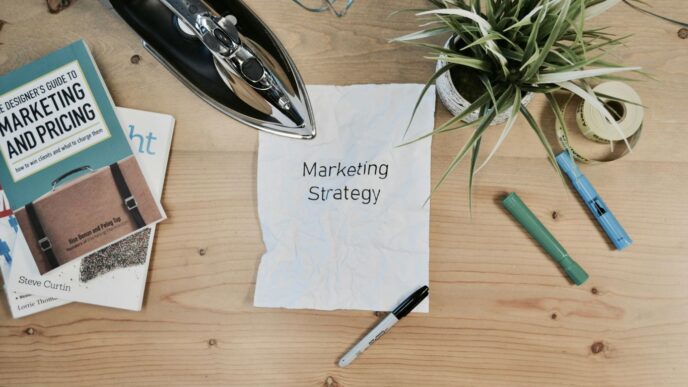

Right, so we’re talking about digital PR strategy for 2026. It sounds a bit fancy, but really, it’s just about getting your message out there online in a smart way. Think of it as your plan to be seen and heard when people are looking for what you offer. In today’s world, if you’re not online, you’re pretty much invisible, so having a solid digital PR strategy isn’t just a good idea, it’s a must-have for any business wanting to grow. We’ll cover how to actually do it, what to focus on, and how to know if it’s working.
Key Takeaways
- Your digital PR strategy needs to be clear about what you want to achieve and how it helps the business overall.
- Knowing who you’re talking to is super important. Research your audience so your message hits the mark.
- Creating content that people actually want to read or watch is key to building trust and getting noticed.
- Pick the right places online to share your message – don’t try to be everywhere at once if it doesn’t make sense.
- Always check if your efforts are paying off. Use the data to make your digital PR strategy even better next time.
Defining Your Digital PR Strategy for 2026
Right then, let’s get down to brass tacks. We’re talking about your digital PR strategy for 2026. It’s not just about throwing some content online and hoping for the best anymore. The digital world has moved on, and frankly, so should your approach. Think of it as building a really solid plan before you start knocking down walls in your house – you wouldn’t just start swinging a hammer, would you? It’s about being smart, knowing where you’re going, and why.
Understanding the Evolving Digital Landscape
The internet is a busy place, isn’t it? More people than ever are online, and they’re spending a good chunk of their day glued to their screens. This means traditional advertising, like those old newspaper ads or even standard TV spots, just doesn’t cut it for reaching people effectively. Digital platforms, on the other hand, let you talk directly to the people you want to reach, almost like having a one-on-one chat. It’s a world where over 70% of people will search online for a local business before they even think about buying something. If you’re not showing up there, you’re practically invisible.
The digital space in 2026 is less about shouting into the void and more about having a genuine conversation. It’s about being found when people are actively looking for what you offer.
The Core Purpose of a Digital PR Strategy
So, what’s the point of all this? At its heart, a digital PR strategy is about building trust and getting your name out there in a way that feels natural, not pushy. It’s about making sure people know who you are, what you do, and why they should care. In a world full of digital noise, being seen as a reliable source is gold. It’s not just about getting clicks; it’s about creating a smooth path from someone having a problem to them finding your solution. This builds a kind of protective barrier around your business, making it stronger.
Aligning Digital PR with Business Objectives
This is where things get serious. Your digital PR efforts need to be tied directly to what your business is trying to achieve. Are you looking to sell more products? Get more people to sign up for a service? Become a recognised name in your industry? Whatever it is, your digital PR plan needs to have clear, measurable goals that help you get there. It’s no good doing great work online if it doesn’t actually help your business grow. We need to make sure that every bit of effort we put in is working towards a bigger picture.
Here’s a quick look at how different goals might translate:
- Increase Brand Awareness: Focus on getting your name mentioned in more places online, social media shares, and website traffic.
- Drive Sales/Leads: Aim for higher conversion rates on your website, more inquiries, and direct sales from digital campaigns.
- Build Authority: Target features in industry publications, positive reviews, and engagement from experts in your field.
- Improve Customer Loyalty: Work on engaging existing customers through social media, email, and community building online.
Foundational Elements of a Robust Digital PR Strategy
A solid digital PR strategy isn’t built on luck — it’s about getting a few key things right at the start. Here’s where the groundwork matters most.
Audience Research and Persona Development
If you don’t really know who you’re talking to, it’s hard to get your message across. Start by gathering information about your typical customer: things like age group, job role, lifestyle, what keeps them up at night, and which sites or platforms they like. Once that’s clear, group similar people together and sketch out a simple profile — these are your buyer personas.
- Look at website analytics and social media insights for real data
- Run surveys or speak with existing customers
- Note patterns in pain points, goals, and preferred channels
The more you understand your audience, the easier it is to cut through the noise and connect.
Setting SMART Goals and Key Performance Indicators
Random targets don’t get results. Instead, set goals that are Specific, Measurable, Achievable, Relevant, and Time-bound — the SMART approach. Pair each aim with a way to track it. For digital PR, this might be the number of press mentions, backlinks earned, website traffic from media coverage, or social shares on key stories.
| Goal | KPI Example |
|---|---|
| Growing brand awareness | 20% increase in mentions |
| Boosting site traffic | +1,000 monthly visitors |
| Improving SEO | 10 new backlinks/qtr |
| Community engagement | 25% more shares/posts |
Review and adjust regularly, keeping your business aims at the centre.
Identifying Your Unique Selling Proposition
Here’s where you figure out what makes your company or story stand out. Your USP should be simple — maybe it’s a unique product, a company value, an industry-first, or a new perspective. Ask yourself:
- What makes our angle or story worth sharing?
- Why would a journalist or influencer care?
- How is our offer different from others in our space?
Summing this up in a sentence or two helps keep your team — and your messaging — on the same page.
Get the basics right, and you make every part of your digital PR stronger. Without this groundwork, it’s like shouting into the wind and expecting everyone to listen.
Crafting Compelling Content for Digital PR
Right then, let’s talk about the actual stuff you put out there – the content. It’s not just about having a website or a social media profile; it’s about what you say and how you say it that really makes a difference in digital PR. Think of it as the voice of your brand, but instead of just shouting, you’re actually having a conversation, or better yet, telling a story that people want to hear.
The Role of Valuable Content in Building Trust
Honestly, nobody likes being sold to all the time. People are looking for information, solutions to their problems, or just something interesting to read or watch. When you consistently put out content that genuinely helps your audience, whether it’s a handy guide, an insightful opinion piece, or even just a bit of well-researched data, you start to build up a reputation. It shows you know your stuff and that you’re not just in it for a quick buck. This builds trust, and trust is the bedrock of any good relationship, including the one between a brand and its customers.
In the digital PR world of 2026, content isn’t just king; it’s the entire kingdom. It’s the currency of attention and the foundation upon which credibility is built. Without content that educates, entertains, or solves a problem, your PR efforts will likely fall flat.
Developing a Content Calendar
Wingin’ it with content just doesn’t cut it anymore. You need a plan. A content calendar is basically your roadmap. It helps you stay organised, ensures you’re covering all the bases, and stops you from scrambling for ideas at the last minute. It doesn’t have to be overly complicated, but it should map out what you’re going to publish, when, and where.
Here’s a simple way to think about setting one up:
- Brainstorm Topics: What are your audience’s burning questions? What’s happening in your industry? What unique insights can you share?
- Assign Formats: Will it be a blog post, a short video, an infographic, a podcast episode? Mix it up to keep things interesting.
- Schedule Publication: Decide on the frequency – daily, weekly, bi-weekly? And slot each piece into your calendar.
- Allocate Resources: Who’s responsible for creating it? Who needs to approve it? Make sure you have the people and tools ready.
Repurposing Content Across Channels
Creating great content takes time and effort, so why let it sit in one place? Repurposing means taking a piece of content and adapting it for different platforms. It’s a smart way to get more mileage out of your work and reach a wider audience without starting from scratch every time.
Think about it like this:
- Blog Post to Social Snippets: Take key points from a long article and turn them into tweets or LinkedIn updates.
- Video to Blog Post: Transcribe a video interview and turn it into a written article, perhaps adding some extra context.
- Infographic to Presentation Slides: Break down the visual data from an infographic into slides for a webinar or a presentation.
- Podcast Episode to Blog Series: Extract interesting segments or themes from a podcast and develop them into a series of blog posts.
This approach not only saves you time but also ensures your message is consistent across all the places people might find you online.
Strategic Channel Selection for Maximum Reach
Right then, so you’ve got your strategy sorted and you know who you’re talking to. Now, where do you actually find these people? It’s no good shouting into the void, is it? In 2026, it’s all about being smart with your channels. Think of it like picking the right pub for a night out – you wouldn’t go to a quiet cafe if you wanted a lively atmosphere, would you?
Leveraging Social Media for Amplification
Social media is still a big deal, obviously. But it’s not just about posting willy-nilly. You need to pick the platforms where your audience actually hangs out. Are they scrolling through TikTok videos, getting their news on X (formerly Twitter), or perhaps networking on LinkedIn? Each platform has its own vibe and its own users. The key is to tailor your message to the platform, not just copy-paste. Think short, punchy videos for TikTok, informative threads for X, and professional insights for LinkedIn. It’s about joining the conversation, not just broadcasting at it. We’re seeing more and more brands use social media not just for promotion, but for customer service too – quick replies and helpful advice can make a real difference.
Optimising for Organic Search Visibility
Let’s be honest, nobody wants to pay for every click if they don’t have to. Getting your content to show up when people search for things related to your business is gold. This means getting your head around Search Engine Optimisation (SEO). It’s not just about stuffing keywords everywhere, though. Google and other search engines are getting smarter all the time. They want to see content that genuinely answers people’s questions and is easy to read. Think about what terms your potential customers would type into a search bar. Are you providing clear, helpful answers to those questions? This often means writing blog posts, guides, or FAQs that are genuinely useful. It takes time, but the payoff is huge because people tend to trust organic results more than ads.
Exploring Paid Advertising and Influencer Collaborations
Sometimes, you just need to give things a nudge. Paid advertising, whether it’s on search engines or social media, can get you in front of people quickly. You can target specific demographics, interests, and even behaviours, which is pretty handy. It’s a bit like putting up a poster in a busy shopping centre – you know a lot of people will see it. Then there are influencers. Working with the right person who already has the trust of your target audience can be incredibly effective. It’s not just about mega-celebrities either; micro-influencers with smaller, more engaged followings can often deliver better results for specific niches. It’s about finding that sweet spot where your brand message aligns with their audience and their content style.
Choosing the right mix of channels is like assembling a good band. You need different instruments playing together to create a great sound. Relying on just one instrument won’t cut it. You need to consider where your audience is, what they’re doing there, and how you can best get their attention without being annoying.
Measuring Success and Optimising Your Digital PR Efforts

So, you’ve put in the work, crafted your message, and pushed it out there. Brilliant. But how do you actually know if any of it is working? It’s easy to get lost in the noise, but keeping tabs on what’s effective is where the real magic happens. We need to look beyond just ‘likes’ and ‘shares’ and get down to what actually moves the needle for your business. This means focusing on metrics that directly link back to your initial goals.
Key Metrics for Digital PR Performance
When we talk about measuring success, it’s not just about counting eyeballs. We need to see how our efforts are impacting real-world outcomes. Here are some of the key things to keep an eye on:
- Website Traffic: How many people are visiting your site as a result of your PR activities? Look at referral traffic from specific publications or campaigns.
- Brand Mentions: Are more people talking about your brand online? Track mentions across news sites, blogs, and social media.
- Backlinks: Are reputable websites linking back to your content? This is a huge signal for search engines and shows authority.
- Conversions: Are these visitors doing what you want them to do? This could be signing up for a newsletter, downloading a guide, or making a purchase.
- Share of Voice: How does your brand’s online presence compare to your competitors? Are you getting a fair slice of the conversation?
It’s also worth noting that some metrics are more valuable than others. For instance, a link from a highly respected industry publication is worth far more than a mention on a small, obscure forum. We need to be smart about what we track.
Adopting a Test-and-Learn Approach
Digital PR isn’t a ‘set it and forget it’ kind of deal. The online world changes at a blink, so we have to be ready to adapt. This means trying new things, seeing what sticks, and ditching what doesn’t. Think of it like this: you wouldn’t keep using a recipe that always turns out bland, would you?
- A/B Testing: Try sending out two slightly different versions of a press release or social media post to see which one gets a better response. Even small tweaks can make a big difference.
- Channel Experimentation: Don’t be afraid to test out new platforms or different ways of using existing ones. Maybe a short video works better than a long article for a particular audience.
- Message Variation: See how different angles or calls to action perform. What language grabs attention and encourages action?
The digital landscape is constantly shifting. What worked last year might not be as effective today. By consistently testing different approaches and analysing the results, you can stay ahead of the curve and ensure your PR efforts remain sharp and relevant. It’s about being agile and responsive.
Iterative Refinement for Long-Term Impact
Once you’ve gathered your data and run your tests, it’s time to put that knowledge to work. This isn’t a one-off review; it’s an ongoing process. We take what we’ve learned and make our strategy even better for the next round. It’s about building momentum over time.
For example, if you notice that press releases sent on a Tuesday get more pickups than those sent on a Friday, you adjust your distribution schedule. If a particular type of content consistently drives high referral traffic, you create more of it. This continuous loop of measuring, learning, and refining is what separates a good digital PR strategy from a truly great one. It’s how you build lasting impact and keep your brand in the spotlight.
Future-Proofing Your Digital PR Strategy
The digital world doesn’t stand still, does it? What worked last year might be old news by next week. So, how do we make sure our digital PR efforts don’t just keep up, but actually stay ahead of the curve? It’s all about being ready for whatever comes next. This means building strategies that can bend without breaking.
Embracing Emerging Technologies and Trends
We’ve seen AI get really good at personalising things, and that’s only going to get more common. Think about how machine learning can predict what people want before they even ask. It’s not just about ads anymore; it’s about being genuinely useful. And with privacy becoming a bigger deal, being upfront about data is key. We need to focus on building trust directly with our audience.
- AI-Powered Personalisation: Using AI to tailor content and messages to individual users.
- Privacy-First Marketing: Prioritising transparency and first-party data collection.
- Immersive Experiences: Exploring augmented and virtual reality for deeper engagement.
- Voice and Visual Search: Optimising content for how people search using their voice or images.
- Short-Form Video: Capitalising on platforms like TikTok and Reels for quick, engaging content.
The digital landscape is constantly shifting. Staying relevant means being willing to adapt and try new things. It’s not about chasing every shiny new object, but about understanding which innovations can genuinely improve how we connect with people.
Building Authentic Customer Relationships
As algorithms change and platforms evolve, the core of good PR remains the same: genuine connection. People want to feel heard and understood. This means moving beyond just broadcasting messages and really listening to feedback, engaging in conversations, and showing the human side of your brand. Building a loyal community around your brand is more important than ever.
Cultivating a Culture of Experimentation
To really future-proof, we need to get comfortable with trying new things and not being afraid to fail. It’s about learning from every campaign, whether it’s a roaring success or a bit of a flop. Setting clear goals from the start helps us measure what’s working and what’s not. This data-driven approach allows us to tweak our strategies and get better over time. Think of it like this:
- Set a Clear Objective: What do you want to achieve with this new approach?
- Design a Small-Scale Test: Try the new idea with a limited audience or budget.
- Measure the Results: Collect data on performance against your objective.
- Analyse and Adapt: Decide whether to scale up, tweak, or abandon the idea based on the data.
This cycle of testing, learning, and refining is what keeps strategies fresh and effective in the long run. It’s not about having all the answers, but about having the right process for finding them.
Wrapping Up: Your Digital PR Journey Ahead
So, that’s a look at how to get your digital PR sorted for 2026. It’s not just about throwing things online and hoping for the best, is it? You really need a plan. Think about who you’re trying to reach and what they actually care about. Using the right tools helps, sure, but don’t forget the human side of things. Your own voice, your brand’s story – that’s what people connect with. Keep an eye on what’s working, and don’t be afraid to tweak things as you go. The digital world changes fast, so staying a bit flexible is key. Get this right, and you’ll be in a much better spot to make a real impact.
Frequently Asked Questions
What exactly is a digital PR strategy?
Think of a digital PR strategy as your online plan to get your brand noticed and liked by the right people. It’s about making sure your business looks good and is talked about positively on the internet, using things like online articles, social media, and other websites to build your reputation and connect with potential customers.
Why is a digital PR strategy important for 2026?
In 2026, everyone is online! Having a good digital PR strategy helps you stand out from the crowd, build trust with people who might want to buy from you, and reach more customers than you could with old-school advertising. It’s key to growing your business online.
How do I know who my target audience is?
To find your audience, you need to do a bit of detective work. Think about who would most likely need or want what you offer. Look at their age, what they like, where they hang out online, and what problems they have that you can solve. This helps you talk to them in a way that makes sense.
What kind of content works best for digital PR?
The best content is helpful, interesting, or entertaining for your audience. It could be blog posts that answer questions, fun videos, useful guides, or eye-catching pictures. The main thing is that it provides real value and makes people think positively about your brand.
How can I tell if my digital PR strategy is working?
You can track how well your strategy is doing by looking at numbers. See how many people are visiting your website, how much they’re interacting with your posts online, if they’re talking about your brand, and if all this is leading to more sales or enquiries. It’s about measuring what matters.
What are some new things I should consider for digital PR in the future?
Keep an eye on new technologies like AI, which can help create content or find trends. Also, focus on being genuine and building real connections with your customers and influencers. Being open to trying new approaches and learning from what works and what doesn’t will keep your strategy strong.