So, Microsoft’s been talking about quantum computing for a while now, and they’ve got this new thing called a topoconductor. It sounds pretty wild, like something out of science fiction, but they’re saying it’s a big deal for making quantum computers actually useful. Apparently, this topoconductor material is the key to building these super-powerful machines that could solve problems we can’t even imagine tackling today. They’ve got this chip, Majorana 1, and it’s supposed to be a huge step forward. Let’s break down what this all means.
Key Takeaways
- Microsoft has created a new type of material called a topoconductor, which is central to their Majorana 1 quantum processor.
- This topoconductor material is key to creating a new kind of qubit, which is more stable and easier to control, a big hurdle in quantum computing.
- The goal is to build quantum computers with a million qubits, a scale needed to solve major real-world problems that current computers can’t handle.
- Microsoft is working on building the first fault-tolerant prototype using these topological qubits, aiming for practical quantum computers in years, not decades.
- The development of the topoconductor is seen as a potentially revolutionary step, similar to the invention of the semiconductor, for the future of computing.
The Dawn Of The Topoconductor Era
It feels like we’ve been talking about quantum computing for ages, right? Always just around the corner, promising to change everything. Well, buckle up, because Microsoft might have just pulled back the curtain on what that future actually looks like. They’re calling it the "topoconductor," and it’s not just a fancy name; it’s a whole new way of thinking about materials and how we can use them for quantum computation. This isn’t just another incremental step; it’s a leap into a new state of matter that, until recently, was mostly confined to theoretical physics textbooks.
Introducing The Majorana 1 Quantum Processor
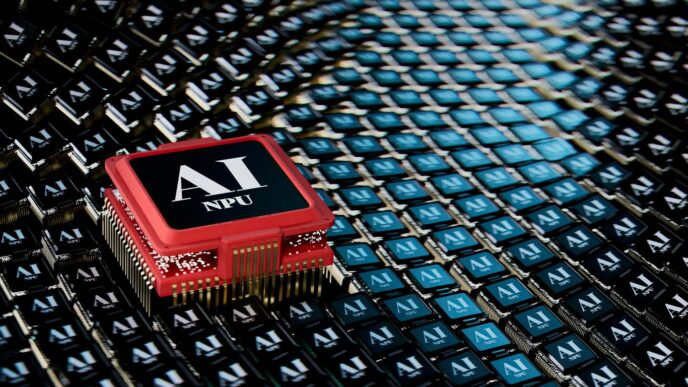
So, what’s the big deal? Microsoft’s new chip, the Majorana 1, is built using these topoconductors. Think of it as the first real engine for this new era. It’s designed with a "Topological Core," and the goal is to scale this thing up to a million qubits on a single chip. A million qubits! That’s the kind of number people say you need to actually solve those massive, world-changing problems we’ve been dreaming about quantum computers tackling.
A Leap Towards Practical Quantum Computing
What makes Majorana 1 and its topoconductor foundation so exciting is that it seems to be a more direct path to making quantum computers actually useful. We’re talking about qubits that are protected by their very design, making them more stable. Plus, they can be controlled digitally, which is a big deal because it simplifies things a lot compared to the super-precise analog controls needed for other types of qubits. This isn’t just about building a quantum computer; it’s about building one that’s reliable and can get to the scale needed for real-world applications.
Harnessing A New State Of Matter
The core of this breakthrough is a new class of materials that exhibit "topological superconductivity." This is a fancy way of saying they’ve created a new state of matter. It’s not a solid, liquid, or gas, but something else entirely, governed by topological properties. This new state allows them to create qubits using something called Majorana particles. These particles are special because the quantum information they hold is incredibly well-protected from errors, thanks to the way they’re built into the material. It’s like nature’s own error correction, built right into the hardware.
Revolutionary Materials For Quantum Breakthroughs
The Science Behind The Topoconductor
So, what exactly is this ‘topoconductor’ stuff? It’s not your everyday material, that’s for sure. Microsoft has developed a whole new class of materials that are key to their Majorana 1 quantum processor. Think of it as a special kind of superconductor, but with some really unique properties that make it perfect for quantum computing. This new material is engineered to create a specific state of matter that was, until recently, only a theoretical idea. It’s built by combining indium arsenide, a semiconductor we already use for things like infrared sensors, with a superconductor. When you get this hybrid material super cold, near absolute zero, and apply magnetic fields just right, it forms these special nanowires. And at the ends of these nanowires? That’s where the magic happens – something called Majorana Zero Modes appear.
Engineering Atom By Atom For Precision
Making these topoconductors isn’t like baking a cake; it’s way more precise. We’re talking about building these materials literally atom by atom. If there are even a few too many imperfections, or ‘defects’ as they call them, in the material stack, it can mess up the whole qubit. It’s like trying to build a house on a shaky foundation – it just won’t work. This level of precision is incredibly difficult, which is ironic because understanding these complex materials is one of the very reasons we need quantum computers in the first place. Once we have more powerful quantum computers, we’ll be able to design even better materials for future quantum machines.
Indium Arsenide And Superconductivity Synergy
The core of the topoconductor relies on a clever combination. On one hand, you have indium arsenide, a semiconductor that’s already pretty useful. On the other, you have superconductivity, which happens when certain materials conduct electricity with zero resistance, but only at extremely low temperatures. By carefully merging these two, and then cooling the whole thing down to near absolute zero, Microsoft has created a hybrid material. This synergy is what allows for the creation of topological superconductivity. It’s this specific state of matter, born from the marriage of indium arsenide and superconductivity under extreme conditions, that makes the whole topological qubit concept possible.
Topological Qubits: The Heart Of Majorana 1
Hardware Protection For Qubit Stability
So, what makes the Majorana 1 chip tick? It’s all about these "topological qubits." Think of them as the core building blocks, and they’re built using a special kind of material Microsoft calls a "topoconductor." This isn’t your everyday silicon; it’s a mix of indium arsenide and aluminum, cooled down to super low temperatures. The real magic happens when these materials create a new state of matter, one that’s theoretically protected from errors. This is a big deal because quantum computers are super sensitive to noise and interference. By building qubits that are inherently more stable, Microsoft is trying to sidestep a lot of the complex error correction that other quantum computing approaches need. This hardware-level protection is key to making quantum computers reliable enough for real-world tasks. It’s like building a house with super strong foundations instead of constantly patching up cracks.
Digital Control Of Quantum Information
One of the tricky parts with quantum computers is controlling the qubits. Usually, it involves a lot of fine-tuning, like adjusting a thousand tiny dials for each qubit. Microsoft’s topological approach aims to simplify this. They’ve figured out a way to measure the state of these qubits, which is how you get information out, using something like a digital switch. It’s a much simpler process, almost like flipping a light switch on and off, rather than needing a whole control panel. This digital control makes the whole system easier to manage and, importantly, easier to scale up. Imagine trying to build a massive city where every single light switch needs a custom-built mechanism – it would be impossible. Digital control offers a much more practical path forward.
The Promise Of Majorana Particles
The whole concept hinges on something called Majorana particles. These aren’t particles you can just find lying around; they’re theoretical and have to be coaxed into existence using those special materials and conditions we talked about. The cool thing about Majoranas is how they hide quantum information. They store it in a way that’s really hard for the outside world to mess with. This is what gives the qubits their stability. However, this hiding act also makes them tough to read. Microsoft’s recent breakthrough, published in Nature, is about finally being able to reliably measure these hidden states. They’ve developed a measurement technique so precise it can tell the difference between a billion and a billion and one electrons. That level of precision is what allows them to actually get useful information out of these protected qubits, making the promise of Majorana particles a step closer to reality.
A Roadmap To Scalable Quantum Computation
So, how do we get from the cool tech we’re seeing now to a quantum computer that can actually tackle big problems? Microsoft has a plan, and it’s pretty detailed. They’re not just hoping for the best; they’ve laid out steps to build a quantum computer that can handle errors and scale up.
The Path To A Million Qubits
Getting to a million qubits isn’t just a number; it’s about building a machine capable of real breakthroughs. Think about designing new materials or discovering new medicines – things that are currently way too complex for even the best supercomputers. Microsoft’s approach focuses on building a scalable architecture, starting with individual qubit devices and moving towards larger arrays. They’ve already got eight topological qubits on a chip designed to eventually hold a million. This is a big deal because it means they’re building with scale in mind from the get-go. It’s like planning for a skyscraper when you’re just laying the foundation.
Building The First Fault-Tolerant Prototype
This is where things get really interesting. Microsoft is working on building a prototype that can actually correct its own errors. This is super important because quantum states are fragile. They’ve partnered with DARPA on this, which is a pretty serious stamp of approval. DARPA is looking for systems that can do things beyond what current computers can handle. The goal is to have this fault-tolerant prototype ready in years, not decades. That’s a huge acceleration. They’re using a specific design called a "tetron" as their building block, and they’ve already shown it can do basic operations. This is a key step toward making quantum computation reliable enough for practical use. You can see their roadmap to fault-tolerant quantum computation which shows how they plan to go from single qubits to arrays that can correct errors.
Addressing The Challenges Of Quantum Control
Even with the best hardware, controlling qubits is tricky. Microsoft’s topological qubits have an advantage here because they’re naturally more protected from errors. But you still need to be able to manipulate them precisely. They’re using measurement-based control, which sounds complicated, but basically means they can perform operations by measuring the qubits in specific ways. This is a big step because it allows for digital control of quantum information, making the system more manageable. They’re also developing custom error correction codes that are much more efficient than older methods, meaning they need fewer physical qubits to achieve the same level of reliability. This efficiency is key to making a million-qubit machine actually feasible.
The Transformative Potential Of Topoconductors
So, what does all this mean for us? It means we’re looking at a future where problems that seem impossible today could become solvable. Think about it: the kind of calculations needed for things like discovering new medicines, creating advanced materials, or even understanding complex climate models are just too much for even the most powerful supercomputers we have now. Topoconductors, with their unique ability to host and control topological qubits, are the key to unlocking that next level of computational power.
Solving Real-World Problems With Quantum Power
This isn’t just theoretical stuff. The potential applications are huge. We’re talking about:
- Drug Discovery: Simulating molecular interactions with incredible accuracy could speed up the development of new drugs and treatments dramatically. Imagine designing personalized medicine based on your unique genetic makeup.
- Materials Science: Creating entirely new materials with specific properties, from super-efficient solar cells to lighter, stronger alloys for aerospace.
- Financial Modeling: Developing more sophisticated models to understand market behavior and manage risk, potentially leading to more stable economies.
- Artificial Intelligence: Training AI models that are far more complex and capable than anything we have today, leading to breakthroughs in machine learning and data analysis.
Beyond Current Computational Limits
Right now, our computers are great at many things, but they hit a wall when dealing with problems that have a massive number of variables or require exploring countless possibilities. Quantum computers, especially those built with reliable topological qubits, can explore many of these possibilities simultaneously. This is a game-changer for fields like optimization, where finding the best solution among a vast number of options is critical. The path to a million qubits, as outlined by Microsoft, is designed to tackle these kinds of challenges, moving us past the limitations of classical computing. This is a big step towards practical quantum computing.
The Future Of Scientific Discovery
Ultimately, topoconductors represent a new frontier. They’re not just about faster computers; they’re about enabling us to ask and answer questions we couldn’t even formulate before. The ability to engineer materials atom by atom, creating exotic states of matter like topological superconductivity, opens up avenues for scientific exploration that were previously confined to theory. It’s like getting a whole new set of tools for understanding the universe, from the smallest particles to the grandest cosmic structures. This is how we’ll push the boundaries of human knowledge.
Microsoft’s Vision For Quantum Advancement
A High-Risk, High-Reward Strategy
Microsoft really went all-in on this topological qubit idea, which, let’s be honest, was a pretty big gamble. It wasn’t the easy path, but they figured it was the one that could actually lead to something useful down the road. They knew they needed a different kind of qubit, one that was more stable and easier to control, and this topological approach seemed like the best bet, even if it meant a lot more work and uncertainty upfront. It’s like deciding to build a whole new type of engine for your car instead of just tweaking the old one – way more complicated, but potentially much faster if it works.
Commercial Impact As A Driving Force
From the get-go, Microsoft wasn’t just aiming for bragging rights or academic papers. They wanted to build a quantum computer that businesses could actually use, something that could make a real difference. That’s why they’ve been pushing so hard to scale up, aiming for that million-qubit mark. The idea is that once you have that kind of power, you can start tackling problems that are just impossible for today’s computers. Think about designing new materials that can fix themselves, or figuring out how to break down plastic waste more effectively. These aren’t just theoretical exercises; they’re real-world problems that could change a lot of things.
Collaboration In The Quantum Ecosystem
While Microsoft is building its own hardware, they’re not trying to do it all alone. They’ve been working with other companies and researchers, which makes sense. Quantum computing is a massive undertaking, and nobody has all the answers. They’re also making their technology available through Azure Quantum, so other people can start experimenting with it. It’s kind of like how the early days of personal computers involved a lot of different companies building different parts, and eventually, it all came together. They’re building the foundational tech, but they also want to see what others can do with it, especially when combined with AI. It’s a big ecosystem, and they’re trying to be a central part of it.
Looking Ahead
So, what does all this mean? Microsoft’s work with topoconductors and the Majorana 1 chip is a pretty big deal. It feels like we’re finally moving past the ‘what ifs’ and getting closer to actual, usable quantum computers. The idea of solving huge problems, like cleaning up pollution or creating new materials, is no longer just science fiction. It’s still a long road, and there are definitely challenges ahead, but this feels like a real step forward. It makes you wonder what the next few years will bring.
Frequently Asked Questions
What is a topoconductor and why is it important?
Imagine a special new material that’s not like regular solids, liquids, or gases. That’s a topoconductor! Microsoft created it, and it’s super important because it helps make quantum bits, called qubits, much more stable and reliable. This is a big step towards building powerful quantum computers that can solve really tough problems.
What is the Majorana 1 chip?
The Majorana 1 is like the brain of a new kind of quantum computer. It’s the first chip ever built using a special ‘topological core’ that relies on those topoconductor materials. Microsoft designed it to be able to hold a million qubits, which is a huge number and a key goal for making quantum computers truly useful.
How are these new qubits different from older ones?
Older quantum bits, or qubits, were really tricky to work with because they made mistakes easily. These new ‘topological qubits’ are special because they are protected by the way the material is built. Think of it like having a built-in shield that keeps them from getting messed up, making them much more dependable for calculations.
What kind of problems can a quantum computer like this solve?
Quantum computers can tackle problems that are impossible for today’s best computers. This includes things like discovering new medicines, creating amazing new materials that can fix themselves, or even figuring out how to break down pollution like microplastics. It’s about solving the world’s biggest challenges.
When will we have these powerful quantum computers?
Microsoft believes that with this new technology, we could have useful quantum computers that can solve big problems much sooner than expected – possibly in just a few years, not decades. They are working on building a test version that’s reliable enough to prove this.
Is Microsoft the only one working on quantum computers?
No, many companies and scientists around the world are racing to build quantum computers. Microsoft’s approach with topoconductors and topological qubits is a unique and promising way to tackle the challenges, but it’s part of a bigger global effort to unlock the power of quantum computing.