Wondering what’s happening in the world of space launches today, December 15, 2025? It’s a busy day, with a few key missions on the schedule. We’ll break down what you need to know about today’s nasa launch today and what else is heading skyward.
Key Takeaways
- SpaceX is scheduled for a Falcon 9 Starlink mission today, December 15, 2025, launching from Florida.
- A Chinese Long March 4C rocket is also expected to launch an unknown payload on December 15, 2025, from the Taiyuan Space Launch Site.
- Looking ahead, the United Launch Alliance Atlas V is set to launch Amazon’s Project Kuiper satellites on December 16.
- SpaceX has multiple Starlink missions planned for the coming days, including launches from both Florida and California.
- Launch schedules are always subject to change due to weather or technical reasons, so it’s good to stay updated.
Today’s Nasa Launch Schedule: December 15, 2025
SpaceX Falcon 9 Starlink Mission Details
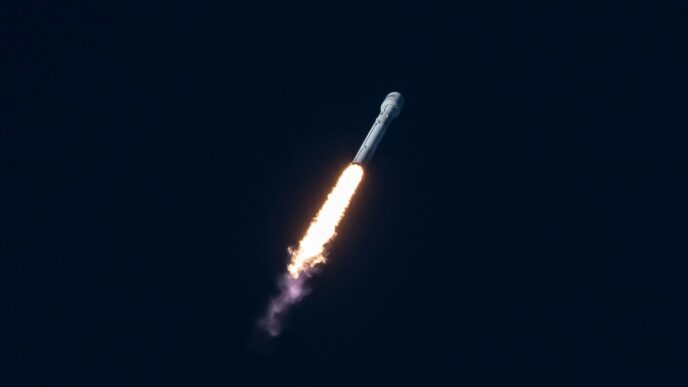
Well, folks, it looks like December 15, 2025, is shaping up to be a busy day for launches, especially with SpaceX’s Starlink program. They’re planning to send up another batch of satellites to keep that global internet service humming along. It’s pretty wild to think about how many of these are already up there, helping connect people everywhere. This particular mission is part of their ongoing effort to build out their constellation, which is already quite extensive.
Launch Site and Time for Starlink Mission
For this Starlink mission, we’re looking at a liftoff from NASA’s Kennedy Space Center in Florida. Specifically, Launch Complex 39A is the spot. The launch window is set to open in the early morning hours, around 7:45 a.m. EST. It’s always a bit of a race against time with these launches, and weather can play a big role, so keep your fingers crossed for clear skies.
Booster Landing and Mission Statistics
After the satellites are deployed, the first-stage booster from the Falcon 9 rocket will attempt a landing. SpaceX aims to bring it back down onto a droneship named ‘Just Read the Instructions,’ which will be stationed out in the Atlantic Ocean. This reusability is a huge part of what makes SpaceX’s operations so efficient. While specific mission statistics for this exact flight aren’t available yet, these Starlink missions are becoming routine, with boosters often flying for the sixth time or more. It’s a testament to the reliability they’ve built into the system.
International Launches On December 15, 2025
While NASA and its commercial partners are busy on the Space Coast, other nations are also making their mark on space exploration. Today, December 15, 2025, we’re keeping an eye on China’s space activities.
China Aerospace Science and Technology Corporation Launch
The China Aerospace Science and Technology Corporation (CASC) has a launch scheduled for later today. This mission involves an unknown payload, adding a bit of mystery to the day’s space events. CASC is a major player in China’s space program, responsible for a wide range of launch vehicles and satellite development.
Payload and Launch Site Information
The specific payload for this CASC mission hasn’t been disclosed, which is not uncommon for certain types of launches. What we do know is that it will be carried aloft by a Long March 4C rocket. This rocket is a workhorse in the Long March family, often used for deploying satellites into various orbits. The launch is slated to originate from the Taiyuan Space Launch Site in China. This facility is one of several major spaceports in the country, each with its own specialties and geographical advantages.
Launch Time and Date
The planned liftoff time for the CASC mission is 10:15 p.m. Eastern Standard Time, which translates to 03:15 GMT on December 16th. This late-night launch for some time zones means that mission control teams will be working through the night. It’s always fascinating to think about the global coordination involved in these operations. You can follow updates on international launches through various space tracking resources, like the space calendar which often lists these events.
Upcoming Launches Following December 15
Even though December 15th is packed with activity, the launches don’t stop there. The days immediately following are also looking pretty busy, with a few significant missions on the horizon.
United Launch Alliance Atlas V for Amazon Leo
Get ready for another big one from United Launch Alliance (ULA). They’re scheduled to send up an Atlas V rocket carrying satellites for Amazon’s Project Kuiper. This is part of Amazon’s plan to build a large internet constellation, kind of like SpaceX’s Starlink, but for Amazon. The Atlas V is a workhorse rocket, known for its reliability, and this particular mission, designated LA-04, will be launching from Cape Canaveral Space Force Station in Florida. It’s a pretty important step for Amazon’s goal of having a significant number of satellites in orbit.
SpaceX Falcon 9 Starlink Missions
SpaceX isn’t slowing down either. Following the launches on the 15th, they have more Falcon 9 rockets ready to go, packed with Starlink satellites. These missions are key to expanding their global internet service. We’re talking about multiple launches, potentially from both the East and West coasts, as SpaceX continues to build out its massive satellite network. Each launch adds more capacity and reach to their Starlink service, which is already serving a lot of people around the world.
SpaceX Falcon 9 for National Reconnaissance Office
Beyond the Starlink missions, keep an eye out for a SpaceX Falcon 9 rocket carrying a payload for the National Reconnaissance Office (NRO). These are typically classified missions, meaning we won’t know exactly what’s inside the payload fairing. However, NRO launches are always significant, as they are responsible for designing, building, launching, and operating the United States’ intelligence-gathering satellites. These missions are vital for national security. The Falcon 9 has proven itself to be a very capable rocket for these sensitive payloads, and its reusability helps keep costs down for these important government flights.
Key Launch Vehicles and Their Missions
When we talk about getting things into space, it’s all about the rockets. Different missions need different kinds of muscle, and NASA and its partners rely on a few workhorses to get the job done. Today, December 15, 2025, we’re seeing a lot of activity, and it’s good to know what’s actually doing the lifting.
Atlas V Rocket Capabilities
The Atlas V is a pretty reliable rocket that’s been around for a while. It’s known for being adaptable, meaning it can be set up in different ways depending on what it needs to carry. Think of it like a truck that can have different attachments for different jobs. For instance, it can use extra solid rocket boosters to give it more power for heavier payloads or missions that need to go to higher orbits. It’s been used for a lot of important science missions and national security payloads.
Falcon 9 Rocket Versatility
SpaceX’s Falcon 9 is probably the most talked-about rocket right now, and for good reason. Its big selling point is reusability. They land the first stage after launch and use it again, which helps cut down on costs. This rocket is used for all sorts of things, from launching batches of Starlink internet satellites to sending astronauts to the International Space Station and carrying important cargo for NASA’s lunar missions. It’s a real jack-of-all-trades in the launch world.
Long March Rocket Series
China’s Long March rocket family is another major player. These rockets have a long history and are used for a wide range of missions, including launching satellites for communication, navigation, and scientific research. They come in various sizes, allowing them to handle everything from small payloads to much larger ones. The Long March series is key to China’s space program and its ambitions for exploration and development.
Here’s a quick look at some of the rockets and their typical uses:
| Rocket Family | Primary Operator/Country | Key Features | Common Missions |
|---|---|---|---|
| Atlas V | United Launch Alliance (USA) | Adaptable, reliable, various configurations | National security, science missions, heavy payloads |
| Falcon 9 | SpaceX (USA) | Reusable first stage, versatile | Starlink, crew transport, cargo, lunar missions |
| Long March Series | CASC (China) | Wide range of sizes, long operational history | Satellites (comms, nav, science), space station modules, lunar missions |
Space Coast Launch Activity Overview
The Space Coast is buzzing with activity today, December 15, 2025, and it’s not just about the launches happening right now. This area is a hub for space exploration, with launches happening pretty regularly. It’s pretty amazing to think about all the rockets heading up from places like Cape Canaveral Space Force Station and Kennedy Space Center.
Launch Site Information
Florida’s Space Coast is home to two primary launch sites:
- Kennedy Space Center (KSC): Primarily used by NASA and its partners for major missions, including human spaceflight. Launch Pad 39A is a famous spot here.
- Cape Canaveral Space Force Station (CCSFS): Hosts a variety of launches from different companies, including SpaceX and ULA. You’ll find multiple launch complexes here, like Space Launch Complex 40.
Launch Window Details
Launch windows are specific periods when conditions are just right for a liftoff. They can be quite short, sometimes only a few minutes long. Missing a launch window means the mission has to wait for the next available opportunity, which could be hours or even days later. These windows depend on a lot of factors, including:
- Orbital mechanics: The Earth is moving, and the destination in space is moving, so the timing has to be perfect.
- Range safety: Making sure the rocket’s path is clear of any other aircraft or ships.
- Weather: Clouds, wind, and lightning can all cause delays.
Weather Considerations for Launches
Weather is a big deal when it comes to launching rockets. It’s not just about rain; there are specific conditions that can scrub a launch:
- Lightning: Any lightning within a certain radius of the launch pad is a no-go.
- Winds: High winds, especially at higher altitudes, can put too much stress on the rocket.
- Clouds: Thick cloud cover can sometimes interfere with tracking and safety systems.
- Temperature and Humidity: Extreme conditions can affect the rocket’s systems and fuel.
Wrapping Up December 15th’s Space Schedule
So, that’s the rundown for December 15, 2025. It looks like a pretty busy day in space, with a few launches planned. Remember, these dates can shift around, so it’s always a good idea to double-check closer to the time if you’re following along. Whether it’s a new satellite heading up or something else entirely, it’s always exciting to see what’s happening beyond our atmosphere. We’ll keep an eye on things for you!
Frequently Asked Questions
What is launching today, December 15, 2025?
On December 15, 2025, NASA is not scheduled for any launches. However, SpaceX is expected to launch a Falcon 9 rocket for a Starlink mission. Additionally, China Aerospace Science and Technology Corporation (CASC) is planning a launch with an unknown payload on a Long March 4C rocket.
Where can I watch the SpaceX Starlink launch?
The SpaceX Starlink mission is scheduled to launch from Florida. You can watch the launch online through SpaceX’s official website or YouTube channel. Many space news websites also provide live streams and coverage.
What is a Starlink mission?
Starlink is a project by SpaceX to create a network of satellites that orbit the Earth. These satellites work together to provide internet access to people all over the world, especially in places where regular internet is hard to get.
What is the Long March 4C rocket?
The Long March 4C is a rocket made by China Aerospace Science and Technology Corporation (CASC). It’s used to send various types of payloads, like satellites, into space. This particular launch has an unknown payload, meaning its exact purpose isn’t public.
Can launch dates change?
Yes, absolutely! Rocket launches are very complex and can be delayed for many reasons, like bad weather, technical issues, or problems with the rocket itself. It’s always a good idea to check the latest updates from the launch provider before making any plans.
What are some other rockets mentioned, like Atlas V and Falcon 9?
The Atlas V and Falcon 9 are both powerful rockets used for sending payloads into space. The Atlas V is made by United Launch Alliance (ULA) and is known for its reliability. The Falcon 9, made by SpaceX, is famous for its ability to land its first-stage booster back on Earth, making launches more reusable and cost-effective.