
The Unsettling Rise of the 996 Work Culture in America
It feels like just yesterday we were all talking about how the pandemic was going to change work forever, right? More flexibility, better balance, all that good stuff. But now, there’s this other thing creeping in, and it’s kind of a big deal. It’s called the "996 work culture," and it’s not just some far-off concept anymore. It means working from 9 in the morning until 9 at night, six days a week. That’s a 72-hour work week, folks. It used to be something you heard about happening overseas, mostly in China’s tech scene, but now it’s showing up here, especially in places like San Francisco.
Understanding the 996 Work Schedule
The "996" isn’t some official company policy you’ll find in the HR handbook, at least not usually. It’s more like an unspoken expectation, a grueling pace that some companies, particularly in the fast-paced tech world, are pushing for. Think about it: 9 a.m. to 9 p.m., Monday through Saturday. That’s a serious chunk of your life spent at work. Some companies are even being upfront about it in job postings, framing it as a commitment for those who are really "excited" about the grind. They might offer perks like free meals to keep you there longer, but the core expectation is clear: long hours are the norm.
A Shift from Pandemic-Era Flexibility
Remember all those conversations about avoiding burnout and embracing remote work during the pandemic? Well, it seems like the pendulum has swung back, and maybe even a bit too far. The 996 schedule is a direct contrast to that focus on well-being. It’s like a return to an older, more intense way of working, where putting in massive hours was seen as the only way to get ahead. This shift is noticeable, especially when you compare it to the flexibility many workers got used to.
Companies Embracing the Intense Schedule
So, why are some companies going for this? Often, it’s about trying to compete. In fields like artificial intelligence, where the race to innovate is fierce, some leaders believe that more hours directly translate to faster progress. You see companies offering big pay bumps or extra stock options to employees willing to sign up for the 996 life. It’s a gamble, for sure, and it definitely changes the vibe of a workplace from one that might have been focused on balance to one that’s all about intense, sustained effort. This trend suggests a significant portion of the tech industry is prioritizing rapid development and market capture over traditional work-life boundaries.
A Data-Driven Look at the 996 Effect
It’s not just talk anymore; the 996 work schedule is starting to show up in the numbers. What used to be whispers about long hours is now something we can actually see in spending patterns, especially in places like San Francisco. A look at how companies are spending money, particularly on things like food and employee perks, gives us a pretty clear picture.
Quantifiable Evidence of Increased Work Hours
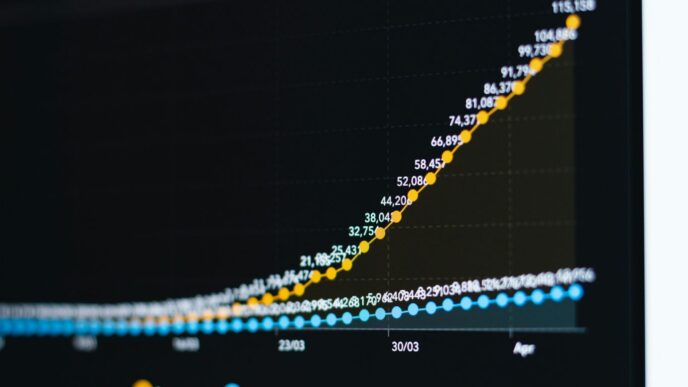
Think about it: when people are working late into the weekend, they often need to eat. A study looking at corporate card spending in San Francisco found a really noticeable jump in activity on Saturdays starting around noon and going all the way until midnight. This wasn’t happening a year or two ago. It’s a recent thing, and it’s pretty specific to that area. This pattern suggests that full workdays, complete with meals, are becoming the norm on Saturdays for many.
Here’s a quick breakdown of what the data showed:
- Saturday Work Surge: A clear increase in spending on food and delivery services on Saturdays in 2025, unlike previous years.
- Recent Phenomenon: This specific Saturday spending pattern is new, not seen in data from 2024 or earlier.
- San Francisco Focus: The trend is strongest in the San Francisco Bay Area, though other tech hubs show a smaller increase.
Basically, the 996 schedule now has a measurable footprint in the spending data. It’s recent, it’s local, and it’s not just happening in tech companies.
The San Francisco Tech Scene’s Adoption
This trend seems to be hitting the tech world particularly hard. Companies, especially those in fast-paced fields like AI, are openly advertising these intense schedules. Some job listings mention expecting employees to work over 70 hours a week, framing it as a commitment for those who are really "excited" about the work. To help make this happen, some companies are even providing all meals, including on Saturdays. It’s a big change from the focus on flexibility and avoiding burnout that we saw during the pandemic.
Corporate Spending as an Indicator
When companies start providing meals and other services to keep employees on-site for longer hours, it shows up in their expenses. The increase in Saturday spending on food delivery and restaurants is a direct indicator that people are working. It’s a way to measure the adoption of these longer workweeks without directly asking employees about their hours. This shift from a focus on work-life balance to a 72-hour workweek is a significant change, and the spending data is one of the clearest ways we can see it happening. It’s a sign that the pressure to compete is leading some businesses to push their teams harder, and the financial records are starting to reflect that.
The Downsides of Extended Work Hours
So, you’re thinking about diving into a 9-9-6 schedule? Before you do, let’s talk about what that really means for your well-being. It sounds like a fast track to success, right? More hours, more output, more wins. But the reality is often a lot messier.
Diminished Productivity and Burnout
It’s a common myth that working more automatically means getting more done. In fact, research consistently shows the opposite. When you’re pushing yourself for 72 hours a week, your brain just can’t keep up. You start making more mistakes, your creativity dries up, and you feel pretty much checked out. It’s like trying to run a marathon every single day – eventually, you just hit a wall.
- Cognitive Fatigue: Your ability to focus and solve problems takes a nosedive.
- Reduced Creativity: Those "aha!" moments become rare when you’re exhausted.
- Increased Errors: Simple mistakes creep in when your attention span is shot.
Serious Health Risks Associated with Overwork
This isn’t just about feeling tired. Working these kinds of hours can seriously mess with your health. We’re talking about more than just a headache or a bad night’s sleep. Studies have linked long work hours to:
- Heart disease and stroke
- Sleep disorders
- High stress levels and anxiety
- Musculoskeletal pain
There have even been tragic cases where people have died or taken their own lives due to the extreme pressure of these schedules. It’s a heavy price to pay for a job.
The Myth of More Hours, More Output
Let’s be clear: the idea that more time at your desk equals more success is a flawed one. Think about it – would you rather have someone work 12 hours straight and be completely drained, or have them work 8 focused hours and be sharp? The quality of your work often suffers when quantity is the only thing being measured. Companies that push these schedules might see short-term gains, but they often end up with a workforce that’s burnt out, disengaged, and ultimately, less productive in the long run. It’s a cycle that’s hard to break once it starts.
The Human Cost of the 9-9-6 Grind
So, we’ve talked about the numbers and the data, but what does this 9-9-6 schedule actually do to people? It’s not just about feeling tired, you know. It really messes with your life outside of work, and honestly, it’s not a fair trade for anyone.
Impact on Family and Personal Life
Imagine this: you’re leaving the house before your kids even wake up, and you get back when they’re already fast asleep. That’s the reality for many parents trying to keep up with a 9-9-6 schedule. You miss out on the little things – the bedtime stories, the school plays, even just sitting down for dinner together. It’s tough. And it’s not just about missing events; it’s about being too wiped out to actually enjoy the one day you do have off. Your personal life? It basically shrinks to nothing. You’re not just an employee; you’re a parent, a partner, a friend, a person with hobbies. This schedule makes it incredibly hard to be any of those things.
The Opportunity Cost of Saying Yes
When you’re offered a job with a 9-9-6 expectation, especially in a hot tech field, it can feel like a golden ticket. These roles often come with the promise of big rewards, like stock options that could really change your life. It’s tempting to think, "I’ll just do this for a few years, and it’ll be worth it." And for some, maybe it is. But what are you giving up in the meantime? You’re trading precious time with loved ones, chances to pursue other interests, and frankly, your own well-being. It’s a huge gamble, and you have to ask yourself if the potential future payoff is worth the present sacrifice. Saying yes to the grind often means saying no to the life you have right now.
Disproportionate Burden on Mothers
Let’s be real, this schedule hits mothers particularly hard. Even in households where responsibilities are shared, the bulk of childcare and household management often still falls on women. Trying to juggle a 72-hour work week with the unpredictable nature of raising kids – a sick child, a sudden daycare closure, a partner who’s also swamped – is incredibly difficult. The cost of extra childcare alone can be astronomical, adding tens of thousands of dollars a year. Beyond the financial strain, there’s the emotional toll. The guilt of not being present, the exhaustion of trying to be everything to everyone, it’s a heavy load. It often feels like a choice between advancing your career and being the kind of parent and partner you want to be, and that’s a choice no one should have to make.
The Resistance: Gen Z and the Push for Sustainable Work

It feels like everywhere you look, there’s talk about the "996" schedule – you know, 9 AM to 9 PM, six days a week. It’s a lot. But here’s the thing: not everyone is buying into it. Especially the younger crowd, Gen Z. They’re looking at this intense grind and saying, "Nah, I’m good." This generation is really pushing back against the idea that you have to sacrifice your entire life for your job.
They’re not just complaining, either. They’re actively looking for jobs that let them have a life outside of work. Think about it: who wants to be glued to their screen all the time? Gen Z is prioritizing their mental health and looking for work that actually means something to them, not just a way to clock in hours.
Here’s what this pushback looks like:
- Rejecting the "Burnout is Cool" Vibe: Gone are the days when bragging about pulling all-nighters was a flex. Gen Z sees it as a sign of a broken system, not personal achievement.
- Wanting Real Life: They want time for friends, family, hobbies, and just, you know, living. Work-life balance isn’t just a buzzword for them; it’s a requirement.
- Focusing on Well-being: Mental health is a big deal. They expect employers to support it, not contribute to its decline.
And it’s not just talk. There are real, data-backed alternatives out there. Take the four-day workweek, for example. A big trial happened recently with almost 3,000 people across 141 companies. After six months of working four days, people felt better, and guess what? Productivity didn’t drop. In fact, 90% of the companies decided to stick with it. It just goes to show that working smarter, not just longer, can actually work. Some places are even looking at making this a policy, which is pretty wild to think about, right?
Data-Backed Alternatives to the 996 Work Schedule
Look, the whole 9-9-6 thing, working 72 hours a week, it sounds like a fast track to success, right? But the data is starting to tell a different story. It turns out, pushing people to work crazy hours isn’t actually the best way to get things done. In fact, it can backfire pretty hard.
The Success of the Four-Day Workweek
This is where things get interesting. Companies that have tried out a four-day workweek, where employees work fewer days but often the same total hours or slightly fewer, are seeing some really positive results. It’s not just about giving people an extra day off; it’s about rethinking how work gets done.
- Increased Focus: When people know they have less time, they tend to focus more on what really matters. Less time is wasted on busywork.
- Better Morale: An extra day off does wonders for people’s mood and energy levels. They come back to work feeling refreshed.
- Reduced Costs: For businesses, this can mean lower utility bills and less office wear and tear.
Some studies have shown that productivity doesn’t just stay the same – it can actually go up. People are more engaged and less likely to be staring at the clock.
Improved Employee Well-being and Productivity
It’s pretty simple when you think about it. When you’re not constantly exhausted, you’re going to be better at your job. The 9-9-6 schedule is a one-way ticket to burnout. People get sick more often, make more mistakes, and eventually, they just can’t keep up.
Here’s a quick look at what happens when hours get too long:
| Metric | Standard Week (40 hrs) | 9-9-6 Week (72 hrs) |
|---|---|---|
| Productivity per Hour | High | Declines |
| Error Rate | Low | Increases |
| Burnout Risk | Moderate | Very High |
| Employee Retention | Good | Poor |
The data clearly shows that working fewer, more focused hours leads to better outcomes for both the employee and the employer. It’s about working smarter, not just longer.
Policy Considerations for Shorter Weeks
So, how do we make this shift happen on a larger scale? It’s not just up to individual companies. Governments and industry leaders have a role to play.
- Incentives for Adoption: Governments could offer tax breaks or grants to companies that successfully implement shorter workweeks.
- Pilot Programs: Encouraging more large-scale pilot programs can gather more data and demonstrate the benefits to hesitant businesses.
- Legal Frameworks: Updating labor laws to reflect modern work patterns and protect against exploitative hours is also key.
Moving away from the 9-9-6 grind isn’t just a nice idea; it’s becoming a data-driven necessity for a healthier, more productive workforce.
Navigating Career Choices Amidst the 996 Trend
So, you’re looking at jobs, and this whole 9-9-6 thing keeps popping up, especially in the hot tech scene. It’s easy to feel like you have to say yes, right? Especially when the pay and the potential stock options look amazing. It feels like you’re on the fast track, and saying no means you’re falling behind. Some folks go into it thinking, ‘I’ll just do this for a couple of years, get ahead, and then I’ll dial it back.’ And hey, for some people, that might actually work out.
But let’s be real, it’s not always that simple. The cost isn’t just about the hours you’re putting in. It’s about what you’re giving up in your actual life. Missing out on family stuff, feeling too wiped to enjoy your days off, or just not having the energy to be you outside of work. It’s a big trade-off, and for many, especially those with family responsibilities, it feels like a really tough choice.
The good news is, it doesn’t have to be an all-or-nothing situation. You can still aim for a fulfilling career without sacrificing your well-being.
Looking Beyond High-Profile Startups
Not every company that’s doing interesting work is pushing a 9-9-6 schedule. There are plenty of solid businesses out there, maybe not the ones always splashed across the tech news, that value results over just clocking in a ton of hours. Think about companies that offer hybrid setups, where you might go into the office a couple of days a week, but the focus is on what you accomplish, not just how long you’re at your desk. You might have fewer options this way, and these places might not have the same ‘buzz’ as the big names, but if you’re looking for a more sustainable pace, it’s definitely worth exploring.
Considering Individual Contributor Roles
Sometimes, the pressure for extreme hours comes with management roles. If you’re more interested in the actual work – coding, designing, analyzing – rather than managing teams, looking at individual contributor (IC) positions can be a good move. These roles often have a clearer focus on specific tasks and deliverables, and while they still require hard work, they might not come with the same expectation of being ‘always on’ that some leadership positions do. It’s about finding a role where your technical skills are the main focus.
Valuing Sustainability Over Prestige
Ultimately, it comes down to what you want your life to look like. Is the ‘hottest’ job title worth feeling constantly drained? Or is it more important to have a career that allows you to live a fuller life outside of work? There are jobs that offer great challenges and growth without demanding your entire existence. It’s about finding that balance that works for you, even if it means choosing a path that’s less about the immediate prestige and more about long-term happiness and health.
So, What’s the Verdict on 996?
Look, the whole 996 thing? It’s a real head-scratcher. Some companies are pushing it hard, thinking more hours automatically means more gets done. But the data just doesn’t back that up. Turns out, people get tired, make more mistakes, and eventually just burn out. Plus, there’s a whole generation, Gen Z mostly, who are pushing back hard and looking for something better, like that four-day week that seems to actually work. So, is 996 the future? Probably not for most people. It feels like a step backward, and honestly, most of us just want a life outside of work. We’ll see how it plays out, but right now, it doesn’t seem like a winning strategy for the long haul.