Hey everyone! So, the world of IoT platforms is changing, and it’s happening fast. We’re not just talking about connecting more gadgets anymore. By 2026, these platforms are becoming way more sophisticated, basically acting like the brains behind how our physical world works. Think less about just collecting data and more about making smart decisions automatically. It’s a big shift, and understanding these changes is key for anyone involved.
Key Takeaways
- IoT platforms are moving beyond simple data collection to become active decision-makers, integrating sensing, reasoning, and action for a more intelligent physical enterprise.
- Computer vision and edge AI are becoming central, allowing IoT systems to ‘see’ and make immediate decisions locally, rather than relying solely on the cloud.
- Connectivity is prioritizing reliability and consistent performance (determinism) over just raw speed, with 5G and hybrid strategies playing a big role.
- Security is no longer an afterthought; it’s a core requirement from the start, with regulations and Zero Trust principles shaping how IoT platforms are built.
- The market is seeing consolidation and a focus on platforms that offer strong security, clear monetization paths, and interoperability to break down vendor lock-in.
The Evolving Role of IoT Platforms
From Data Collection to Intelligent Action
IoT platforms used to be mostly about gathering data. Think of it like a digital ear and eye for your business, just collecting information from sensors and devices. But that’s changing, fast. Now, these platforms are expected to do more than just listen and see; they need to understand what’s happening and actually do something about it. We’re talking about systems that don’t just tell you a machine might break, but figure out the best time to fix it, considering things like worker availability and production schedules. It’s a shift from just knowing to actively managing. This means platforms are becoming smarter, moving beyond simple alerts to offering concrete, actionable steps that directly impact business goals.
The Software Layer of the Physical Enterprise
Imagine the physical world – factories, buildings, vehicles – all equipped with sensors. IoT platforms are becoming the software that ties all this physical stuff together, making it work smarter. They’re like the operating system for the real world. This layer connects everything, allowing different parts of a business, or even different businesses, to talk to each other. It’s where all the information from sensors gets processed, analyzed, and turned into instructions. This makes the physical operations more efficient and responsive, almost like a digital brain for physical assets.
Convergence of Sensing, Reasoning, and Action
What’s really interesting is how these platforms are bringing together different capabilities. They’re not just about sensing the environment anymore. They’re also about reasoning – figuring out what the sensed data means. And then, they’re about acting on that understanding. This three-part process, sensing, reasoning, and acting, is becoming standard. For example, a smart building might sense occupancy, reason that lights and HVAC can be adjusted, and then act to save energy. This integrated approach means IoT platforms are becoming central to how businesses operate, making them more automated and intelligent.
Key Technological Shifts in IoT Platforms
Alright, so what’s actually changing under the hood with IoT platforms? It’s not just about more gadgets connecting; it’s how they’re working and what they’re doing.
Computer Vision as the Sensory Backbone
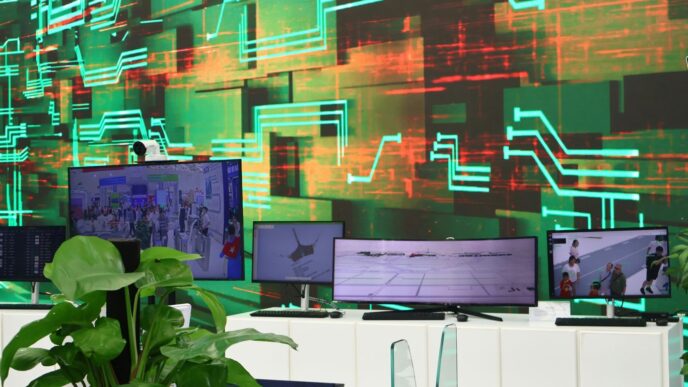
Think about it, cameras are everywhere now. Instead of just basic sensors, computer vision is becoming a major way IoT systems ‘see’ and understand the world. This means platforms are getting smarter at processing visual data, not just for security cameras, but for everything from checking product quality on an assembly line to monitoring traffic flow in a city. It’s like giving the IoT a pair of eyes that can actually make sense of what it’s looking at. This shift means platforms need more power to handle all that image data, often right where it’s collected.
Edge AI Dominance for Real-Time Decisions
Speaking of processing data where it’s collected, that’s where Edge AI comes in. Instead of sending every bit of data back to a central server, a lot of the ‘thinking’ happens right on the device or a local gateway. This is a big deal for things that need instant reactions, like autonomous vehicles or industrial robots. Waiting for data to go to the cloud and back just isn’t fast enough anymore. Edge AI helps cut down on latency and also reduces the amount of data that needs to be transmitted, which saves bandwidth and costs. It’s all about making quicker, smarter decisions closer to the action. This is a major driver for the next significant phase of growth in the IoT sector.
Prescriptive Maintenance Over Predictive
We’ve talked about predictive maintenance for a while now – figuring out when something might break. But the real game-changer happening now is prescriptive maintenance. This isn’t just about predicting a failure; it’s about telling you exactly what to do about it, and when. IoT platforms are starting to factor in things like technician availability, spare parts inventory, and even production schedules. So, instead of just getting an alert that a machine might fail, you’re getting a recommended action plan that considers the bigger business picture. It moves from ‘Will it fail?’ to ‘What’s the best course of action?’ which is a much more practical approach for keeping operations running smoothly.
Connectivity and Infrastructure Advancements
Okay, so let’s talk about how devices actually talk to each other in the IoT world. It’s not just about having a bunch of gadgets; it’s about making sure they can communicate reliably and efficiently. This area is seeing some pretty interesting shifts, moving beyond just raw speed to focus on what really matters for industrial and critical applications.
Determinism Over Speed in Connectivity
For a long time, the big push was just making things faster. Think about your home internet – you want the quickest download speeds, right? But in the industrial IoT space, especially for things like factory automation or critical infrastructure monitoring, it’s not always about being the absolute fastest. What’s more important is predictability. We need to know that a signal will arrive within a specific, guaranteed timeframe, every single time. This is what we call determinism. If a robot arm needs to move at a precise moment, a slight delay could cause a problem. So, while 5G offers incredible speeds, the focus is increasingly on how to make those connections reliably consistent, not just quick.
The Rise of 5G and Open RAN
Speaking of 5G, it’s definitely a big deal. It’s not just for your phone anymore; it’s enabling a whole new level of IoT capabilities with its low latency and high bandwidth. Think about things like real-time video analysis for quality control on a production line or remote surgery. But it’s not just about the big carriers rolling out their networks. We’re also seeing the growth of Open RAN (Radio Access Networks). Basically, this is like taking the proprietary, closed-off systems that telcos used to use and opening them up. It means different companies can build different parts of the network infrastructure, which should lead to more innovation and potentially lower costs. It’s about making the network more flexible and less dependent on a single vendor.
Hybrid Connectivity Strategies
What’s becoming clear is that there’s no single ‘best’ way to connect everything. Different situations call for different tools. So, many organizations are adopting hybrid strategies. This means they might use 5G for high-bandwidth, low-latency needs in one area, but then use older, more established cellular technologies like LTE-M or NB-IoT for simpler devices that just need to send small amounts of data periodically, like a temperature sensor. They might even mix in satellite or LoRaWAN for remote locations where cellular coverage is spotty. The key is to pick the right tool for the job, balancing cost, power consumption, and performance requirements. It’s about building a connected ecosystem that’s robust and cost-effective by using a mix of technologies.
Security and Regulatory Imperatives

Secure-by-Design as an Entry Requirement
Look, nobody wants to deal with security headaches, right? Especially not in 2026. The days of tacking on security as an afterthought are long gone. Now, it’s got to be baked in from the very start. Think of it like building a house – you wouldn’t put the roof on before the foundation is solid. IoT platforms need that same kind of upfront thinking. This means things like making sure devices can’t be easily hacked with default passwords (seriously, still a thing!) and that the software running on them is kept up-to-date. It’s about building trust from day one, so companies don’t have to worry about their connected devices becoming weak links in their systems.
Navigating Evolving Data Privacy Laws
Data privacy is a big deal, and it’s only getting bigger. Laws like the EU Data Act, which became fully applicable in late 2025, are putting more control over device data right back into the hands of users. This impacts everything from your smartwatch to your smart home appliances and even industrial machines. IoT platforms have to be built with these regulations in mind, making sure data is handled responsibly and transparently. It’s not just about avoiding fines; it’s about respecting people’s privacy and building a sustainable business. Companies are increasingly looking for platforms that can manage data across different regions and comply with all the local rules.
Zero Trust Principles in IoT Architecture
Zero Trust might sound a bit intense, but it’s a smart way to approach security in a world where threats are constantly changing. The basic idea is simple: don’t automatically trust anything or anyone, even if they’re already inside your network. Every device, every user, every connection needs to be verified. For IoT platforms, this means implementing strict access controls, constantly monitoring activity, and segmenting networks so that if one part gets compromised, the rest stays safe. It’s a more proactive stance that helps protect against those persistent security issues we’ve been seeing for years. This shift towards continuous verification is becoming a standard expectation for any serious IoT deployment.
Here’s a quick look at some key security features that are becoming non-negotiable:
- Role-Based Access Control (RBAC): Limits what users can do based on their job. This stops someone from accidentally or intentionally messing with things they shouldn’t.
- Multi-Tenant Isolation: If a platform serves multiple clients, this keeps each client’s data and operations completely separate from the others. Think of it like having separate, locked rooms for each guest.
- Audit Trails: Detailed logs of who did what and when. This is super important for figuring out what went wrong if something happens and for proving compliance to regulators.
Industry-Specific IoT Platform Applications
It’s pretty wild how IoT platforms are showing up in all sorts of places, not just in factories or big tech companies anymore. They’re really starting to make a difference in how specific industries work, making things more efficient and sometimes even creating entirely new ways of doing things.
Smart Buildings as Energy Orchestrators
Think about smart buildings. It’s not just about turning lights on and off with your phone. These platforms are becoming the brains behind managing a building’s energy use. They can monitor everything from HVAC systems to occupancy sensors and then make smart decisions to cut down on waste. This intelligent energy management is becoming a major selling point for commercial real estate. It’s about more than just comfort; it’s about saving money and being more environmentally friendly. We’re seeing platforms that can predict when energy demand will be high and adjust usage proactively, sometimes even interacting with the local power grid to take advantage of off-peak rates. It’s a complex dance of sensors, data, and automated responses.
Transforming Manufacturing with IoT
Manufacturing has always been a big area for IoT, but it’s really evolving. We’re moving beyond just tracking assets on the factory floor. Now, platforms are helping with things like predictive maintenance, where sensors on machines can tell us when a part is likely to fail before it actually breaks. This saves a ton of downtime and money. Plus, with the rise of digital twins, manufacturers can create virtual replicas of their production lines. This allows them to test changes or troubleshoot issues in a simulated environment before touching the real equipment. It’s a huge step up from just collecting data; it’s about using that data to make smarter, faster decisions on the factory floor. For managing industrial edge container deployments, platforms like Portainer are becoming quite popular [0d97].
Advancements in Healthcare and Logistics
Healthcare is another area where IoT is making big waves. Imagine remote patient monitoring, where devices can track vital signs and send alerts to doctors if something is wrong. This is especially helpful for people with chronic conditions or those living in rural areas. IoT platforms are also being used for things like smart hospital beds that can monitor patient movement and prevent falls, or even for tracking the temperature of sensitive medications during transport. In logistics, it’s all about visibility. Platforms can track shipments in real-time, monitor conditions like temperature and humidity for sensitive goods, and optimize delivery routes. This means fewer spoiled products and happier customers. The ability to manage device lifecycles and ensure secure data transmission is key here, especially with the increasing focus on data privacy regulations.
Investment and Market Dynamics for IoT Platforms
It feels like just yesterday we were talking about IoT as this futuristic idea, and now, it’s a full-blown market with serious money flowing in. Investors are really paying attention to IoT platforms, and it’s not just about the number of devices anymore. They’re looking for platforms that can actually make money and keep things secure.
Investor Focus on Security and Monetization
When you look at where the smart money is going, security and how platforms make money are at the top of the list. With so many devices out there, the risk of cyberattacks is a big deal. So, platforms that build security in from the start, not as an afterthought, are getting a lot more attention. Think about it: if your smart factory gets hacked, the damage could be huge. That’s why investors are willing to back platforms that offer strong security features and can prove they protect data.
On the monetization side, it’s not just about selling a platform. Investors want to see flexible ways for businesses to make money from their IoT setups. This often means usage-based pricing or services that help manage the whole lifecycle of a device, from when it’s made to when it’s retired. It’s about creating a sustainable business model, not just a one-off sale.
Market Consolidation and Strategic Acquisitions
The IoT platform market is getting crowded, and that means some companies are buying others to get bigger or grab new technology. We’re seeing bigger players snapping up smaller ones that have a good niche or a strong customer base. This consolidation isn’t necessarily a bad thing; it often means more stable, well-supported platforms for users. It also means that startups need to have a really clear plan and something unique to offer if they want to stand out.
Here’s a quick look at what’s happening:
- Mergers & Acquisitions: Larger companies are buying smaller ones to expand their capabilities and market reach.
- Platform Exits: Some companies might get bought out by bigger players, while others might pivot their focus.
- Focus on Scale: Investors are backing platforms that can handle a massive number of devices and complex operations.
The Role of Venture Capital and Corporate Investment
So, who’s actually putting up the cash? It’s a mix. You’ve got traditional venture capital firms looking for the next big thing, especially in areas like AI for IoT or specialized industry solutions. Then there are the big tech companies and telecom providers. They’re investing directly or through their own venture arms, often to secure partnerships or get early access to new technologies that fit into their own ecosystems. Think of Microsoft partnering with Vodafone, or Deutsche Telekom backing global platforms. It’s a dynamic landscape, and these investments are shaping the future of how we connect and use devices.
Interoperability and Standardization in IoT
Breaking Down Vendor Silos with Open Standards
Remember when every smart gadget seemed to speak its own secret language? It felt like trying to get a bunch of people from different countries to have a conversation without a translator. That’s kind of what the IoT world was like for a long time. You’d buy a smart light bulb from one company, a smart thermostat from another, and getting them to play nice together was a real headache. It made building bigger systems really expensive and a pain to keep running.
But things are changing. We’re seeing a big push towards open standards. Think of it like agreeing on a common language that everyone can use. Organizations like the Connectivity Standards Alliance are working hard to make sure devices and platforms can talk to each other, no matter who made them or what kind of wireless tech they use. This means less hassle for businesses and consumers trying to connect different things.
The Impact of Matter on Smart Home Ecosystems
The smart home is a prime example of this shift. You’ve probably heard of Matter. It’s a newer standard that’s backed by big names like Apple, Google, and Amazon. The idea is simple: make it easier for your smart lights, locks, speakers, and other gadgets to work together. Starting in 2025, these companies began accepting Matter certification directly, which is a big deal. It means if a product has the Matter badge, you can be more confident it will work with your existing smart home setup, regardless of the brand. This is helping to clear up some of the confusion and make smart homes more user-friendly.
Ensuring Seamless Device Communication
So, what does this mean for how devices talk to each other? It means more reliability and less guesswork. When devices follow the same rules, they can communicate more predictably. This is super important for things like industrial robots or safety systems where a dropped signal or a delay can cause big problems. It’s not just about speed anymore; it’s about making sure the communication is dependable, every single time. This consistency is what allows more complex IoT systems to be built and function correctly, moving beyond simple data collection to more sophisticated operations.
Wrapping It Up: What’s Next for IoT?
So, looking at everything, it’s clear that IoT in 2026 isn’t just about having more gadgets connected. It’s really about making those connections smarter and more useful. We’re seeing platforms get better at not just spotting problems before they happen, but also figuring out the best way to fix them, considering things like who can do the work and when. Connectivity is shifting too; it’s less about how fast it is and more about how reliable it needs to be for things like robots or safety systems. And security? That’s not an afterthought anymore; it’s built in from the start, partly because of new rules. Even buildings are getting smarter, acting like mini power grids. All these changes mean IoT is becoming the brain for how businesses operate in the real world, bringing together what things sense, how they think, and what they do. The big question now is how companies will actually use all this to their advantage.
Frequently Asked Questions
What are IoT platforms doing now that’s different from before?
Before, IoT platforms were mostly about collecting information from devices. Now, they’re smarter. They don’t just gather data; they use it to make decisions and take action, like fixing a machine before it breaks or managing a building’s energy use automatically. Think of them as the ‘brains’ for physical things.
Why is computer vision becoming so important for IoT?
Computer vision is like giving IoT devices ‘eyes’ that can understand what they see. Instead of just noticing shapes, these systems can now figure out what’s happening in a scene. This helps in places like factories to spot problems or in stores to understand how people move around.
What does ‘Edge AI’ mean for IoT?
Edge AI means that the ‘thinking’ or decision-making part of AI happens right on the device or nearby, instead of sending all the data to a faraway computer. This makes things happen much faster, which is great for things like robots or self-driving cars that need to react instantly.
How is security changing for IoT devices?
Security is now a must-have from the very beginning, not an add-on. New rules and ideas, like ‘Zero Trust,’ mean that every part of the system needs to be checked and secured. It’s about making sure devices are safe and private from the start.
What’s new with smart buildings and IoT?
Smart buildings are becoming more than just automated spaces. They’re now like energy managers. IoT platforms help control heating, lights, and even electric car charging all at once to save energy, be eco-friendly, and keep people comfortable, all while working with the bigger energy grid.
What is ‘interoperability’ in IoT, and why does it matter?
Interoperability means that different devices and systems, even from different companies, can work together and talk to each other easily. This is important because it breaks down barriers, making it simpler and cheaper to build and manage complex IoT systems, especially in smart homes.