
So, you’re thinking about jumping into the electric SUV world? It’s a pretty exciting time, with tons of new models hitting the market. Figuring out which one is the best ev suv for you can feel a bit overwhelming, though. That’s why we’ve put together this list, looking at some of the top contenders for 2025. We’re not going to get too technical, just give you the straight scoop on what makes these vehicles stand out. Let’s see what’s out there.
Key Takeaways
- The 2025 Kia EV9 is a top pick for electric SUVs, scoring well in safety, efficiency, and cargo space.
- While not as spacious as the EV9, the 2025 Chevrolet Blazer EV still ranks high due to its strong safety and efficiency ratings.
- We analyzed vehicles based on safety, power, efficiency, cargo space, and warranty to provide objective rankings.
- The Hyundai Ioniq 5 stands out with ultra-fast charging, a spacious interior, and a retro-futuristic design.
- The Tesla Model Y is a strong all-around option, known for its compelling EV features and performance.
1. Kia EV9

The Kia EV9 is a pretty big deal in the electric SUV world, especially if you need more than five seats. It’s only been around for a little while, so for 2025, Kia hasn’t really shaken things up too much. They did add a new package called the Plus Package for the Land AWD trim, which throws in some nice extras like bigger wheels and fancier seats.
When it comes to power, you’ve got options. The base Light RWD model gives you 215 horsepower, which is fine for getting around town. But if you want more pep, the AWD versions really step it up, offering up to 379 horsepower. This thing moves when you hit the accelerator, making highway merging a breeze. It also handles pretty well, feeling stable even when the wind picks up. Plus, Kia even put in special driving modes for snow, which is smart.
Range is decent for a big electric SUV. The Light RWD gets about 370 km, while the bigger battery models can push closer to 490 km. What’s really cool is the charging speed. If you can find a super-fast 350 kW charger, you can get the battery from 10% to 80% in about 24 minutes. That’s pretty quick for a vehicle this size.
Inside, it’s pretty comfortable. All models get two big screens – one for the driver and one for the infotainment. You also get things like climate control for three zones and plenty of USB ports. Higher trims add even more goodies like heated second-row seats and a better sound system. The seats are comfy, and some even have a sort of massage feature, which is a nice touch after a long drive. They also thought about families, with cupholders that can turn into storage and a center console that can be accessed from the second row, even acting as a little tray back there.
Space is definitely a strong point. You can fit three rows of people, though the third row is a bit tighter for adults. Cargo space is good, especially when you fold down the seats. It can even tow a decent amount, up to 5,000 lbs on the AWD models, which is handy if you need to pull a trailer.
Here’s a quick look at the estimated ranges and pricing for Canada:
| Trim Level | Battery Size | Drive Type | Estimated Range (km) | Starting Price (CAD) |
|---|---|---|---|---|
| Light RWD | 76.1 kWh | RWD | 370 | $59,995 |
| Wind RWD | 99.8 kWh | RWD | 489 | $62,995 |
| Land AWD | 99.8 kWh | AWD | 451 | $64,995 |
| Land AWD + Plus Package | 99.8 kWh | AWD | 451 | $69,995 |
| Land AWD + Premium Package | 99.8 kWh | AWD | 451 | $74,995 |
| Land AWD + GT-Line Package | 99.8 kWh | AWD | 435 | $78,995 |
Note: Prices are before any applicable government rebates.
2. Chevrolet Blazer EV
Alright, let’s talk about the Chevrolet Blazer EV. This one’s been making some waves, and for 2025, they’re really pushing it with the addition of the SS model. If you’re looking for something with a bit more pep, the SS is where it’s at. It’s got this "Wide Open Watts" mode that sounds pretty wild, promising some serious acceleration.
When it comes to getting around, the Blazer EV offers a few different setups. You’ve got rear-wheel drive and all-wheel drive options, and depending on which you pick, you’re looking at different horsepower and torque figures. The battery sizes also vary, which naturally affects your driving range. For instance, the rear-drive RS model is rated for a decent 538 km on a full charge, while the AWD versions get about 455 km. The SS model, with its bigger battery and dual motors, should also offer a good range, though Chevy hasn’t released all the exact numbers for that one yet.
Charging is always a big question with EVs, right? Chevrolet does things a little differently here. Instead of always telling you how long it takes to get to 80%, they often mention how much range you can add in just 10 minutes with a DC fast charger. For the RS rear-drive, you can add about 128 km in 10 minutes, which is pretty handy if you’re on a longer trip. If you’re using a Level 2 charger at home, expect it to take around 9.5 to 11.2 hours to fully charge, depending on the battery size.
Inside, the Blazer EV feels pretty modern. You get this big 17.7-inch infotainment screen that dominates the dashboard, paired with an 11-inch digital driver display. It’s running on Google’s Android Automotive OS, which means things like Google Maps are built right in, and you can use the Google Assistant for voice commands. Just a heads-up, some of these features might need a subscription after a while, and that semi-autonomous Super Cruise system also has a subscription after the initial free period. Oh, and a bit of a bummer for some: it doesn’t support Apple CarPlay or Android Auto directly. Still, the seats are comfy, and the materials feel pretty good quality.
Here’s a quick look at how the pricing shakes out for the 2025 models in Canada (remember, these are before any government rebates):
- LT AWD: Starts around $57,999
- RS AWD: Around $61,699
- RS Rear-Drive: About $64,999
- SS AWD: The top-tier model, coming in at $69,999
Don’t forget to add about $2,500 for delivery on all models.
3. Hyundai Ioniq 5
The Hyundai Ioniq 5 is a really interesting electric SUV. It stands out with its retro-futuristic design, which is pretty unique in the EV market. It’s built on a special electric platform, giving it a spacious interior and a smooth ride.
The Ioniq 5 offers a good balance of range, performance, and practicality. It’s the kind of car that feels at home whether you’re commuting in the city or heading out on a longer trip. The interior is modern and minimalist, with plenty of tech features to keep you connected and comfortable.
Here’s a quick look at some of its key features:
- Performance Options: You can get it with different battery sizes and either rear-wheel or all-wheel drive, so you can pick what suits your needs best. The more powerful versions offer quick acceleration that’s genuinely fun.
- Charging Speed: One of its big selling points is its ability to charge really fast. If you can find a compatible high-speed charger, you can get a significant amount of range back in a short amount of time.
- Interior Space: Thanks to its flat floor and long wheelbase, the Ioniq 5 feels surprisingly roomy inside, especially for rear passengers. The cargo space is also quite decent for an SUV.
While the Ioniq 5 N model cranks up the performance with more horsepower and track-focused features, the standard Ioniq 5 is a solid choice for most people looking for a stylish and capable electric SUV.
4. Tesla Model Y
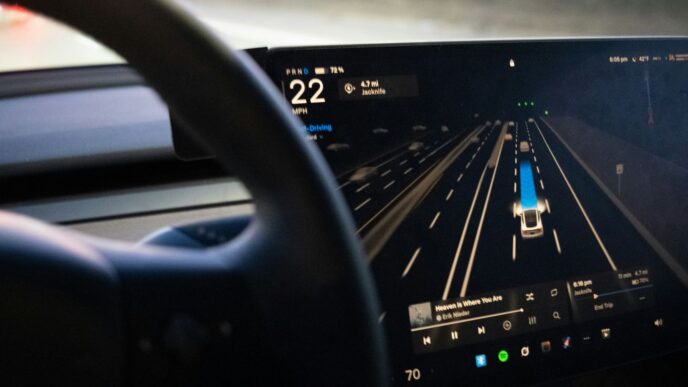
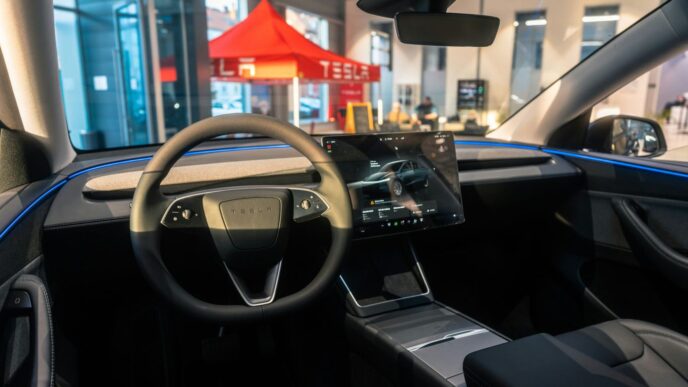
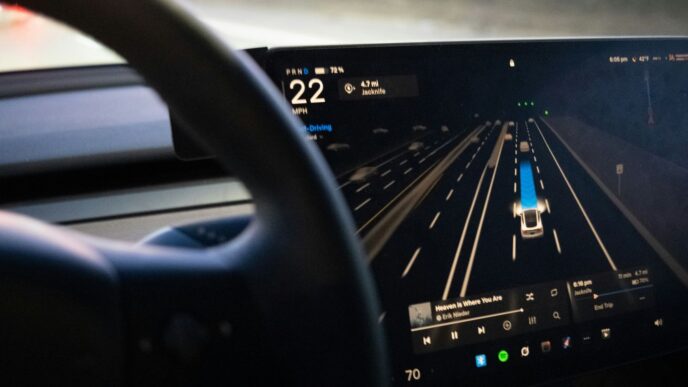
It’s hard to talk about electric SUVs without mentioning the Tesla Model Y. Honestly, it’s kind of the default choice for a lot of people, and for good reason. Tesla really hit a sweet spot with this one, balancing range, performance, and that minimalist tech vibe that’s become their signature.
For 2025, Tesla is rolling out what they’re calling the ‘Juniper’ update, which is basically a refresh. Think of it like giving your favorite app a makeover – it looks a bit sleeker, maybe a few new features, but it’s still the same core experience you know and love. We’re expecting some tweaks to the exterior, maybe a sharper front end, and definitely some interior upgrades. They’re aiming to smooth out that ride quality that some folks found a bit rough before and make the inside feel a bit more premium, less… well, basic.
The Model Y continues to be a top pick because it just works for so many different people. Whether you’re commuting across town or planning a road trip, its range is pretty solid. The base rear-wheel-drive version can get you about 525 kilometers on a full charge, which is plenty for most daily driving and even some longer hauls. If you opt for all-wheel drive, that number dips slightly to around 501 km, and the high-performance version, while quick, will give you about 446 km. It’s not the absolute longest range out there, but it’s a good, practical amount.
Inside, it’s the classic Tesla experience: a big central touchscreen controls almost everything. Some people love this super clean look, while others miss having physical buttons for things like climate control. For 2025, they’re apparently sticking with the 15.4-inch main screen, and sadly, no sign yet of that extra screen for the back seats that’s in the Model 3. You can get white seats and ditch the wood trim for an extra $1,300 if you want to spice things up a bit.
Here’s a quick look at how the different versions stack up:
- Rear-Wheel Drive: Starts around $59,990. Good range, single motor, 0-100 km/h in under 7 seconds.
- All-Wheel Drive: Adds about $4,000 to the price. Dual motors, quicker acceleration (around 5 seconds 0-100 km/h), slightly less range.
- Performance: The top-tier option, costing around $68,990. Dual motors, seriously fast (3.7 seconds 0-100 km/h), but the shortest range at 446 km.
Safety-wise, the Model Y has a good track record, scoring well in crash tests. It’s a practical choice, and even with new competition popping up, it remains a strong contender for anyone looking for a mainstream electric SUV.
5. Acura ZDX
Acura’s ZDX is a pretty interesting addition to the electric SUV scene for 2025. It’s not a total redesign from last year, but honestly, it didn’t really need to be. This SUV comes with options for either a single or dual-motor setup, and if you go for the dual-motor, you’re looking at a pretty hefty 500 horsepower. That’s more than enough to get you moving quickly.
One of the cool things about the ZDX is its infotainment system. It uses Google’s operating system, which makes things feel pretty familiar and easy to use. Plus, it’s packed with all sorts of driver assistance and safety features, which is always a good thing. The ZDX offers a solid driving range, with the all-wheel-drive version getting an estimated 304 miles on a single charge. If you’re eyeing the performance-focused Type S model, that range dips a bit to 278 miles, but you’re getting a lot more zip for your buck.
Here’s a quick look at the estimated range:
| Drivetrain | Estimated Range |
|---|---|
| Rear-Wheel Drive | ~310 miles |
| All-Wheel Drive | 304 miles |
| Type S (AWD) | 278 miles |
It’s definitely a contender if you’re looking for a blend of luxury, performance, and decent electric range in an SUV package. Acura seems to be hitting its stride with its electric offerings, and the ZDX is a good example of that. You can check out more about the Acura ZDX if you’re curious.
6. Audi Q4 E-Tron
The Audi Q4 e-tron might be Audi’s entry-level electric SUV, but don’t let that fool you into thinking it’s basic. Last year’s updates brought improvements to comfort and charging speed, though its peak charging rate still sits below 200 kWh, which is a bit behind what some other EVs can do. Still, it scores points for its tight turning radius, well-done interior tech, and good looks. If you opt for the Sportback version, you get a sloping roofline that looks pretty sharp and helps with range due to better aerodynamics, but you do give up a bit of cargo room, rear headroom, and visibility.
Here’s a quick look at what the Q4 e-tron offers:
- e-quattro All-Wheel Drive: This system intelligently switches between two-wheel and all-wheel drive based on what the road conditions require.
- Fast Charging: It can handle DC fast-charging up to 175 kW, which really cuts down on how long you’re plugged in.
- Tech-Forward Interior: Expect features like a virtual cockpit and an augmented reality head-up display for a modern driving feel.
The Q4 e-tron really balances luxury with electric efficiency and solid build quality. It’s designed with driving dynamics and advanced tech in mind, making it a strong contender in the luxury electric SUV market.
7. Audi Q6 E-Tron
Audi’s Q6 E-Tron is shaping up to be a pretty big deal for the brand, especially since it’s built on a new platform shared with Porsche. This means it should handle well and offer some serious electric performance. We’re looking at a range that should easily clear 300 miles on most versions, which is great for longer trips.
Inside, you’ll find Audi’s latest tech. There’s a big, curved screen that’s 14.5 inches across, and it’s where you’ll control pretty much everything – from the music to the air conditioning and all the car’s settings. It’s supposed to feel pretty futuristic.
Here’s a quick look at what we expect:
- New Platform: Shared with Porsche, promising good driving dynamics.
- Impressive Range: Aiming for over 300 miles on a charge.
- High-Tech Interior: Featuring a large, curved display for all controls.
- Fast Charging: Designed to get you back on the road quickly.
Audi is really trying to make a splash with this one, aiming to compete with some tough rivals. It seems like they’ve learned a lot from their earlier electric models, and the Q6 E-Tron feels like a big step forward.
8. Nissan Leaf
The Nissan Leaf has been around for a while, and for 2026, it’s getting a bit of a makeover, leaning into a more crossover-like style. It’s still essentially a hatchback, but with a fresher look and a surprisingly nice, bright interior. For those watching their wallets, the S+ version is a solid pick, starting around $31,485 and offering up to 303 miles of range. That’s pretty good for getting around town or even longer trips without constantly worrying about finding a charger.
Now, if you’re feeling a bit more adventurous with your budget, you might want to check out the Platinum version. It bumps the price up to about $40,485 and has a bit less range at 259 miles. But what you get in return is a more premium feel. Think better seats, a cool glass roof that can dim electronically, a Bose sound system, and some sharp LED taillights. It really makes the whole car feel a lot more upscale, without breaking the bank entirely.
When it comes to driving dynamics, the Leaf has seen some improvements over the years. The brake pedal, for instance, has been tuned better than in older models. However, some drivers still find it a little soft, which can make the driving experience feel a bit less precise than you might want. It’s not a dealbreaker for most, but it’s something to be aware of if you’re particular about how your car feels on the road. Overall, the Leaf remains a practical choice, especially if you’re looking for an affordable entry into the EV world. You can find more details on its features and specifications on the Nissan website.
9. Hyundai Kona Electric

The Hyundai Kona Electric is back for 2025, and it’s still a really solid choice if you’re looking for a smaller electric SUV that doesn’t break the bank. Last year’s redesign gave it a much cooler look, and for 2025, Hyundai is sticking with what works. They’ve kept the two powertrain options and most of the same gear, but they’ve also tweaked the trim levels and what features you can get on each. This makes it a bit easier to find the exact Kona Electric that fits your needs and budget.
It’s the mid-$30,000 price point that really makes the Kona Electric stand out. It’s one of the more affordable electric SUVs out there, which is a big deal when you’re trying to make the switch to electric. Plus, it’s got some pretty neat tech and safety stuff, like Lane Keeping Assist and Highway Driving Assist, to help you out on the road. It’s not the biggest EV SUV, but for city driving and shorter trips, it’s pretty efficient and charges up nicely, so you can get back to your journey without too much waiting.
Here’s a quick look at what you can expect:
- Range: You can get a decent range, often over 250 miles depending on the setup, which is plenty for most daily commutes and even some weekend getaways.
- Powertrain Options: It comes with a couple of different power choices, so you can pick between something a bit more basic or a bit more pep.
- Charging: It supports fast charging, meaning you can add a good chunk of range in a relatively short amount of time.
- Design: The updated styling is modern and a bit more eye-catching than before, making it a stylish option in the compact EV space.
10. Cadillac Lyriq
Cadillac’s first all-electric crossover, the Lyriq, really made a splash. It’s got this cool, futuristic look going on, and inside, it feels pretty plush. For 2025, they’ve added a few new color options and some interior trim bits, which is nice, but the core of the Lyriq remains the same. It’s not exactly a sports car, but the all-wheel-drive versions have some pep, and Cadillac’s Super Cruise system is still one of the best hands-free driving aids out there.
The Lyriq offers a comfortable ride and a quiet cabin, making it a solid choice for longer trips.
When it comes to getting around, the single-motor rear-wheel-drive models put out a decent 340 horsepower. If you want more oomph, the dual-motor all-wheel-drive setup bumps that up to 500 horsepower. It’s not the most nimble EV out there, with steering that can feel a bit vague and handling that’s just okay. But, it feels stable on the road, and most bumps don’t really bother the passengers too much, though those big 22-inch wheels on the higher trims can make things a bit jarring.
Here’s a quick look at what you can expect:
- Range: Single-motor models can go up to 505 km on a full charge, while dual-motor versions get about 480 km.
- Charging: It comes with a 11.5 kW onboard charger, which you can upgrade to 19.2 kW on higher trims. With the faster charger, you can add around 120 km of range in just 10 minutes at a DC fast charger.
- Interior Tech: A big 33-inch curved screen handles most of the controls, and it’s pretty easy to use. Wireless charging, Apple CarPlay, and Android Auto are standard.
- Safety: Cadillac includes a bunch of driver aids, like blind-spot monitoring, automatic emergency braking, and lane-keeping assist. Higher trims also get the Super Cruise system.
Cargo space is decent, with 793 liters behind the rear seats, expanding to 1722 liters when you fold them down. One thing to note, though: unlike some other EVs, there’s no storage space under the front hood.
Wrapping It Up
So, that’s a look at some of the top electric SUV choices hitting the road for 2025. It’s pretty clear that the electric future is here, and it’s got plenty of options for just about everyone. Whether you need a big family hauler like the Kia EV9, something zippy and stylish, or just a solid daily driver, there’s a lot to be excited about. The tech keeps getting better, the ranges are improving, and honestly, they’re just fun to drive. Take your time, do your homework, and find the EV SUV that fits your life. Happy driving!
Frequently Asked Questions
What makes the Kia EV9 stand out as the top electric SUV for 2025?
The Kia EV9 takes the lead because it scores really well in important areas like safety, how far it can go on a charge (efficiency), and how much stuff you can fit inside (cargo space). It’s a big SUV, similar to a gas-powered Telluride, and can carry up to seven people, making it a great choice for families.
How does the Chevrolet Blazer EV compare to the Kia EV9?
While the Chevrolet Blazer EV doesn’t have quite as much cargo room as the EV9, it still ranks highly. This is thanks to its strong scores in safety and efficiency. It’s a solid option if you need a good balance of features in an electric SUV.
Which electric SUV is good for long trips?
Many of the electric SUVs in 2025 offer good range, making them suitable for both daily driving and longer journeys. Models like the Tesla Model Y and Hyundai Ioniq 5 are often praised for their ability to cover significant distances on a single charge, giving you peace of mind on the road.
What are the benefits of the Hyundai Ioniq 5?
The Hyundai Ioniq 5 is a popular choice because it charges up incredibly fast – it can go from 10% to 80% in just about 18 minutes! It also has a really roomy interior because of its flat floor design, making it feel spacious and comfortable for everyone inside.
Are there any luxury electric SUVs mentioned?
Yes, the list includes luxury options like the Acura ZDX and Audi Q4 e-tron and Q6 e-tron. These vehicles offer premium features, advanced technology, and sophisticated designs for those looking for a more upscale electric driving experience.
What should I consider when buying an electric SUV in 2025?
When picking an electric SUV, think about what’s most important to you. Consider things like how safe the car is, how far it can go on a charge, how much space it has for people and cargo, and how good its warranty is. Also, look into charging times and the availability of charging stations in your area.