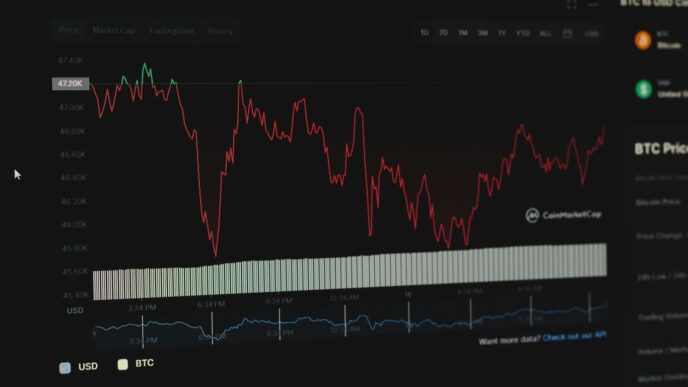

Alright, so you’re looking into the world of blockchain publicly traded companies for 2026. It’s a space that’s changed a lot. Forget the wild hype from a few years back; things are getting more serious now. We’re seeing big players focus on building the actual infrastructure, making sure things are compliant, and getting institutions on board. It’s less about the price of a single coin and more about the companies providing the backbone for this whole digital economy. Think of it as building the roads and railways for the future of finance and tech.
Key Takeaways
- Companies focused on direct, recurring revenue from blockchain activities like custody, transaction processing, and tokenization are the ones to watch. It’s about real business, not just buzz.
- Look for businesses that have actually put distributed ledger technology into their core operations. Are they cutting costs or finding new ways to make money with it?
- The regulatory landscape is clearer now. Companies that understand and can work within these rules are better positioned for steady growth.
- The focus has shifted from speculative token prices to the companies building the essential infrastructure for the on-chain economy – the ‘digital railways’.
- Long-term success in this sector relies on solid business fundamentals like revenue growth and profit margins, not just the latest tech trends.
1. Coinbase Global
When you’re looking at companies involved in the blockchain space, Coinbase Global (COIN) often comes up first. It’s one of the more direct ways to get exposure to the crypto world through the stock market. Basically, Coinbase runs the biggest regulated crypto exchange in the U.S. They make money in a few ways: transaction fees from people buying and selling crypto, holding digital assets for big clients (that’s institutional custody), letting people earn rewards by holding certain cryptos (staking), and through subscription services.
What sets Coinbase apart is how closely its business model ties into the growth of blockchain technology itself. Unlike some bigger tech companies that might just dabble in blockchain, Coinbase is all-in. They’ve even built their own Layer-2 network on Ethereum called Base. This not only brings in revenue from transaction fees but also gives them a key role in the Ethereum infrastructure. Plus, their work in institutional custody is a big deal. As more traditional finance players get into crypto products, Coinbase is there holding assets for hedge funds and ETF issuers. This is a pretty solid position to be in.
Here are some of the things driving their business:
- Leading the pack in holding digital assets for institutions.
- Expanding into new countries by getting the right licenses.
- Developing new products like derivatives and more staking options.
It’s worth noting that Coinbase stock saw a dip in 2026, but analysts are predicting a more stable period ahead. They expect revenue to grow, which could signal a comeback after some market ups and downs. You can find more details on their financial outlook on Coinbase stock performance.
Of course, it’s not all smooth sailing. There are risks, like competition from decentralized exchanges that could lower fees, and the ever-present regulatory scrutiny that seems to follow the crypto industry.
2. PayPal Holdings
PayPal, a name most of us know for sending money online, is also making some serious moves in the blockchain space. They’re not just dabbling; they’re actively building out infrastructure that bridges traditional finance with the digital asset world. Think of their stablecoin, PYUSD. It’s pegged to the US dollar, and it’s designed to make payments faster and cheaper, especially for businesses. This is a big deal because it means companies can use digital assets for transactions without worrying about the wild price swings you see with other cryptocurrencies.
What’s really interesting is how PayPal is integrating this into their massive existing payment network. They’ve got decades of experience and a huge global reach, which gives them a lot of credibility. For small and medium-sized businesses, this means they can potentially get faster settlement times and lower fees when accepting payments. Plus, PayPal is looking at using stablecoins for things like international payments and remittances, which could really streamline how money moves across borders.
Here’s a quick look at why PayPal’s blockchain play is noteworthy:
- Stablecoin Integration: PYUSD acts as a reliable digital dollar, simplifying transactions for businesses.
- Global Network Reach: Their existing infrastructure allows for widespread adoption of blockchain-based payments.
- Reduced Volatility Risk: Businesses can transact with digital assets without exposure to price fluctuations.
- Cross-Border Payment Focus: Streamlining international transactions and remittances is a key area of development.
While some companies are all-in on crypto, PayPal’s approach is more about integrating blockchain tech into their established financial services. This makes them a more conservative, yet potentially very impactful, player in the evolving digital economy.
3. Microsoft
Microsoft might not be the first company that comes to mind when you think about blockchain, but they’re actually a pretty big deal in the background. Think of them as the builders of the digital highways that blockchain applications can use. Their Azure cloud platform is where a lot of businesses go to figure out how to use blockchain technology without having to build everything from scratch.
What they do is provide the infrastructure. Companies, governments, and developers can use Azure to build and manage their own blockchain stuff. This is a smart move because it means Microsoft isn’t directly betting on any one cryptocurrency; instead, they’re providing the tools for everyone else. It’s like selling shovels during a gold rush.
Here’s a quick look at how they’re involved:
- Enterprise Solutions: Azure offers ways for businesses to track goods in their supply chains, create digital versions of assets, and set up systems for checking data. This makes things more transparent and easier to keep track of.
- Quorum Integration: A big part of their strategy is Quorum, which is built on Ethereum technology. It’s designed for businesses that need more control, like privacy features and ways to manage who can do what on the network. This is important for industries that have a lot of rules to follow.
- AI and Blockchain Synergy: Microsoft is also a leader in artificial intelligence. They’re looking at how AI can make smart contracts – those self-executing agreements on the blockchain – even better. Imagine AI helping to automate tasks and reduce paperwork, making business operations smoother.
- Digital Identity: With more companies needing secure ways to verify who people are online, Microsoft’s work in blockchain can help create better digital identity systems. This is becoming a major focus for businesses and governments alike.
For investors, Microsoft offers a way to get exposure to the blockchain space without the wild swings you see with some crypto-focused companies. It’s more of a steady, foundational play within their larger tech business.
4. Circle Internet Group
Circle Internet Group is a company that’s really focused on making digital money work for everyone, especially through stablecoins. You know, those digital currencies that are pegged to something stable, like the US dollar? Circle is a big player in that space, with their USD Coin (USDC) being one of the most recognized. They’re not just about creating the coin, though; they’re building the infrastructure to make it useful.
Think about it like this: Circle is trying to bridge the gap between the old way of doing things with money and the new digital world. They’re working on making it easier for businesses to accept payments in digital currencies without all the usual hassle. Plus, they’re involved in making cross-border payments smoother and cheaper, which is a huge deal for global commerce. They’ve also been busy getting licenses in key places like the US, Europe, and Asia, which shows they’re serious about playing by the rules and building trust.
Here’s a bit of what they’re up to:
- Making stablecoins a go-to for everyday transactions: Circle wants USDC and other stablecoins to be as easy to use as regular cash for buying things or sending money.
- Helping banks and businesses adopt digital assets: They provide tools and services so companies can get involved with blockchain and digital currencies without needing a whole new IT department.
- Working with governments on digital currency ideas: Circle is also looking at how stablecoins can work alongside potential central bank digital currencies (CBDCs) in the future.
Circle’s big push is to make digital currency practical and safe for a wide range of users, from individuals to large institutions. They see a future where digital money is just another tool in the financial toolbox, and they’re building the parts to make that happen.
5. Metaplanet
Alright, let’s talk about Metaplanet. This Japanese company has been making some serious waves in the digital asset space, especially when it comes to how companies hold their treasury assets. You know how back in the day, only a handful of public companies were even touching Bitcoin? Well, things have changed a lot. By late 2025, we saw over 150 public companies, plus governments, holding billions in digital assets.
Metaplanet is one of those companies that’s really leaning into this trend. They’ve been quite aggressive in their approach to acquiring and holding Bitcoin as a treasury reserve. This isn’t just a small side bet for them; it’s a core part of their strategy.
Here’s a quick look at why they’re noteworthy:
- Treasury Strategy: They’ve publicly committed to holding Bitcoin, viewing it as a long-term store of value. This is a bold move, especially for a company based in Japan, showing that the global adoption of digital assets is really picking up speed.
- Market Position: As the digital asset landscape continues to mature, companies like Metaplanet are positioning themselves as leaders in how traditional businesses can integrate and benefit from cryptocurrencies.
- Global Diversification: Their presence highlights that the trend of companies holding digital assets isn’t just a US-centric phenomenon anymore. It’s becoming a global play, with different regions and companies adopting unique strategies.
Looking ahead to 2026, the market is expected to see more consolidation and a focus on real-world utility and compliance. Metaplanet’s proactive stance puts them in an interesting spot as institutional adoption continues to grow. It’s definitely a company to keep an eye on if you’re interested in how traditional finance and digital assets are merging.
6. MicroStrategy
MicroStrategy has really carved out a unique niche for itself in the blockchain space, mostly by going all-in on Bitcoin. It’s not just a casual investor; the company has made Bitcoin its primary treasury reserve asset. This bold move means their financial strategy is pretty much tied to the ups and downs of the leading cryptocurrency. For investors, this makes MicroStrategy a way to get exposure to Bitcoin’s price movements through a publicly traded stock, without directly buying and holding the digital asset itself.
Their approach isn’t about building blockchain tech from the ground up like some other companies. Instead, they’re focused on accumulating Bitcoin. This strategy has its own set of risks and rewards, obviously. When Bitcoin’s price climbs, MicroStrategy’s stock often follows suit, sometimes even amplifying the gains. But when Bitcoin takes a hit, MicroStrategy feels that pain too, and then some.
Here’s a quick look at how their Bitcoin holdings have evolved:
- Q1 2025: Acquired an additional X BTC, bringing total holdings to Y BTC.
- Q2 2025: Continued accumulation strategy, adding Z BTC.
- Q3 2025: Announced plans to explore further Bitcoin acquisition, subject to market conditions.
It’s a strategy that definitely gets people talking. Some see it as a brilliant long-term play on digital scarcity, while others view it as a highly speculative bet. Either way, MicroStrategy’s commitment to Bitcoin makes it a company worth watching if you’re interested in the intersection of corporate finance and digital assets.
7. Marathon Digital Holdings
Marathon Digital Holdings (MARA) is a company that’s really focused on Bitcoin mining. Unlike some other companies that dabble in blockchain, Marathon’s business is pretty much all about the nuts and bolts of mining digital currency. This means their performance can be pretty tied to the ups and downs of Bitcoin itself, making them a higher-risk, potentially higher-reward play for investors.
What sets Marathon apart is their approach to mining operations. They’ve been working on building out large-scale mining facilities and have put a lot of effort into securing energy sources and investing in efficient hardware. This vertical integration is supposed to help them keep costs down and operate more smoothly, even when the crypto market gets a bit bumpy. They’re aiming for operational resilience, which is a fancy way of saying they want to keep mining even when things get tough.
Their strategy centers on expanding their mining capacity and optimizing their operations for efficiency.
Here’s a quick look at some of the factors influencing Marathon:
- Bitcoin Halving Events: These events, which happen roughly every four years, cut the reward for mining new blocks in half. This directly impacts mining profitability and is a major consideration for companies like Marathon.
- Energy Costs: Electricity is a huge expense for Bitcoin miners. Marathon’s focus on securing favorable energy contracts is a key part of their business model.
- Hardware Efficiency: The technology for mining hardware is always improving. Staying on top of the latest, most efficient machines is vital for maintaining a competitive edge.
- Regulatory Landscape: Like all crypto companies, Marathon operates within a constantly evolving regulatory environment. Changes in regulations can affect their operations and profitability.
For investors interested in direct exposure to the Bitcoin mining sector, Marathon Digital Holdings presents a significant opportunity. The company’s stock forecast suggests a potential upside, with price targets ranging significantly, indicating a volatile but potentially rewarding investment.
8. Riot Platforms
Alright, let’s talk about Riot Platforms, ticker symbol RIOT. If you’re looking for a company that’s all-in on Bitcoin mining, Riot is pretty much it. Unlike some other companies that dabble in blockchain, Riot’s whole business model is built around the economics of Bitcoin network security and those sweet block rewards. This makes it a pretty high-energy investment, meaning it can swing quite a bit with the market, which is exactly what some investors are looking for if they’re betting big on Bitcoin long-term.
Riot has put a lot of effort into building out its Bitcoin mining operations across the U.S. They’ve gone for a vertically integrated approach, which means they’re handling everything from getting the power to developing the facilities and setting up the mining hardware. They’ve even locked in long-term energy deals and invested in efficient equipment. This kind of control helps them stay resilient when the crypto market gets rough and potentially boost their profits when things are good. It’s a pure-play crypto kind of deal, so if you’re looking for that, Riot is definitely on the list. Just remember, with pure-play comes higher risk, but also potentially higher rewards.
9. Galaxy Digital Holdings
Galaxy Digital Holdings is a company that’s really involved in a few different parts of the digital asset world. They’re not just about one thing, which is kind of interesting. They do investment banking, they manage money, and they also trade digital assets themselves. Think of them as a financial services firm that’s fully embracing crypto.
Their main goal seems to be bridging the gap between traditional finance and the newer digital asset markets. This is a big deal because, let’s be honest, a lot of people still find crypto confusing or risky. Galaxy Digital tries to make it more accessible, especially for bigger players.
Here’s a quick look at what they focus on:
- Asset Management: They run funds that invest in cryptocurrencies and related companies. This is a way for people who aren’t crypto experts to get some exposure.
- Trading and Liquidity: They actively trade digital assets, which helps make the markets smoother and provides ways for others to buy and sell.
- Investment Banking: They help other crypto companies with things like raising money or advising them on deals. It’s like a Wall Street firm, but for crypto.
- Principal Investments: They also invest their own money into promising blockchain projects.
It’s a pretty broad approach. They’ve had to deal with the ups and downs of the crypto market, like any company in this space. Regulatory changes and how fast the technology moves are always things they have to keep an eye on. But by being involved in so many areas, they’re trying to build a solid business that can handle whatever comes next in the digital asset industry.
10. Robinhood Markets
Robinhood Markets, a name many people recognize from their stock trading app, has also been making moves in the crypto space. While they might not be building new blockchains from scratch, they’re providing a pretty accessible on-ramp for everyday folks to get into digital assets. Their platform allows users to buy, sell, and hold a variety of cryptocurrencies right alongside their stocks, which is a big deal for simplifying the whole investment process.
Think about it: instead of juggling multiple apps and accounts, you can manage both traditional investments and crypto in one place. This integration is key to their strategy. They’ve also introduced their own stablecoin, PYUSD, which is a step towards bridging traditional finance with the digital asset world. It’s not just about trading, though; they’re also working on making crypto transactions smoother for merchants.
Here’s a quick look at what they’re doing:
- User-Friendly Crypto Access: Making it easy for millions to buy and sell Bitcoin, Ethereum, and other popular coins.
- Stablecoin Integration: Launching and supporting stablecoins like PYUSD to facilitate transactions.
- Cross-Asset Platform: Combining stock and crypto trading under one roof for convenience.
- Exploring New Features: Continuously looking at ways to improve the crypto experience for their users, like faster settlement times and better security.
Looking Ahead: The Evolving Blockchain Landscape
So, as we wrap up our look at the top publicly traded blockchain companies for 2026, it’s clear this space is really changing. We’ve moved past the early hype and are now seeing companies build actual infrastructure and find real-world uses for this tech. It’s less about chasing the next big token and more about investing in the companies that are creating the digital rails for finance and other industries. Keep in mind that things are still developing, and staying informed about regulations and new tech is key. But for those looking for long-term growth, focusing on companies with solid revenue from blockchain activities and clear plans for using the technology makes a lot of sense. It’s an exciting time to watch how these companies continue to shape our digital future.
Frequently Asked Questions
What makes a company a good blockchain investment for 2026?
The best blockchain companies for investing in 2026 are those that make real money from their blockchain work, like handling digital money, managing special investment funds (ETFs), or processing transactions. They should have growing sales directly from using blockchain technology, not just from talking about it. Companies that are using blockchain to make their operations cheaper or create new ways to earn money are the ones to watch.
Why is enterprise blockchain adoption important for stock value?
When big companies use blockchain technology for their main business operations, it shows the technology is becoming a reliable tool. If blockchain helps these companies save money, become part of their future plans, or bring in new income, it makes their stocks more valuable. Think of companies using blockchain for quick money settlements or turning assets into digital tokens – these are signs of strong adoption.
How does regulation affect blockchain companies?
Clear rules and laws for blockchain are important. Companies that can follow these rules well, especially in big markets, are more likely to succeed. The rules help make sure things are done correctly and safely. Companies that understand and work within the regulatory system are better investments.
What is the ‘Great Infrastructure Migration’ in blockchain investing?
This term describes a shift where money is moving away from just buying digital coins based on excitement, and instead going into stocks of companies that build the technology and systems that support blockchain. These companies are like the builders of the digital highways for finance, offering services for storing assets, creating digital tokens, and processing payments. They focus on making money from the actual use of blockchain.
How is AI related to blockchain for investments?
AI and blockchain work well together. Blockchain can make sure data is accurate and can’t be changed, which helps AI trust the information it uses. AI can help process many transactions quickly on the blockchain. This partnership can lead to more trust and automation, making both technologies stronger and creating growth opportunities.
What are the main risks for blockchain stock investors in 2026?
Investors face several risks. Different countries have different rules for blockchain, which can make it hard and expensive for companies to expand globally. The value of cryptocurrencies can change a lot, affecting companies that mine or deal with them. Also, new technology can quickly make older systems outdated, so companies need to keep innovating to stay relevant.