So, the US energy storage market is really heating up, and it’s not just about keeping the lights on when the sun goes down. It’s becoming a huge part of how we manage our power grid, especially with all the new solar and wind farms popping up. Costs for the hardware are dropping, which is a big deal, and the government is throwing some support behind it too. We’re seeing massive projects get built, and companies are pouring money into this space. It’s a pretty exciting time to watch how this all plays out for the next few years and beyond.
Key Takeaways
- Hardware costs for energy storage systems are dropping significantly, making them more affordable for widespread use.
- Integrating renewable energy sources like solar and wind requires more energy storage to ensure a stable power supply.
- Government policies and investments are providing a major boost to the us energy storage market, encouraging growth and development.
- Lithium iron phosphate (LFP) batteries are currently the most popular choice due to their cost and safety, but other technologies are starting to emerge.
- The us energy storage market is seeing a lot of investment, with large-scale projects being planned and executed, pointing to a major expansion in the coming years.
US Energy Storage Market Growth Drivers
Plummeting Hardware Costs
It’s no secret that the cost of energy storage hardware has been dropping like a stone. This is a huge deal for the whole market. Think about Lithium Iron Phosphate (LFP) batteries, for example. They’ve gotten so much cheaper, especially with the massive scale of electric vehicle production driving down prices. We’re seeing rack prices for stationary systems hit around $125 per kWh, which is pretty wild when you compare it to just a few years ago. This cost reduction makes energy storage projects much more financially viable, especially for large-scale grid applications.
Urgent Renewable Integration Needs
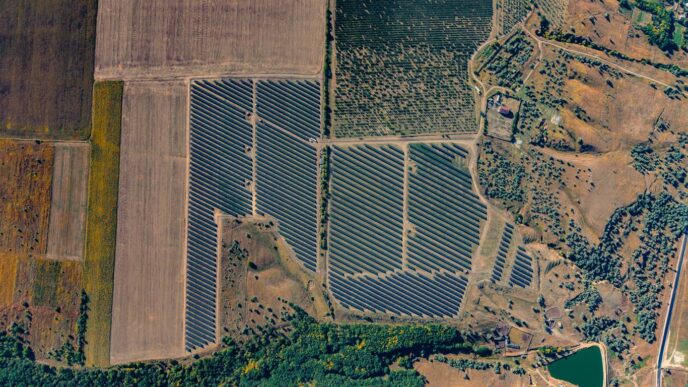
As we bring more solar and wind power online, we run into a bit of a problem: they don’t always produce power when we need it. That’s where energy storage comes in. It’s becoming absolutely necessary to smooth out the bumps from these intermittent sources. We need storage to capture excess energy when the sun is shining or the wind is blowing and then release it when demand is high or generation dips. This isn’t just a nice-to-have anymore; it’s a critical piece of the puzzle for a reliable, clean energy grid. Projects like the Edwards Sanborn Solar and Energy Storage facility in California, with over 3,000 MWh of capacity, show just how big these integration efforts are becoming.
Supportive Government Policies
Government policies are playing a massive role in pushing energy storage forward. Things like tax credits and incentives, such as those found in the Inflation Reduction Act, make a big difference for project developers. On top of that, there’s a growing focus on domestic manufacturing and supply chains, which is leading to new investments and policies aimed at building out U.S. production capabilities. While tariffs can add complexity, the overall trend is towards policies that encourage the deployment and manufacturing of energy storage systems. The Department of Energy, for instance, has put billions into supply chain development and long-duration storage projects, signaling a strong commitment.
Key Technologies Shaping the US Energy Storage Market
When we talk about energy storage, it’s not just one thing. Lots of different technologies are out there, and they’re all playing a part in how the US grid is changing. It’s pretty wild to see how fast things are moving.
Lithium Iron Phosphate Dominance
Right now, Lithium Iron Phosphate, or LFP, is the big player. You see it everywhere, especially in grid-scale projects and increasingly in electric vehicles. Why? Well, it’s gotten a lot cheaper to make, and it’s generally considered safer than some other lithium-ion types because it doesn’t have cobalt. Plus, it tends to last for a good number of charge cycles. This makes LFP the go-to choice for many developers looking to build large battery farms.
Emerging Flow and Sodium-Ion Batteries
But LFP isn’t the only game in town, not by a long shot. We’re seeing a lot of interest in other chemistries. Flow batteries, for instance, are getting attention for their potential in long-duration storage. They work a bit differently, storing energy in liquid electrolytes. Then there’s sodium-ion. This one is really interesting because sodium is way more abundant and cheaper than lithium. While they might not pack as much energy density as lithium-ion right now, they’re getting better, and their lower cost could be a huge deal for certain applications.
Long-Duration Storage Innovations
This is a really hot area. The grid needs more than just a few hours of backup power. We’re talking about storing energy for 8, 10, or even 24 hours or more. This is where technologies like advanced flow batteries, compressed air energy storage (CAES), and even thermal storage are being explored and developed. The goal is to keep the lights on when the sun isn’t shining or the wind isn’t blowing for extended periods. It’s all about making the grid more reliable as we add more renewables.
Regional Dynamics in the US Energy Storage Landscape
When we look at where energy storage is popping up across the US, a few key areas really stand out. It’s not just one big national push; different states and regions are leading the charge for their own reasons.
California’s Continued Leadership
California has been the undisputed heavyweight in energy storage for a while now, and that’s not changing anytime soon. By late 2024, the state had already racked up over 13.4 GW of cumulative storage capacity. Think of it as the early adopter that showed everyone else what’s possible. The sheer number of projects in the pipeline, with an interconnection queue hitting a massive 177 GW, shows just how much more is coming. This isn’t just about adding batteries; it’s about making sure the grid can handle all the solar and wind power coming online without skipping a beat.
Texas as a Critical Growth Hub
Then there’s Texas. It’s rapidly becoming a major player, especially with its own independent grid, ERCOT. In just the last three months of 2024, Texas added about 1.2 GW of utility-scale storage. By October 2024, the state had already reached 9.3 GW of battery capacity. This growth is fueled by a mix of factors, including the state’s vast renewable energy resources and a market structure that’s proving quite friendly to storage projects. It’s becoming a really important place for new developments.
Federal Support and Investment
Beyond specific states, federal initiatives are also shaping the landscape. The Department of Energy has been putting serious money on the table. For instance, a huge $15 billion loan was finalized in late 2024 for a major utility. This kind of backing from Washington D.C. helps de-risk big projects and signals a strong commitment to building out storage infrastructure nationwide. It’s not just about state-level action; there’s a national strategy at play here, too, with funding aimed at everything from supply chains to long-duration storage research.
Investment and Financial Trends in Energy Storage
Okay, so let’s talk about the money side of energy storage. It’s gotten pretty interesting lately. A lot of cash is flowing into this sector, which is a good sign, right? We’re seeing big numbers from venture capital and other investment sources. This robust capital inflow is a clear signal of growing confidence in the long-term viability of energy storage solutions.
Robust Capital Inflows and Venture Funding
It seems like investors are really starting to see the potential here. In 2024, the energy storage market pulled in about $19.9 billion in total corporate funding. Most of that came from debt and public markets, around $16.2 billion. Venture capital is still active too, bringing in $3.7 billion across 84 deals for the whole year. Some of these deals are pretty significant, especially for companies working on new battery tech. For example, Form Energy, which is developing iron-air batteries, snagged $405 million. That was the biggest VC deal of the year. Sila Nanotechnologies got $375 million, and EnerVenue Holdings raised $308 million for their metal-hydrogen technology. Even in the first nine months of 2025, venture funding already hit $2.7 billion. It just goes to show people are putting their money where their mouth is.
Navigating Merchant Risk and Hybrid Models
Now, it’s not all smooth sailing. Investors have to deal with what’s called "merchant risk." Basically, that means the revenue from selling electricity can change a lot depending on market prices. It’s a bit of a gamble. To deal with this, companies are getting creative. They’re looking at "hybrid models," which combine different ways of making money. This could involve long-term contracts for some of the energy produced, alongside selling power on the open market when prices are good. It’s all about trying to create more predictable income streams. Data-driven trading strategies are also becoming a bigger deal, using analytics to figure out the best times to buy and sell power.
Impact of Tariffs on Project Economics
Something else that’s really affecting the cost of projects, especially here in the US, are tariffs. These are taxes on imported goods. For instance, the US put a 100% tariff on Chinese EVs and a 25% tariff on battery parts back in 2024. Then, in 2026, there are even more tariffs coming, hitting non-EV batteries at 25%. Lithium iron phosphate (LFP) cells, which are pretty common, are facing an effective rate of almost 65%. This makes building projects more expensive here compared to other places. It’s a big factor that developers and investors have to carefully consider when looking at where and how to build new storage facilities. It really changes the math on whether a project makes financial sense.
Manufacturing and Supply Chain Considerations
Okay, so let’s talk about where all these batteries and energy storage systems are actually coming from. It’s a pretty big deal, and honestly, it’s a bit of a mixed bag right now.
Global Manufacturing Oversupply
It feels like everyone and their uncle is trying to build battery factories these days, especially overseas. This has led to a ton of production capacity, way more than we actually need at the moment. This oversupply can drive down prices, which is good for us buying the systems, but it also makes it tough for new factories, especially here in the US, to compete. It’s a weird situation where more supply is good for cost, but bad for building up domestic industry.
Onshoring of Battery Production
There’s a big push to bring battery manufacturing back to the US. Think about it – less reliance on other countries, more jobs here, and potentially more control over the supply chain. A lot of incentives are out there to make this happen, and we’re seeing some new plants pop up. It’s not going to happen overnight, though. Building these factories is expensive and takes time. Plus, we need to make sure we have the raw materials and skilled workers to keep them running.
Supply Chain Volatility and Resilience
Remember all those supply chain headaches during the pandemic? Yeah, that’s still a thing, especially with critical minerals needed for batteries. Things like lithium, cobalt, and nickel can be hard to get, and their prices can jump around like crazy. Plus, there are trade issues and tariffs that can mess things up even further. Companies are really trying to figure out how to make their supply chains tougher, so they don’t get caught off guard. This means looking for new sources of materials, working with different suppliers, and maybe even recycling old batteries to get materials back.
Future Outlook for the US Energy Storage Market
Gigawatt-Scale Project Execution
The energy storage market is really moving beyond just small pilot projects. We’re seeing a definite shift towards executing massive, gigawatt-scale projects across the US. Think of California’s Edwards & Sanborn project, which came online with a huge 3,287 MWh capacity. This isn’t just a trend; it’s becoming the standard for how we build out grid-scale storage now. Developers are getting better at managing these huge undertakings, and the technology is finally there to support it. It’s pretty exciting to see these massive installations becoming a reality, helping to stabilize the grid.
Grid Stability and Decarbonization Enabler
Energy storage is no longer just a nice-to-have; it’s becoming a core part of making our power grid stable and helping us cut down on carbon emissions. With more and more solar and wind power coming online, we need ways to store that energy when it’s sunny or windy and use it when it’s not. Storage systems are stepping up to fill that gap. They are absolutely critical for integrating renewables reliably and meeting our climate goals. Without them, we’d be stuck relying on older, dirtier power sources more often than we’d like.
Projected Market Expansion to 2035
Looking ahead, the numbers for energy storage are pretty impressive. The global market, which was valued at about $50 billion in 2025, is expected to balloon to over $486 billion by 2035. That’s a massive jump, with a compound annual growth rate of around 25.50% from 2026 to 2035. This growth isn’t just happening in one place; it’s a global phenomenon, but North America, in particular, is set to see huge expansion. This surge is fueled by falling hardware costs, the need to support renewable energy, and government backing. It’s clear that energy storage is set to become a much bigger piece of our energy puzzle in the coming years.
Wrapping It Up: What’s Next for Energy Storage?
So, looking at everything, it’s pretty clear the energy storage scene is booming. Costs are dropping, and we really need these systems to make renewables work smoothly. It’s not just a niche thing anymore; it’s becoming a big part of how we power everything. Governments are pushing for it, and keeping the grid steady is a major goal. We’re seeing huge growth, especially in places like North America and Asia. While lithium-ion is still king, other technologies are popping up, and companies are really going head-to-head to lead the pack. It feels like we’re moving past the testing phase and into building out these systems on a massive scale. Energy storage is definitely here to stay and will be key for a more stable and cleaner energy future.