
Addressing Computing’s Growing Carbon Footprint
It’s no secret that our digital lives are getting bigger and bigger. From streaming endless videos to training massive AI models, the demand for computing power is just exploding. But all this digital progress comes with a pretty hefty environmental price tag. Information and communication technology (ICT) is now responsible for a significant chunk of global greenhouse gas emissions, somewhere between 2.1% and 3.9%. That might not sound like a lot, but when you consider the sheer scale of global emissions, it’s a really big deal.
The Scale of the Challenge: Emissions from ICT
Think about it: every device, every server, every network connection uses energy. And if that energy comes from burning fossil fuels, it means more carbon dioxide in the atmosphere. The International Telecommunication Union has set a goal to cut ICT emissions by 45% by 2030, which is pretty ambitious and totally necessary if we want to stick to the Paris Agreement’s targets for climate change. Meeting this goal while also keeping up with the ever-increasing demand for computing is going to be tough. We need smart ways to figure out the best balance between being sustainable and, well, actually being able to run our digital world.
Embodied Carbon in Hardware Manufacturing
Beyond just the electricity we use, there’s another big piece of the puzzle: the stuff that makes up our computers. This is what we call "embodied carbon." It’s all the emissions that happen when we mine the raw materials, manufacture the chips, assemble the servers, and ship them all over the place. For high-performance computing and the massive data centers powering AI, this is a huge cost. We’re talking about billions of devices coming online, and their combined embodied carbon could eventually rival the emissions from all commercial airplanes. It’s a staggering thought.
Operational Carbon from Data Centers and Devices
Then there’s the "operational carbon." This is the carbon we release when we actually use our devices and data centers, primarily through the electricity they consume. Data centers, in particular, are massive energy hogs. Keeping them cool, powered up, and running 24/7 requires an enormous amount of electricity. Even our personal devices, with their high replacement rates, contribute to this. Figuring out how to power these operations with clean, renewable energy is one of the biggest hurdles we face. It’s not just about having enough power, but about having power that doesn’t harm the planet.
NSF’s Vision for Sustainable Computing
The National Science Foundation (NSF) recognizes that computing, while a powerful engine for progress, also carries a significant environmental cost. Their vision for sustainable computing is about making sure we can keep innovating without wrecking the planet. It’s a big picture approach, looking at the whole lifecycle of our digital tools, from how they’re made to how they’re used and eventually retired.
Fostering Interdisciplinary Research
The NSF is pushing for collaboration across different fields. It’s not just computer scientists anymore; they want engineers, environmental scientists, economists, and even social scientists working together. This is because solving the sustainability puzzle in computing requires input from everyone. Think about it: how can we design more efficient chips without understanding material science? Or how can we manage data centers better without knowing about energy grids and policy?
- Bringing together diverse minds: Computer science, engineering, environmental science, economics, and policy experts.
- Breaking down silos: Encouraging communication and joint projects between academic departments and research institutions.
- Addressing complex problems: Tackling issues that can’t be solved by one discipline alone, like balancing resource use with economic growth.
Advancing Critical and Emerging Technologies
This vision also involves pushing the boundaries of what’s possible in computing, but with sustainability built-in from the start. This means developing new hardware designs that are less resource-intensive and software that runs more efficiently. It’s about creating the next generation of computing tools that are not only powerful but also kind to the environment.
The goal is to make sustainable practices a standard part of technological advancement, not an afterthought.
Integrating Research and Education
Another key part of the NSF’s plan is to make sure this knowledge gets passed on. They want to see sustainable computing principles woven into university curricula and training programs. This way, the next generation of researchers and developers will already have sustainability in their toolkit. It’s about training people to think about the environmental impact of their work from day one.
- Developing new courses and educational materials on sustainable computing.
- Creating workshops and training sessions for students and professionals.
- Encouraging real-world projects where students can apply these principles to solve actual problems.
Key Research Thrusts for Sustainability
So, what are we actually going to do about all this computing carbon? The NSF is looking at a few big areas to get things moving. It’s not just about making computers use less power today; it’s a much bigger picture.
Holistic Carbon Accounting Models
First off, we need to get a real handle on where the carbon emissions are coming from. Right now, it’s a bit messy. We’ve got emissions from making the hardware (that’s the ’embodied’ carbon) and then emissions from actually running the machines and data centers (the ‘operational’ carbon). These two can actually work against each other. For example, making super-durable hardware might mean more energy used in manufacturing, but it lasts longer, reducing operational needs later. We need ways to measure both accurately and understand how they balance out.
- Developing standardized ways to track emissions across the entire life of a device or data center. This means looking at everything from mining raw materials to disposal.
- Creating tools that can predict the carbon impact of different design choices. This helps engineers make smarter decisions from the start.
- Figuring out how to attribute carbon costs fairly, especially in shared environments like cloud computing.
Life Cycle Design Strategies for Hardware
This is about thinking about the whole life of a piece of hardware, not just when it’s brand new and shiny. Think about it: billions of devices are made, and many get replaced pretty quickly. That’s a huge amount of manufacturing energy and materials going into things that might not get used for very long. We need to design hardware with its entire journey in mind.
- Designing for repairability and upgradability. If you can fix or improve something instead of throwing it away, that’s a win.
- Using materials that are easier to recycle or reuse. This closes the loop and reduces the need for new raw materials.
- Exploring modular designs where components can be swapped out or upgraded independently.
Efficient Use of Renewable Energy Sources
Data centers and high-performance computing chew through a lot of electricity. Just plugging them into the grid isn’t a sustainable solution if that grid is powered by fossil fuels. We need to get smarter about how we power these operations.
- Developing better ways to match computing demand with renewable energy availability. This might mean scheduling certain tasks when solar or wind power is abundant.
- Improving energy storage solutions so that power generated from renewables can be used even when the sun isn’t shining or the wind isn’t blowing.
- Creating smart grids and microgrids that can better integrate and manage renewable energy for computing facilities.
Innovations in Hardware and Software Design
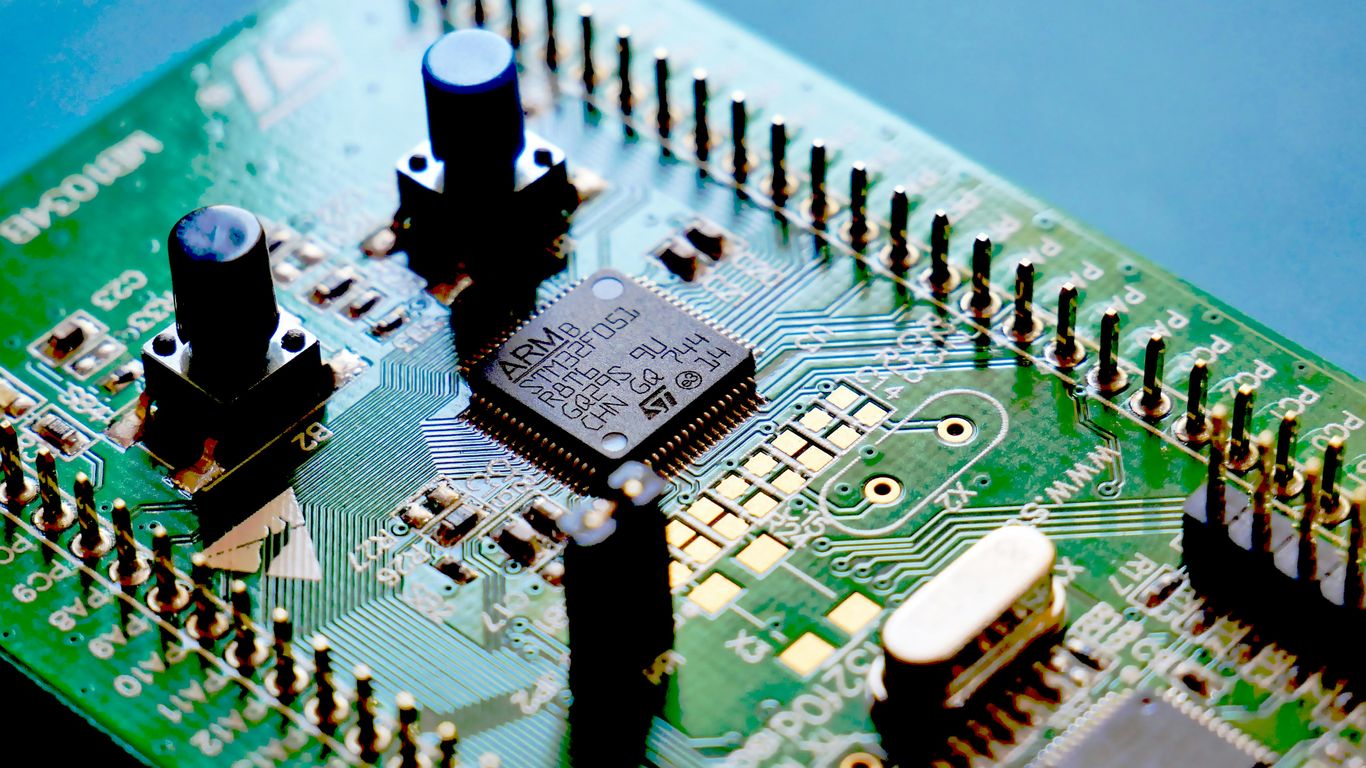
When we talk about making computing greener, it’s not just about the electricity data centers use. We also have to look at the stuff they’re made of and how the software runs on it. It’s a two-pronged approach, really.
Modular Hardware for Enhanced Reuse
Think about how we build computers today. Often, when one part gets old or breaks, the whole system gets replaced. That’s a lot of waste. The idea here is to design hardware in a more modular way, like building with LEGOs. Instead of replacing an entire server, you could swap out just the CPU or memory. This means components can have different lifespans and be replaced independently. For example, graphics cards for AI might need upgrading more often than the main processors. This approach also makes it easier to reuse parts. We could have "hardware odometers" that track how much a component has been used, similar to how car odometers work. This information would help in a secondary market, letting people know the condition of used parts and assigning them a fair value. It’s about extending the life of hardware and reducing the need to constantly manufacture new stuff.
Energy-Efficient Data Center Architectures
Data centers are huge energy consumers, and a lot of that energy is wasted. We need smarter designs. One concept is "disaggregation," where different parts of a server, like the CPUs and memory, are separate but connected over a network. This way, you can scale up just the parts you need. If your workload needs more memory, you add more memory modules without adding unnecessary CPUs. This "Lego-block" approach helps balance resources better and cuts down on wasted power. We also need hardware that’s "energy proportional," meaning its power use drops significantly when the workload is low. Right now, many components have a baseline power draw that’s hard to get rid of, even when they’re not doing much. Designing for better proportionality is key.
Optimizing Software for Emerging AI Applications
Software plays a massive role too. We need ways for systems to adjust their power usage based on what they’re doing. This could involve different operating modes that dial down power when not needed. For AI, which is a big energy hog, we can explore "approximate computing." This means the software might not need to be perfectly precise all the time. For certain tasks, a slightly less accurate result might be acceptable if it saves a lot of energy. Think about real-time systems that can offer a range of quality levels depending on available power. The goal is to make software smarter about its resource needs, dynamically adjusting performance and power consumption to match the task and the available energy budget. This could involve intelligent agents that monitor both hardware and software performance, making decisions to optimize power use without sacrificing too much on the quality of the service.
Future Directions and Societal Impact
Balancing Embodied and Operational Carbon
So, we’ve talked a lot about how much energy data centers and our devices use, right? That’s the operational carbon. But we also need to think about the carbon that goes into making all this stuff in the first place – the embodied carbon. It’s like buying a new gadget; the energy used to manufacture it and ship it to you is a big chunk of its total environmental cost, not just what it uses when it’s plugged in. The challenge is that sometimes, making hardware more energy-efficient during its life (reducing operational carbon) means using more complex manufacturing processes, which can actually increase its embodied carbon. It’s a tricky balance. We need to figure out how to design hardware that’s both efficient to run and less impactful to produce. This might mean looking at materials differently or designing for easier repair and upgrades.
Economic and Policy Considerations
This whole sustainability thing isn’t just about tech; it’s also about money and rules. Right now, the environmental cost of computing isn’t really factored into the price of services or devices. Think about it: if a company can use a ton of energy without paying directly for the pollution it causes, why wouldn’t they? That’s where policy comes in. We might need new regulations or incentives to encourage greener computing. For example, maybe tax breaks for companies that use renewable energy for their data centers or standards for hardware longevity. Economically, investing in sustainable computing could create new jobs and industries, but it also requires upfront investment, which can be a hurdle. We need to consider how these changes affect businesses, consumers, and the global economy.
Encouraging Diverse Participation in Computing
Finally, who gets to be part of the solution? When we talk about sustainable computing, it’s easy to get stuck in the technical weeds. But building a truly sustainable future for computing needs input from everyone. This means making sure that people from all backgrounds, not just the usual suspects, are involved in designing, building, and using these technologies. We need more voices in the room to identify problems and come up with creative solutions. This could involve:
- Developing educational programs that reach a wider range of students.
- Creating mentorship opportunities for underrepresented groups in tech.
- Ensuring that the benefits of sustainable computing are shared equitably across different communities.
If we don’t have diverse perspectives, we risk creating solutions that only work for a select few, or worse, that overlook critical environmental and social issues.
Looking Ahead: The Path to Greener Computing
So, where does all this leave us? The National Science Foundation is really pushing for a future where our digital tools don’t cost the Earth. It’s not just about making computers run faster; it’s about making them run smarter and cleaner. From the chips inside our devices to the massive data centers powering AI, every part of the computing world has an environmental footprint. The challenge is big, especially with AI demanding more and more power. But there are promising ideas out there, like designing hardware that lasts longer and using energy more wisely. It’s going to take all sorts of experts – computer folks, engineers, even economists – working together. The goal is clear: build a digital future that’s both powerful and kind to our planet.