So, General Motors and Nvidia are teaming up. It sounds like a pretty big deal for cars and how they’re made. They’re looking to use some fancy AI stuff to make self-driving cars better and also to improve how factories work. It’s all about bringing more smart tech into vehicles and making production lines more efficient. This partnership between nvidia gm is set to change a lot of things.
Key Takeaways
- General Motors is working with Nvidia to put advanced AI into their next-generation vehicles, aiming to improve self-driving features and in-car experiences.
- The nvidia gm collaboration will also use Nvidia’s technology to make GM’s factories smarter, using things like digital models to plan and run production more smoothly.
- GM plans to use Nvidia’s Drive AGX for car functions and Nvidia’s Omniverse for factory simulations, creating virtual copies of plants to test changes.
- This partnership is about creating a shared vision for smarter transportation, speeding up how AI is developed for cars, and working together to bring new ideas to life.
- Nvidia’s AI safety systems, like Halos, will play a role in making sure these autonomous systems are reliable and safe for drivers and passengers.
Nvidia and GM: Powering Next-Generation Vehicles
Advancing Autonomous Driving Capabilities
GM is really stepping up its game when it comes to self-driving tech, and a big part of that is their partnership with Nvidia. They’re using Nvidia’s powerful computing platforms, like the Blackwell architecture, to make their future cars smarter and safer on the road. Think of it as giving the car a super-brain that can process tons of information really fast. This isn’t just about making cars drive themselves; it’s about building systems that can handle complex situations with more confidence. The goal is to make autonomous driving a reality for more people, not just a futuristic concept.
Enhancing In-Cabin AI Experiences
It’s not just about what happens outside the car. GM and Nvidia are also working on making the inside of your car a lot more intelligent. This means better infotainment systems, personalized settings, and maybe even AI assistants that can help you out while you’re driving or just hanging out. They’re looking at using Nvidia’s tech to create interfaces that are easier to use and more responsive. Imagine your car knowing what music you like or suggesting the best route based on your past trips – that’s the kind of stuff they’re aiming for.
Leveraging Blackwell Architecture for High-Performance Compute
At the heart of this push is Nvidia’s Blackwell architecture. This is some seriously powerful hardware, capable of performing a mind-boggling number of calculations every second. For cars, this translates to:
- Faster sensor data processing: The car can understand what its cameras and sensors are seeing much quicker.
- More complex AI models: Running sophisticated AI algorithms for driving and other features becomes possible.
- Real-time decision making: Critical for safety, allowing the car to react instantly to changing road conditions.
This kind of computing power is what’s needed to move autonomous driving from testing phases to widespread use.
Revolutionizing Automotive Manufacturing with Nvidia
It’s not just about the cars themselves; Nvidia is also working with GM to make the places where cars are built way smarter. Think about how cars are put together. It’s a huge, complex process, right? Well, Nvidia’s tech is helping GM rethink that whole operation.
Optimizing Assembly Plant Design and Operations
GM is using Nvidia’s tools to get a better look at their factories. They can now design and test out new ways to build cars virtually before they actually change anything on the factory floor. This means less guesswork and fewer costly mistakes. It’s like having a blueprint that you can actually walk through and test out before you start hammering nails.
Creating Digital Twins with Nvidia Omniverse
One of the coolest things is this idea of ‘digital twins.’ Basically, GM is creating exact virtual copies of their assembly lines using Nvidia’s Omniverse platform. This lets them simulate everything – from how robots move to how materials flow. They can spot potential bottlenecks or inefficiencies just by watching the simulation. It’s a big step towards making production lines run smoother than ever.
AI-Powered Robotics for Factory Automation
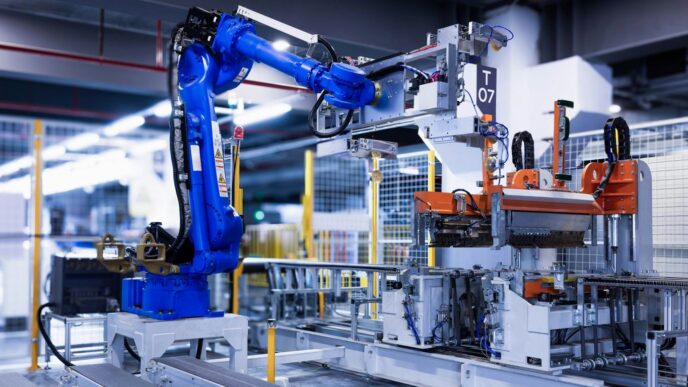
Robots are already a big part of car manufacturing, but Nvidia is helping GM make them even more capable. These AI-powered robots can learn to do more complex tasks, like precise welding or moving heavy parts around the factory. This not only speeds things up but also helps keep workers safer by taking on the more repetitive or dangerous jobs. It’s all about making the factory a more efficient and intelligent place to work.
The Strategic Alliance Between Nvidia and GM
So, GM and Nvidia are teaming up, and it’s a pretty big deal for the future of cars and how they’re made. It’s not just about slapping some new tech into a car; they’re really looking at the whole picture, from the factory floor to what happens inside the vehicle when you’re driving.
A Shared Vision for Intelligent Transportation
Both companies seem to be on the same page about where transportation is headed. They want to build smarter vehicles that can do more, and frankly, that’s what people expect these days. Think about it: cars are becoming more like computers on wheels, and this partnership is all about making that happen. They’re aiming to create vehicles that are not only safer but also offer a much better experience for the driver and passengers. This collaboration is a big step towards making that vision a reality, and it’s exciting to see how it will shape the future of mobility.
Accelerating AI Development in the Automotive Sector
Developing advanced AI for cars is no small feat. It requires massive computing power and sophisticated software. GM is already using Nvidia’s tech for training AI models, but this alliance takes it to a whole new level. They’re planning to use Nvidia’s Blackwell architecture, which is seriously powerful, for things like autonomous driving. This means future GM cars could have some pretty advanced self-driving capabilities. It’s all about speeding up how quickly they can get these AI systems ready and working safely.
Here’s a quick look at what they’re focusing on:
- Advanced Autonomous Driving: Using Nvidia’s Drive AGX platform to build better self-driving tech.
- Smarter In-Cabin Tech: Creating AI-powered experiences for infotainment and other vehicle functions.
- Factory Optimization: Applying AI to make car manufacturing more efficient.
Driving Innovation Through Collaboration
This isn’t just a one-off project. It’s a deep partnership. GM is looking at how Nvidia’s Omniverse platform can be used to create digital copies of its factories. This allows them to test out new production lines and robot setups virtually before they build anything for real. It’s a smart way to cut down on mistakes and speed up production. Plus, they’re working on new software platforms for their vehicles that will allow for updates over the air, kind of like how your phone gets new features. It really shows how much they’re committed to working together to push the boundaries of what’s possible in the automotive world.
Nvidia’s AI Platform Integration Across GM’s Ecosystem
It’s pretty wild how much technology is getting packed into cars these days, and GM is really leaning into Nvidia’s AI smarts to make it happen. They’re not just slapping some new software in; they’re weaving Nvidia’s tech right into the fabric of their vehicles and even how they build them.
Utilizing Drive AGX for In-Vehicle Functionalities
Think about the stuff happening inside your car. GM is using Nvidia’s Drive AGX platform to power a lot of that. This isn’t just for the fancy self-driving bits, though that’s a big part of it. It’s also about making the whole in-cabin experience better. We’re talking about smarter infotainment systems, personalized settings, and maybe even AI assistants that actually understand what you’re saying. The goal is to make the car feel more like a connected, intelligent space.
Implementing Omniverse for Factory Simulations
Now, let’s talk about the factories. Building cars is complicated, and GM is using Nvidia’s Omniverse platform to create digital copies, or ‘digital twins,’ of their assembly plants. This is super useful.
- Virtual Testing: They can test out new assembly line setups or robot movements in the digital world before touching anything real. This saves a ton of time and money.
- Process Optimization: By simulating different scenarios, they can figure out the most efficient way to build cars, reducing bottlenecks and waste.
- Robotics Training: Omniverse can also be used to train robots for specific tasks, like welding or moving parts, making sure they perform perfectly.
Transforming Vehicle Electrical Architecture
GM is also rethinking the basic electrical setup of its vehicles. This means integrating new hardware and software that can be updated remotely, kind of like how your phone gets updates. Nvidia’s powerful computing platforms are key here. They provide the horsepower needed for advanced driver assistance systems and future autonomous driving features. This shift allows for more flexibility and the ability to add new capabilities over the vehicle’s lifetime, rather than being stuck with the tech it had when it rolled off the lot.
Enhancing Vehicle Software and Over-the-Air Updates
GM is really focusing on making sure its cars are smart and can get better over time, without you needing to visit a dealer. This means building new software platforms from the ground up. Think of it like your smartphone – it gets new features and fixes through updates. GM is aiming for the same thing with its vehicles, making sure they stay current and packed with the latest AI capabilities. This shift towards software-defined vehicles is a big deal for the future of driving.
Developing New Vehicle Software Platforms
GM is putting a lot of effort into creating a whole new software backbone for its upcoming cars. This isn’t just about the infotainment system anymore. It’s about a unified platform that can handle everything from driving assistance to how the car interacts with you inside. This new system will be the foundation for many future GM models, including popular ones like the Chevrolet Equinox and big trucks such as the GMC Sierra EV. It’s all about making the car a more integrated part of your digital life.
Enabling Seamless Over-the-Air Updates
One of the coolest parts of this new software approach is the ability to send updates wirelessly, straight to the car. No more scheduling service appointments just to get a software patch. These over-the-air (OTA) updates mean GM can push out new features, improve existing ones, and even fix bugs remotely. This keeps the vehicle performing at its best and can add new functionalities long after you’ve driven it off the lot. It’s a way to keep your car feeling new and advanced, much like how apps on your phone get updated. This is a big step for automaker partnerships with tech companies.
Powering Future GM Vehicles with Advanced AI
At the heart of these software updates and new platforms is advanced AI. GM is working with Nvidia to integrate powerful AI processing into the vehicles. This AI will power everything from more sophisticated driver-assist features to personalized in-cabin experiences. Imagine your car learning your preferences, adjusting settings automatically, or providing more intuitive information. The goal is to make driving safer, more comfortable, and more connected. This AI integration is key to GM’s vision for intelligent transportation, making cars more than just a way to get around, but truly smart companions on the road.
Nvidia’s Commitment to AI Safety in Autonomous Systems
When we talk about self-driving cars and advanced AI, safety is always the big question, right? Nvidia gets that. They’re putting a lot of effort into making sure these systems are not just smart, but also really dependable. Think of it like building a super-reliable co-pilot for every vehicle.
The Role of Nvidia Halos in AI Safety
Nvidia has something called Halos, which is basically a system designed to boost the safety of AI in cars and even robots. It pulls together different hardware and software pieces to create a more secure AI. This integrated approach is key to building trust in autonomous technology. It’s not just about making the car drive itself; it’s about making sure it does so safely, no matter the situation.
Ensuring Reliable Real-Time Processing and Decision-Making
Autonomous cars have to make split-second decisions based on tons of information coming in from sensors. Nvidia’s tech, like their Drive AGX platform, is built to handle all that data quickly and accurately. This means the car can react properly, whether it’s spotting a pedestrian or a sudden change in traffic. They’re working on systems that can predict and avoid problems before they even happen.
Building Consumer Trust Through Advanced Safety Features
Ultimately, for self-driving cars to become common, people need to feel safe using them. Nvidia is focusing on making their AI systems transparent and predictable. They use simulations, like those created in Nvidia Omniverse, to test these systems in countless scenarios – way more than you could ever test on the road. This rigorous testing helps iron out issues and builds confidence that the technology is ready for the real world.
Looking Ahead
So, what does all this mean? Basically, GM and Nvidia are teaming up to make cars smarter and factories run better. They’re putting Nvidia’s brainpower into GM’s next-gen vehicles for self-driving and cool in-car tech. Plus, they’re using fancy computer simulations to make car factories more efficient. It’s a big move that shows how important AI is becoming, not just for the cars we drive, but for how they’re even made. This partnership is a clear sign that the future of driving and manufacturing is getting a serious AI upgrade.
Frequently Asked Questions
What is the main goal of the partnership between NVIDIA and GM?
NVIDIA and GM are teaming up to make cars that can drive themselves better and to improve the smart technology inside cars. They also want to make car factories work smarter and faster using AI.
How will NVIDIA’s technology help GM’s cars drive themselves?
GM will use NVIDIA’s special computer chips and software, like the Blackwell architecture and DriveOS, to power the self-driving features in their future cars. This technology is super powerful and helps the car understand its surroundings and make safe driving decisions.
What is NVIDIA Omniverse and how will GM use it?
NVIDIA Omniverse is a tool that lets people create virtual copies of real places, like car factories. GM will use it to build digital models of their factories to test out new ideas and improve how things are made before they do it for real. This helps them make factories more efficient.
Will GM cars get smarter over time with this partnership?
Yes! GM is working on new software for their cars that can be updated wirelessly, like updating your phone. This means cars can get better and gain new features even after you buy them, thanks to the AI technology from NVIDIA.
How does this partnership help make cars safer?
NVIDIA is focused on making AI systems safe, especially for self-driving cars. They have tools like NVIDIA Halos that help ensure the car’s AI can make quick and correct decisions in any situation. This helps build trust so people feel safe riding in or using these advanced vehicles.
Besides cars, what else will this partnership improve?
This partnership isn’t just about the cars themselves. It’s also about making the factories where cars are built much better. By using AI and digital tools, GM can design factories more effectively, train robots for specific jobs, and make the whole car-building process run more smoothly.