Thinking about jumping into the VR battle royale scene? Population: One has been making some noise, and you’re probably wondering if it’s worth your time and money. It’s a game that promises a lot, especially for VR enthusiasts looking for something new. We’ve spent some time with it to see if it lives up to the hype. This article will break down what makes Population: One tick and whether it’s a good fit for your VR library.
Key Takeaways
- Population: One offers a unique VR battle royale experience with unmatched freedom of movement, allowing players to climb any surface and glide across the map.
- The core gameplay focuses on trios-only matches, featuring interactive looting, combat, and reloading mechanics that add to the immersion.
- While the game provides a solid foundation, there’s a desire for more map diversity and dynamic events to increase long-term engagement.
- Crossplay across multiple VR platforms and accessibility options are strong points, though comfort settings may be needed for some players due to the fast-paced action.
- Visually, the game performs well on Quest 2 and PC VR, maintaining smooth gameplay and minimal network lag, making it a strong contender in the VR shooter genre.
An Unrivaled VR Battle Royale Experience
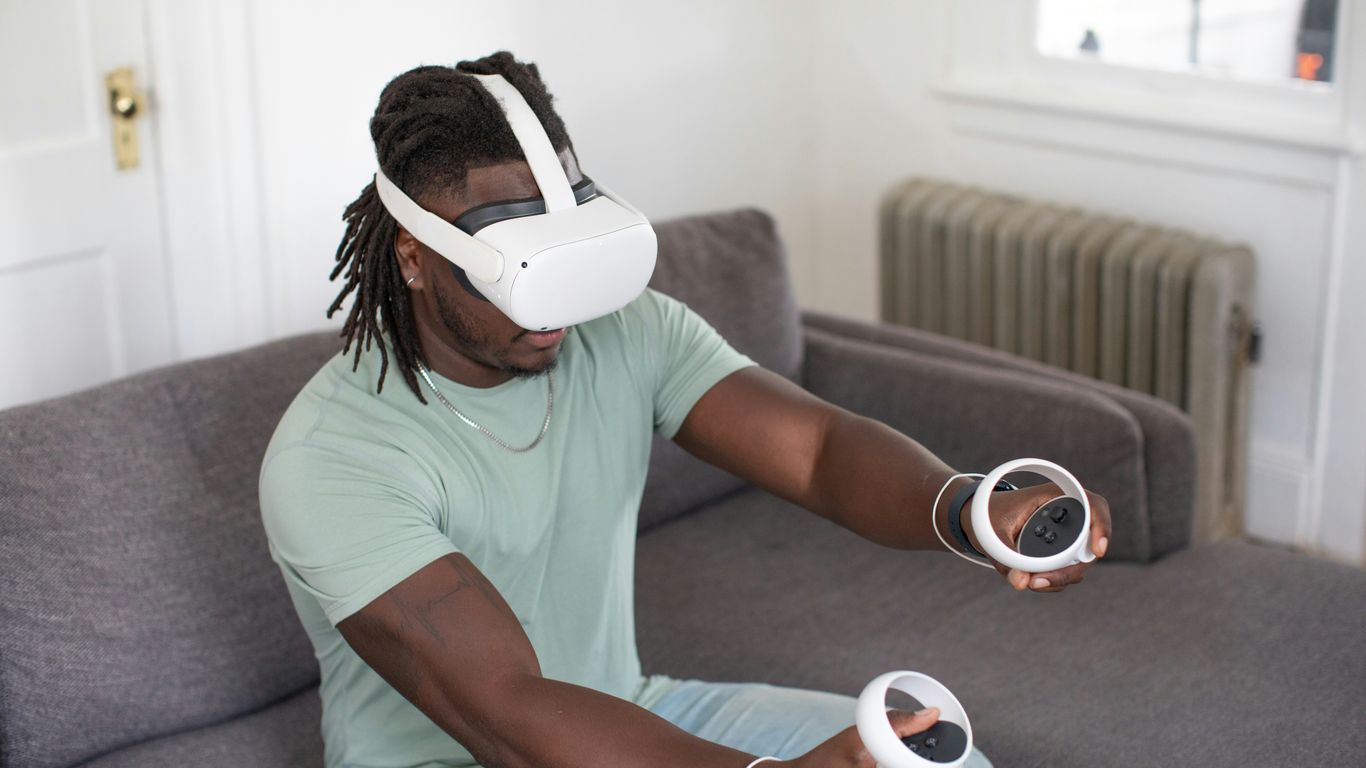
When you first jump into Population: One, it feels familiar, almost like a VR version of Fortnite. But that’s where the similarities mostly end. This game really leans into what VR can do, offering a level of freedom that’s pretty wild. The ability to climb literally anything you see is a game-changer.
Freedom Of Movement In Virtual Reality
Forget just running and jumping. In Population: One, you can grab onto almost any surface and pull yourself up. Think of a sheer cliff face or the side of a building – you can climb it. It feels surprisingly natural, too. You just reach out with your virtual hands and move them like you’re climbing a ladder. This opens up so many tactical options, letting you get the high ground or escape a sticky situation in ways other battle royales just can’t match.
Verticality And Gliding Mechanics
This climbing ability ties directly into the game’s verticality. You’re not just stuck on the ground. You can scale massive structures and then, when you’re ready, leap off and glide. Holding your arms out lets you soar through the air, covering huge distances. It’s exhilarating and makes traversing the map feel dynamic. You can use this to flank enemies, reposition quickly, or just enjoy the view before dropping back into the action. It’s a core part of the Population: One gameplay.
Climbing Any Surface
Seriously, any surface. That giant central tower? Climbable. The side of a mountain? You bet. This isn’t just a gimmick; it’s fundamental to how you play. You’ll find yourself constantly assessing the environment, looking for new routes and vantage points. It makes every match feel different because you’re not limited to predefined paths. You create your own way through the chaos.
Core Gameplay And Mechanics
Trios Only Matches
Population: One really leans into the squad experience. You can’t go into a match alone; it’s strictly trios. This means you’re always working with two other players, which really changes the dynamic compared to solo or duo modes in other games. Winning as a team is the only way to win. You can team up with friends before a match or even try to fist-bump strangers in the lobby to form a squad. It’s a good system that encourages cooperation from the get-go. If a teammate goes down, you’ve got a defibrillator to bring them back, though charging it under fire is definitely a tense moment.
Looting And Combat
Once you drop into the map, the hunt for gear begins. You’ll find a variety of weapons, from pistols and SMGs to assault rifles and sniper rifles. There aren’t a ton of unique weapon types, but rarity levels do exist, indicated by color. Honestly, the difference between tiers wasn’t super obvious when I was playing. Besides guns, you’ll also find armor, health items like bananas and soda, and shields. Combat feels pretty fluid, especially with the ability to shoot while gliding. The verticality of the map means you’re often fighting enemies above and below you, which is a neat twist.
Interactive Reloading And Healing
Reloading in Population: One is a bit of a hybrid. It’s not as complex as some super realistic shooters, but it’s more involved than just pressing a button. You’ll mimic the actions of reloading your weapon, and while you don’t need perfect hand placement, it adds a layer of immersion. Healing works similarly; you’ll use items like bananas or soda cans, and the animations feel pretty natural. The game also includes building materials, which you can use to create shields for cover, adding another tactical layer to fights. The overall gameplay loop of looting, fighting, and using the environment to your advantage is pretty engaging, especially with the constant threat of the shrinking play area, which can make the current game meta feel stale if not managed well.
Population One Reviews: A Deep Dive
So, is Population: One actually worth your hard-earned cash? Let’s break it down.
Is Population One Worth The Price?
At $29.99, Population: One sits in a middle ground for VR titles. It’s not a budget indie game, but it’s also not a full-price AAA release. For that price, you’re getting a pretty solid VR battle royale experience. The core mechanics are fun, and the freedom of movement really sets it apart. If you’re a big fan of battle royales and have a VR headset, it’s a strong contender. The developers have also been pretty good about updates, so the game does evolve.
Crossplay And Accessibility
One of the biggest wins for Population: One is its crossplay. You can jump into matches with friends no matter if they’re on a Quest, Rift, or PC VR headset. This really helps keep the player base healthy, which is super important for a multiplayer-focused game like this. It means you’re not stuck playing with just people on the same hardware as you. That said, accessibility in terms of comfort can be a bit tricky. Fast-paced VR games can be rough for some people, and this one is no exception.
Comfort Options For VR Sickness
This is where things get a little more personal. Population: One is intense. You’re climbing, gliding, and shooting, and all that movement can really mess with some people’s stomachs. The game does offer standard comfort options like snap turning and vignetting (where the screen darkens around the edges during movement) to help mitigate VR sickness. However, even with these turned on, some players still report feeling unwell. It really depends on your personal tolerance for VR motion. If you’re prone to getting sick in VR, you might want to watch some gameplay videos or try it with a refund policy in mind first. It’s not the most comfortable VR experience out there, that’s for sure.
Content And Longevity
So, does Population: One keep you coming back for more? For a VR battle royale, it actually does a pretty decent job. The game drops you and your squad onto a single, but quite varied, map. You’ve got different areas like a graveyard with lots of cover, or that giant central tower that you can spot from pretty much anywhere. Each spot feels distinct, which is nice. You’ll find weapons, shields, and other gear scattered around, and the act of looting and reloading is actually interactive, which adds a bit of a learning curve but feels rewarding when you get the hang of it. The real staying power, though, comes from the freedom of movement. Being able to climb literally anything, glide around with your wingsuit, and build cover on the fly makes every match feel different, even if the map itself doesn’t change.
Right now, there’s only one map, and after a while, you’ll start to recognize every nook and cranny. While the random drops and player encounters keep things fresh, some players might wish for more map variety or dynamic events that shake things up. The developers have mentioned plans for future content, like seasonal events and possibly new maps, which could definitely add to the game’s longevity. They’re also planning to add more cosmetic items, which is typical for this genre. These are purely visual, so they don’t affect gameplay, but they do give you something extra to work towards, either by earning them in-game or buying them.
Here’s a quick look at what you can expect:
- Map Design: A single, large map with distinct zones offering varied combat scenarios.
- Movement Mechanics: Climbing, gliding, and building create dynamic, vertical gameplay.
- Loot and Combat: Interactive reloading and healing add depth to standard shooter mechanics.
- Future Content: Developers have hinted at seasonal events and new additions to keep the game evolving.
- Cosmetics: Optional purchases and in-game unlocks for character customization.
Comparing Population One To Other Battle Royales
Fortnite’s Building Versus Population One
Okay, so when you first boot up Population One, it’s hard not to think of Fortnite. I mean, the building mechanic is pretty obvious, right? You can slap down walls and ramps pretty quickly. But here’s where it gets different. In Fortnite, you’re building structures from scratch, usually to get a height advantage or block shots. Population One takes that idea and runs with it, but it’s more about using the environment. You can climb literally anything – walls, trees, even that giant tower in the middle of the map. It feels way more organic, like you’re actually interacting with the world rather than just placing blocks. Plus, you’ve got the gliding, which is a whole different ballgame for getting around.
VR’s Unique Take On The Genre
This is where Population One really shines. Trying to play a traditional battle royale in VR can be a real pain. Moving around big maps feels clunky, and getting into firefights can be awkward. Population One just gets it. The freedom to climb anything and then glide across the map makes traversal feel natural, not like a chore. It’s like they took the core idea of a battle royale and rebuilt it from the ground up for virtual reality. You’re not just looking at a screen; you’re in the game, scrambling up a building or swooping down from the sky. It’s a totally different feeling.
Player Base And Matchmaking
One of the biggest hurdles for any VR game is getting enough players to fill lobbies. That’s why the crossplay in Population One is such a big deal. You can play with folks on Quest, Rift, Vive, Index – pretty much any major VR headset. This really helps keep the player base healthy. You’re not stuck playing with just other Quest owners. This means you’re way more likely to jump into a match quickly, no matter what headset you’re using. It’s a smart move that makes the game much more accessible and keeps the action going. The matches themselves are trios only, with six teams total, so it’s a bit smaller scale than some of the massive lobbies you see elsewhere, but it works well for VR.
Performance And Visuals

When you’re dropping into a chaotic battle royale, the last thing you want is for your game to stutter or lag. Thankfully, Population One generally holds up pretty well, especially considering it’s a pretty demanding VR experience. It manages to keep things moving smoothly for the most part, which is a big deal when you’re trying to aim and shoot while gliding through the air.
Quest 2 Performance
On the Quest 2, the game is surprisingly solid. It’s not going to win any awards for graphical fidelity, but it runs at a consistent frame rate that makes the fast-paced action playable. You might notice some minor dips during really intense moments with lots of players and explosions, but it’s rarely game-breaking. The visuals are clear enough to pick out enemies and navigate the environment without too much trouble. It’s a good example of how to make a game look and run well on standalone VR hardware.
Graphical Fidelity On PC VR
If you’re playing on PC VR, you can really crank things up. The game looks significantly better, with sharper textures, better lighting, and more detailed environments. It’s one of the best-looking VR shooters out there when you have the hardware to support it. For those looking for top-tier PC VR experiences, checking out the best PC VR games is a good idea, and Population One definitely belongs in that conversation when maxed out.
Smooth Gameplay And Network Lag
For the most part, the gameplay feels really fluid. The climbing and gliding mechanics are responsive, and shooting feels pretty good. Network lag can be an issue sometimes, as it can be with any online multiplayer game. You might occasionally experience some rubber-banding or delayed hit registration, but it’s usually not a persistent problem. The developers seem to have put a good amount of effort into keeping the netcode as clean as possible, which is a huge plus for a game that relies so heavily on quick reactions and precise movements.
So, Is Population: One Worth It?
Look, if you’re hunting for a VR game that really scratches that battle royale itch, Population: One is a solid pick. The way you can climb pretty much anything and then glide around the map feels pretty unique and keeps things moving. It’s not perfect, and sometimes I wished there was a bit more variety in what you’re doing or seeing on the map. But honestly, the core gameplay is fun, and it feels like a strong starting point for whatever the developers do next. For a VR battle royale, it’s definitely one of the better ones out there right now.
Frequently Asked Questions
What makes Population: One different from other battle royale games?
Population: One stands out because you can climb literally any surface, glide through the air, and build simple cover on the fly. This makes moving around the map and fighting feel super dynamic and exciting, unlike other games where you mostly just run around.
Is Population: One only for PC VR, or can I play it on other headsets?
Nope! Population: One is available on both PC VR and the Oculus Quest (including Quest 2). It also lets players on different VR systems play together, which is awesome for finding matches.
How many players are in a match?
Each match has 18 players, split into six teams of three. While it’s not as huge as some other battle royales, it keeps the action focused and the matches moving at a good pace.
Can I play solo, or is it only teams?
You can only play in teams of three, called ‘Trios’. So, you’ll need to team up with friends or other players to jump into the action.
Is the game hard to get used to, especially for VR?
The game has a learning curve, but it’s designed to be easy to pick up. Things like reloading your gun or using health items involve simple actions you do with your hands, which makes it feel more real. Mastering these and other moves takes practice, but it’s rewarding.
Will I get motion sick playing Population: One?
Like many fast-paced VR games, it can be intense. While there are comfort options like screen dimming and turning settings, some players might still feel a bit queasy due to all the climbing and gliding. It really depends on how sensitive you are to VR motion.