
Thinking about the future can be a bit wild, right? We often imagine crazy flying cars or total chaos, but the reality is usually less dramatic and more about the slow changes happening now. Predicting the super power countries in 2050 isn’t about crystal balls; it’s about looking at today’s trends and seeing where they might lead. It’s a bit like trying to figure out how a small crack in your wall might become a bigger problem later. Let’s take a peek at what the world might look like in a few decades.
Key Takeaways
- The world will likely still be made up of countries, and there might even be more of them as some regions seek independence. Big countries like the US, China, and India will probably stay influential, though their exact standing could shift.
- China is expected to become a major global player, possibly challenging the United States for the top spot in various areas like technology and the economy. The US might still be strong, but its lead could shrink.
- Emerging economies, especially China and India, are predicted to drive global economic growth. Innovation and new technologies, like AI, will be key factors in determining a country’s power and influence.
- Regional powers will continue to matter, but their global impact might depend on how they handle internal issues and external relationships. Organizations like the EU will need to adapt to stay relevant.
- Social factors like education and how well people get along within a country will become more important. Countries that invest in their people and stay stable are more likely to do well on the world stage.
The Shifting Global Power Landscape
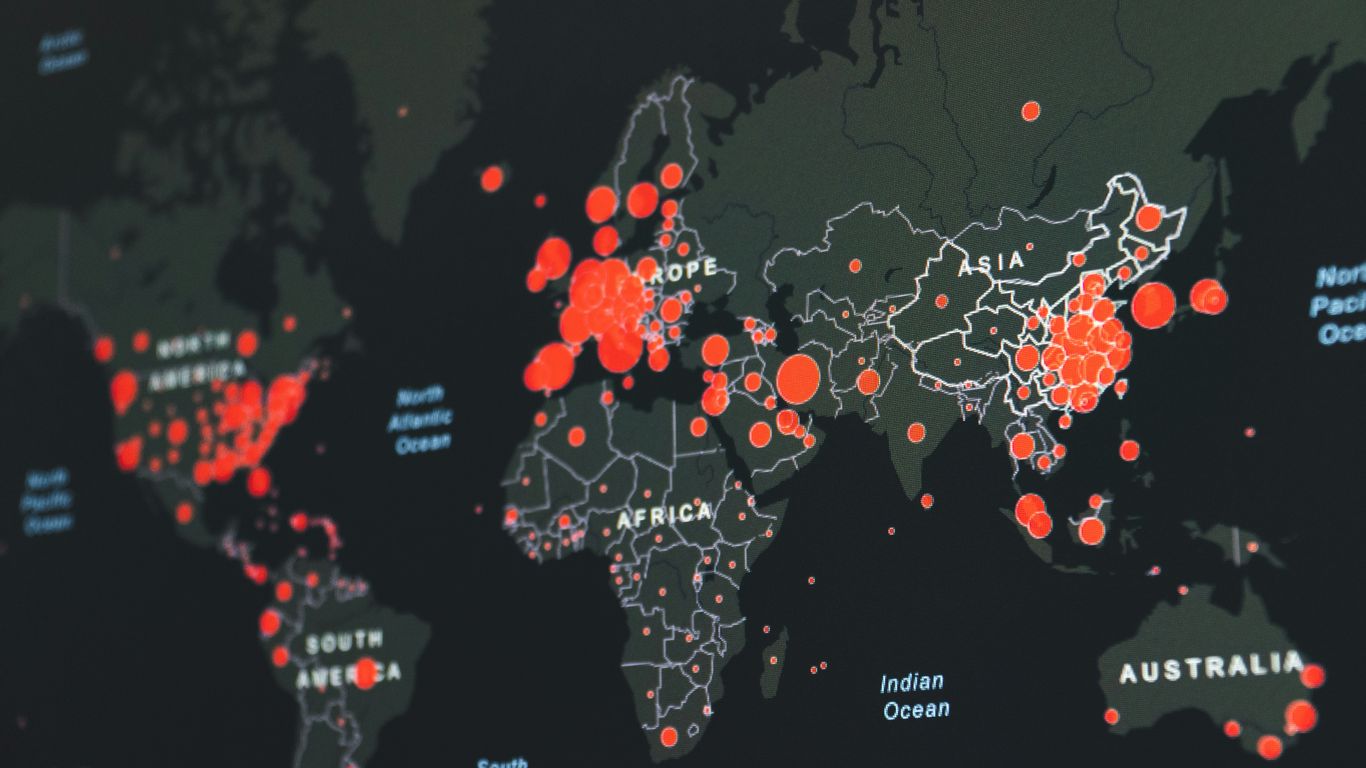
Things are definitely changing out there on the world stage, aren’t they? It feels like just yesterday the United States was the undisputed heavyweight champion, but that picture is getting a lot more crowded. We’re seeing a real shift away from that single-power setup towards something more complex. It’s becoming clear that no single nation will hold all the cards by the middle of this century. Instead, we’re looking at a world where several major players, along with various regional powers, will be calling the shots, often forming shifting alliances depending on the issue at hand.
Nation-States Remain The Primary Actors
Even with all the talk about global interconnectedness and international bodies, it’s still the individual countries that really drive things. They’re the ones making the big decisions, signing the treaties, and, well, sometimes starting the conflicts. While global challenges like pandemics and climate change certainly demand cooperation, the fundamental units of power are still the nation-states. They’re the ones with the armies, the economies, and the political will – or lack thereof – to act.
The Rise of Multipolarity
This move towards multipolarity means we’re not likely to see a simple repeat of the Cold War’s bipolar standoff, nor a return to a US-dominated era. Instead, expect a more fragmented pattern. Countries are increasingly hesitant to be forced into picking sides. Think of it like a big dance where different groups form temporary partnerships for each song. This means that depending on the topic, leadership might come from a group of democracies, then an alliance of autocracies, or even a bloc of developing nations. No single group will consistently set the agenda. This new global order is inadequate for the rapidly evolving international system, contributing to a widespread feeling of unease. The current global order is a central issue here.
Challenges to Unipolar Dominance
So, what’s causing this shift? A few things, really. Economic shifts are a big one, with emerging economies gaining ground. Plus, protracted conflicts and the sheer rise of new power centers have chipped away at the dominance of any single nation. The old ways of doing things, the structures set up decades ago, just aren’t cutting it anymore. We’re seeing a real strain on global frameworks, and many experts are calling for a serious rethink of how international bodies work to avoid becoming irrelevant in this more scattered world. It’s a complex picture, and how well everyone adapts will really shape things for decades to come.
Key Contenders for Superpower Status
So, who’s actually going to be calling the shots in 2050? It’s not as simple as picking one winner. The global stage is getting crowded, and a few big players are really stepping up their game. We’re looking at a world where power isn’t just concentrated in one or two places anymore. It’s more like a complex dance with several partners leading at different times.
The United States’ Enduring Strength
Even with all the changes, the U.S. isn’t just going to pack up and go home. They’ve still got a lot going for them. Think cutting-edge tech, a strong military presence pretty much everywhere, and a whole lot of influence in science and academia. It’s true, their share of the global economy might not be what it used to be, and manufacturing has shifted, but they’re still a major force. They’re good at adapting, and that’s a big deal in a fast-changing world. Plus, they’re working to keep their old alliances strong, which helps a lot.
China’s Ascendancy and Competition
Then there’s China. Their economic growth has been pretty wild, and it’s projected to keep going, maybe even surpassing the U.S. in sheer size. But it’s not all smooth sailing. They’ve got their own challenges, like an aging population and a lot of debt. Still, they’re pushing hard in pretty much every area, from technology to military might. It’s going to be a real competition, and honestly, nobody’s quite sure who will come out on top in the long run. They’re definitely a country to watch, and many see them as a significant challenge to the current global order.
India’s Growing Influence
And we can’t forget about India. Their population is booming, which is a huge engine for economic growth. While they’ve got their own development hurdles to clear, the sheer momentum is undeniable. Some folks are predicting that by 2050, India could be right up there with the top global powers, maybe holding a similar kind of influence that China has today. It’s a big shift from where they were even a few decades ago. Their rise is a key factor in how the global power balance shapes up.
Here’s a quick look at how some economic projections stack up:
| Country | Projected Economic Rank (2050) |
|---|---|
| China | 1st |
| India | 2nd |
| United States | 3rd |
| EU | Below 10% GDP Share |
It’s clear that the economic landscape is shifting, and these three nations are at the forefront of that change. Their continued growth and how they handle domestic issues will be massive factors in their global standing.
Economic Drivers of Future Power
So, what’s really going to make countries powerful in 2050? A big part of it is going to be their economy, no surprise there. We’re seeing a major shift happening right now, and it’s not just about who has the most money, but how that money is made and where it’s going.
Emerging Economies Leading Global Growth
Forget the old guard for a second. By 2050, a lot of the economic heavy lifting is expected to come from countries that are really taking off now. Think China and India – they’re projected to be some of the biggest economies on the planet. It’s not just about sheer size, though. These places are becoming huge markets and manufacturing hubs, changing how goods and services move around the world. The old economic order, the one we’ve known for decades, is definitely being challenged.
The Role of Innovation and Technology
This is where things get really interesting. It’s not just about having a big population or lots of natural resources anymore. The countries that are really going to shine are the ones that are good at coming up with new ideas and using technology. We’re talking about things like artificial intelligence, advanced computing, and new energy sources. The US is still doing pretty well in some of these areas, like AI research, but China is catching up fast. It’s a real race to see who can develop the next big thing, because whoever does will have a serious advantage, both economically and, let’s be honest, militarily.
Here’s a quick look at AI development, which is a good example:
| Category | United States (2024) | China (2024) |
|---|---|---|
| Top AI Models Developed | 40 | 15 |
| AI Investment | ~$109 billion | ~$9.3 billion |
Impact of Shifting Energy Markets
Energy is another huge piece of the puzzle. How countries get their power and how they manage their energy resources is going to be a major factor. We’re seeing a big push towards cleaner energy, but also a lot of competition and potential for disruption. Countries that can secure reliable, affordable energy, especially from new sources, will have a big leg up. This also ties into technology – developing new energy tech is a game-changer. It’s not just about oil and gas anymore; it’s about who can harness the power of the sun, wind, and maybe even fusion down the line. This will affect everything from industry to daily life.
Regional Powers and Their Influence
The European Union’s Evolving Role
The European Union, while not a single nation-state, acts as a significant bloc on the world stage. Its economic clout is undeniable, often ranking among the top global economies. However, its future influence hinges on its ability to present a united front. Internal disagreements and differing national priorities can sometimes dilute its collective power. Think of it like a big family trying to decide on a vacation spot – everyone has ideas, and sometimes it takes a while to agree. If the EU can find a stronger common purpose, perhaps focusing on areas like digital standards or climate policy where it already leads, it could solidify its position. Otherwise, it might become a looser association, prioritizing trade and movement over deeper political integration. It’s a balancing act, for sure.
Russia’s Potential and Limitations
Russia remains a player with considerable potential, largely due to its vast natural resources and its established military capabilities, including its nuclear arsenal. It’s not a country you can just ignore. However, its economic diversification has been a challenge, and its global influence can be limited by these factors. While it has the capacity to exert regional influence and play a role in international security discussions, its ability to compete as a top-tier global superpower in the long run faces hurdles. It’s a bit like a strong athlete who’s incredibly talented but sometimes struggles with consistent training.
Emerging Regional Players
Beyond the established powers, several other countries are increasingly making their mark regionally and could shape global dynamics. Nations like Indonesia and Turkey are often mentioned as having the potential to become more influential in their respective areas. Their rise to true global superpower status, however, will depend on a complex mix of economic growth, political stability, and how they navigate relationships with larger powers. It’s not just about having resources; it’s about how you use them and who you partner with. We might also see major cities becoming more like independent entities, focusing on their own economic and social development, almost like mini city-states. This could add another layer of complexity to the global map.
Factors Shaping International Relations
So, what’s really going to steer how countries get along in the future? It’s not just about who has the biggest army or the most money. A bunch of other things are at play, and they’re pretty complex.
The Future of Multilateral Organizations
Think about groups like the UN, the G7, or BRICS. These organizations were set up to help countries work together, but they’re facing some serious challenges. The world has changed a lot since they were first created, and some people think they’re just not keeping up. We’re seeing more and more countries wanting a bigger say, and the old ways of doing things just don’t seem to fit anymore. It’s like trying to use an old flip phone for everything in 2026 – it might still work, but it’s not ideal. Some experts are even calling for a complete overhaul, a sort of ‘new Bretton Woods,’ to make global governance work better for today’s world. Without some serious rethinking, these groups could become less relevant, which could lead to more friction between big powers. It’s a tricky balance between cooperation and competition, and how these organizations adapt will really matter. Global frameworks are collapsing despite all our connectivity.
Ideological Currents and Political Systems
It’s not just about governments; it’s about what people believe and how their societies are set up. We’re seeing different ideas about how countries should be run clashing. Some nations are pushing for more democratic ideals, while others are sticking to more centralized control. This ideological tug-of-war can really affect how countries interact and form alliances. It’s not always a straightforward path, and sometimes it feels like we’re heading back to older ways of thinking, even with all our modern tech. The way different political systems handle things like trade, human rights, and security will definitely shape partnerships and rivalries.
The Importance of Social Cohesion and Education
This might sound a bit softer, but it’s actually super important. Countries that have strong communities, where people generally get along and trust each other, tend to be more stable. Think about it: if everyone’s pulling in the same direction, it’s easier to get things done, whether that’s building infrastructure or responding to a crisis. Education plays a big part in this too. A well-educated population is usually more adaptable, innovative, and better equipped to handle complex global issues. Countries that invest in their people, in their social fabric, and in learning are likely to be more resilient and influential in the long run. It’s about building a solid foundation at home so you can stand tall on the world stage. Here are some key areas that matter:
- Strong Community Bonds: When people feel connected and have shared goals, it creates stability.
- Investment in Education: A knowledgeable populace can tackle modern challenges and drive innovation.
- Adaptability and Resilience: Societies that can adjust to change are better positioned for the future.
- Trust in Institutions: When citizens believe in their government and systems, it strengthens the nation.
So, What’s the Takeaway?
Looking ahead to 2050, it’s clear the world stage is going to look pretty different. While predicting the future is always a bit of a guessing game, the trends point towards a more complex global landscape. We’re likely to see shifts in economic power, with countries like China and India continuing their rise, while the United States remains a major player. It’s not just about who’s on top, though. The way countries interact, the rise of new technologies, and even how societies change internally will all play a big part. Ultimately, the future isn’t set in stone; it’s shaped by the choices made today. It’ll be interesting to see how it all unfolds.
Frequently Asked Questions
Will countries still be the main players on the world stage in 2050?
Yes, it’s very likely that countries, also known as nation-states, will continue to be the most important groups in how the world works. Think of them like the main characters in a story. While some countries might face challenges, the big ones we know today will probably still be around and powerful.
Will there be just one superpower, or many?
It looks like the world will have more than one major power, a situation called multipolarity. Instead of one country being the strongest in everything, power will be shared among several countries. This means countries will have to work together more, or sometimes compete, in different ways.
Which countries are expected to be the most powerful in 2050?
The United States is expected to remain very strong, but China is predicted to become a major competitor, possibly even challenging for the top spot. India is also likely to become much more influential. Other countries like Russia and possibly Brazil will also have significant roles.
How important will technology and the economy be for a country’s power?
Very important! Countries that are good at inventing new things and using technology, like in areas such as artificial intelligence or new energy sources, will have a big advantage. Also, countries with strong economies, especially those that are growing fast, will have more influence on the world.
What about groups like the European Union?
The European Union will still be a significant force, but its role might change. For it to stay strong, its member countries will need to agree on how to work together. Other regional groups might also become more important as countries team up to tackle global issues.
Will international organizations like the UN still matter?
It’s a bit uncertain. While major countries will still be powerful, the future of global groups like the UN or the G20 is harder to predict. They might need to change to stay relevant. Leadership might happen more through smaller groups or alliances of countries working together.