Key Trends from the AR VR Conference 2018
This year’s AR VR Conference really felt like a turning point. It wasn’t just about cool tech demos anymore; people were talking about real applications and how this stuff is actually going to make money. It was pretty clear that mobile AR, especially with tools like Apple’s ARKit, is becoming way more common in everyday apps. Think about how Snapchat filters or even Google Maps are starting to use AR – it’s not just for games anymore.
The Rise of Mobile AR and Enterprise Applications
We saw a lot of focus on how businesses are using AR. It’s not just for the big tech companies either. Manufacturing, warehouses, and assembly lines are starting to use AR headsets for things like showing schematics or guiding workers. It seems like a pretty straightforward way to make jobs easier and maybe even safer. The enterprise side of AR is growing fast, and it’s not just a niche thing anymore.
Developer Platform Preferences and Future Project Targets
It was interesting to see what platforms developers are actually using and planning to use. While HTC Vive and Oculus Rift are still big for VR, ARKit for iOS and ARCore for Android are definitely gaining ground for mobile AR projects. It looks like developers are thinking about where the users are, and a lot of them are on their phones.
| Platform | Current Use (%) | Next Project Target (%) |
|---|---|---|
| HTC Vive | 45 | 39 |
| Oculus Rift | 41 | 41 |
| Android (ARCore) | 30 | 24 |
| iOS (ARKit) | 24 | N/A* |
Note: ARKit data was presented separately and not directly comparable in the same survey format for future targets.
Shifting Investment Landscape: Self-Funding Dominates
One of the biggest takeaways for me was how companies are paying for all this. Venture capital and angel investment seem to be taking a backseat. A huge chunk of developers are using their company’s existing funds or even their own personal money to get projects off the ground. It suggests that the industry is maturing, and companies are more confident in their own ability to fund these ventures rather than relying on outside investors. Most people there seemed to think AR/VR is a solid long-term business, which is pretty encouraging.
Innovations Showcased at the AR VR Conference
This year’s conference really felt like a turning point, with so many cool things on display. It wasn’t just talk; there were actual demos and experiences that showed off what AR and VR can do right now, and where they’re headed.
Mixed Reality Performances and Drone Choreography
One of the most talked-about moments was Marco Tempest’s performance. He’s a creative technologist, and he put on a show that blended mixed reality with storytelling and even swarm robotics. Imagine seeing a bunch of drones moving in perfect sync, seemingly controlled by hand gestures. Tempest programmed these drones using VR, and they followed markers on the floor, creating a choreographed dance. It was like watching a futuristic ballet, and it really showed how art and technology can come together in unexpected ways. He called himself a "virtual magician," but honestly, it felt more like a glimpse into a very real, augmented future.
ARKit’s Impact on Everyday Applications
It’s clear that Apple’s ARKit, which came out not too long before the conference, has had a big effect. We’re starting to see augmented reality pop up in apps we use all the time. Think about Snapchat filters or how Google Maps can show you directions overlaid on the real world. This isn’t just for games anymore; AR is slowly becoming a part of our daily digital lives. The conference floor had more content and real-world examples than ever before, showing how businesses are starting to use AR for practical tasks, from manufacturing to logistics.
Showcasing the Latest in AR Headsets
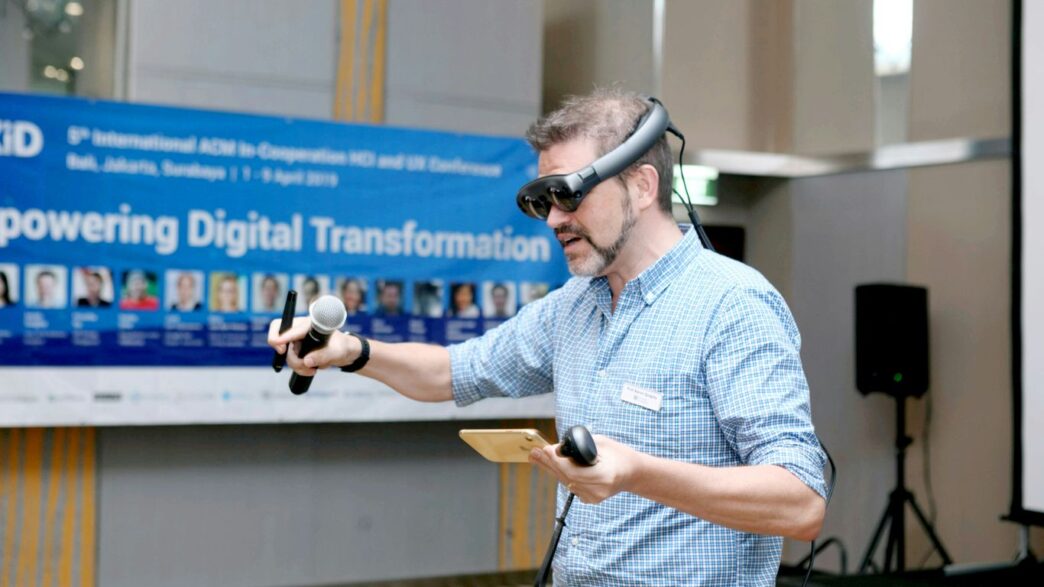
Trying on the latest AR headsets was a big part of the experience for many attendees. While some are still a bit bulky, there’s a noticeable effort to make them look more like regular eyewear. Companies like ODG showed off devices that are getting lighter and sleeker, with their R8 model looking more like glasses. Others, like the Mira Prism, offered a more affordable option focused on business use. Even with the current designs, the potential for hands-free information and interaction is huge. It’s still early days for consumer-friendly headsets, but the progress is definitely visible.
The Future of AR and VR Development
Looking ahead, the landscape for augmented and virtual reality development seems pretty solid, with most folks in the industry believing it’s a long-term game. It’s not just a fad; people are investing time and money because they see it sticking around. We’re talking about a future where these technologies are integrated into our daily lives, not just for games or niche applications.
Long-Term Sustainability and Profitability Projections
Most developers surveyed feel confident that AR and VR are here to stay as a business. While not everyone is raking in cash right now, a good chunk are already seeing profits, and many more expect to turn a profit in the coming years. The numbers show a clear trend: companies are increasingly funding their own AR/VR projects rather than relying heavily on outside investors. This self-funding approach suggests a growing maturity in the market, where businesses are willing to put their own capital into developing these immersive experiences because they believe in the return.
Here’s a quick look at the profit outlook:
- Already Profitable: 15%
- Short-Term Profit Expected: 12%
- Medium-Term Profit Expected: 38%
- Long-Term Profit Expected: 23%
The AR Cloud: A Shared Digital Map of the World
One of the really exciting ideas buzzing around is the concept of an ‘AR Cloud.’ Think of it as a digital layer over our physical world, a shared map where digital information can be placed and accessed by anyone, anywhere. Companies are working on ways to map out the real world so that AR experiences can be consistent and persistent. This means if someone places a virtual object in a park, others using the same AR system could see it too. It’s like building a shared digital memory for the planet, which could change how we interact with information and each other.
Dimensional Information and Interactive Experiences
Beyond just visuals, the future points towards richer, more interactive experiences. We’re moving past simple 3D models to a point where digital information will have depth and context. Imagine pointing your phone at a historical building and not just seeing a plaque, but a fully interactive AR overlay showing how it looked centuries ago, complete with characters and events. This blending of the digital and physical will allow for new forms of storytelling, education, and even problem-solving, making information more engaging and accessible than ever before.
Industry Recognition and Awards
The AR VR Conference 2018 wasn’t just about looking forward; it was also a moment to celebrate the people and projects that have pushed the boundaries of augmented and virtual reality. The Auggie Awards, a highlight of the event, recognized pioneers who have truly shaped the landscape of XR.
Auggie Awards Celebrate AR/VR Pioneers
This year’s Auggie Awards saw some incredible talent take home the hardware. It’s always inspiring to see the dedication and innovation that goes into this field. The awards cover a range of categories, acknowledging both established leaders and emerging stars. It’s a testament to how far AR and VR have come, moving from niche concepts to technologies impacting various industries.
Lifetime Achievement for VR Innovators
We saw a special moment when Nonny DeLaPena was honored with a Lifetime Achievement award. Her groundbreaking work in virtual reality has paved the way for so many others. Similarly, Mark Bolas, a co-founder of Fakespace, also received recognition for his early contributions to VR. These individuals represent the foundational efforts that made events like this possible.
Recognizing Excellence in AR/VR Development
Beyond the major awards, the conference floor buzzed with excitement over numerous projects and companies. It was clear that the quality of development is on the rise. Here are a few areas that really stood out:
- Enterprise Solutions: Many companies showcased practical AR applications for manufacturing, logistics, and training. Think of assembly line workers getting real-time instructions overlaid on their view, or remote experts guiding on-site technicians.
- Mobile AR Advancements: With tools like ARKit becoming more robust, the potential for everyday mobile AR experiences is exploding. We saw demos ranging from interactive educational content to enhanced retail shopping.
- Hardware Innovations: While not the sole focus of the awards, the underlying hardware enabling these experiences was also celebrated. Advances in optics, processing, and form factor are critical for wider adoption.
Technological Advancements Driving AR VR

This year’s conference really highlighted how far the tech has come, and honestly, it’s pretty wild to think about. A lot of the buzz was around new hardware and the brains behind it.
Qualcomm’s Snapdragon X-1 Chip for Next-Gen Devices
Qualcomm dropped some news about their new Snapdragon X-1 chip, and it sounds like a big deal for making AR and VR devices smaller and more powerful. They’re talking about smartglasses that can do way more, like show you videos, run games, and even let remote experts help you out in real-time. It’s designed to be super light, which is key for anything you wear. Big names like HTC and Vuzix were there, giving it a thumbs-up, so that tells you something.
The Evolution of Wearable Audiovisual Systems
Beyond just the chips, the actual devices you wear are getting a serious upgrade. We saw some ruggedized headsets, like the RealWear HMT-1Z1, that are built for tough environments – think industrial sites or places where you need protective gear. It’s not just about VR headsets anymore; it’s about making AR and VR accessible and useful in more everyday, and even extreme, situations. The idea is to get these systems to a point where they’re comfortable and practical for long-term use.
WebXR and Mixed Reality with Live Actors
This was a really cool one. Imagine a performance where virtual elements interact with real people on stage. Marco Tempest showed off a show with drones that seemed to be controlled by his gestures, blending digital and physical worlds in a way that felt like magic. It wasn’t just about pre-programmed sequences; it was about creating dynamic, live experiences. This kind of mixed reality, especially when you add live actors or performers, opens up a whole new avenue for entertainment and even training simulations. The potential for live, interactive storytelling is huge.
Wrapping Up: What We Learned and Where We’re Headed
So, after all that, what’s the big picture from the 2018 AR/VR conference? It’s clear that this tech isn’t just a passing fad. We saw a lot of real-world uses, especially for businesses, and developers are really digging into tools like ARKit and ARCore. While some of the hardware still looks a bit clunky, the progress is undeniable. Funding seems to be shifting more towards companies using their own money, which suggests a maturing market. The general feeling was one of strong optimism – people believe this is here to stay and will become a bigger part of our lives. It’s exciting to think about what comes next as these technologies continue to evolve and find their place in our everyday world.