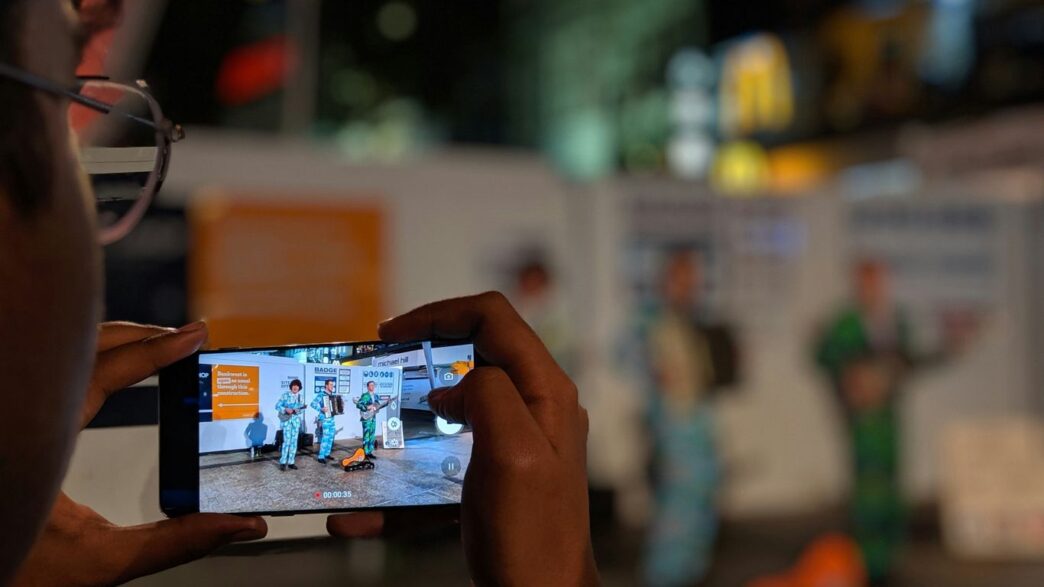
Augmented Reality Conference 2022: Key Industry Transformations
Augmented reality (AR) isn’t just a buzzword anymore. At the 2022 conference, one thing was clear: AR is moving from novelty to necessity across several fields. Let’s break down how it’s changing things in retail, healthcare, and education.
AR Revolutionizing Retail Experiences
- Shoppers want more than plain product photos—AR lets you see that chair in your living room before buying or try on glasses from your couch.
- Retailers are seeing fewer returns because customers know what to expect. Confidence goes up, and so do sales.
- Tech like smart mirrors and virtual fitting rooms is popping up everywhere.
Retail AR Impact Table
| Metric | Statistic |
|---|---|
| Shoppers preferring AR retailers | 61% |
| Willing to pay more after seeing in AR | 40% |
| Increase in purchase intention | 17% |
Enhancing Healthcare Through Augmented Reality
- Surgeons can use AR overlays for more accurate procedures—kind of like having a GPS during surgery.
- Medical students, nurses, and doctors use AR simulations for practice without putting real patients at risk.
- Physical therapy gets a boost when patients can follow interactive, real-time instructions from home.
Transforming Education and Training with AR
- Kids get excited about learning when dinosaurs roam their classroom or molecules float above their desk.
- AR brings complicated subjects to life, making boring textbooks way more interesting.
- In job training, new workers use AR to learn equipment without making costly mistakes.
In short, this industry shift was front and center at the conference—AR isn’t only about looking cool; it’s making real life a little easier, smarter, and more fun.
Emerging Trends in Augmented Reality
It feels like just yesterday AR was this cool, futuristic thing you only saw in sci-fi movies. Now, it’s really starting to show up everywhere, and the pace of change is pretty wild. We’re seeing some big shifts that are making AR more practical and, honestly, more exciting for all of us.
The Rise of AR Glasses and Wearable Technology
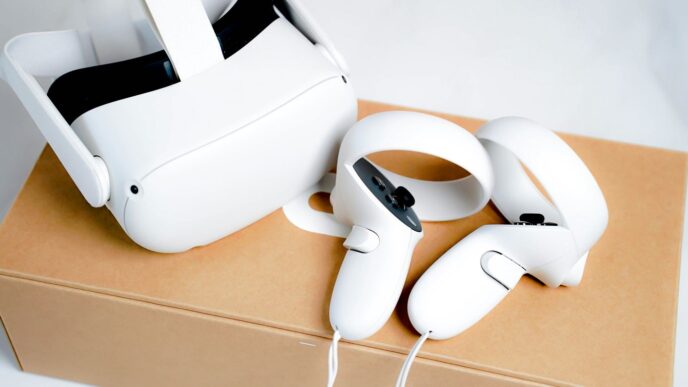
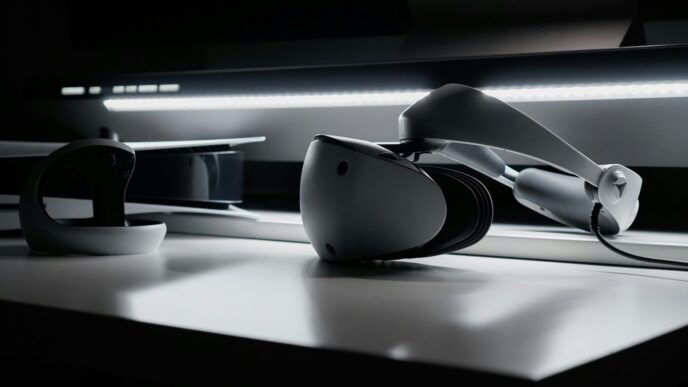
Forget fumbling with your phone all the time. The real game-changer is the push towards AR glasses and other wearables. These devices are getting lighter, more powerful, and frankly, look a lot less like something out of a bad sci-fi flick. The idea is to overlay digital information directly onto your view of the real world, hands-free. Think getting directions projected onto the street in front of you, or seeing product details just by looking at an item in a store. It’s about making digital interactions feel more natural and less intrusive. We’re still a ways off from everyone wearing them daily, but the progress is undeniable.
AI-Powered Augmented Reality Interactions
Artificial intelligence is really the secret sauce making AR smarter. It’s not just about showing you a 3D model anymore. AI is helping AR understand your environment, recognize objects, and even predict what you might want to do next. This means more personalized experiences. Imagine an AR app that can identify a plant in your garden and then pull up care instructions, or a virtual assistant that can guide you through a complex repair by understanding your specific situation. The combination of AI and AR is paving the way for interactions that feel truly intuitive and responsive.
Advancements in Mobile AR Market
While glasses are cool, let’s not forget about our phones. Mobile AR is still a massive part of the landscape, and it’s getting better all the time. Developers are finding new ways to use your phone’s camera and sensors to create more engaging experiences. This includes everything from virtual try-ons for clothes and furniture to interactive games that blend the digital and physical worlds. The accessibility of smartphones means that AR is reaching a huge audience, and the tools for creating mobile AR content are becoming more user-friendly. This accessibility is key to AR becoming a common part of our daily lives.
Augmented Reality’s Impact on Consumer Behavior
It’s pretty wild how augmented reality is changing the way we shop, play, and just generally interact with stuff. Remember when trying on clothes online was a total gamble? Now, you can actually see how that shirt or those glasses might look on you, right from your phone. This whole virtual try-on thing is a big deal because it makes people feel way more confident about buying things they haven’t physically touched. This boost in consumer confidence is a major reason AR is catching on so fast.
AR in Gaming and Entertainment
Gaming has always been a big playground for new tech, and AR is no exception. Games like Pokémon GO showed us how AR could pull us out into the real world to play. It’s not just about mobile games anymore, though. Developers are finding ways to mix AR into console and computer games, making them feel more immersive. The market for AR gaming is really taking off, with projections showing massive growth over the next decade. It’s moving beyond just a novelty to something that can really pull you into the experience.
Social Media and Marketing Innovations with AR
Social media platforms have jumped on the AR bandwagon, too. Think about all those filters that change your face or add fun effects to your videos – that’s AR at work. Brands are using these tools for marketing, letting people try out virtual products or interact with brand characters. It’s a more engaging way to get attention than just a static ad. Plus, when people share their AR experiences, it’s like free advertising for the brand.
Consumer Confidence Boosted by AR Try-Ons
This is a huge win for online shopping. Before AR, buying furniture online meant hoping it would fit your space, or buying clothes meant guessing the size and fit. Now, you can use AR to place virtual furniture in your room or try on clothes and accessories. Studies show that a good chunk of shoppers feel more certain about their purchase after using AR, and many would even prefer shopping with stores that offer these kinds of experiences. It cuts down on returns and makes the whole process feel less risky for the buyer.
Enterprise Adoption of Augmented Reality
It’s pretty clear that augmented reality isn’t just for playing games or trying on virtual hats anymore. Businesses are really starting to see the practical side of AR, especially when it comes to how their teams work. We’re talking about making everyday tasks smoother and more efficient.
AR for Remote Assistance and Field Operations
Imagine a technician out in the field, maybe fixing some complicated machinery. Instead of having to call back to the office and describe the problem, they can use AR. Someone experienced can see exactly what the technician sees through their device and overlay instructions or diagrams right onto the real-world view. This cuts down on downtime and makes sure the job gets done right the first time. It’s like having an expert looking over your shoulder, even if they’re miles away.
- Reduced travel costs: Experts don’t need to physically go to every location.
- Faster problem resolution: Issues are often fixed on the first visit.
- Improved training: New employees can learn complex tasks with guided assistance.
- Better documentation: AR sessions can be recorded for future reference and quality checks.
Improving Efficiency in Manufacturing with AR
In factories, AR is becoming a game-changer for assembly lines and quality control. Workers can get step-by-step visual guides projected onto the parts they’re working on, showing them exactly where to place components or how to perform a specific task. This reduces errors and speeds up production. Think about complex assembly instructions that are now just a visual overlay instead of a confusing paper manual.
| Area of Improvement | Potential Efficiency Gain |
|---|---|
| Assembly | Up to 35% |
| Quality Inspection | Up to 40% |
| Training | Up to 50% |
The Evolving Enterprise AR Software Market
The software side of things is growing just as fast. Companies are developing specialized AR platforms designed for business needs. These aren’t just off-the-shelf apps; they’re tools built for specific industries, like logistics, construction, or maintenance. The market is seeing more user-friendly interfaces and better integration with existing business systems, making it easier for companies to adopt and use AR without needing a team of developers on staff. This shift towards accessible, industry-specific AR software is key to its widespread adoption in the enterprise space.
The Future Outlook for Augmented Reality
Augmented Reality Market Forecasts and Growth
It’s pretty wild to think about how fast AR is growing. We’re talking about a market that was valued at over $32 billion and is expected to keep climbing at a really good pace, something like 33.5% each year. Some people are guessing that by the 2030s, it could even be worth more than $300 billion. That’s a lot of money and a lot of new apps and experiences coming our way. By 2025 alone, the global AR market is projected to hit over $50 billion. Mobile AR is a big part of this, with billions in revenue and over a billion users already. It’s clear AR isn’t just a fad; it’s becoming a major part of how we do things.
AR’s Role in Mainstream Technology Adoption
AR is moving beyond just being a cool tech demo. It’s starting to show up everywhere, from how we shop to how we learn. Think about trying on clothes virtually before you buy them online, or using AR to see how a new sofa would look in your living room. These aren’t futuristic ideas anymore; they’re happening now. In 2025, AR is expected to be a regular topic in many industries, changing how businesses plan and how we all interact with products and services. It’s becoming a standard tool, not just an extra feature.
Future of AR Glasses and Hands-Free Navigation
One of the most exciting parts of AR’s future is definitely AR glasses. We’re seeing more and more development in wearable tech that can overlay digital information onto our view of the real world. This means things like hands-free navigation, where directions just appear in front of you as you walk or drive. Imagine getting instructions for fixing something without having to look away from what you’re doing. It’s also about making interactions more natural, using gestures or voice commands. This shift towards more intuitive and integrated AR experiences is what will really make it a part of our daily lives.
Wrapping Up: What’s Next for AR?
So, after spending time at the Augmented Reality Conference 2022, it’s pretty clear this tech isn’t just a passing fad. We saw how AR is already changing how we shop, learn, and even do our jobs, and it’s only going to get bigger. The numbers show a huge jump in how many people are using it and how much money is being invested. It feels like we’re on the edge of something major, where digital stuff will just blend into our everyday lives more and more. Keep an eye on this space, because AR is definitely shaping the future, and it’s happening faster than you might think.