It feels like every day there’s a new breakthrough in life sciences, and a lot of that has to do with companies like Resolve Biosciences. They’re doing some pretty cool stuff with something called Molecular Cartography. Basically, it lets scientists see things in tissues at a super high level of detail, which is a big deal for understanding diseases and developing new treatments. We’re going to take a look at what makes Resolve Biosciences stand out and what they might be up to next.
Key Takeaways
- Resolve Biosciences is known for its Molecular Cartography platform, which offers a detailed view of spatial biology.
- Their technology provides subcellular resolution and captures the full spatial context of tissues.
- The platform is designed for automated workflows that preserve tissue samples.
- Resolve Biosciences’ technology helps detect individual transcripts and rare signals, aiding research in areas like oncology and neuroscience.
- With over $100 million in capital raised, Resolve Biosciences is a significant player in the spatial biology field.
Resolve Biosciences: Pioneering Molecular Cartography
Resolve Biosciences is really shaking things up with their Molecular Cartography platform. It’s a fancy name, I know, but what it does is pretty amazing. Basically, it lets scientists see exactly where different molecules are inside a cell, and not just in a general area, but down to the really tiny parts of the cell. This level of detail is a game-changer for understanding how cells work and what goes wrong in diseases.
The Power of Molecular Cartography
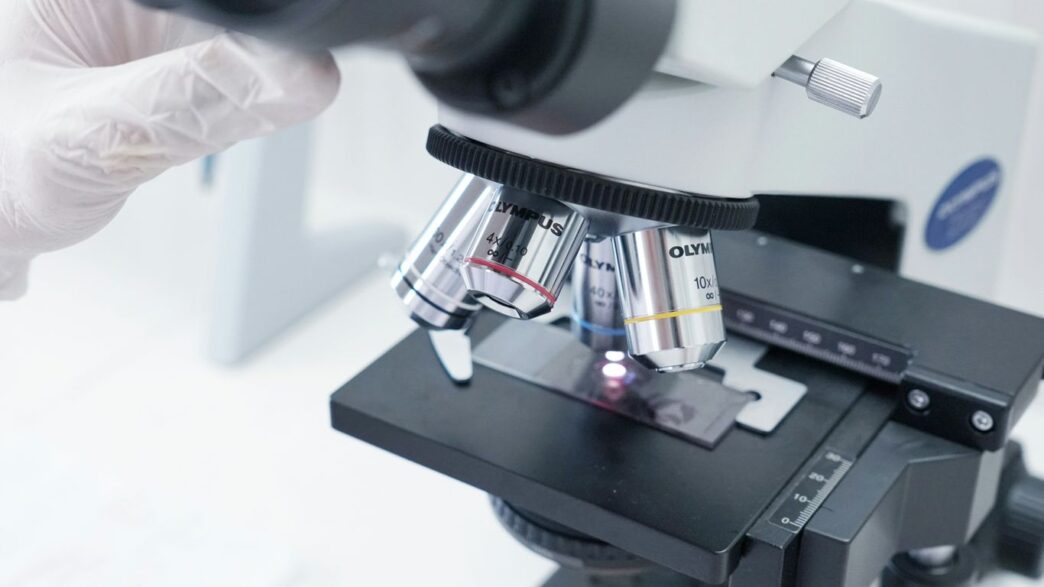
Think of it like having a super-powered microscope that doesn’t just show you what a cell looks like, but also maps out all the different types of RNA molecules floating around inside it. This isn’t just a few molecules; the platform can track hundreds at once. This detailed map, or ‘cartography,’ helps researchers figure out how cells communicate and function on a much deeper level than before. It’s like going from a blurry sketch to a high-definition, 3D model of cellular activity.
Subcellular Resolution and Full Spatial Context
What really sets Resolve apart is its ability to see these molecules at the subcellular level. This means they can pinpoint exactly where a specific RNA molecule is located within a cell – is it near the nucleus, out in the cytoplasm, or somewhere else entirely? This spatial information is super important because where a molecule is can drastically change its function. By keeping the whole tissue intact, they get the full picture, not just a snapshot of isolated cells. This helps answer questions like how a virus might spread from one cell to another or how different cell types interact in a complex tissue like the brain.
Automated Workflows for Tissue Preservation
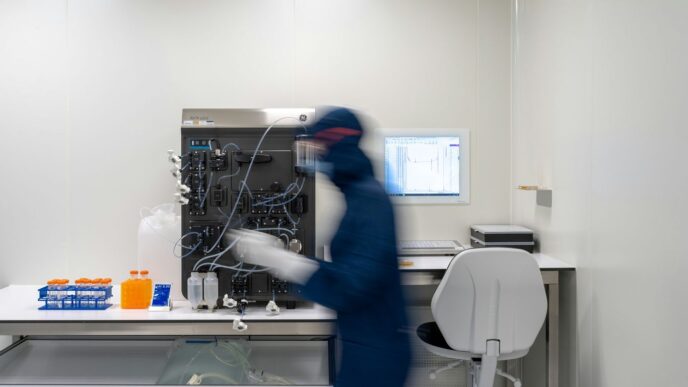
Getting this kind of detailed information used to be a real headache, often involving complicated and time-consuming lab work. Resolve Biosciences has worked to streamline this process. Their platform includes automated steps that help preserve the tissue samples while the analysis is happening. This is a big deal because it means the samples aren’t damaged during the process and can even be used for other types of studies later on. It makes the whole research process more efficient and reliable, which is always a good thing when you’re trying to make scientific breakthroughs.
Advancing Biological Insights with Resolve Biosciences

Resolve Biosciences is really changing the game when it comes to looking at biological samples. Their Molecular Cartography platform lets scientists see things at a level of detail that just wasn’t possible before. This means we can spot really tiny signals, like individual gene transcripts, that might otherwise get missed. This ability to detect rare signals is a big deal for understanding complex diseases.
Think about it: instead of just seeing a general area of activity, you can pinpoint exactly where a specific molecule is within a cell. This spatial context is super important. It helps researchers figure out how cells are interacting, how diseases are spreading, and how treatments might be working (or not working).
Detecting Individual Transcripts and Rare Signals
One of the coolest parts of Resolve’s technology is its sensitivity. It’s like going from a blurry photograph to a high-definition movie. You can actually see individual RNA molecules and track them. This is huge for finding those rare cells or events that are key to understanding things like early cancer development or how a virus is behaving.
Applications in Oncology and Neuroscience
In cancer research, this means scientists can get a much clearer picture of tumor diversity. They can see how different cancer cells are behaving and interacting with their surroundings, which could lead to more targeted therapies. For neuroscience, it’s about mapping out the intricate connections within the brain at a molecular level. Understanding these connections is key to figuring out neurological disorders.
Contributions to Agriculture and Infectious Disease Research
It’s not just about human health, either. In agriculture, this technology can help researchers understand how plants respond to stress or disease, potentially leading to better crop yields. And with infectious diseases, like we saw with COVID-19, being able to see exactly where a virus is active within tissues at such high resolution provides insights that were previously out of reach. It really opens up new avenues for discovery across a bunch of different fields.
Resolve Biosciences’ Technological Innovations
Resolve Biosciences is really shaking things up with their Molecular Cartography™ platform. It’s not just another tool; it’s a whole new way to look at biology, giving scientists a super high-resolution map of what’s happening inside cells. They’ve managed to pack a lot of power into this system.
Proprietary Single-Molecule Detection
At the heart of it all is their special way of spotting individual molecules. This isn’t like older methods that might group things together. Resolve’s technology can pick out single molecules, which is a pretty big deal for seeing the fine details. This allows for a much clearer picture of gene activity and protein interactions.
Unparalleled Sensitivity and Specificity
What this means for researchers is that they can find really faint signals, like those from rare cells or genes that aren’t turned on very much. This level of detail helps uncover biological processes that might have been missed before. It’s like going from a blurry photograph to a crystal-clear image. This high sensitivity, combined with great specificity, means you can trust the data you’re getting. You’re not just seeing noise; you’re seeing real biological events.
Interpreting Fundamental Biological Questions
With this advanced detection, scientists can tackle some really big questions. Think about understanding how diseases start at the molecular level, or how the brain works. Resolve’s platform is being used to:
- Map out gene expression patterns in complex tissues.
- Identify subtle changes linked to diseases like cancer.
- Study the intricate communication networks within cells.
This technology is helping to move the needle on understanding basic biology and how it goes wrong in disease states.
Strategic Growth and Industry Recognition
Significant Capital Investment
Resolve Biosciences has been making waves, and that’s not just talk. The company has seen some serious backing, which really shows how much people believe in what they’re doing. It’s not every day you see this kind of financial support in the life sciences sector. This investment isn’t just about keeping the lights on; it’s about fueling big ideas and making them a reality. Think of it as rocket fuel for innovation. The money helps them push their technology further, hire more smart people, and generally speed things up.
Collaborative Research Studies
Working with others is a big part of how Resolve Biosciences is growing. They’ve been teaming up with different research groups and institutions. These collaborations are super important because they let Resolve test their technology in real-world scenarios and get feedback from scientists who are actually using it to solve problems. It’s a two-way street: Resolve gets to see how their tools perform on diverse biological questions, and the researchers get access to cutting-edge tech. This kind of partnership helps refine the technology and also shows the scientific community what’s possible with molecular cartography.
Talent Acquisition and Company Culture
It’s pretty clear that Resolve Biosciences knows that people are their biggest asset. They’ve been actively bringing in top talent, folks who are really passionate about spatial biology and pushing the boundaries of what we can learn from cells. Building a strong team means more than just hiring smart people; it’s about creating an environment where they can do their best work. From what I gather, they’re focused on building a culture that encourages creativity and collaboration. When you have a team that’s excited about the mission and feels supported, that’s when the real breakthroughs happen. It’s this combination of smart investment, working with others, and having a great team that’s really setting Resolve Biosciences up for success.
The Future Landscape of Spatial Biology
Resolve Biosciences’ Role in Field Maturation
The whole field of spatial biology has really grown up fast. It feels like just yesterday it was the big new thing, and now it’s becoming a standard tool. Companies are merging, like Vizgen and Ultivue, to get stronger. Others are being bought, such as NanoString by Bruker. This kind of consolidation shows the field is getting serious and companies are trying to be the best. Resolve Biosciences, with its Molecular Cartography platform, is right in the middle of this. They’re not just keeping up; they’re helping shape where things are going by providing really detailed views inside cells. This level of detail is what’s pushing spatial biology from a cool research idea to something that could actually help patients.
Synergies with Other Industry Leaders
No single company can do it all, right? That’s why seeing collaborations is so important. For instance, Bio-Techne teamed up with Nikon to get their spatial biology platform, COMET, out to more researchers. Resolve Biosciences is also working with others. They’ve been talking to lots of smart people in single-cell and spatial biology, getting feedback, and helping them find things they couldn’t see before. This kind of teamwork is how new discoveries happen. It’s like building with LEGOs – you need different kinds of bricks to make something amazing. When companies share their tech and knowledge, everyone benefits, and we all move forward faster.
Driving Clinical Utility in Spatial Analysis
So, what does all this mean for us? It means spatial biology is moving beyond the lab bench. We’re starting to see how it can be used for real-world problems. Take cancer research, for example. Institutions like MD Anderson are setting up whole departments to use spatial omics to understand cancer better and find new treatments. Even for things like rheumatoid arthritis, places in Australia are using spatial biology to figure out better ways to diagnose and treat patients. Resolve’s ability to see individual molecules in their exact spot within a tissue is a big deal here. It means doctors might be able to get a much clearer picture of a patient’s disease and tailor treatments specifically for them. It’s a slow process, but we’re getting closer to using this advanced tech to actually help people.
Looking Ahead
So, what’s next for Resolve Biosciences? It’s clear they’re not just sitting around. With their Molecular Cartography platform showing up in important studies, like the one looking at heart disease, they’re definitely making waves. They’ve also been busy hiring, looking for folks who are "super creative" and "curious" – sounds like they’re building a team ready to tackle big challenges. They’ve raised a good chunk of money, over $100 million, which means they’ve got the resources to keep pushing forward. It feels like Resolve Biosciences is on a solid path, working to give scientists better ways to see what’s happening at the smallest levels in biology. We’ll have to keep an eye on them to see what new discoveries they help make possible.
Frequently Asked Questions
What is Resolve Biosciences’ main technology?
Resolve Biosciences uses a special technology called Molecular Cartography. Think of it like creating a super-detailed map of the tiny parts inside cells and tissues. This map shows where different molecules are located, giving scientists a really clear picture of what’s happening at the smallest level.
How does Molecular Cartography help scientists?
This technology lets scientists see individual molecules, even very rare ones, within their natural place in a tissue. It’s like finding a specific tiny needle in a huge haystack, but much faster and more accurately. This helps them understand complex biological processes better, like how diseases start or how the brain works.
What kinds of diseases or problems can this technology help study?
Scientists are using this technology to study many things, including cancer to understand how tumors grow and how to fight them. They also use it to study brain disorders, figure out how infections spread, and even improve crops in agriculture. It’s a versatile tool for many life science challenges.
Is the process of using this technology complicated?
Resolve Biosciences aims to make things easier. Their platform is designed to be automated, meaning it does a lot of the work itself. This helps preserve the tissue samples perfectly and makes the whole process more efficient for researchers.
How much money has Resolve Biosciences raised to support its work?
Resolve Biosciences has received significant financial backing, raising more than $100 million. This funding helps them continue to develop their innovative technology and expand their reach in the scientific community.
What is the future for spatial biology, and what role will Resolve Biosciences play?
The field of spatial biology is growing rapidly, and Resolve Biosciences is a key player. Their advanced technology is helping to make spatial analysis more useful in real-world medical situations, like helping doctors diagnose and treat patients more effectively.