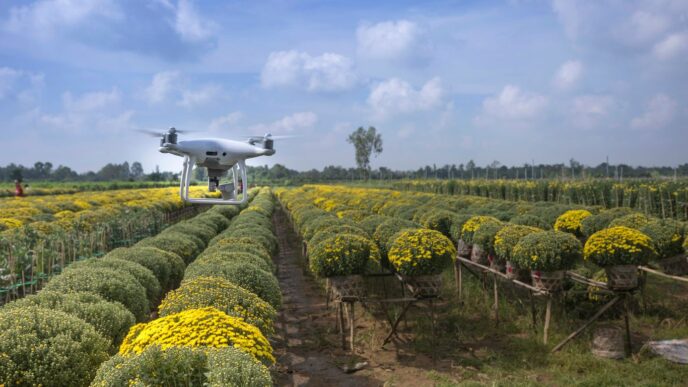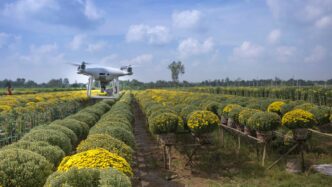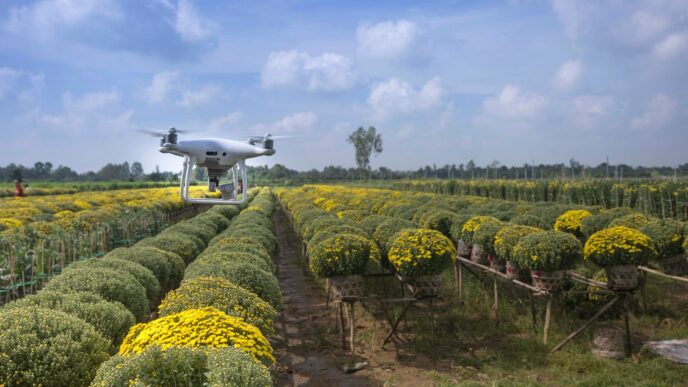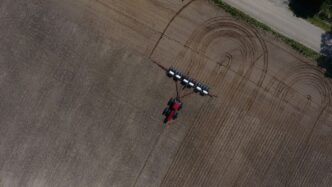
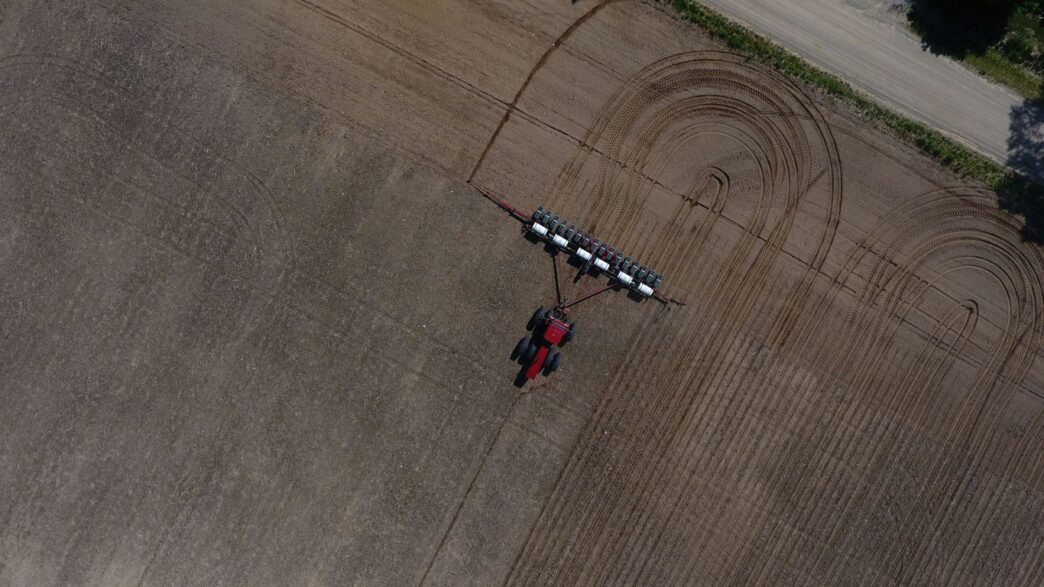
Farming in 2026 is all about working smarter, not just harder. Drone crop scouting is no longer a futuristic idea; it’s a practical tool that gives you a better look at your fields than ever before. Think of it as having a super-powered scout that can cover acres in minutes, spotting problems you might miss from the ground. This guide will help you understand how drone crop scouting can really change how you farm, making things more efficient and helping you get more from your land.
Key Takeaways
- Drone crop scouting offers a bird’s-eye view, replacing guesswork with data for better farm management.
- These drones help spot issues like pests or nutrient problems early, allowing for quick, targeted fixes.
- Choosing the right drone depends on your farm’s size and what tasks you need it for, like mapping or spraying.
- Implementing drone technology involves assessing needs, checking costs, and planning flights carefully.
- Future trends include swarm technology and AI integration, making drone operations even more automated and efficient.
Understanding The Power Of Drone Crop Scouting
Farming in 2026 is all about working smarter, not just harder. You’ve got acres to manage, weather that’s always a gamble, and costs that seem to climb every year. Walking the fields to check on everything is slow, and honestly, you can miss a lot from ground level. That’s where drones come in. They give you a completely new perspective, like having a super-powered scout that can cover your entire farm in no time.
The Bird’s-Eye View Advantage
Think about it: instead of spending hours trekking through crops, a drone can fly over thousands of acres in a single day. It’s not just about seeing your farm from above; it’s about seeing it with incredible detail. This high-resolution view lets you spot issues that are practically invisible from the ground. You get a clear picture of what’s really going on, field by field, plant by plant.
Swapping Guesswork for Data-Backed Certainty
For too long, farming has involved a lot of educated guessing. You hope the fertilizer is working, you hope the irrigation is even, you hope that patch of wilting plants is just a minor thing. Drones change that. They collect real data – like how healthy the plants are, where water might be pooling, or if pests are starting to show up. This information means you can stop guessing and start making decisions based on facts. It’s about knowing exactly what needs attention and where.
Early Detection For Proactive Intervention
This is a big one. A small problem, like a pest outbreak or a nutrient deficiency, can spread fast and cause major damage if you don’t catch it early. Drones equipped with special sensors can detect these issues sometimes weeks before you’d ever notice them yourself. Imagine finding a small patch of stressed plants and being able to treat just that area, instead of waiting until half the field is affected. This early warning system lets you act fast and precisely, often saving crops and cutting down on wasted resources. It means you’re fixing problems before they become big, expensive headaches.
Key Drone Applications Revolutionizing Agriculture
It feels like just yesterday we were talking about drones as a cool new gadget, but honestly, they’ve become a pretty big deal for farms. They’re not just for taking pretty pictures anymore; these flying machines are tackling some of the biggest headaches farmers face. Think about it: instead of guessing what’s going on in that far corner of the field, you get real, solid information. This shift from guesswork to data is changing everything.
Enhancing Crop Health Monitoring
Walking miles of rows to check on your crops is a thing of the past. Drones equipped with special cameras, like multispectral sensors, can see things we can’t. They can spot early signs of stress in plants – maybe a bug is starting to munch, or a nutrient is missing – long before you’d notice it from the ground. This means you can get to the problem spot quickly and fix it before it spreads and ruins a big chunk of your yield. It’s like having a super-powered scout that never gets tired.
Here’s a quick look at what this means:
- Early Pest and Disease Detection: Spotting trouble spots when they’re small.
- Nutrient Deficiency Identification: Finding out which plants need a boost.
- Water Stress Assessment: Knowing where your crops are thirsty.
Precision Input Application
Remember when farmers used to spray pesticides or spread fertilizer over the entire field, just in case? That’s expensive and not great for the environment. Drones change that. They can use the data they collect to create ‘prescription maps.’ These maps tell the drone exactly where to apply treatments, like fertilizer or weed killer, and how much to use. So, you’re only treating the areas that actually need it. This can seriously cut down on costs and reduce how much stuff runs off into our waterways.
| Input Type | Potential Reduction vs. Blanket Application |
|---|---|
| Pesticides | 30-50% |
| Fertilizers | 20-40% |
| Herbicides | 30-50% |
Optimizing Resource Management
Water is precious, and so are other resources. Drones help make sure we’re not wasting them. They can map out areas where irrigation isn’t working right, like finding leaks in your sprinkler system or spots where water isn’t getting to the plants. They can also pinpoint where weeds are popping up the most. By knowing exactly where the problems are, you can use your water, herbicides, and other inputs more efficiently. This saves money and makes your farm more sustainable, which is a win-win.
Choosing The Right Drone Crop Scouting Platform
Selecting a drone scouting system for your farm isn’t just about picking the flashiest model or spending the most money. It’s about matching your choice to your field size, budget, and the exact problems you want to solve. Start by figuring out if you just want better crop images, need precise spot spraying, or are trying to map huge areas of land in one flight. Here’s how to approach your decision.
Matching Drone Type To Your Use Case
Ask yourself what job you need done. There are a few common scenarios:
- Spot-checking and spraying tight areas: You’ll want a nimble platform that can hover and maneuver precisely.
- Mapping and inspecting large tracts: Look for options built to cover lots of ground quickly.
- General all-round use: Some hybrid designs try to blend both strengths but may cost more.
Understanding Multi-Rotor vs. Fixed-Wing
Multi-rotors and fixed-wings serve different needs, and the right one depends a lot on how you farm. Here’s a quick breakdown:
| Feature | Multi-Rotor | Fixed-Wing |
|---|---|---|
| Flight Time | 15–40 min | 60–120 min |
| Payload | 5–50 kg | 1–5 kg |
| Best for | Spraying, spot work | Large-area mapping |
| Launch method | Vertical | Runway/launcher |
- Multi-rotors excel at detailed, up-close tasks and can take off/land almost anywhere.
- Fixed-wings are the right pick for flying long distances and mapping big properties in a single run.
- Pick based on which farm task eats up the most of your time or causes the most headaches.
Considering Hybrid VTOL Capabilities
Hybrid VTOL (Vertical Takeoff and Landing) drones mix the strengths of both classic types. They lift off and land like a helicopter but can switch to airplane mode for longer, more efficient flights. These are worth thinking about when:
- You cover a medium to large farm but don’t have a smooth launch strip or wide open spaces.
- You want flexibility in scouting tight spots and, on occasion, need to map a big acreage.
- You value simplicity and don’t want multiple drones for different jobs.
Before making your pick, make sure to:
- Check if the sensor options (for imaging, thermal, or spraying) fit your actual field needs.
- Ask about parts, support, and warranty. A great drone is useless if stuck in the shed waiting for repairs.
- Consider software: If your drone data can’t easily move into your farm’s management system, it’ll just be digital clutter.
In the end, don’t chase the biggest or most expensive model just because it sounds impressive. The right platform is the one that works with your actual workflow and makes life on your farm easier, not more complicated.
Implementing Drone Crop Scouting On Your Farm
So, you’re convinced drones are the way to go for your farm. That’s great! But actually getting one up and running can feel like a big step. It’s not just about buying a drone and pointing it at your fields. You need a plan. Let’s break down how to make this work for your operation.
Assessing Your Farm’s Specific Needs
Before you even look at drone models, take a good, hard look at what’s really bothering you on the farm. Are you losing sleep over patchy weed growth? Is it hard to tell if that section of corn is getting enough water? Maybe you just want a better handle on your overall crop health without spending hours walking rows. Pinpointing your biggest challenges will guide everything else.
Think about the kind of information you actually need. Do you need to see tiny pest spots, or is a general overview of plant vigor enough? What kind of data will help you make decisions? Knowing this helps you figure out what kind of sensors you’ll need on your drone.
Evaluating Costs And Return On Investment
Okay, let’s talk money. Drones aren’t cheap, but neither is losing crops to problems you didn’t catch early. You’ve got a few options here:
- Buying your own drone: This gives you total control and flexibility. It’s usually the best bet if you have a larger operation (say, over 500 acres) and plan to use the drone a lot.
- Hiring a drone service: For smaller farms or if you’re just starting out, paying a company to do the scouting for you can be more cost-effective. You get the data without the upfront investment.
- Leasing: This can be a middle ground, letting you use a drone for a set period without the full purchase price.
When you’re looking at the numbers, don’t just think about the price tag. Consider how much time you’ll save, how much you might cut back on inputs like fertilizer or pesticides because you’re applying them more precisely, and how much yield you might save by catching problems early. That’s your return on investment.
Developing Effective Flight Plans
Once you have your drone and know what you’re looking for, you need to tell the drone how to fly. This is where flight planning software comes in. You’re essentially creating a map for the drone to follow.
Here’s what goes into a good flight plan:
- Defining the area: You’ll map out the exact fields or sections you want to cover.
- Setting parameters: This includes things like the drone’s altitude, its speed, and how much the camera images should overlap (this is important for creating accurate maps).
- Automating the mission: Most software lets you save these plans so you can fly the exact same route next week, or next year. This consistency is key for comparing data over time and seeing how your crops are changing.
Good flight plans mean you get the most useful data without wasting battery or time. It turns a complicated task into something repeatable and reliable.
Navigating Regulations And Training For Drones
Alright, so you’ve got your drone picked out, and you’re ready to start flying. But hold on a second, before you take off, there are a couple of important things to sort out. Flying drones for farm work isn’t quite like flying a toy. There are rules, and you’ll need some training.
Understanding FAA Requirements
In the United States, if you’re flying a drone for any kind of business purpose – and that definitely includes farming – you need to get certified by the Federal Aviation Administration (FAA). This usually means passing a test to get your Remote Pilot Certificate, often called a Part 107 certificate. This certificate shows you know the rules of the sky and how to fly safely. It covers things like airspace restrictions, weather minimums, and how to operate your drone without endangering people or other aircraft. You’ll need to renew it every couple of years, too.
State-Specific Pesticide Applicator Rules
Now, if your drone plans involve spraying anything, like pesticides or fertilizers, things get a bit more complicated. On top of your FAA pilot certificate, your state might have its own rules for pesticide applicators. This often means getting a separate license or certification from your state’s department of agriculture. These rules are there to make sure that any chemicals being applied are done so safely and responsibly. It’s worth checking with your local agricultural extension office or state agency to see exactly what’s required in your area. They can help you figure out if you need a specific applicator’s license for drone spraying.
Seeking Hands-On Training Opportunities
Passing the FAA test is one thing, but actually flying a drone effectively, especially for complex tasks like crop scouting or spraying, takes practice. Many drone manufacturers and agricultural organizations offer hands-on training courses. These aren’t just about flying; they often cover how to use the specific software for flight planning, how to interpret the data your drone collects (like NDVI maps), and how to maintain your equipment. Think of it like learning to drive a tractor – you need to know how to operate it, but also how to use it to get the job done right. These courses can really help you get the most out of your drone investment and avoid common mistakes.
Future Trends In Drone Crop Scouting
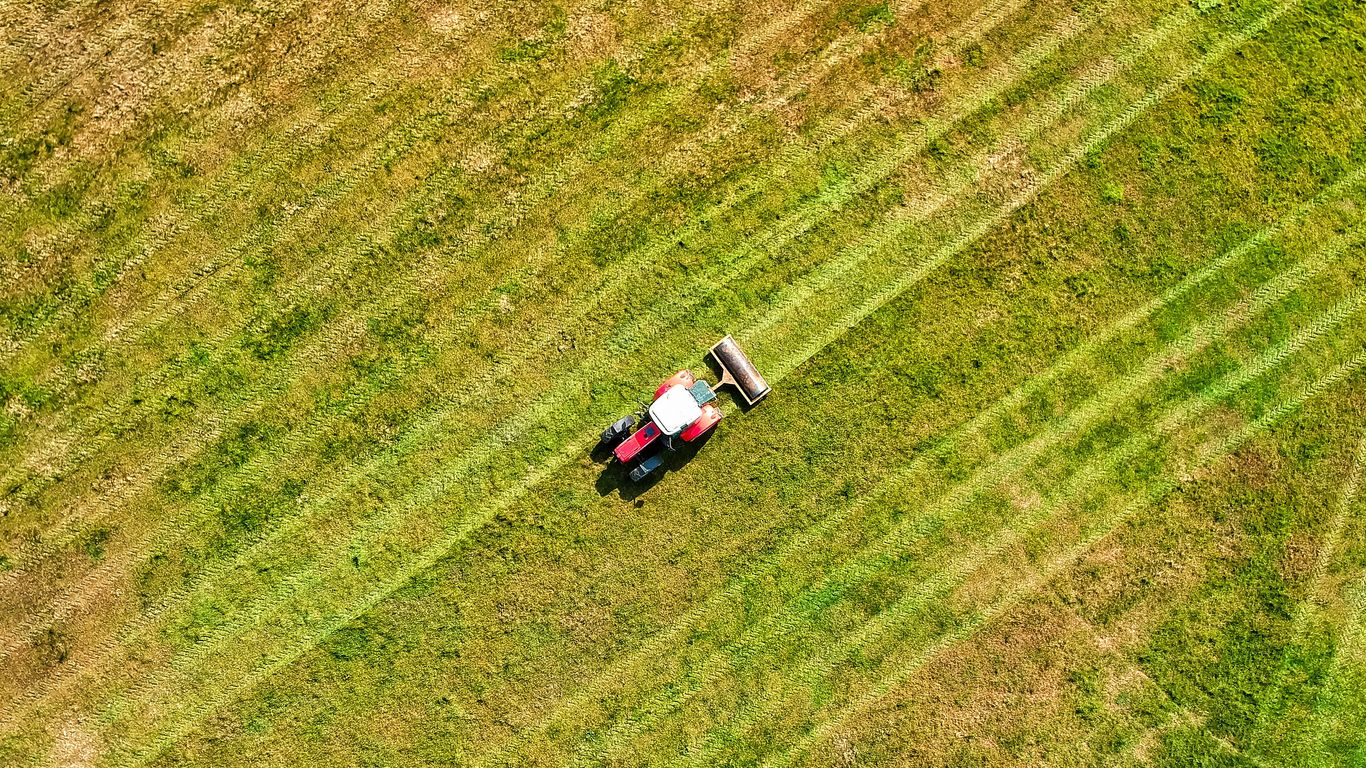
The way farms use drones is set to change rapidly over the next few years. There’s a wave of new tech that will make tomorrow’s drone crop scouting smarter, faster, and more precise than ever before. Here’s what to keep an eye on:
The Rise Of Swarm Technology
If you think one drone is handy, imagine a dozen of them working together. That’s swarm technology. Instead of sending out one drone at a time, a coordinated group can split up, cover bigger fields, or focus on problem areas without missing a beat. This isn’t science fiction—some farms in Asia have already tested fleets of drones for spraying and planting, and these are starting to gain traction in North America now.
Benefits of swarm drones include:
- Covering thousands of acres in a single mission.
- Reducing costs per acre for seeding or spraying.
- Handling more tasks at once (think: mapping, counting plants, and checking crop health all at the same time).
AI And Machine Learning Integration
Gone are the days of flying a drone just to take pictures. In 2026, more drones will have built-in artificial intelligence. Modern onboard processors can spot weeds, pests, or plant stress without you needing to analyze the photos later. Some systems can even make real-time decisions—like only spraying a patch where there’s a problem, or optimizing their flight mid-air.
A few big changes we’re seeing:
- Weed and pest recognition while the drone’s still in the air.
- Instant yield and plant counts.
- Smarter flight routes that save on battery and time, thanks to machine learning.
Here’s how far the upgrade goes:
| Task | Old Way | AI-Powered Drone (2026) |
|---|---|---|
| Disease Detection | Review images post-flight | Finds and flags in real time |
| Spraying | Blanket application | Precision, spot-only spraying |
| Yield Prediction | Manual sampling/guesswork | Automated drone assessment |
Advanced Sensors And Connectivity
Everyone talks about better cameras, but that’s only half the story. Recent drones come equipped with sensors that see beyond visible light—like hyperspectral or thermal, which spot issues before you can see them on a leaf. Combine that with faster wireless networks (think 5G or even 6G), and you’re now looking at live feedback from the field while the drone’s still flying.
In practice, this trend means:
- Detecting pests, nutrient shortages, or water stress weeks earlier.
- Sending huge amounts of field data back to your phone or computer instantly.
- Handling more complex tasks with fewer flights, since each flight collects more info.
To sum it up, tomorrow’s drone crop scouting is about getting more done with less headache. The tech is moving from fun gadget to serious farm tool, and if you keep up, you could cut costs, catch problems early, and get ahead while others are still walking their fields.
Wrapping Up: Drones Are Changing the Game for Farmers
So, that’s the big picture. Drones aren’t just a flashy new gadget—they’re quickly becoming a regular part of running a farm, no matter the size. Whether you’re working a few acres or a few thousand, these flying helpers can save you time, catch problems early, and help you make smarter choices about where to spend your money and effort. The tech is getting easier to use, and it’s not as expensive as it used to be. If you’re still on the fence, maybe try starting small—test out one drone on a single field and see what kind of difference it makes. You might be surprised at how much it changes your day-to-day. Farming is tough work, but with tools like these, it doesn’t have to be quite as much of a guessing game anymore. The future is here, and it’s buzzing right over your crops.
Frequently Asked Questions
What exactly is a drone for farming?
Think of a farm drone as a super-smart flying camera or sprayer. It helps farmers see their fields from high up, collecting detailed information. This helps them take better care of their crops, use water and fertilizer wisely, and make more money by farming smarter, not harder. It’s all about replacing guesswork with real facts.
How do drones help farmers find problems early?
Drones can spot tiny issues like sick plants, bugs, or dry spots in the soil way before a person walking the fields would notice. They use special cameras to see things like plant stress or lack of water. This early warning lets farmers fix problems quickly, often saving a lot of the harvest that might otherwise be lost.
Can drones be used on smaller farms, or are they just for big operations?
Drones are great for farms of all sizes! While big farms might use one type of drone for mapping huge areas, smaller farms can use smaller drones for checking specific fields, looking for problems, or even spraying just the spots that need it. There are also services that let you rent drone help, so you don’t have to buy one if you have a smaller farm.
What’s the difference between a multi-rotor drone and a fixed-wing drone?
A multi-rotor drone is like a helicopter; it can hover in one spot and take off straight up, which is good for spraying or taking close-up pictures of smaller areas. A fixed-wing drone flies more like an airplane and can cover a lot more ground in one go, making it better for mapping large fields quickly.
Do I need special training or permission to fly a drone on my farm?
Yes, in many places, you need to get a special license, like the FAA’s Part 107 certificate in the U.S., to fly drones for farming. If you plan to spray anything with a drone, there might be extra rules from your state about being a certified pesticide applicator. It’s important to check the rules and get proper training.
How are drones going to change farming in the future?
In the future, many drones might work together like a team to cover huge areas super fast. They’ll get even smarter, using AI to figure out what’s wrong with crops on their own and telling sprayers exactly where to go. Plus, they’ll connect better with other farm technology, making farming even more precise and efficient.