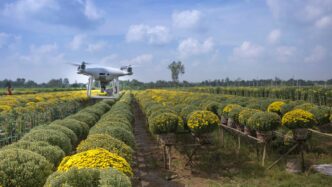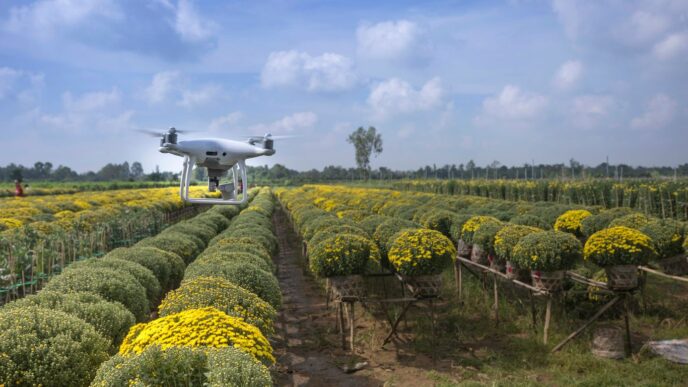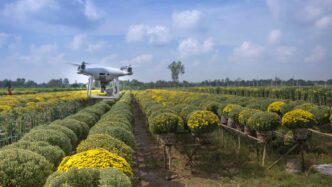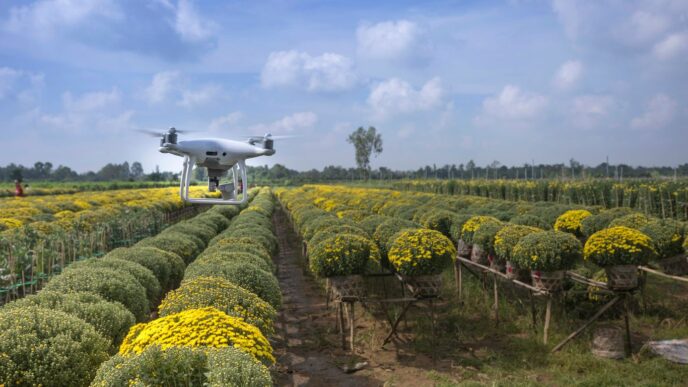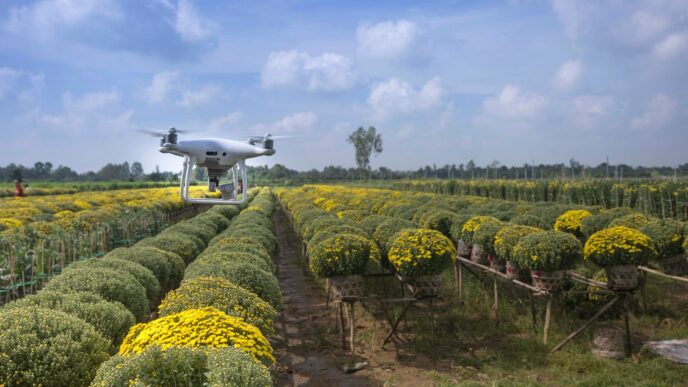
Farming is tough, right? Weather’s unpredictable, costs keep climbing, and you’re always trying to grow more. But what if there was a simpler way to get things done? Drones for spraying fields are changing the game. They help save time, cut down on expenses, and can even make your crops healthier. Plus, they’re kinder to the environment. Let’s look at how these flying helpers are making farming smarter and more sustainable.
Key Takeaways
- Drones for spraying fields allow for precise application of fertilizers and pesticides, meaning less waste and healthier crops.
- Using drones significantly cuts down on the time and labor needed for field operations, freeing up farmers’ schedules.
- Targeted spraying with drones lowers the cost of inputs like chemicals and water, leading to overall farm savings.
- By using fewer chemicals and conserving water, drones help protect the environment, keeping ecosystems and soil healthier.
- The future includes smarter drones with AI and more autonomous operations, making farm management even more efficient.
Revolutionizing Crop Management With Drones
Farming has always been a tough gig, right? You’ve got the weather doing its own thing, costs going up, and everyone wants more food. It feels like you’re always playing catch-up. But things are changing, and a big part of that change is coming from the sky. Drones are seriously shaking things up, making farming smarter and, honestly, a lot less of a headache.
Precision Application Of Fertilizers And Pesticides
Forget just spraying everywhere and hoping for the best. Drones let you get super specific. They can fly over your fields and apply fertilizers or pesticides exactly where they’re needed. This means less waste, which is good for your wallet and the environment. Think about it: instead of dousing an entire field, a drone can target just the spots showing signs of pests or nutrient deficiencies. It’s like giving your plants a personalized treatment plan.
Enhanced Crop Health Monitoring
Keeping an eye on your crops used to mean a lot of walking. Now, drones can do a lot of that legwork for you. Equipped with special cameras, they can capture detailed images of your fields. These images can show you things you might miss with the naked eye, like early signs of stress in your plants or areas that aren’t getting enough water. This real-time data helps you make better decisions, faster.
Early Detection Of Pests And Diseases
Spotting pests or diseases early is a game-changer. If you catch something small, you can deal with it before it spreads and causes major damage. Drones are really good at this. They can spot subtle changes in plant color or temperature that might signal a problem brewing. This early warning system means you can act quickly, often saving your crops and avoiding costly treatments later on.
Boosting Farm Efficiency Through Drone Technology
Farming has always been a tough gig, right? You’re juggling weather, costs, and the constant push to get more from your land. But what if you could make things run a whole lot smoother? That’s where drones come in. They’re not just fancy toys; they’re tools that can seriously speed things up and cut down on the grunt work.
Significant Time Savings In Field Operations
Think about how long it takes to walk or drive across a big field, checking on crops or spraying something. It eats up hours, sometimes days. Drones change that game. A single drone can cover a huge area, like 40 to 60 acres, in just an hour. That’s way faster than any person or even a tractor could manage. This means you get more done in less time, freeing you up for other important tasks. This speed is a major win for getting things done on schedule.
Reduced Labour Requirements For Spraying
Manual spraying or even using ground machinery needs a crew. More people mean higher labor costs, and finding reliable help can be a headache. Drones can do a lot of the heavy lifting, literally. They can handle the spraying tasks over large areas, meaning you don’t need as many hands on deck. This isn’t about replacing people entirely, but about making the work more manageable and less physically demanding, especially for repetitive tasks like spraying.
Accelerated Data Collection For Informed Decisions
Getting a good look at your whole farm used to mean a lot of walking and guessing. Drones, with their cameras and sensors, can gather detailed information about your crops and fields really quickly. They can spot areas that need more water, fertilizer, or pest treatment. This data comes back fast, letting you make smart choices about what to do next, instead of waiting around. It’s like having a bird’s-eye view that tells you exactly what’s going on, so you can act before small issues become big problems.
Economic Advantages Of Drones For Spraying Fields
Let’s talk about the money side of things. Using drones for spraying isn’t just some fancy new gadget; it actually makes good financial sense for your farm. Think about it: you’re trying to grow crops, make a living, and every dollar counts, right? Drones help you keep more of those dollars in your pocket.
Lowering Input Costs With Targeted Application
This is a big one. Instead of just blasting chemicals everywhere, hoping for the best, drones let you be super precise. They can fly over your fields and only spray where the plants actually need it. This means you use way less fertilizer, less pesticide, and less water. Some farmers are seeing input costs drop by as much as 40% because of this targeted approach. It’s like having a super-accurate aim instead of a shotgun blast. You’re not wasting expensive stuff on empty ground or areas that are already healthy.
Achieving Substantial Overall Cost Reductions
When you add up all the savings – less chemical use, less water, and also less labor because the drone does the work much faster than people – the overall cost reduction can be pretty significant. We’re talking about farmers reporting savings around 20% on their total operational costs. That’s not pocket change. It means your farm can be more profitable without necessarily needing to grow more crops. It’s about working smarter, not harder, and making your existing resources go further.
Maximizing Yields Through Optimized Treatments
It’s not just about saving money; it’s also about making more money by getting better yields. When you can monitor your crops closely and apply treatments exactly when and where they’re needed, your plants are healthier. Healthier plants mean better growth and, ultimately, a bigger harvest. Drones help you get the most out of every acre. You can cover a lot of ground quickly, too – up to 50 acres a day is possible with some of these machines. This means you can manage your farm more effectively and respond to issues before they really hurt your crop. So, you get healthier crops, a bigger harvest, and a healthier bank account. It’s a win-win-win.
Environmental Benefits Of Drone-Assisted Agriculture
Farming has always been about working with nature, but sometimes our methods can put a strain on it. That’s where drones really start to shine, helping us farm in ways that are kinder to the planet. It’s not just about getting the job done faster; it’s about doing it more responsibly.
Minimizing Chemical Usage For Healthier Ecosystems
Think about how much pesticide or fertilizer used to get sprayed everywhere, even on areas that didn’t really need it. Drones change that. They can be programmed to spray only the exact spots that show signs of pests or nutrient deficiencies. This means a lot less chemical runoff into our waterways and soil. This targeted approach can reduce chemical application by up to 90% in some cases, which is a huge win for local wildlife and the overall health of the environment around your farm. It’s like giving your crops a precise treatment instead of a blanket bombing.
Conserving Water Resources Through Precise Delivery
Water is becoming more precious, especially in drier regions. Traditional irrigation and spraying can often waste a lot of water. Drones, however, can deliver water and liquid treatments with incredible accuracy. They can identify areas that are dry and need attention, applying just the right amount of moisture or nutrients exactly where they’re needed. This precision means less water is wasted, which is good for your bottom line and even better for the planet’s water supply. It helps make sure every drop counts.
Protecting Soil Health For Sustainable Farming
Our soil is the foundation of everything we grow. When we use fewer chemicals and less water, we’re naturally helping to keep our soil healthier. Less chemical residue means the beneficial microbes in the soil can thrive. Healthier soil holds nutrients and water better, which in turn means healthier plants and better yields over time. It’s a cycle: by being gentler with our application methods using drones, we’re investing in the long-term productivity and vitality of our farmland. This makes farming more sustainable for generations to come.
The Future Of Drones In Agriculture
Integration Of Artificial Intelligence For Smarter Operations
So, what’s next for farm drones? Well, it’s getting pretty interesting. We’re talking about drones that don’t just fly and spray, but actually think. Artificial intelligence, or AI, is starting to be built right into these machines. Imagine a drone that can look at your crops and not only tell you if they need water, but also figure out why they might be struggling – maybe it’s a nutrient issue, or perhaps a specific pest is starting to show up. These AI-powered drones will act like super-smart scouts for your fields. They can analyze data way faster than we can, spotting problems before they even become visible to the human eye. This means we can react quicker and use resources more wisely.
Advancements In Drone Sensors And Imaging
Beyond just seeing, drones are getting better at how they see. New sensors are being developed all the time. Think about multispectral or hyperspectral cameras – these can pick up on light wavelengths that our eyes can’t even detect. This lets us see things like plant stress, nutrient levels, or even the early signs of disease long before they’d show up in a regular photo. It’s like giving your drone super-vision for your crops. This kind of detailed imaging helps us understand exactly what each part of the field needs, leading to more precise treatments and healthier plants overall. We’re moving from just spraying everything to treating specific spots with exactly what they require.
Autonomous Field Operations
Picture this: you set up your drone, tell it what needs to be done for the day, and it just goes. No constant supervision needed. That’s the direction autonomous field operations are heading. Drones are becoming more capable of handling complex tasks on their own, from mapping out the best flight paths to executing spraying or seeding missions with minimal human input. This doesn’t mean farmers will be out of a job, but it does mean they can focus on bigger picture decisions rather than the day-to-day grind of field work. It’s about making farming more efficient and less labor-intensive, allowing farmers to manage larger areas or dedicate more time to other important aspects of their operation.
Adoption And Support For Agricultural Drones
So, you’ve heard about all the cool stuff drones can do for your farm – saving time, cutting costs, and making crops healthier. That’s great, but how do you actually get started? It’s not like you can just pick one up at the local hardware store and expect it to work magic. Thankfully, there’s a growing support system out there to help farmers like us make the switch.
Government Initiatives Promoting Drone Usage
Governments are starting to see the big picture here. They know that modernizing farms is good for everyone, so they’re rolling out programs to make it easier for farmers to get their hands on this tech. Think of it like this: they’re offering a helping hand, sometimes with actual money, to get these advanced tools into the fields. For example, some programs offer subsidies, which means they’ll pay for a portion of the drone’s cost. This can make a huge difference, especially if you’re on a tight budget. It’s not just about buying the drone, either; these initiatives often aim to get more people involved in operating them, which is a win-win.
Drone-As-A-Service Models For Farmers
Not everyone wants to buy a drone outright, and that’s totally understandable. Maybe you only need it for a specific season, or perhaps the upfront cost is still a bit much. This is where "Drone-as-a-Service" (DaaS) comes in. It’s kind of like subscribing to a service. Instead of owning the equipment, you pay for the drone’s capabilities when you need them. A company handles the drone, the maintenance, and the operation, and you just pay for the spraying or monitoring service they provide. This model significantly lowers the barrier to entry, letting you benefit from drone technology without the big investment. It’s a flexible way to try things out and see the benefits firsthand.
Training And Support For Drone Operators
Getting a drone is one thing, but knowing how to fly it safely and effectively is another. You can’t just wing it, especially when you’re dealing with chemicals or flying over valuable crops. Luckily, there are more and more training programs popping up. These courses teach you everything from the basics of drone flight to the specifics of agricultural applications. They cover things like:
- Flight Controls and Safety: Learning how to maneuver the drone properly and what to do in different weather conditions.
- Application Techniques: Understanding how to calibrate the drone for precise spraying of fertilizers or pesticides.
- Data Interpretation: Learning how to make sense of the information the drone collects to make better farming decisions.
Beyond initial training, many companies and government programs offer ongoing support. This means if you run into a problem or have a question, there’s someone you can call. It’s all about making sure farmers can use these tools confidently and get the most out of them.
The Future is Flying
So, there you have it. Drones aren’t just a fancy gadget anymore; they’re becoming a real game-changer for farms, big or small. They help you use less stuff like pesticides and water, which is good for your wallet and the planet. Plus, they save you a ton of time and effort. It might seem like a big step, but with options out there for buying, leasing, or even just hiring services, getting started is easier than you think. Don’t get left behind – it’s time to look up and see how drones can help your farm thrive.
Frequently Asked Questions
What exactly are agricultural drones and how do they help farmers?
Think of agricultural drones as small, flying robots equipped with cameras and special sprayers. They help farmers by flying over fields to check on crops, spray just the right amount of water, bug spray, or plant food exactly where it’s needed, and even spot problems like sick plants early on. This makes farming easier and more efficient.
How much time can drones save on a farm?
Drones can cover a lot of ground very quickly! While a person might take hours to spray a big field, a drone can do it in a fraction of that time. Some drones can cover up to 50 acres in just one day, meaning farmers can get tasks done much faster and spend less time out in the fields.
Do drones actually help save money for farmers?
Yes, they really can! Because drones spray things precisely where they’re needed, farmers use less water, bug spray, and plant food. This cuts down on the cost of these supplies. Plus, since drones save time and reduce the need for a lot of workers, the overall expenses for running the farm can go down quite a bit.
Are drones good for the environment?
Absolutely! Drones help the environment by using fewer chemicals, which means less pollution in the soil and water. They also use water more wisely, which is super important when water is scarce. By using only what’s needed, drones help keep the land healthy for a long time.
What’s the future looking like for drones in farming?
The future is really exciting! Drones will get even smarter, using artificial intelligence (AI) to figure out what crops need without a person telling them. They’ll have even better cameras to see tiny details and might even be able to do entire jobs all by themselves, making farming even more automated and efficient.
Is it hard for farmers to start using drones?
It might seem tricky at first, but there are programs and services designed to help. Some companies offer ‘Drone-as-a-Service,’ where you can hire them to use their drones for you, so you don’t have to buy or learn to fly one yourself. There’s also training available to help farmers and pilots become experts.