Introducing the Canvas Drywall Robot
Revolutionizing Drywall Finishing
Drywall finishing has always been a tough part of construction. It’s detailed work, often involving a lot of repetitive motions and working in awkward positions. For years, the industry has relied on skilled tradespeople to get that smooth, perfect wall surface. But let’s be honest, it’s a process that takes time and can be really hard on the body. The Canvas Drywall Robot is here to change all of that. It’s a new kind of machine designed to take on the heavy lifting, the repetitive tasks, and the precision needed for high-quality finishes, making the whole process faster and less taxing.
The Need for Automation in Construction
Construction, as an industry, hasn’t always been quick to adopt new technology compared to places like factories or warehouses. Think about it: every construction site is different, with unique layouts and conditions. This makes it tricky to use robots that need predictable environments. But here’s the thing, we need to build a lot more buildings in the coming years, and at the same time, fewer people are entering the trades. We’re facing a real shortage of skilled workers. This is where automation becomes not just a nice-to-have, but a necessity. We need smarter tools to help the workers we do have be more productive and to keep projects moving forward.
Canvas’s Innovative Approach
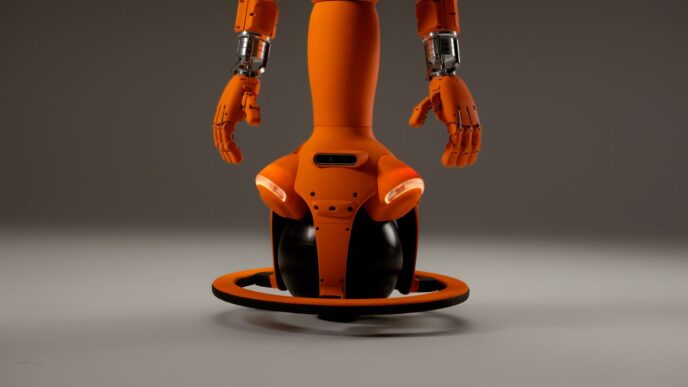
The folks at Canvas took a different route. They built a mobile robot that uses advanced sensors and artificial intelligence. Instead of needing detailed plans or a mapped-out site beforehand, the Canvas robot can figure out its surroundings on its own. You can literally bring it onto a job site, and it’s ready to go. It uses collaborative robot arms, which are designed to work safely alongside people. This means the robot can handle the demanding tasks of applying compound and sanding, freeing up human workers to focus on other aspects of the job or to oversee the robot’s work. It’s about making the whole finishing process more efficient and less physically demanding.
Key Features of the Canvas Drywall Robot
Collaborative Robot Arms for Precision
The Canvas robot uses specialized robotic arms, similar to those found in advanced manufacturing. These aren’t just any arms; they’re designed for delicate, repetitive tasks. Think of them as super-steady hands that can apply joint compound, tape, and even sand surfaces with incredible accuracy. This precision is what allows the robot to achieve those high-quality finishes that are tough to get consistently by hand. They work tirelessly, moving smoothly to cover walls and ceilings without the fatigue a human worker might experience.
AI-Powered Site Detection and Operation
One of the coolest things about the Canvas robot is how it figures out where it is and what to do. It doesn’t need a detailed map of the building beforehand. Instead, it uses AI and sensors to scan the room, detect walls, corners, and openings on its own. This means you can basically drive it onto a job site, turn it on, and it starts working. The AI helps it plan the most efficient path for applying materials and sanding, reducing waste and making sure it doesn’t miss any spots. It’s like having a smart assistant that knows exactly how to finish a wall.
Mobile and Maneuverable Design
Construction sites can be cramped, especially in older buildings or urban areas. The Canvas robot is built to handle this. It’s designed to be mobile, meaning it can be moved around the site relatively easily. Its footprint is compact, allowing it to fit through standard doorways and operate in tighter spaces where larger equipment wouldn’t stand a chance. This mobility means it can get to where it’s needed without a lot of fuss, making the whole finishing process quicker from start to finish.
Transforming Project Timelines and Efficiency
Let’s talk about how this new tech really shakes things up on the job site. When you think about finishing drywall, it’s usually a pretty drawn-out process. You’ve got taping, mudding, sanding, and then doing it all over again. It takes time, a lot of it, and that adds up on any project. The Canvas Drywall Robot promises to cut that time down dramatically.
Think about it: instead of waiting days for mud to dry and then coming back to sand, the robot can often do the whole job in a couple of passes. This isn’t just a small tweak; we’re talking about potentially cutting the finishing time by more than half. For big projects, especially in places like Philadelphia where space can be tight and schedules are packed, shaving off weeks can make a huge difference. It means other trades can move in sooner, and the whole building gets finished faster.
Dramatic Reductions in Finishing Time
This is where the numbers really start to look good. Manual drywall finishing often involves multiple trips to the same wall for different coats of joint compound and sanding. A large area might take five to seven days to get to a paint-ready state. With a robot like Canvas, the process can be streamlined. The robot applies the compound precisely, and after it dries, it sands it smooth. This can bring the entire finishing process down to just two days for many jobs. This speed-up means projects can move from framing to paint much quicker than before.
Achieving Level 5 Finishes Consistently
Getting a Level 5 finish – that perfectly smooth, skim-coated wall ready for any kind of paint or finish – is tough. It requires a lot of skill and a steady hand. Robots, however, are built for precision. They can apply coats evenly and sand surfaces to a uniform smoothness every single time. This consistency is hard to achieve with manual labor, especially over large areas or on complex jobs. The result is a higher quality finish that looks great and reduces the chance of callbacks or rework.
Increased Labor Productivity
When a robot handles the repetitive and physically demanding parts of drywall finishing, your crew can get more done. Instead of spending hours applying mud or sanding, workers can oversee the robot, manage other tasks, or move on to the next section. This doesn’t necessarily mean fewer workers, but it means the workers you have are more productive. Reports suggest that labor needed for the same square footage can be reduced by around 40%. This boost in productivity helps keep projects on schedule and within budget, especially when dealing with tight deadlines or labor shortages.
Benefits Beyond Speed and Quality
Enhancing Worker Safety and Well-being
Working with drywall can be tough on the body. Think about all the repetitive motions, reaching up high, and carrying heavy sheets. It’s no wonder injuries happen. The Canvas Drywall Robot takes on a lot of the physically demanding parts of the job. Instead of workers doing the heavy lifting and awkward reaching, they can supervise the robot. This means less strain on their backs, shoulders, and wrists. It’s about making construction jobs safer and more sustainable for the people doing the work.
Addressing Labor Shortages in the Trades
We all know there’s a shortage of skilled tradespeople out there. It’s getting harder to find experienced workers, and that can slow down projects. Robots like Canvas can help fill some of those gaps. They can perform tasks consistently and efficiently, freeing up human workers for more complex jobs or allowing projects to move forward even with fewer hands on deck. It’s not about replacing people, but about working smarter with the workforce we have.
Cost Savings and Return on Investment
While the initial investment in a robot might seem high, the long-term savings can be significant. Faster project completion means less overhead. Reduced errors and rework save on materials and labor. Plus, with fewer injuries, you see lower workers’ compensation claims. Over time, the efficiency gains and improved quality can lead to a solid return on investment. It’s a way to build more, better, and potentially cheaper in the long run.
The Canvas Drywall Robot in Action
Real-World Applications and Case Studies
So, where are these robots actually showing up? Well, they’re starting to pop up on job sites, making a real difference. Think about it: instead of a crew spending five to seven days on spraying and sanding drywall, the Canvas robot can knock it out in about two days. That’s a huge time saver, especially on big projects where every day counts. We’re seeing this in places that need high-quality finishes, like commercial buildings and even some residential developments where a perfect surface is a must before painting.
Integration with Trade Training Programs
One of the cool things is how this tech is being used to train new folks coming into the trades. It turns out you don’t need years to learn how to operate the Canvas system. Most apprentices can get the hang of it in about a week. This means they can start contributing sooner and learn to work alongside the robot, handling those trickier spots or coordinating other tasks. It’s a way to get more skilled workers on the job faster, which is something the industry really needs right now.
Future Developments and Expansion
Canvas isn’t just stopping here, of course. They’re always looking at what’s next. The idea is to make these robots even smarter and more adaptable. Imagine them handling more steps in the finishing process or working even more closely with human crews. They’re also thinking about how to get these robots into more types of construction projects, not just the big ones. The goal is to make high-quality, efficient drywall finishing accessible everywhere. It’s all about making construction faster, safer, and just plain better for everyone involved.
The Future is Now
So, what does all this mean for the construction world? Basically, robots like Canvas aren’t just a cool new gadget; they’re changing how we build. They promise to speed things up, make the work safer, and help deal with the worker shortage that’s been a headache for years. While there’s still a learning curve and some upfront costs, the benefits in efficiency and quality are pretty clear. It looks like the days of slow, tough drywall finishing might be numbered, making way for a smarter, faster way to get those walls looking just right.