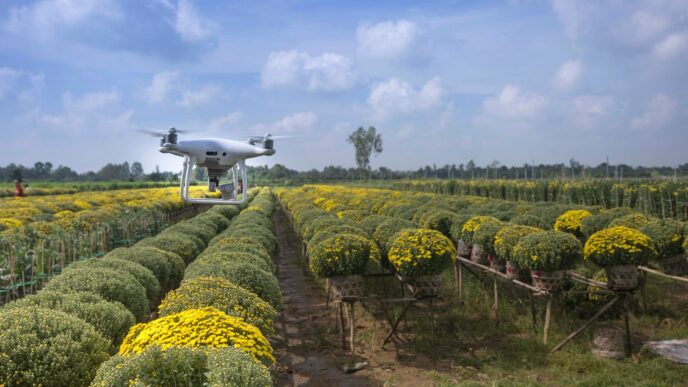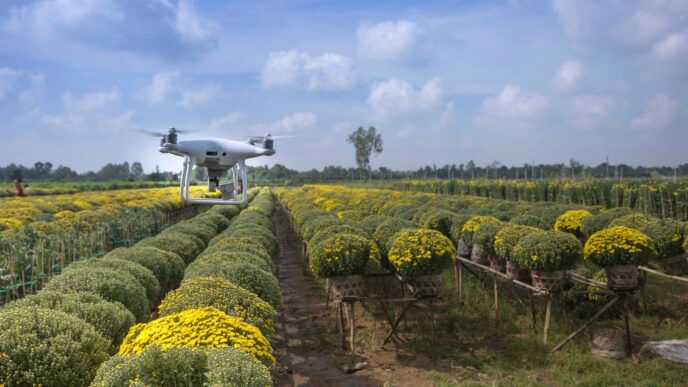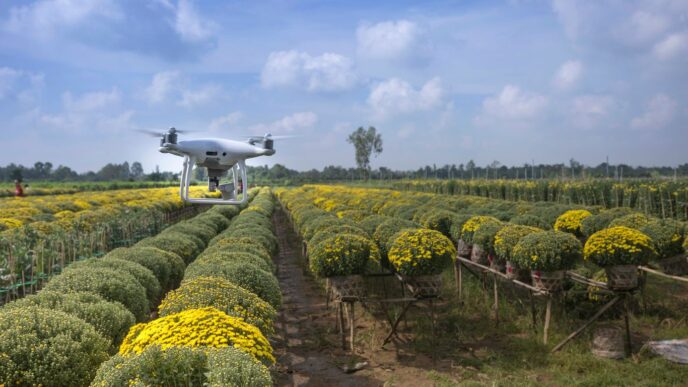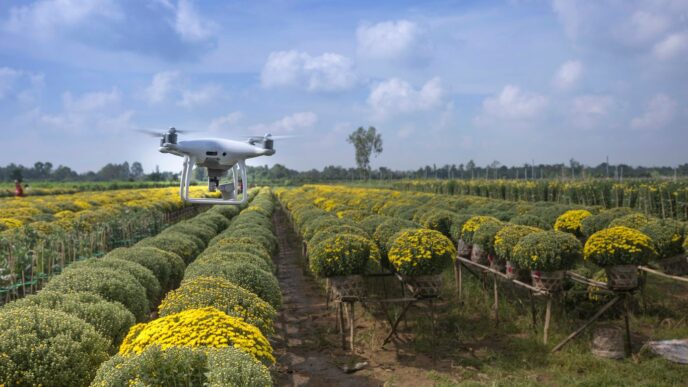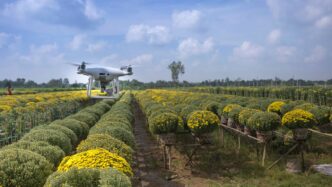
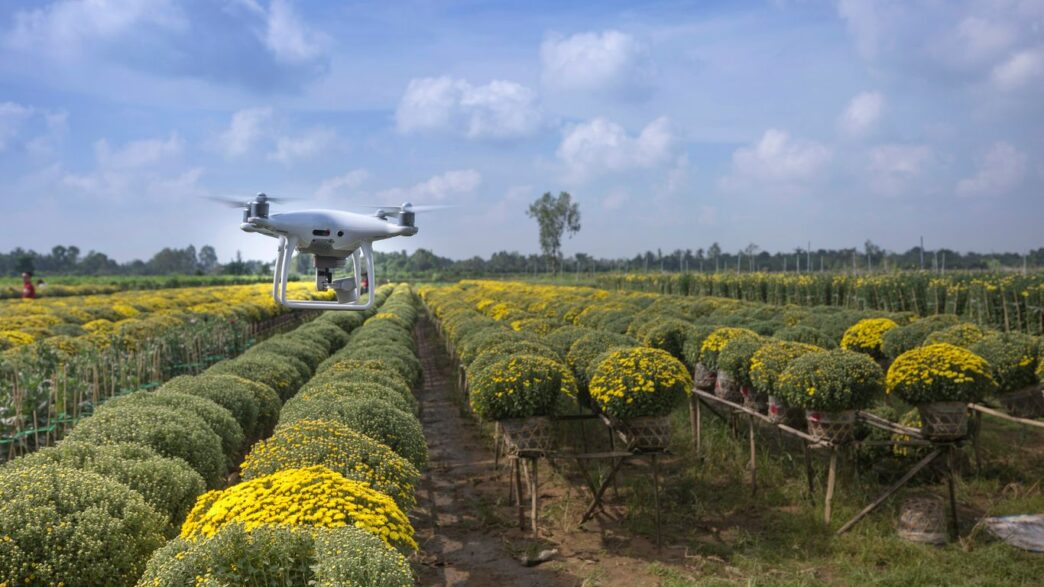
Farming is changing, and drones are a big part of that. You know, those little flying gadgets? Well, they’re not just for taking cool aerial photos anymore. Now, they’re flying over fields, spraying crops with amazing accuracy. This isn’t some far-off sci-fi idea; it’s happening right now. Sprayer drone agriculture is basically taking the old way of doing things and giving it a high-tech upgrade. Think about it: instead of walking miles with heavy equipment or driving big tractors, farmers are using these smart drones to get the job done. It’s all about making farming smarter, faster, and a lot less of a headache.
Key Takeaways
- Sprayer drone agriculture uses automated drones to apply pesticides and fertilizers, offering a modern alternative to traditional methods.
- These drones provide precise application, leading to better crop health monitoring and optimized chemical use, which helps the environment.
- Farmers can save time and money with sprayer drones, as they require less labor and can cover fields faster than ground equipment.
- While challenges like weather, regulations, and training exist, the technology is improving, making it more accessible.
- The future of sprayer drone agriculture involves integration with AI and IoT, leading to more automated and data-driven farming practices.
Revolutionizing Crop Management With Sprayer Drone Agriculture
Farming is changing, and a big part of that change is coming from the sky. We’re talking about sprayer drones, which are basically high-tech helpers for farmers. These aren’t your grandpa’s farming tools; they’re smart machines that can fly over fields and apply exactly what the crops need, right where they need it. This precision is a game-changer for how we grow food.
The Precision Advantage of Drone Spraying
Think about it: instead of broadcasting chemicals over an entire field, hoping some of it lands where it’s supposed to, drones can be incredibly accurate. They use GPS to follow pre-programmed routes, making sure every plant gets the right amount of treatment. This means less waste and more effective pest or nutrient control. It’s like giving each plant a personalized health plan.
Enhanced Crop Monitoring Capabilities
These drones aren’t just for spraying. Many are equipped with special cameras and sensors that can see things we can’t easily spot from the ground. They can detect early signs of disease, nutrient deficiencies, or pest problems. This early warning system lets farmers step in before a small issue becomes a big headache, potentially saving crops and boosting yields.
Navigating Difficult Terrain with Ease
Some fields are just tough to work with. Steep hills, wet ground, or just tight spaces can make it hard for traditional machinery to get the job done. Drones don’t have that problem. They can fly right over obstacles and reach every corner of the field, no matter how tricky the terrain. This means no spot gets missed, and the whole crop gets the care it needs.
Key Benefits of Sprayer Drone Agriculture for Modern Farmers
Let’s talk about why these sprayer drones are becoming such a big deal for farmers today. It’s not just about having fancy new gadgets; there are some real, practical advantages that are changing how farms operate.
Reduced Labor and Increased Efficiency
Farming, as we all know, is hard work and often needs a lot of hands. Finding enough people to do the job, especially during busy times like planting or harvesting, can be a real headache. This is where sprayer drones really shine. One person flying a drone can get done what used to take a whole crew and a tractor. Think about that – it frees up your existing team for other important tasks or even gives them back some much-needed downtime. This boost in efficiency means more work gets done, faster, and with fewer people.
Optimized Chemical Usage and Environmental Impact
Spraying chemicals like pesticides and fertilizers is a necessary part of farming, but using too much can be wasteful and bad for the environment. Drones change this game. Because they fly precisely, often guided by GPS, they can apply treatments exactly where they’re needed. This means less chemical is used overall. Less waste means lower costs for the farmer, and it also means less chemical runoff into the soil and water. It’s a win-win: good for the farm’s budget and good for the planet.
Here’s a quick look at how they stack up:
| Feature | Drone Spraying | Traditional Spraying |
|---|---|---|
| Labor Required | Low | High |
| Chemical Usage | Optimized | Often excessive |
| Speed | 5–10 acres/hour | 2–3 acres/hour |
| Environmental Impact | Low | High |
Improved Farmer Safety and Working Conditions
Working with traditional spraying equipment can put farmers in direct contact with potentially harmful chemicals. They might have to walk through treated fields or handle concentrated products. Drones take the farmer out of the direct line of fire. The operator can manage the spraying from a safe distance, significantly reducing exposure to pesticides and other chemicals. This not only makes the job safer but also improves the overall working conditions, making farming a more appealing profession.
Understanding the Technology Behind Sprayer Drones
So, how exactly do these flying sprayers work? It’s not just a tank strapped to a hobby drone, believe me. Modern agricultural spray drones are sophisticated pieces of equipment, built with several key technologies working together. The real magic happens when these components are integrated to perform tasks with incredible accuracy.
Core Components of Advanced Spraying Systems
These drones are packed with specialized parts that make them effective for farming. Think of it like a high-tech watering can, but way smarter.
- Navigation System: This is usually powered by GPS, often with RTK (Real-Time Kinematic) for super-precise positioning. This helps the drone follow exact flight paths, ensuring no spots are missed and no areas are sprayed twice. It’s like having a self-driving car for the sky, but for your fields.
- Spray Nozzles and Pump: These aren’t just simple sprayers. They’re designed to control the size and distribution of the spray droplets. This means the right amount of liquid, whether it’s fertilizer or pesticide, gets applied evenly to the crops, allowing them to absorb it properly.
- Battery and Payload System: The drone’s flight time and how much it can carry (its payload) are determined by its battery and overall design. This is a big deal when you’re trying to cover a large farm. You need to know how much area you can treat before needing to land and recharge or swap batteries.
Manual Versus Autonomous Operation
When it comes to flying these drones, there are two main ways to go:
- Manual Operation: This is where a trained pilot flies the drone using a remote control. It’s often less expensive upfront and can be very accurate for smaller areas. However, it takes more time and a skilled hand to operate.
- Autonomous Operation: These drones can fly themselves. Using GPS and pre-programmed flight plans, they can cover large fields with minimal human input. This saves a lot of labor, but these systems can be pricier and require someone who knows how to set them up and keep them running.
The Role of GPS and Intelligent Navigation
GPS is the backbone of how these drones know where they are and where they need to go. But it’s more than just basic GPS. Many advanced drones use RTK GPS, which gives them centimeter-level accuracy. This is super important for making sure the spray lands exactly where it’s supposed to. Some drones even use sensors and AI to detect obstacles like trees or power lines and automatically steer clear of them. They can also map fields in real-time, identifying areas that might need special attention, like signs of disease or nutrient deficiencies. It’s like the drone is not just spraying, but also scouting and making smart decisions as it flies.
Real-World Successes in Sprayer Drone Agriculture
It’s one thing to talk about how great drone spraying could be, but it’s another to see it actually working out there in the fields. And let me tell you, the results are starting to stack up. Farmers who were maybe a little hesitant at first are now seeing the benefits firsthand, and it’s changing how they farm.
Quantifiable Yield Increases and Cost Reductions
This is where things get really interesting for any farmer. We’re not just talking about small improvements; we’re seeing solid numbers. One survey of farmers using spray drones showed an average yield increase of 15% and a cost reduction of about 10% per acre. That’s money back in your pocket and more crops to sell. It’s like finding a hidden profit margin you didn’t know you had. Think about it: less money spent on chemicals, less labor, and more product. It adds up fast.
Global Adoption Across Diverse Agricultural Landscapes
This isn’t just a trend happening in one place. Drones are showing up everywhere, from the big, flat fields of the American Midwest to the steep, terraced farms in Asia. They’re proving their worth in all sorts of conditions. Whether it’s:
- Vineyards: Where getting between tight rows without damaging vines used to be a headache.
- Orchards: Where reaching the tops of trees with traditional equipment is tough.
- Rice Paddies: Where the ground can be too wet and soft for heavy machinery.
- Large Grain Farms: Where covering vast areas quickly is key.
It seems like wherever there’s a crop, there’s a way a drone can help make the job easier and more effective.
Case Studies from Vineyards to Large Grain Farms
Let’s look at a couple of examples. In California’s wine country, vineyards are using drones to precisely target specific areas with treatments, reducing chemical use significantly while protecting the delicate grapevines. They can fly right over the rows, getting a uniform spray without the risk of soil compaction from tractors. Then you have massive grain operations in the plains states. When the weather window for spraying is tight, a drone can get up in the air and cover acres much faster than a ground rig, sometimes 5 to 10 acres an hour compared to 2 or 3 with a tractor. This speed is a game-changer when you’re racing against the clock and the weather.
Challenges and Considerations for Sprayer Drone Adoption
So, you’re thinking about getting into sprayer drones for your farm? That’s great! They really can change how you work. But, like anything new, there are a few bumps in the road you’ll want to be aware of before you jump in. It’s not just about buying the drone and sending it off. There’s a bit more to it.
Navigating Regulatory Hurdles and Airspace Restrictions
First off, you can’t just fly these things anywhere, anytime. There are rules, and they can be a bit of a maze. Depending on where you are, you’ll need to figure out permits and licenses. The FAA, for example, has specific rules for flying drones, especially for commercial use. You’ll likely need something like a Part 107 certificate. Plus, there are rules about flying near airports or in certain controlled airspace. It’s super important to get this right to avoid fines or bigger problems. You’ll also need to check local and state regulations, as they can differ quite a bit.
Addressing Operational Challenges: Weather and Battery Life
Then there’s the actual flying part. Weather is a big one. If it’s too windy, your drone might not be able to fly safely, or your spray could drift off target. And if it starts raining right after you spray, well, that’s just a waste of chemicals and time. Battery life is another thing to think about. Most drones can only fly for about 20 to 40 minutes on a single charge. For larger fields, this means you’ll need a plan for swapping batteries quickly. Having a few extra batteries charged and ready to go is pretty much a must-have, not just a nice-to-have. You also need to factor in the time it takes to land, swap, and take off again.
Here’s a quick look at typical flight times and recharge needs:
| Task | Typical Duration | Notes |
|---|---|---|
| Flight Time per Battery | 20-40 minutes | Varies by payload, speed, and conditions |
| Battery Recharge Time | 30-60 minutes | Using a standard charger |
| Acres per Battery Charge | 5-15 acres | Depends on tank size and spray rate |
The Importance of Training and Technical Expertise
Finally, you need to know how to use the drone properly. It’s not like flying a kite. You’ll need training to understand the controls, the software, and how to plan your flights. Some people pick it up quickly, but for others, there’s a learning curve. You’ll want to be comfortable with the drone’s systems, how to maintain it, and maybe even how to do basic repairs. Plus, understanding the data the drone collects is key to getting the most out of it. Many companies offer training programs, and it’s worth looking into those to make sure you and your team are ready. Getting the right knowledge upfront will save you a lot of headaches down the road.
The Future Trajectory of Sprayer Drone Agriculture
Integration with Artificial Intelligence and IoT
The path forward for sprayer drones is really tied to how we use artificial intelligence (AI) and the Internet of Things (IoT) in farming. We’re moving towards farms that run themselves, and smart drones are a big part of that. Think about drones that can not only spray but also collect data on soil conditions, plant health, and even weather patterns in real-time. This information, fed into AI systems, can help make much smarter decisions about when and where to spray, or even if spraying is needed at all. It’s about moving from just applying chemicals to actively managing the farm’s ecosystem.
Emerging Innovations: Drone Swarms and Advanced Analytics
We’re starting to see some really interesting new ideas pop up. One of them is the concept of drone swarms – groups of drones working together. Imagine a whole team of drones coordinating to cover a large field much faster and more efficiently than a single drone could. They could even communicate with each other to avoid overlap and ensure complete coverage. On top of that, advanced analytics are becoming more sophisticated. Drones equipped with better sensors can gather more detailed information, and software can then analyze this data to spot problems before they become visible to the human eye. This could mean identifying specific plants that need treatment, rather than spraying an entire field.
Zenadrone’s Vision for Connected Farm Management
Companies like Zenadrone are looking at drones as more than just sprayers; they see them as central hubs for farm data. Their vision is for drones to be constantly connected, sending real-time updates about crop conditions straight to a farmer’s phone or computer. This system could even predict when a drone might need maintenance, scheduling it automatically. The goal is to create a fully connected farm where technology works together to make farming more efficient, sustainable, and less of a guessing game. It’s about having all the information you need, right when you need it, to take the best possible care of your crops.
The Sky’s the Limit for Farming’s Future
So, it’s pretty clear that these sprayer drones are changing how we farm. They’re faster, more precise, and honestly, just a smarter way to get the job done compared to the old methods. While there are still a few bumps in the road, like figuring out the weather and learning the new tech, the benefits are huge. Farmers are saving time, using fewer chemicals, and getting better results. It feels like we’re just scratching the surface of what these flying helpers can do, and it’s exciting to think about how they’ll keep making farming better and more sustainable for years to come.
Frequently Asked Questions
What exactly are sprayer drones in farming?
Sprayer drones are like flying robots for farms. Instead of using big machines or walking around, farmers can send these drones up in the air to spray special liquids, like fertilizers or bug-killers, onto their crops. They are a high-tech way to take care of plants from above.
How do these drones help farmers spray better?
These drones are super precise! They use GPS to follow exact paths, making sure every plant gets the right amount of spray. This means less wasted spray and healthier crops because the farmer knows exactly where and how much is being applied. They can even fly over tricky areas where big tractors can’t go.
Are sprayer drones good for the environment?
Yes, they can be! Because they spray so precisely, they use less chemicals overall. This means less stuff can accidentally get into the soil or water. They also help reduce the need for heavy machinery that can compact the soil and use lots of fuel.
Do farmers need special training to use these drones?
Yes, farmers do need to learn how to use them. It’s not just like flying a toy. They need to understand the technology, how to program the flight paths, and sometimes how to look at the data the drone collects. Luckily, there are training programs to help farmers learn these new skills.
What are the biggest problems with using sprayer drones?
Sometimes the weather can be a problem – strong winds or rain can stop flights. Also, batteries don’t last forever, so farmers need to plan for charging or swapping them, especially on large fields. There are also rules about where and how drones can fly, which farmers need to follow.
Are sprayer drones the future of farming?
Many people think so! They make farming more efficient, save money, and can be better for the environment. As the technology gets even smarter with things like artificial intelligence, drones will likely become even more important in helping farmers grow food for everyone.