
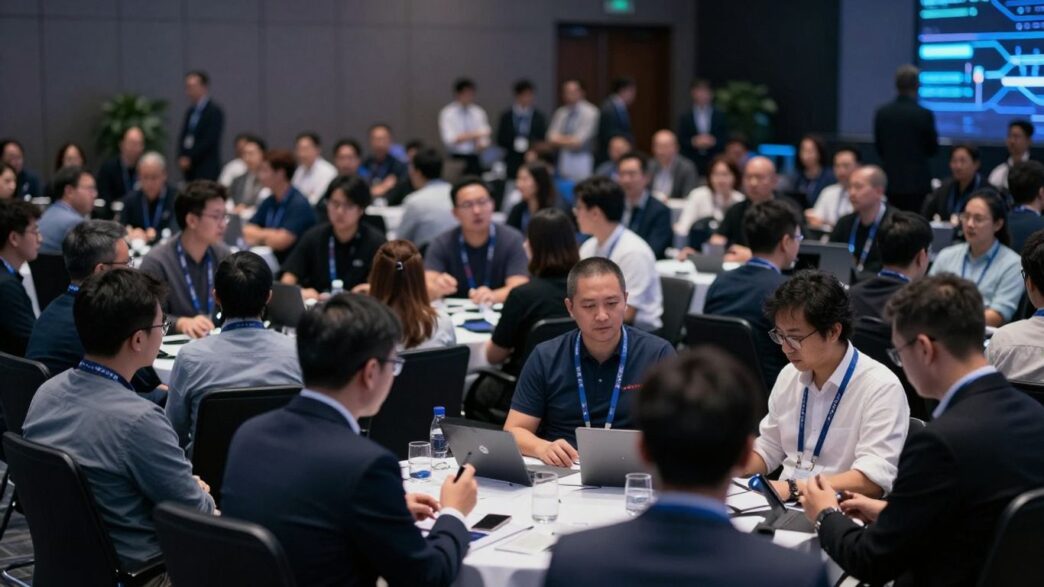
Right now, artificial intelligence is changing B2B software faster than anyone predicted. It feels like a huge shift, and if you’re not paying attention, you might get left behind. This year’s SaaStr Conference 2026 is all about figuring out this new world. It’s not just talk; it’s about getting real advice from people who are actually doing it, building companies in this new AI-driven landscape. We need to understand how AI changes growth, how we sell, and how we invest, especially when things are moving this quickly. The SaaStr conference is where you can find those answers.
Key Takeaways
- AI is changing how businesses grow and operate, and companies need to adapt quickly or risk falling behind.
- The SaaStr conference focuses on practical advice from people who have built and scaled AI-powered businesses, not just theories.
- AI agents are changing work, but the focus is on augmenting human tasks rather than full automation for now.
- Fundraising for AI startups is still possible, but investors are looking closely at real revenue and solid business metrics, not just hype.
- Go-to-market strategies need a rethink for AI-native products, including how to price them and convince buyers.
Navigating the AI Revolution at SaaStr Conference 2026
The Imperative of AI in B2B Growth
Right now, AI isn’t just a buzzword; it’s fundamentally changing how B2B companies operate and grow. If you’re not paying attention, you’re already falling behind. The pressure to integrate AI features into products is immense, and the fear of competitors launching something disruptive is a daily reality for many leaders. Board meetings are now filled with questions about AI strategies, and late nights are spent wondering if existing business models are about to be made obsolete. This feeling of urgency isn’t going to disappear on its own. The companies that figure out how to harness this wave are the ones that will build lasting businesses, while others might become cautionary tales.
The next few years are going to be a period of massive change in the tech world. AI is set to reshape every part of software, and founders who get it right will create the next generation of leading companies. But you can’t do it all by yourself.
Why This SaaStr Conference Is Different
Many conferences talk a good game about the future, but often they’re either too theoretical, filled with people who’ve never actually shipped a product, or they’re just thinly veiled sales pitches. SaaStr AI Annual 2026 is built on a different principle. Every speaker is an operator who has been in the trenches, shipping AI products, rebuilding go-to-market strategies for the AI era, and managing the shift from older systems to AI-native ones. They’ll be sharing what actually worked, what didn’t, and precisely how they managed it. The focus is on practical, actionable advice, not vague pronouncements. You’ll hear about specific frameworks for pricing AI features, restructuring customer success teams when AI handles a large chunk of queries, and how to pitch new AI products to buyers who might be hesitant. This event is happening from May 12-14, 2026, in the San Francisco Bay Area, and it’s designed for founders and leaders who need real answers. SaaStr Annual 2026 is where you’ll find them.
Actionable Insights from Industry Operators
This isn’t about listening to academics or consultants. It’s about hearing directly from people who are actively building and scaling AI-driven B2B businesses right now. They understand the challenges because they’re living them. You’ll get insights into:
- Pricing AI Features: How to set prices for features that might cost significantly more to run than your existing offerings.
- GTM Restructuring: Adapting sales and marketing playbooks for a market where AI is changing customer behaviour and expectations.
- Product Development: Identifying genuine customer needs for AI features versus chasing trends.
- Team Adaptation: Strategies for managing teams as AI takes on more tasks, freeing up human resources for higher-value work.
Attending events like this is an investment. The cost of figuring things out slowly or making the wrong decisions can be far greater than the ticket price. It’s about getting into the right room with the right people to make the right decisions at this critical juncture.
The Future of B2B Software with Artificial Intelligence
Right then, let’s talk about where B2B software is heading, especially with AI now firmly in the picture. It’s not just about adding a few smart features anymore; AI is fundamentally changing how we build, sell, and use business applications. The pace of change is frankly a bit dizzying, but there are some clear trends emerging that every B2B company needs to get a handle on.
AI Agents: Augmentation Versus Automation
One of the biggest talking points is the rise of AI agents. Are we looking at a future where we have dozens, maybe even hundreds, of these little AI helpers running around our businesses? Or will AI functionalities simply get baked into the software we already use? It’s a bit of a debate, but the consensus seems to be leaning towards AI augmenting what humans do, rather than replacing them entirely. Think of it like having a super-efficient assistant rather than a robot taking over your job. Companies like Synthesia are showing how AI can make video creation as easy as putting together a PowerPoint, speeding things up without losing the human touch. The real win is in boosting productivity, not just cutting heads.
Consolidating Applications with AI-Driven Tools
It feels like we’ve all got too many software subscriptions, doesn’t it? Well, AI might actually help with that. Instead of adding more and more specialised apps, the thinking is that AI-driven tools could start to consolidate functionalities. Imagine one platform that handles multiple tasks, making things simpler and, hopefully, cheaper. This shift means that while the number of software applications might not explode, the spending on AI-powered tools that replace manual work is likely to go up. It’s about smarter integration, not just more tools.
The Shifting Economics of Enterprise Software
This is where things get really interesting from a business perspective. AI is changing the financial side of enterprise software. For early-stage AI startups, the valuation game is still on, but for those further along, investors are looking much more closely at how durable the revenue is. It’s not just about rapid growth anymore; they want to see solid metrics like customer retention and expansion. The old rules of growth, like the "triple triple double double" metric, might not cut it anymore. Investors are now focused on revenue durability and how well AI investments actually translate into tangible business outcomes. It’s a move towards more sustainable growth, which, let’s be honest, is probably a good thing for everyone in the long run. The market for big data, for instance, is expected to grow significantly, driven by businesses wanting to improve operations and customer relations, though a shortage of skilled data professionals remains a challenge US Big Data market.
The focus is shifting from simply adopting new AI features to ensuring these tools solve genuine business problems. This means a more critical look at ROI and a preference for integrated solutions over a multitude of standalone AI agents. The economics are changing, and companies that adapt will be the ones to thrive.
Fundraising and Investment Trends in the AI Era
Navigating Early-Stage AI Startup Valuations
Getting money for a new AI company is a bit of a mixed bag right now. On one hand, investors are really keen on the potential of AI, and some early-stage businesses are still managing to get pretty high valuations. It seems like having a compelling vision and a solid story can still go a long way. However, it’s not just about having a cool idea anymore. You need to show that your AI can actually do something useful and that people will pay for it. The days of just throwing money at any AI concept are fading fast.
Growth-Stage Focus on Revenue Durability
Once your AI company starts to grow, the game changes. Investors aren’t just looking at how much money you’re bringing in; they’re digging into how stable that income is. This means they’re scrutinising things like customer retention and how much existing customers are spending more. It’s not enough to just acquire new customers; you need to prove that they’ll stick around and keep paying. This shift towards revenue durability is a big deal for established AI businesses.
Beyond Hype: Fundamental SaaS Metrics for AI Companies
Forget the buzzwords for a moment. While AI is exciting, investors are increasingly looking past the hype and focusing on the same core metrics that have always mattered for software companies. Things like net revenue retention (NRR) and how much existing customers expand their contracts are now under the microscope. Even impressive growth rates might not be enough if the underlying business isn’t solid. It’s about building a company that can last, not just one that looks good on paper today. The bar for growth has definitely been raised, partly because of the capabilities AI brings to the table, meaning companies need to show AI-level growth to impress.
The market is certainly hot for AI, but capital is becoming more selective. Companies with a clear path to sustained revenue and a strong grip on their existing customer base are the ones attracting serious investment. It’s less about the ‘wow’ factor of AI and more about its practical, long-term business impact.
Strategic Go-to-Market for AI-Native Businesses
Right, so you’ve got this shiny new AI product. Brilliant. But how do you actually get it into the hands of businesses that need it, especially when the market’s shifting faster than a chameleon on a disco floor? That’s the million-dollar question, isn’t it? The old ways of selling software just don’t cut it anymore. We’re talking about a whole new ballgame here, and frankly, most sales playbooks are about as useful as a chocolate teapot.
Rebuilding Playbooks for AI-Dominated Markets
Forget what you think you know about selling. The landscape has changed. AI isn’t just a feature; it’s the engine. This means your sales approach needs a serious overhaul. Instead of just pushing features, you’re selling outcomes, efficiency gains, and a competitive edge. It’s about understanding the deep pain points that AI can solve, not just the surface-level problems.
- Focus on the ‘Why’: Clearly articulate the business problem your AI solves and the tangible results it delivers. Think reduced costs, increased productivity, or new revenue streams.
- Educate, Don’t Just Sell: Many potential buyers are still wrapping their heads around AI. Your sales team needs to be educators, explaining the technology and its benefits in plain English.
- Adapt to Agentic AI: Agentic AI is revolutionizing the SaaS sector, compelling leaders to re-evaluate their business models and go-to-market strategies to adapt to this new landscape. This shift means your product might be interacting with other AI agents, not just humans, so your sales narrative needs to reflect that.
The days of a sales rep simply demonstrating software are fading. Now, it’s about showing how AI integrates into existing workflows to create new efficiencies, often replacing tasks that previously required significant human effort or external services.
Pricing AI Features Effectively
Pricing AI is, let’s be honest, a bit of a mess right now. Everyone’s trying to figure it out. Do you charge per API call? Per user? For the outcome? It’s complex, and there’s no one-size-fits-all answer. But here’s the thing: you can’t just slap a premium on it and expect people to pay without seeing clear value.
- Value-Based Pricing: Tie your pricing directly to the business value your AI delivers. If your AI saves a company £10,000 a month, charging £2,000 makes sense. If it only saves them £500, that £2,000 price tag looks a bit steep.
- Tiered Offerings: Consider different tiers based on usage, features, or the level of AI sophistication. This allows businesses of various sizes to engage.
- Transparency is Key: Be upfront about what drives the cost. Customers are more likely to accept pricing if they understand the mechanics behind it.
Pitching AI-Native Products to Skeptical Buyers
Selling to a skeptical buyer when you’re talking about AI requires a different approach. They’ve heard the hype, they’ve seen the failures, and they’re wary of investing in something that might not deliver. Your pitch needs to be grounded in reality and focused on demonstrable results.
- Show, Don’t Just Tell: Demos are critical. Let them see the AI in action, solving real problems. Case studies with quantifiable results are your best friend here.
- Address Concerns Head-On: Anticipate their doubts about data privacy, integration challenges, or the ‘black box’ nature of AI. Have clear, concise answers ready.
- Pilot Programs: Offer pilot programs or trials. This allows buyers to test the waters with lower risk, building confidence before a full commitment.
Remember, the goal is to build trust. When you can show that your AI product is not just a technological marvel but a practical solution that drives measurable business outcomes, you’ll find those skeptical buyers start to listen.
The SaaStr Conference Community Advantage
Running a B2B software company in 2026, especially with AI changing everything so fast, can feel pretty isolating. You’ve got your team looking to you for direction, your investors wanting solid answers, and your customers expecting you to have all the solutions. But the truth is, most of us are just figuring things out as we go. That’s where the SaaStr conference community really shines. It’s not just about the talks; it’s about being surrounded by people who are in the same boat, facing the same choppy waters.
Connecting with Operators in the Trenches
Forget the theorists and the analysts. The SaaStr AI Annual is built differently. Every speaker is an operator, someone who has actually built, shipped, and scaled AI products. They’ve rebuilt their go-to-market strategies for this new AI-driven world and can tell you precisely what worked and, more importantly, what didn’t. You’ll hear about specific frameworks, not just vague ideas about AI. Think about how to price AI features that customers will actually use, or how to restructure your customer success team when AI is handling a huge chunk of support tickets. These are the real-world challenges being discussed by people who’ve lived them.
The Value of Hallway Conversations
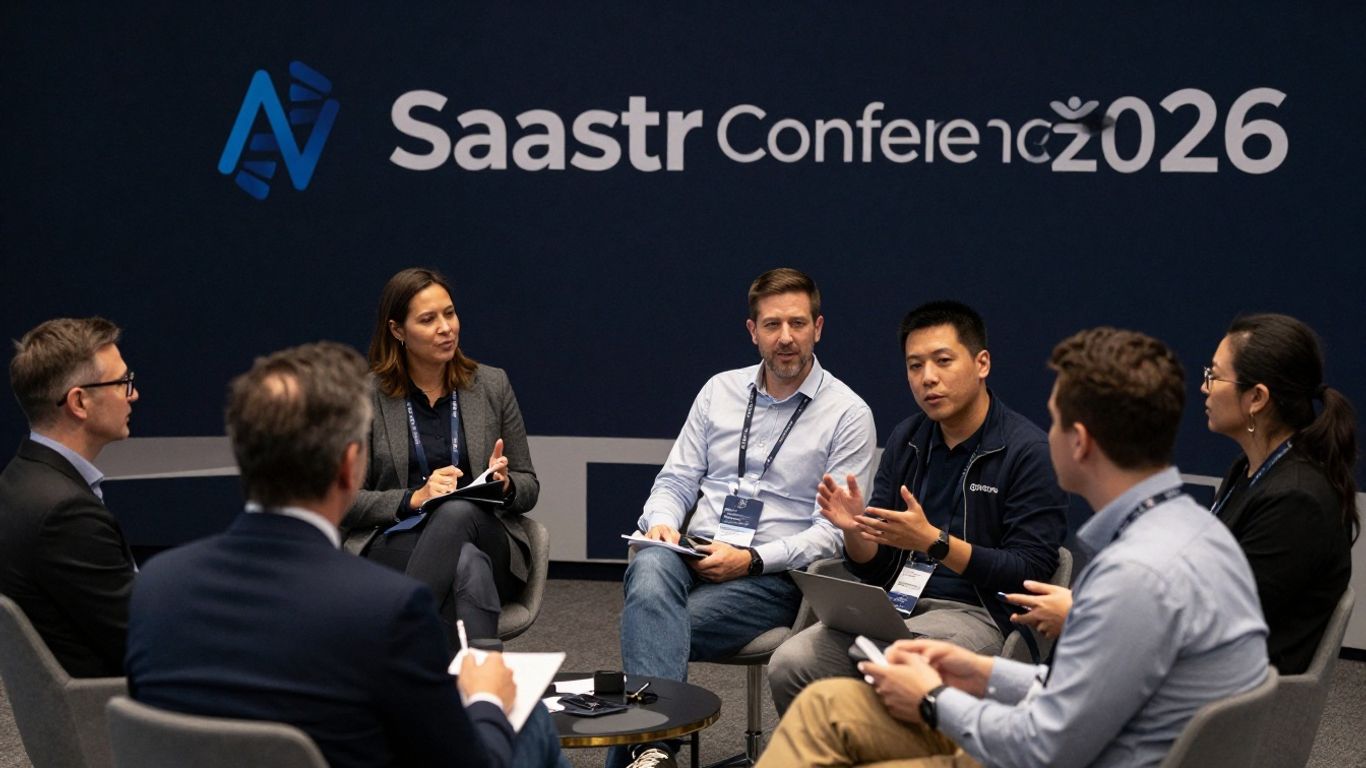
Honestly, some of the most impactful moments at any conference happen away from the main stage. The SaaStr community is curated, meaning you’re not just lost in a massive crowd. You’re connecting with founders and leaders who are right there with you, wrestling with the same problems. These hallway conversations are gold. You might find the exact tactic or approach you’ve been missing to get to your next stage of growth. It’s the relief of realising you’re not alone in your fears and challenges that makes these interactions so powerful. Many lasting business relationships and even funding deals have started with a casual chat at SaaStr.
Building Generational Businesses Together
This isn’t just about surviving the AI disruption; it’s about thriving. The founders who win are the ones who don’t try to figure it all out in isolation. They find the right room, the right people to learn from and collaborate with. The SaaStr community provides that space. You’ll leave with more than just notes; you’ll have the clarity and the conviction to make those tough decisions you’ve been putting off. It’s about building something lasting, something generational, together. The collective knowledge and shared experience within the SaaStr community is unparalleled for anyone serious about enterprise software.
The pressure to integrate AI is immense, and the landscape shifts daily. Relying solely on internal resources can lead to missed opportunities and strategic missteps. Engaging with peers who are actively implementing AI solutions offers a vital reality check and a source of practical, tested advice.
Here’s what you can expect to gain:
- Actionable Playbooks: Discover specific tactics and frameworks for AI integration, pricing, and GTM strategies.
- Peer Support: Connect with founders and operators facing similar challenges, reducing the isolation of leadership.
- Renewed Conviction: Leave with the clarity and energy to implement necessary changes and drive your business forward.
Key Takeaways for AI Adoption in B2B
So, what does all this AI talk at SaaStr 2026 really boil down to for businesses? It’s not just about having the latest tech; it’s about making it work for you. We heard a lot about how AI is changing the game, and here are a few things that really stuck with me.
AI’s Impact on Services and Consulting Spend
It seems like a lot of the money companies are now spending on AI software isn’t coming from their existing software budgets. Instead, it’s often being pulled from what they used to spend on outsourcing and external consultants. Think about it: if an AI tool can do a job faster and cheaper than a human team, why wouldn’t you shift those funds? This means the services sector needs to adapt, perhaps by offering AI integration or specialised consulting around these new tools. The economics are definitely shifting, and it’s not just about cutting costs, but about reallocating resources for better efficiency.
The Role of AI in Enterprise Video Communication
Video is becoming a much bigger deal in how businesses talk to each other and their customers. We saw examples, like Synthesia, showing how AI can create professional-looking videos for training, marketing, and support without needing a huge production crew. This isn’t just about making videos look good; it’s about making them interactive and easier to produce. Instead of long, text-heavy documents, companies are looking at AI-generated videos to get their message across more clearly. This could mean fewer lengthy emails and more engaging visual content.
Ensuring AI Investments Drive Real Business Outcomes
It’s easy to get caught up in the excitement of new AI tools, but the real test is whether they actually help the business. Investors are looking beyond just growth numbers; they want to see that AI spending is leading to tangible results. This means focusing on metrics that show real value, like customer retention and expansion. It’s about using AI to solve actual problems, not just for the sake of using AI. The goal is to make sure that every pound spent on AI contributes to the company’s bottom line and long-term success.
The conversation around AI in B2B is moving past the initial hype. The focus is now on practical application and measurable results. Businesses that can clearly demonstrate how AI drives efficiency, improves customer engagement, or creates new revenue streams will be the ones that truly succeed in this evolving landscape. It’s about smart adoption, not just adoption for its own sake.
Here’s a quick look at what’s changing:
- Budget Reallocation: AI spending often comes from services and consulting budgets.
- Video Content: AI is making video creation more accessible and effective for businesses.
- Outcome Focus: Demonstrating real business value is key for AI investments.
- Augmentation Over Automation: Many AI tools are currently designed to help people do their jobs better, not replace them entirely.
So, What’s Next?
Right then, that’s a wrap on SaaStr Conference 2026. It’s pretty clear AI isn’t just a buzzword anymore; it’s really changing how B2B companies work, sell, and even how they get funded. We heard a lot about how AI can help with everyday tasks, but also that it’s not quite ready to take over everything just yet. For founders and leaders, the message seems to be: don’t get left behind. The ones who do well are the ones who connect with others, share what’s working (and what’s not), and figure out practical ways to use this new tech. Trying to go it alone in this fast-moving world just doesn’t seem to cut it anymore. It’s a big shift, no doubt about it, but it also looks like a massive opportunity for those ready to adapt.
Frequently Asked Questions
What is the SaaStr Conference 2026 all about?
The SaaStr Conference 2026 is a big meeting for people who build and sell software that businesses use (B2B software). This year, it’s focusing a lot on how Artificial Intelligence (AI) is changing everything in the world of business software and how companies grow.
Why is AI so important for businesses right now?
AI is like a super-smart tool that can help businesses work faster and smarter. It’s already changing how companies sell things, how they make their products, and how they plan for the future. Companies that learn to use AI well will likely do really well, while those that are slow to adapt might get left behind.
Will AI take over jobs or just help people do their jobs better?
Right now, AI seems to be better at helping people do their jobs more effectively, rather than replacing them completely. Think of it like a helpful assistant that can handle some tasks, freeing up humans to focus on more important things. While AI can automate some tasks, it still needs human guidance for the best results.
Is it hard for new AI companies to get money to start?
Getting money can be a bit tricky. For brand new AI companies with a great idea, it’s still possible to get a lot of funding. But for companies that are already growing, investors want to see that they are making real money and that customers really like their products, not just focusing on flashy new ideas.
How can businesses sell products that use AI?
Selling AI products is different now. Businesses need to figure out new ways to tell people about their products and how much they should cost. It’s important to show customers how AI can truly help them, especially if they’re a bit unsure about new technology.
What’s the best way to learn about AI for business?
The best way is to connect with people who are actually doing it – the founders and leaders who are building AI products right now. Sharing ideas and learning from their experiences, even in casual chats, can be incredibly valuable. The conference is a great place to find these people.