
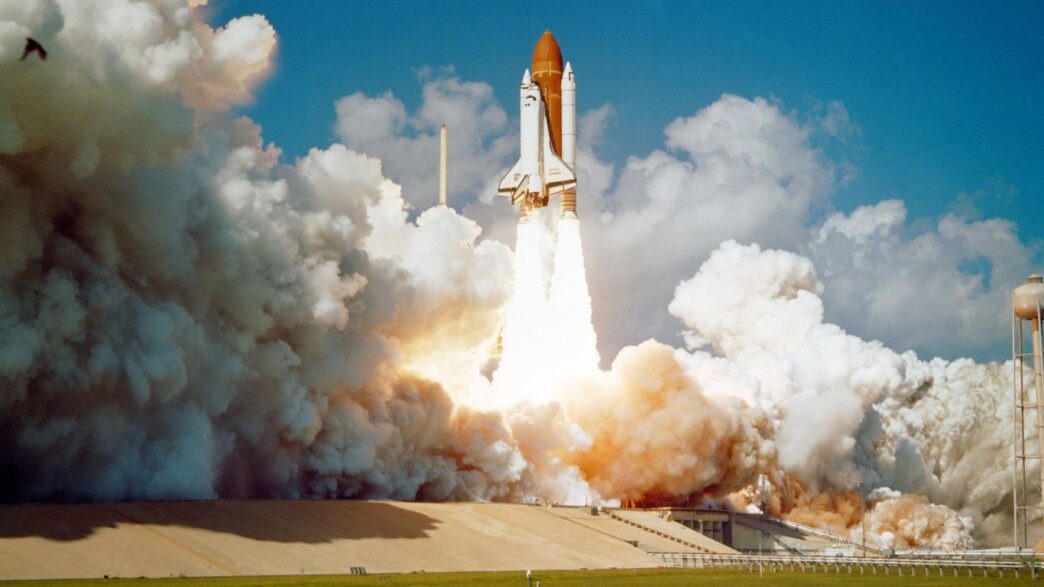
Hey everyone, welcome back! If you’re like me and get a kick out of watching rockets go up, you’re in the right place. It feels like there’s always something new blasting off into space these days. Today is no different, with a couple of interesting launches on the docket. We’ll cover what’s happening right now and give you a peek at what’s coming up. So grab your coffee, and let’s talk about today’s space launch.
Key Takeaways
- There are two launches scheduled for today, offering opportunities to witness liftoffs.
- The Blue Origin New Shepard NS-37 mission is planned for a suborbital tourism flight.
- SpaceX has a Falcon 9 launch scheduled for the CSG-3 mission for the Italian Space Agency.
- Japan’s H3 rocket is set to launch the Michibiki No. 5 satellite, though it has faced delays.
- Information on viewing locations and potential airspace restrictions is available for those wanting to watch launches in person.
Today’s Space Launch Schedule
Upcoming Launch Details
It’s a busy time for launches, with several missions on the books for the coming days. Keep an eye on the skies, because you never know when you might catch a liftoff! Remember, all these times are subject to change, so it’s always a good idea to double-check closer to the date.
Live Launch Coverage
Want to watch these launches happen in real-time? Many of these events will be streamed live online. Check the websites of the respective space agencies and companies for broadcast details. It’s pretty cool to see these rockets go up!
Key Mission Information
Here’s a quick look at some of the missions scheduled:
- December 28, 02:09 AM UTC: SpaceX Falcon 9 is set to launch the CSG-3 mission, carrying an Earth observation satellite for the Italian Space Agency (ASI). This satellite will help with both civilian and military needs.
- December 28, 05:00 AM UTC: Another SpaceX Falcon 9 launch, this time for the Starlink (6-88) mission from Vandenberg Space Force Base.
- December 23, 03:24 AM UTC (Dec 23, 10:24 PM EST): An Indian ISRO LVM3 rocket will launch the BlueBird Block 2 satellite for AST SpaceMobile. This is a big deal for mobile communication from space.
- December 24, 02:50 AM UTC: A Roscosmos Soyuz-2 rocket is scheduled to launch from Vostochny Cosmodrome, carrying weather satellites.
All launch dates and times are subject to change.
International Space Launch Updates
It’s a busy time for space agencies around the globe, with several nations gearing up for important missions. Let’s take a look at what’s happening beyond the usual US-centric launches.
Japan Aerospace Exploration Agency (JAXA) Missions
JAXA, in partnership with Mitsubishi Heavy Industries, is preparing for the ninth launch of their H3 rocket. This mission will send the Michibiki No. 7 satellite into orbit as part of the Quasi-Zenith Satellite System (QZS). This system is designed to improve navigation accuracy across Japan and the Asia-Oceania region. The launch is currently targeted for February 5th, though exact times are still TBD.
Indian Space Research Organisation (ISRO) Missions
While specific upcoming ISRO launches aren’t detailed in the latest updates, they are consistently active in Earth observation and communication satellite deployment. Keep an eye on their official channels for announcements regarding their next PSLV or GSLV rocket missions, which often carry scientific payloads or provide communication services.
China Aerospace Science and Technology Corporation (CASC) Launches
CASC has a launch scheduled for December 26th. A Long March 3B rocket will lift off from the Xichang Satellite Launch Center carrying the Fengyun-4C meteorological satellite. This advanced weather satellite is designed to provide high-resolution atmospheric data. Another CASC launch is planned for December 28th from the Vandenberg Space Force Base in California, USA, utilizing a Falcon 9 rocket to deploy Earth observation satellites for the Italian Space Agency (ASI). This mission is part of a broader international collaboration.
Roscosmos Missions
Roscosmos is preparing to launch the Elektro-L No. 5 weather satellite aboard a Proton-M rocket. This satellite will be placed in a geostationary orbit to monitor weather patterns. The launch was previously delayed due to an issue with the upper stage and is now tentatively scheduled for an unspecified date in the near future. Additionally, a Soyuz-2 rocket is slated to launch from the Vostochny Cosmodrome on December 28th, carrying the AIST-2T satellites and other payloads.
Commercial Spaceflight Activities
The private sector is really shaking things up in space lately. It feels like every week there’s a new launch or a new company making waves. Let’s look at some of the big players and what they’ve got going on.
SpaceX Falcon 9 Missions
SpaceX continues to be a dominant force, with their workhorse Falcon 9 rocket launching frequently. They’re not just sending up their own Starlink satellites, but also carrying payloads for other companies and government agencies. It’s pretty impressive how many missions they can juggle.
Here’s a look at some recent and upcoming Falcon 9 activities:
- December 28, 02:09 AM EST: Falcon 9 is scheduled to launch from Vandenberg Space Force Base in California. This mission, designated CSG-3, will carry an Earth observation satellite for the Italian Space Agency (ASI). This satellite is designed for a specific orbit to observe the Earth as the sun rises and sets.
- December 28, 05:00 AM EST: Another Falcon 9 launch is planned, this time from Cape Canaveral Space Force Station in Florida. This flight, Starlink (6-88), will add more satellites to their growing constellation. The first stage booster is expected to land on a droneship.
Blue Origin New Shepard Flights
While SpaceX focuses on orbital launches, Blue Origin’s New Shepard is all about suborbital hops. These flights are designed to take passengers and payloads just beyond the edge of space for a few minutes of weightlessness before returning to Earth. They’re still in the testing and development phase for crewed flights, but they’ve been conducting regular uncrewed test flights.
- Upcoming: Blue Origin has not announced specific dates for their next New Shepard flights in December 2025, but they typically conduct several flights per year. These missions often carry scientific experiments and technology demonstrations.
Rocket Lab Electron Launches
Rocket Lab is another company making a name for itself with its smaller, more agile Electron rocket. They specialize in launching small satellites, often referred to as "smallsats," into orbit. Their "New Zealand" launch site is quite scenic, I hear.
- November 14, 2025: The Electron rocket launched the Leidos-3 mission from their facility in Wallops Island, Virginia. This was a successful launch carrying a classified payload.
- December 16, 2025: Rocket Lab is slated to launch the "Bridging the Swarm" mission from their Mahia Peninsula launch site in New Zealand. This mission is important as it will carry a verification satellite for South Korea’s new microsatellite constellation.
Government and Agency Launches
NASA’s Artemis Program Updates
While the Artemis program is focused on returning humans to the Moon, its progress is often marked by uncrewed test flights and component testing. Keep an eye out for updates on the Space Launch System (SLS) rocket and Orion spacecraft development. These missions are building blocks for future lunar exploration, so even if there isn’t a launch today, there’s always something happening behind the scenes.
Roscosmos Missions
Russia’s space agency, Roscosmos, continues its work with launches from its Plesetsk Cosmodrome. These missions often involve military satellites or resupply runs to the International Space Station.
- Soyuz-2 launches are a workhorse for Roscosmos, frequently carrying various payloads.
- GLONASS navigation satellites are part of Russia’s global positioning system.
- Progress cargo spacecraft are vital for keeping the ISS stocked.
Italian Space Agency (ASI) Deployments
The ASI is involved in a variety of international collaborations and scientific missions. While they may not operate their own launch vehicles regularly, their payloads are often seen on launches by other agencies or commercial providers. ASI’s focus is on scientific research, Earth observation, and contributing to European space efforts.
Keep an eye on payloads destined for scientific research and Earth observation.
Future Space Launch Outlook
United Launch Alliance (ULA) Future Flights
ULA has some interesting missions lined up. They’re planning a demonstration flight for the Vulcan Centaur rocket, which will carry Sierra Space’s Dream Chaser cargo vehicle. This is a big deal because it’s the Dream Chaser’s first trip to space. It’s designed to launch on a rocket and then land on a runway, which is pretty neat. This flight has been pushed back a few times, but it’s definitely one to watch. ULA is also scheduled to launch Boeing’s Starliner spacecraft on an uncrewed cargo mission to the ISS. This flight is meant to test some adjustments made after their crewed flight test. It’s all part of the ongoing work to get Starliner ready for regular crewed missions.
Long-Term Mission Planning
Looking beyond the immediate launches, there’s a lot of planning going on for the future. We’re seeing missions like Project Kuiper, which aims to put a constellation of satellites into orbit for internet access. Atlas V rockets are slated for these launches. Then there’s the Dragonfly mission, planned for a Falcon Heavy rocket, though the specifics are still a bit under wraps. These longer-term projects show a continued investment in space infrastructure and services.
Next-Generation Launch Vehicles
Several companies are working on new rockets that promise to change how we get to space. Rocket Lab is continuing its Electron launches, with missions like "Bridging the Swarm" carrying satellites for South Korea’s constellation. They’re also developing their larger Neutron rocket. In China, companies like CAS Space and Galactic Energy are testing new vehicles like Kinetica-2 and Ceres-2, aiming to increase launch capacity and frequency. It’s exciting to see these new capabilities emerge, potentially making space more accessible. You can keep up with many of these upcoming events using apps like Space Coast Launches.
Navigating Space Launch Today
So, you want to catch a rocket launch? It’s not quite as simple as just showing up. There’s a bit of planning involved, and knowing where to look makes all the difference. Don’t just show up hoping for the best; get prepared!
Launch Viewing Locations
If you’re on Florida’s Space Coast, you’re in luck. There are tons of spots to watch a launch. Some are right on the beach, others are parks, and some are even designated viewing areas. You can find a map online that shows recommended spots, especially if you want the best possible view. Just remember, popular spots fill up fast, so get there early if you can.
Airspace and Hazard Restrictions
This is super important. When a rocket is getting ready to go, the airspace around the launch site gets shut down. The same goes for boats out on the water. Launch providers, like Space Launch Delta 45, put out official notices about these restricted zones and times. You absolutely need to check these before you head out, especially if you’re planning on boating or flying anything. Ignoring these can lead to big trouble.
Mobile App for Launch Tracking
Honestly, the easiest way to stay on top of everything is to grab a dedicated app. These apps are usually updated in real-time. You can get countdown timers, see detailed mission info, and even watch live streams right from your phone. They’re great for keeping track of when the next launch is, where it’s happening, and if there are any delays. It beats constantly refreshing a website, that’s for sure.
Wrapping Up Today’s Space Adventures
So, that’s a look at what’s heading skyward today. It’s pretty wild to think about all the different missions launching, from sending satellites up to keep us connected, to pushing the boundaries of space tourism, and even getting ready for bigger things down the road. Space is always busy, and it feels like there’s always something new happening. Keep an eye on the sky, because who knows what tomorrow will bring!
Frequently Asked Questions
What does “NET” mean in a launch schedule?
“NET” stands for “No Earlier Than.” It means the launch can happen on or after that specific date and time, but not before. Sometimes launches get moved to later dates due to various reasons.
Can I watch the launches live?
Yes! Many launches offer live coverage online. You can often find links to live streams on the websites of the launch providers like SpaceX, NASA, JAXA, and ISRO, or through space news websites.
What’s the difference between suborbital and orbital launches?
A suborbital launch goes up into space but doesn’t have enough speed to go all the way around the Earth. An orbital launch is fast enough to keep circling the Earth. Think of it like skipping a stone on water versus throwing it so hard it goes around the world.
Why do launches sometimes get delayed?
Launches can be delayed for many reasons. Sometimes it’s because of the weather, or maybe there’s a problem with the rocket or its equipment. They also might delay a launch if there are other spacecraft in the area that could cause a problem.
What is a payload?
A payload is the ‘stuff’ that a rocket carries into space. This could be satellites for communication or weather, scientific equipment for research, or even astronauts going to the space station.
Where can I find the most up-to-date launch information?
Launch schedules can change quickly! For the latest details, it’s best to check official sources like the space agencies (NASA, ESA, JAXA, ISRO) or the launch companies (SpaceX, Blue Origin, Rocket Lab). Many also have apps or email alerts to keep you informed.