Starship 7: A New Era of Flight
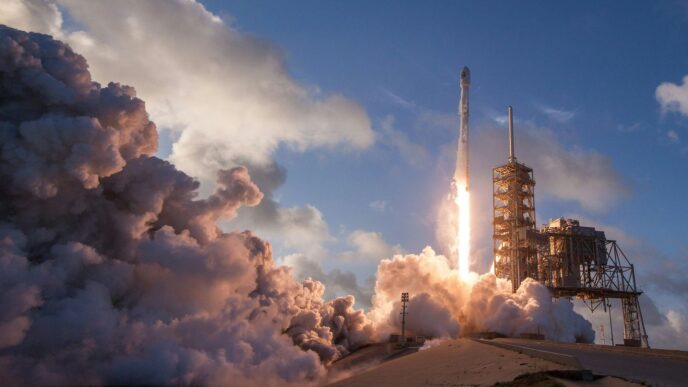
Alright, let’s talk about Starship 7. This wasn’t just another test flight; it felt like a real step into a new chapter for SpaceX’s big rocket. They’re calling it a "new era," and honestly, after seeing what they’ve been working on, I can see why. This flight brought some serious upgrades and a whole new design philosophy.
Key Upgrades and Block 2 Design
So, the big news here is the Block 2 design. This isn’t just a minor tweak; it’s a significant overhaul. The entire vehicle, both the Super Heavy booster and the Starship upper stage, got a makeover. We’re talking about structural improvements, updated avionics, and a whole lot more. The Block 2 Starship is actually taller than its predecessors, pushing the boundaries of what’s ever lifted off this planet. It’s heavier too, tipping the scales at around 5.5 million kilograms at liftoff. That’s a lot of metal and fuel!
Payload Deployment Tests
This flight was also slated to test something new: deploying payloads in space. The plan was to release ten Starlink "simulators" from the Starship. Think of it as a practice run for when they’ll be sending actual satellites or other cargo to orbit. This is a huge step because it moves Starship beyond just being a launch vehicle to being a functional space platform. Getting this right is key for all those future missions to the Moon and Mars.
Reusability and Catch Attempts
Reusability is the name of the game for SpaceX, and Flight 7 was supposed to push that further. While the focus is often on the Starship itself, the Super Heavy booster is just as important. They were aiming for another successful booster catch, building on previous attempts. The goal is to get these massive rockets back safely and quickly so they can be flown again and again. This is what makes the whole Starship concept economically viable for the long haul.
Lessons Learned from Previous Starship Flights
Alright, so Starship 7 isn’t just appearing out of thin air. SpaceX has been through a whole bunch of test flights, and each one, even the ones that didn’t go perfectly, taught them something important. It’s like learning to ride a bike – you fall a few times, maybe scrape your knee, but you get back up and try again, maybe a little differently.
Analyzing Flight 9’s Mixed Results
Flight 9 was a real mixed bag, honestly. On the one hand, they managed to fly the Super Heavy booster again, which is a pretty big deal for reusability. It even had most of its original engines from its last flight! They also tried a new way to land the booster, aiming for a different angle to save fuel. It didn’t quite stick the landing – it broke up during the landing burn – but they got pretty close to what they wanted, which is a hard splashdown. The Ship part did better than some previous flights, making it to space and getting onto its planned path. But, it didn’t make it to its splashdown spot in the ocean. Some experiments on board, like dropping fake satellites and trying to restart an engine in space, didn’t work out. They think a problem with how it controlled itself, maybe a fuel leak, caused it to lose control about 46 minutes into the flight.
Booster Reuse Milestones
Getting the Super Heavy booster back is a huge part of this whole project. Before Flight 9, they had already flown it once, and then they flew it again on Flight 9. That’s a massive step towards making Starship reusable. They’re not just building it; they’re proving they can use it multiple times. Even with some engines being used from a previous flight, it performed well for a good chunk of the mission. The goal is to get to a point where they can just catch the booster and use it again quickly, and each flight gets them closer to figuring out how to do that reliably.
Ship Stage Performance and Challenges
The Starship upper stage has had its own set of hurdles. In earlier flights, it would break apart way before it was supposed to. Flight 9 showed improvement, reaching space and following its intended path for longer. However, it still faced issues. The planned soft splashdown didn’t happen, and experiments like deploying satellites and the in-space engine relight failed. The loss of control, possibly due to an attitude control error, meant they couldn’t complete the mission objectives. These challenges, while frustrating, provide critical data for refining the ship’s design and flight software. They’re learning what works and, more importantly, what doesn’t, so they can fix it for the next iteration.
The Ambitious Vision for Starship 7
Starship 7 isn’t just another rocket; it’s a key piece in a much bigger puzzle. SpaceX has some seriously big dreams for this thing, and they’re not just about getting to orbit. We’re talking about fundamentally changing how humans explore and live beyond Earth.
Elon Musk’s Mars Colonization Goals
At the heart of it all is Elon Musk’s long-standing goal: making humanity a multi-planetary species, with Mars as the first stop. Starship is designed from the ground up to make this happen. It’s not just about sending a few astronauts; it’s about building a self-sustaining city on another planet. This means Starship needs to be able to haul massive amounts of cargo and people, over and over again. Think of it as the ultimate interplanetary transport system. The ability to land and refuel on Mars is the ultimate objective.
Lunar Exploration and Artemis Program
Before Mars, though, there’s the Moon. Starship is slated to play a role in NASA’s Artemis program, which aims to return humans to the lunar surface. This isn’t just a quick visit; the plan involves establishing a more permanent presence. Starship’s payload capacity means it can deliver the heavy equipment needed for lunar bases, habitats, and scientific instruments. It’s a stepping stone, a way to test and refine the technologies needed for the much longer journey to Mars.
Intercontinental Earth Transportation
And it’s not all about space, believe it or not. SpaceX also envisions using Starship for super-fast travel right here on Earth. Imagine flying from New York to Shanghai in under an hour. Starship’s speed and ability to reach the edge of space would make this possible, cutting down travel times dramatically. It’s a bit of a wild idea, but it shows the versatility they’re aiming for with this vehicle. It’s about rethinking transportation on a global scale.
Technical Innovations in Starship 7
Starship 7 isn’t just another rocket; it’s a rolling laboratory packed with new tech. SpaceX is really pushing the envelope here, trying out a bunch of stuff that could change how we build and fly rockets.
Advanced Heat Shield Technology
Getting a giant metal rocket back through Earth’s atmosphere without it turning into a fireball is, you know, kind of important. For Starship 7, they’ve really focused on the heat shield. The Block 2 ship has a new design where the forward flaps are moved back. This is a smart move because it gets them away from the hottest part of reentry, which simplifies the whole heat shielding situation underneath. Plus, they’re using a new generation of heat shield tiles. Even with these new tiles, they know things can go wrong, so they’ve added a backup layer of ablative material. Basically, if a tile pops off, there’s still something protecting the ship. They’re also testing out different tile materials, including one with active cooling, and looking at how well metal tiles hold up. It’s all about making sure Starship can survive the fiery descent.
Propulsion System Enhancements
To make Starship 7 go further and fly better, they’ve tweaked the engines and fuel system. They’ve increased the propellant volume by about 25 percent, which gives it more juice for longer flights. The feedlines for the vacuum engines are now jacketed, which sounds technical, but it’s really about keeping the fuel at the right temperature. They’ve also put in a new fuel feedline system and an improved avionics module to manage all the valves and sensors for the engines. It’s a bunch of small changes that add up to better performance and the ability to handle more complex missions.
Redesigned Avionics and Control Systems
This is where the rocket’s ‘brain’ gets a serious upgrade. The avionics system has been completely redone to handle more complex tasks, like transferring fuel in space or bringing the ship back for a landing catch. They’ve packed in a more powerful flight computer and integrated antennas that combine Starlink, GPS, and backup communication into single units. They’ve also added more cameras – over 30 now – so engineers can see exactly what’s happening all over the vehicle during flight. This real-time video and data, streamed via Starlink at over 120 Mbps, is super helpful for figuring out what works and what doesn’t, so they can make changes fast.
Future Trajectory of Starship Development
Orbital Flight and Satellite Deployments
So, what’s next for Starship? The big move is getting it into orbit and actually using it to put things, like those next-gen Starlink satellites, into space. We’re talking about the first real tests of its payload deployment capabilities. Imagine Starship launching, heading up, and then smoothly releasing these simulators, kind of like a dress rehearsal for the real deal. These simulators are designed to mimic the size and weight of the satellites SpaceX plans to deploy later. The goal is to get this system working so well that launching hundreds of these satellites becomes routine.
Increasing Launch Cadence
SpaceX has some pretty ambitious plans, and to make them happen, they need to launch Starship a lot. We’re hearing talk about potentially getting approval to launch as many as 25 times a year from Texas. That’s a launch every couple of weeks, which is a huge jump from where we are now. It sounds like a lot, but if they want to build out Mars bases or support lunar missions, they’ll need that kind of pace. It’s all about making Starship a regular sight in the sky, not just a special event.
The Path to Full Reusability
This is the big one, right? Full reusability. It’s not just about catching the booster anymore; it’s about catching the whole Starship too, and doing it consistently. Think about it: catching a giant rocket is one thing, but making it a reliable, everyday operation is another challenge entirely. They’re testing out new ways to do this, like trying out different materials for the heat shield and refining the catch mechanisms. The ultimate aim is to have both the booster and the ship ready to fly again with minimal refurbishment, cutting down costs and making space travel much more accessible. It’s a long road, but every flight test is a step closer to making that vision a reality.
The Journey Continues
So, what’s next for Starship? It’s clear that SpaceX is pushing the limits with every test flight. While not every mission goes perfectly, the data gathered is invaluable. They’re learning, adapting, and building towards something truly big. The goal of reaching Mars and exploring the Moon is still on the horizon, and with each launch, they get a little closer. It’s a long road, for sure, but the progress is undeniable. Keep an eye on Starbase, because the next giant leap is always just around the corner.