

The life sciences industry is moving fast, and keeping up with all the latest life sciences industry news can feel like a full-time job. From new tech popping up to policy changes and how we get medicines to people, there’s a lot happening. This article breaks down some of the biggest shifts and what leaders are doing to stay on top of it all. It’s about more than just surviving; it’s about figuring out how to actually lead in this changing world. We’ll look at how companies are using new tools, rethinking how they work, and what it all means for the future.
Key Takeaways
- TechBio is changing how science works, moving from physical labs to digital data for faster discoveries.
- AI is becoming central to operations, helping with everything from research to getting products to patients.
- Companies need to be more flexible, using data to make decisions instead of just sticking to budgets.
- Supply chains are being redesigned for personalized medicines, needing more precision and speed.
- New ways of reaching patients directly are emerging, but come with privacy and compliance challenges.
Navigating the Evolving Life Sciences Landscape
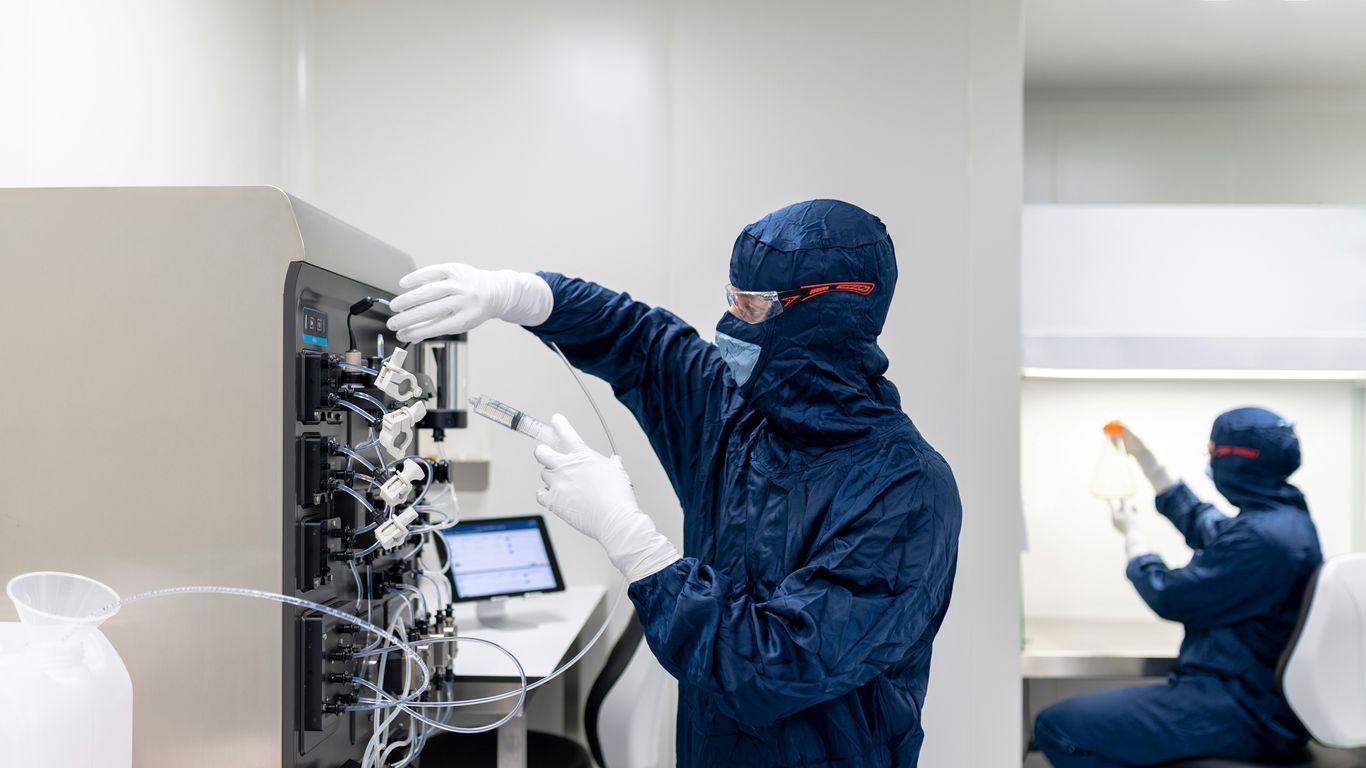
The life sciences world is really shifting, and staying on top of it feels like trying to catch a fast-moving train sometimes. We’re seeing big changes that are reshaping how companies operate, from the lab bench all the way to how treatments reach people. It’s not just about making new drugs anymore; it’s about how we discover them, develop them, and get them out there in a world that’s constantly throwing curveballs.
Embracing TechBio for Accelerated Discovery
Forget the old image of scientists hunched over bubbling beakers. The game is changing. We’re moving from traditional biotech, which often relied on a lot of trial and error in physical labs, to something called TechBio. This new approach puts computing power and data science right at the heart of research. Think of it as biology meeting advanced technology. This fusion means discoveries can happen much faster and more efficiently. Instead of just manipulating biological systems, TechBio uses things like AI and massive datasets to explore possibilities. This digital-first approach shrinks the need for huge lab spaces and lets researchers sift through vast amounts of information – like genetic data or chemical compounds – to find promising leads much quicker and cheaper than before. It’s a whole new way to think about R&D.
The Rise of AI as an Operational Backbone
AI isn’t just a fancy tool anymore; it’s becoming the engine that keeps everything running. By 2026, it’s pretty much a requirement for survival in this industry. Companies are starting to see AI not just for small productivity boosts, but as a way to fundamentally change how they operate. It’s about making systems smarter, more responsive, and ultimately, more effective. This shift means moving beyond pilot programs and integrating AI into the core of operations, building platforms that learn and improve over time. The goal is to have AI support decision-making, streamline processes, and help manage the increasing complexity of the industry.
Adapting to Policy and Trade Volatility
Lately, policy changes and trade issues have been making markets jumpy. Things like pricing rules and tariffs can change quickly, making it tough for companies to plan. This unpredictability means businesses need to be really good at adjusting on the fly. They’re looking at ways to get more control over their operations, sometimes by bringing services in-house that they used to outsource. This includes things like marketing and distribution. The idea is to build more stable operations that can handle unexpected shifts without losing momentum. Scenario planning and using digital tools to model potential policy impacts are becoming key strategies to manage these risks and keep things moving forward.
The life sciences industry is in a period of rapid transformation. Companies that can adapt quickly to new technologies, integrate data effectively, and respond to policy shifts will be the ones leading the pack. It’s about building organizations that are not just resilient, but also agile and forward-thinking.
Strategic Imperatives for Life Sciences Leaders
Shifting from Budget-Driven to Data-Driven Strategies
It’s a tough time out there for life sciences companies. Budgets are tight, costs for research and development are going up, and there’s a big patent cliff coming that could mean losing a lot of money by 2030. Plus, getting investors to open their wallets isn’t as easy as it used to be. People want to see real discipline with their cash, especially when you consider that launching a new drug can cost over two billion dollars.
But here’s the flip side: the industry’s ability to innovate is stronger than ever. New technologies, clinical trials that mix in-person and remote methods, and AI that’s actually doing useful work are all speeding up what science can achieve. Most leaders, almost 80%, think AI will make a big, game-changing difference by 2026. The focus isn’t just on what we can discover anymore, but how fast we can turn those discoveries into real, scalable products.
This push and pull is creating a bigger gap between the companies that are leading the pack and everyone else. The top players aren’t just trying things out; they’re building AI into how they operate every day. They’re creating systems that get better with more data or new acquisitions, and they see being able to adapt not just as a way to survive, but as a way to grow. The rest are stuck running small tests in separate departments, chasing minor efficiency improvements.
Here are some key shifts making a difference:
- Embrace AI as the core operating system: It’s no longer just a nice-to-have. By 2026, it’s a necessity for survival in life sciences.
- Move beyond small gains: Focus on how AI and new tech can create truly impactful performance, not just minor productivity boosts.
- Build trust through governance: Make sure your systems and processes are transparent and reliable as you adopt more automation.
The companies that will win in the coming years are the ones that can quickly adjust their plans, react to market changes, and shift their investments without losing steam. This means moving away from simply cutting costs and towards making smarter, data-backed decisions.
Building Resilient and Adaptive Organizations
Life sciences companies across the board are being pushed to be more flexible. Whether it’s bringing more work in-house, trying out direct-to-consumer models, or dealing with fast-changing markets, agility is key. The organizations that do well in 2026 will be the ones that can quickly change pricing, respond to market signals, and adjust their commercial efforts without missing a beat.
This means leaders are starting to take on more responsibility for managing patient data, which used to be handled by others. This shift is supported by modernizing systems to get better predictions, model policy changes, and use digital tools to test out different pricing and trade scenarios across their global networks.
What does this volatility mean? Companies need to keep building their ability to adapt and control what they can. This involves having solid plans for different situations and taking more ownership of the commercial and data parts of the business. Think about bringing functions like marketing and distribution in-house to reduce reliance on outside agencies and intermediaries.
Here’s how to build that resilience:
- Invest in ongoing modernization: Think of transformation not as a one-time project, but as a continuous way of operating.
- Connect your data: Combine financial, policy, and manufacturing information to see how things like pricing regulations or tariffs might affect you.
- Create flexible compliance systems: Make sure your systems can keep up with changing rules from health authorities.
- Take ownership: Develop the ability to manage things like marketing and direct-to-consumer services yourself.
Fostering Human-AI Collaboration for Breakthroughs
TechBio is more than just technology; it’s about how people work, the skills they have, and their overall approach. The real breakthrough comes when you get biology teams, data scientists, platform engineers, and product owners working together, with new ways to manage projects and partnerships.
We need to plan for jobs and skills that don’t even exist yet. Think about roles like scientific product managers or data engineers who also understand lab work. AI can help speed up clinical trials, making them faster and better at matching patients with the right studies. Designing ways to share data securely, without revealing sensitive information, can help discover new targets more quickly.
Building unified data systems in the cloud that connect all your research data – from lab notebooks to genetic information – is key. This turns data silos into connected pipelines ready for AI. The big win with TechBio is adopting a new mindset, moving from separate systems to connected ones, and from ‘my data’ to ‘our data.’
Consider these steps for better collaboration:
- Align your teams: Get biology, data science, and engineering groups working together with clear governance.
- Plan for new roles: Identify and develop the skills needed for future jobs that blend science and technology.
- Use AI in trials: Implement AI to make clinical trials more efficient and better connect sites with patients.
- Share data smartly: Develop frameworks for learning from data together without compromising privacy.
- Unify your data: Create cloud-based systems that link all your research data into a single, AI-ready pipeline.
Transforming R&D with Digital Innovation
Digital change has made R&D in life sciences nearly unrecognizable compared to even a few years ago. Wet labs filled with pipettes and rows of samples aren’t going away entirely, but the brain of R&D now lives in the cloud.
Digitizing Discovery: From Wet Labs to Cloud Data
More and more, experiments start in a virtual space rather than in a petri dish. Here’s a quick breakdown of how digital approaches are reshaping R&D:
- Experiments simulated on computers cut weeks off research timelines.
- Massive public and private data sets help hunt for patterns that humans miss, making connections between disease and possible treatments faster than before.
- High-performance computing allows testing thousands of drug molecules in hours—not months—before a single physical test occurs.
With virtual labs, researchers try out bold ideas while keeping costs lower and processes more flexible.
Leveraging AI for Precision Therapeutics and New Modalities
AI algorithms now analyze everything from chemical structures to patient genetic information. This means discoveries get sharper, and therapies can be matched to smaller patient groups, sometimes even made for a single person. Here are some ways AI is used:
- Predicting how well a drug might work before actual trials.
- Sorting through millions of potential molecule combinations in record time.
- Identifying which patients could benefit most from particular therapies.
AI is starting to identify previously unknown connections, opening doors to treatments no one saw coming.
Overcoming Hurdles in Data Integration and Validation
For all its promise, digital R&D runs into a big wall: data lives everywhere, in different formats, with varying quality. Getting everything to play nice is not easy.
| Challenge | Impact | Typical Fixes |
|---|---|---|
| Siloed data sources | Missed insights, duplicated efforts | Data pipelines, shared standards |
| Poor data quality | Slows research, can lead to bad conclusions | Automated cleaning, auditing |
| Integration with old tools | Labor-intensive, risky handoffs | API connections, modernized platforms |
Teams have tried everything from new cloud databases to standardized templates. They often find the tech side is simpler than getting everyone on board with new ways of working.
The most successful groups don’t just digitize—they redesign their workflows and spend real time getting both tech and people to cooperate.
Modernizing Supply Chains for Personalized Therapies
Personalized medicine, especially things like cell and gene therapies, is really changing how we think about making and moving drugs. We’re moving away from just churning out huge batches of the same thing. Now, it’s more about small runs, made exactly when they’re needed, and often needing super-cold storage. This is a big shift, and old systems just can’t handle it without a lot of strain.
Personalization’s Impact on Logistics and Manufacturing
The move towards treatments tailored to individuals means manufacturing has to get way more flexible. Think about cell therapies – they’re made from a patient’s own cells. This isn’t like making a standard pill. It requires a lot more hands-on work, specialized equipment, and a very tight schedule. The market for these therapies is set to grow a lot, from about $40 billion now to over $200 billion by the early 2030s. That’s a huge jump, and the current production methods are struggling to keep up. Costs are high, sometimes $500,000 to $2 million per patient, which is a major hurdle. Companies are looking at automation and modular setups to bring those costs down.
Deploying AI-Enabled Control Towers for Visibility
To manage this new complexity, companies are looking at AI-powered control towers. These systems pull together information from manufacturing, logistics, and even procurement. This gives everyone a clear, real-time view of what’s happening across the whole supply chain. It helps spot problems early, like a delay in getting raw materials or a hiccup in the production line, before they become big issues. It’s about having better coordination and being able to react faster.
Redesigning Logistics for Patient-Centric Delivery
Logistics needs a complete rethink. Instead of shipping large quantities to distribution centers, the focus is shifting to getting treatments directly to patients when and where they need them. This means more direct-to-patient (DTC) models, which require careful planning for delivery, temperature control, and handling. It’s about making the whole process work around the patient’s needs, not the other way around. This also brings up new challenges around data privacy and making sure everything is compliant with regulations, especially when dealing directly with patients.
The way companies handle their supply chains today will really decide who’s leading the pack in the next few years. It’s not just about making drugs; it’s about making them accessible and getting them to the people who need them, efficiently and safely.
The Future of Commercial Models in Life Sciences
The way life sciences companies connect with patients and customers is changing, and fast. We’re seeing a big move away from the old ways of doing things, where everything went through a few big middlemen. Now, companies are looking at different ways to reach people directly and manage more of the process themselves.
Piloting Direct-to-Consumer (DTC) Models
This is a pretty big shift. Instead of relying solely on traditional channels like pharmacies and distributors, some companies are starting to experiment with selling directly to patients. This means taking on more responsibility for things like marketing, sales, and even patient support. It’s a way to get closer to the end-user and potentially have more control over the customer experience. Think about it: you get to shape the message and the interaction from start to finish.
- Taking ownership of patient data: This is a new area for many, as they’ll need systems to handle information that was previously managed by others.
- Building new marketing and sales capabilities: Companies need to figure out how to talk to patients directly and effectively.
- Managing logistics for direct delivery: Getting products from the factory to someone’s doorstep requires a different kind of setup.
Managing New Privacy and Compliance Risks
With these new models, especially DTC, comes a whole new set of challenges. Handling patient data means you’ve got to be super careful about privacy laws and regulations. It’s not just about following the rules; it’s about building trust. If people don’t feel their information is safe, these new models won’t work.
The landscape for data privacy is constantly shifting. Companies need to build systems that can adapt quickly to new regulations, whether they’re coming from the FDA, EMA, or local authorities. This isn’t a one-and-done fix; it’s an ongoing process.
Deepening Patient Relationships Through Personalized Experiences
Ultimately, a lot of these changes are about getting closer to the patient. By understanding individual needs better, companies can tailor their treatments and support. This isn’t just about selling a product; it’s about building a relationship. When patients feel understood and supported, they’re more likely to stick with a treatment and have better health outcomes. This focus on the individual is what will set successful companies apart in the coming years.
Here’s a look at how this plays out:
- Tailored communication: Sending information that’s relevant to a patient’s specific condition or treatment.
- Personalized support programs: Offering resources and help that address individual challenges.
- Feedback loops: Creating ways for patients to share their experiences, which can then inform future product development and services.
Key Strategies for Staying Ahead in Life Sciences News
Staying on top of the fast-moving life sciences world feels like trying to catch a speeding train sometimes, right? Things change so quickly, from new tech popping up to rules shifting without much warning. It’s not enough to just read the headlines anymore; you need a solid plan to keep up and actually use that information.
Modernizing Data and System Architectures
Think of your company’s data and systems like the foundation of a house. If it’s old and shaky, everything built on top is at risk. We’re talking about getting rid of those clunky, outdated systems that make it hard to share information between departments. Modernizing means building a flexible, connected data environment that lets you see the whole picture and react fast. This isn’t just about upgrading software; it’s about setting up your tech so it can handle new challenges and opportunities without breaking.
Implementing Agile Structures and Decision Frameworks
Rigid, top-down ways of making decisions just don’t cut it anymore. The life sciences industry needs to be able to pivot quickly. This means creating teams that can adapt, and setting up clear processes for making choices. It’s about shortening the time it takes from spotting a trend or a problem to actually doing something about it. Accountability needs to be clear, so everyone knows who’s responsible for what, especially when things get complicated.
Here’s a look at how to build that agility:
- Cross-functional teams: Get people from different departments working together on projects.
- Rapid prototyping: Test new ideas quickly and cheaply before committing big resources.
- Clear decision rights: Define who makes what decisions and when.
- Feedback loops: Build ways to get input and adjust plans as you go.
Cultivating a Culture of Continuous Learning and Resilience
This is perhaps the most important part. Companies that are doing well aren’t just good at innovating; they’re good at learning from both successes and failures. They encourage people to try new things, even if they might not work out perfectly. This means shifting how you measure success – rewarding smart risks and learning, not just hitting a target. Building resilience means your organization can bounce back from setbacks and keep moving forward, no matter what the market throws at it.
The real challenge isn’t just adopting new technologies like AI; it’s about changing how people think and work. When you create an environment where learning is constant and adapting is the norm, your organization becomes naturally more robust. This mindset shift is what separates those who merely survive from those who truly lead in the dynamic life sciences landscape.
It’s about making sure your people have the skills and the mindset to handle whatever comes next. This involves training, yes, but it’s also about leadership setting the example and creating a safe space for experimentation and growth.
Looking Ahead
So, what does all this mean for staying on top of things in the life sciences world? It’s clear that things are moving fast, and just keeping up isn’t enough anymore. The companies that are really going to make waves are the ones embracing new tech like AI, not just as a side project, but as a core part of how they work. They’re also getting smarter about how they handle data and build flexible systems that can change direction quickly. It’s not just about finding the next big discovery; it’s about how fast you can bring it to people and make it work on a large scale. By focusing on these shifts, from how research is done to how products reach patients, businesses can set themselves up for success in the years to come.