China’s Ambitious Lunar Exploration Program
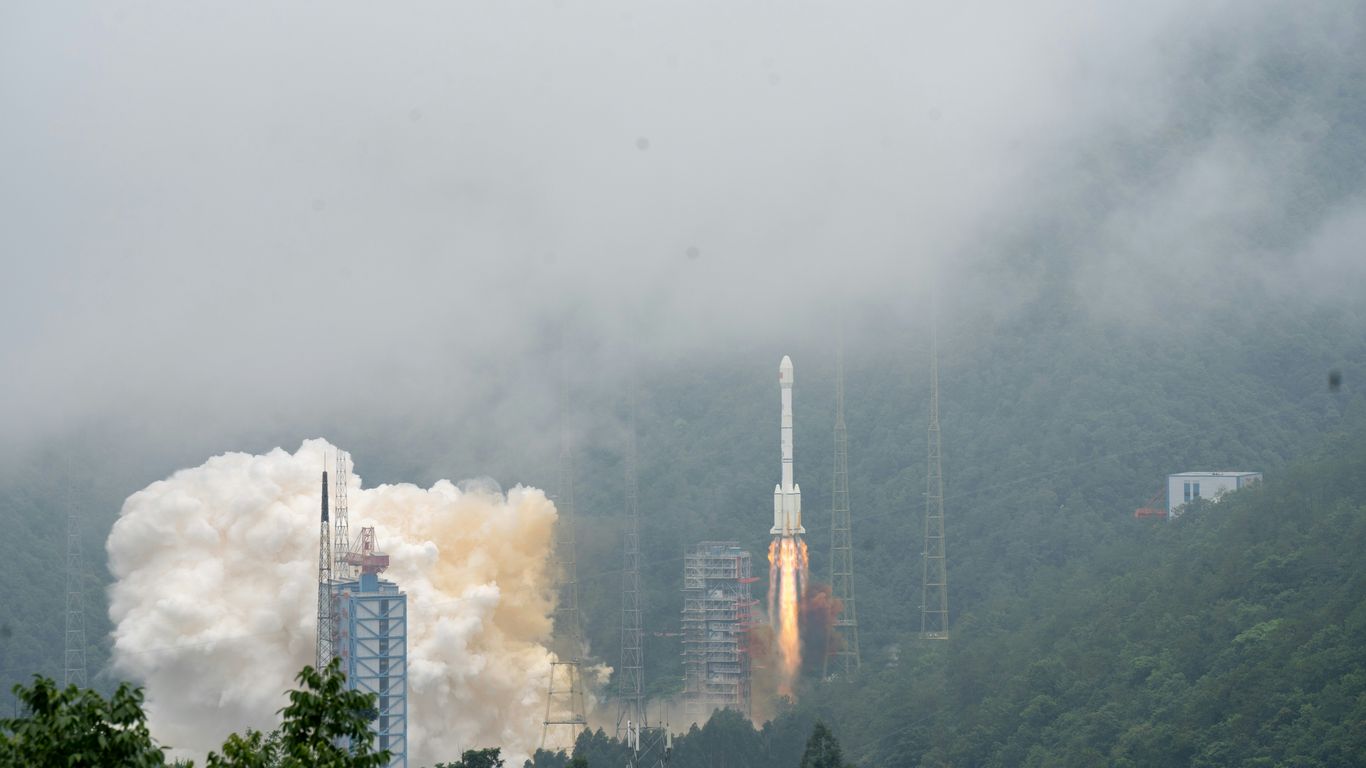
China’s got some pretty big plans for the Moon, and it’s not just about planting a flag. They’re really pushing forward with their lunar exploration, aiming for some serious scientific discoveries and setting up a long-term presence. It feels like a whole new space race is on, but this time, China is a major player.
Chang’e-7 Mission Progress and International Collaboration
The Chang’e-7 mission is shaping up to be a big deal. It’s designed to explore the lunar south pole, a region that scientists think might hold water ice. This is super important for future missions because water can be used for drinking, breathing, and even rocket fuel. What’s interesting is that China isn’t going it alone on this one. They’ve teamed up with several international partners, bringing in experiments from countries like Germany, Italy, and even Saudi Arabia. This collaboration shows a growing trend in space exploration where countries are pooling resources and knowledge.
- Primary Goal: Investigate the lunar south pole for water ice.
- Key Instruments: Includes a radar to look beneath the surface and a spectrometer to analyze materials.
- International Involvement: Seven experiments from different countries are part of the mission.
- Launch Window: Aiming for a launch sometime in 2026.
Long March-10 Rocket Test Flights for Lunar Return
Getting to the Moon, especially with astronauts, requires some serious rocket power. China is developing its Long March-10 rocket specifically for these crewed lunar missions. They’ve been busy with test flights, making sure this new rocket is reliable and ready for the big job. The success of these test flights is a critical step towards China’s goal of landing astronauts on the Moon by the end of this decade. It’s a complex piece of engineering, and getting it right is key to their entire lunar program.
Tianwen-2 Probe Captures Earth and Moon Images
While not directly part of the lunar landing program, the Tianwen-2 probe has been doing its own thing, sending back some cool images. It recently captured pictures of both Earth and the Moon together. This kind of imagery is not just pretty to look at; it helps scientists understand the relationship between our planet and its natural satellite better. Plus, it’s another sign of China’s growing capabilities in deep space exploration.
Advancements in China’s Manned Spaceflight
China’s presence in human spaceflight is really picking up steam. It’s not just about getting astronauts into orbit anymore; they’re building a whole space station and planning for longer missions.
Tiangong Space Station Operations and Crew Handover
The Tiangong space station is now a regular stop for Chinese astronauts. They’ve got a system down for rotating crews, which is pretty neat. The current crew hands over duties to the new arrivals, and it sounds like they even have some special meals for these occasions. I read about a handover BBQ where they had things like baked chicken wings and steak. This shows a growing focus on astronaut well-being and mission sustainability. It’s not just about the science; it’s about making long stays in space more manageable.
Shenzhou Missions and In-Orbit Experiments
Each Shenzhou mission is a chance to do more science up there. They’re sending up all sorts of things to test. For instance, one recent mission included lab mice, which is a first for permanent residents on Tiangong. They’re looking at how different conditions affect living things in space. It’s a big step for understanding long-term effects.
Emergency Space Launch and Debris Impact Analysis
Things don’t always go perfectly, though. There was an incident where a return spacecraft was delayed because of suspected space debris strikes. This led to an emergency launch of a new vessel carrying a repair kit to the station. They had to do a full analysis to figure out the risks, which is a pretty serious business. It highlights the constant challenge of keeping space safe from junk.
Here’s a look at some recent mission activities:
- Shenzhou-21 Launch: Carried lab mice for experiments.
- Shenzhou-20 Delay: Astronauts’ return postponed due to suspected debris impact.
- Emergency Launch: A new vessel sent with a repair kit after damage to a return ship.
- Crew Handover: Regular rotations and improved provisions for astronauts.
China’s Growing Role in Commercial Space
It feels like China’s space program is really hitting its stride lately, especially when it comes to the commercial side of things. They’re not just launching satellites anymore; they’re building up a whole ecosystem that could seriously shake things up.
Reusable Rocket Development and Competition with SpaceX
This is a big one. China is pouring resources into making rockets that can be used again and again, just like SpaceX is doing. It’s not just one or two companies either; there are quite a few Chinese outfits working on this. The goal is pretty clear: bring down the cost of getting stuff into orbit. This push for reusability is key to making space more accessible for everyone. We’re seeing test flights and recovery attempts, and while they might be a bit behind where the US is right now, they’re catching up fast. It’s going to be interesting to see how this competition plays out.
Space Tourism Program Preparations
Remember when space tourism was just a sci-fi dream? Well, China is getting ready to offer its own version. Reports suggest that some of their state-owned companies are planning to launch space tourism packages. The word is that these trips might even be priced lower than what some of the American companies are charging. It’s still early days, but the idea of more people being able to experience space is pretty exciting.
Satellite ‘Super Factory’ for Constellation Deployment
Building large groups of satellites, known as constellations, is becoming more common for things like global internet coverage. China is reportedly setting up what you could call a ‘super factory’ to churn out these satellites. This kind of mass production capability means they can deploy their own constellations much faster and more efficiently. It’s all about having the infrastructure ready to go when they need it, whether for communication, observation, or other purposes.
China’s Strategic Space Technology Developments
China’s really pushing the envelope when it comes to space tech lately. It’s not just about getting to the Moon or having a space station anymore; they’re looking at entirely new ways to operate in orbit.
Inflatable Module Technology for Space Manufacturing
One of the more interesting developments is their work with inflatable modules. Think of it like a balloon that expands once it’s in space. This is a pretty big deal for manufacturing. The idea is that you can launch a much smaller, more compact package into orbit, and then it inflates to create a larger workspace. This could make building things in space, like large structures or even habitats, a lot more practical and cheaper. They’re saying whoever gets good at making things in space will have a big advantage in the future.
New Earth Observation Satellite Launches
China has also been busy launching a lot of new satellites for watching Earth. These aren’t just for pretty pictures; they’re used for all sorts of things, like tracking weather, monitoring crops, managing natural disasters, and even keeping an eye on military movements. They’ve got a whole system going, and it’s getting more sophisticated all the time. It’s part of their broader strategy to have better information about what’s happening on the ground, both at home and around the world.
UAV Revolution and Drone Mothership Technology
And then there’s the drone stuff. China is really into Unmanned Aerial Vehicles (UAVs), or drones as most people call them. They’re not just talking about small drones you might see flying around; they’re developing bigger ones and even ‘drone motherships.’ This is a concept where a larger aircraft or spacecraft can launch and recover multiple smaller drones. It’s like having a mobile base for drones that can operate far from home. This could change how we do reconnaissance, delivery, and even scientific research in remote or dangerous areas, both on Earth and potentially in space.
China-US Space Rivalry and Cooperation
It’s pretty wild how much space is becoming a new frontier for competition, especially between China and the US. You see it everywhere, from who’s going to get back to the Moon first to how we’re handling all the junk floating around up there.
Orbital Stand-off and Satellite Surveillance
Lately, there’s been some interesting back-and-forth regarding satellites. China has actually released images showing their satellites observing US "spycraft." It’s kind of a "we see you seeing us" situation. Analysts are calling it a strategic move, a tit-for-tat in orbit. It makes you wonder what else is going on up there that we don’t see.
US and China’s Race to the Moon
This is a big one. Both nations are really pushing to land humans on the Moon again, something we haven’t done in decades. China is aiming for a crewed landing by the end of this decade, maybe around 2030. The US, with plans for a lunar base, is also in the race, with some political figures pushing for a landing even sooner, like 2028. It’s not just about planting a flag; it’s about resources, technology, and who leads the next chapter of space exploration.
Potential for Space Safety Cooperation
Despite all the rivalry, there’s a growing recognition that space safety is something everyone needs to work on together. With more satellites being launched all the time, the risk of collisions and space debris is a real concern. There have even been instances where China has raised safety concerns about satellite constellations, leading to adjustments. It feels like there’s a real opportunity, and maybe even a necessity, for both countries to cooperate on sharing information and costs to keep space safe for everyone. It’s a complex dance, for sure.
Addressing Space Debris and Safety Concerns
It feels like every week there’s another launch, which is pretty cool, but it also means more stuff up there. We’re talking about old satellites, bits of rockets, even tiny flecks of paint – all zipping around at crazy speeds. This junk, or space debris as the experts call it, is becoming a real headache.
SpaceX Satellite Reconfiguration Due to China’s Concerns
So, apparently, some of SpaceX’s Starlink satellites had to be tweaked. China raised some points about their orbits, and SpaceX ended up changing them. It’s a bit of a dance, showing how actions in space can affect others, even across different countries. It makes you wonder what else is going on behind the scenes.
Risks of Space Debris to Aviation
This is the part that really gets me thinking. It’s not just about other satellites anymore. There’s a growing worry that pieces of space junk could actually fall to Earth and, get this, potentially hit airplanes. Aviation folks and scientists are looking into this, trying to figure out how to track this stuff better and keep planes safe. It sounds like something out of a movie, but it’s a real concern.
China’s Warnings on Starlink Satellite Safety
China has also spoken up about the Starlink satellites, specifically mentioning safety concerns. They’ve pointed out that these large constellations, while useful, could pose risks. It’s a complex issue, balancing the benefits of new space technology with the potential downsides. The sheer number of satellites being launched globally means we really need to get a handle on how to manage space responsibly.
Here’s a quick look at some of the issues:
- Tracking Challenges: Keeping tabs on thousands of small, fast-moving objects is incredibly difficult.
- Collision Avoidance: When two objects get too close, maneuvers are needed, but this takes planning and fuel.
- Re-entry Risks: Predicting exactly where larger pieces will land when they fall back to Earth is not an exact science.
- International Coordination: Getting all the countries and companies involved to agree on rules and share data is a big hurdle.
What’s Next?
So, that’s a quick look at what’s been happening in China’s space world. It’s pretty clear they’re not slowing down, with plans for moon missions, new rockets, and even space tourism. It’s a lot to keep track of, and things change fast. Staying updated means keeping an eye on these developments, whether it’s about new technology or international cooperation. It’s an exciting time to follow space exploration, and China is definitely a big part of that story.