Understanding The International Space Station’s Price Tag
So, how much does this giant orbiting laboratory actually cost? It’s a question that’s been debated since the very beginning, and the answer isn’t as simple as a single number. When the idea of a space station was first floated back in the 1980s, the estimated price tag was around $8 billion. Sounds like a lot, right? Well, that was just the start.
Initial Cost Projections Versus Reality
That initial $8 billion figure from the mid-1980s was for a much different project, often referred to as Space Station Freedom. As plans evolved, especially with the inclusion of international partners and the merging of different concepts, the scope and complexity grew. By the mid-1990s, estimates for assembling the International Space Station (ISS) had ballooned to around $17.4 billion. And that was just for assembly! The projected costs for operating the station from 2003 to 2012 alone were an additional $13 billion. Many folks at the time thought even these revised numbers were too low, with some predicting the total could easily hit $50 billion or more.
Escalating Expenses and Congressional Scrutiny
These rising costs didn’t go unnoticed. Congress, understandably wary of the ever-increasing bill, tried to cancel the project multiple times. There was a particularly close call in 1993 when a vote in the House of Representatives to keep the ISS alive passed by just a single vote. Some politicians argued that the station was a leftover from the Cold War, built more for political reasons than scientific necessity. The fact that it became an international project was, for some, a way to make it harder to cancel.
The Evolving Financial Landscape of the ISS
The financial picture for the ISS has always been a bit of a moving target. Different partners contribute in various ways, sometimes with hardware, sometimes with launch services, and sometimes with direct funding. For example, the European Space Agency (ESA) agreed to contribute modules like Columbus in exchange for launch services. These international contributions, while vital, also add layers of complexity to tracking the overall cost. The budget has seen adjustments and compromises over the years, reflecting shifting priorities and economic realities. It’s a massive undertaking, and keeping it funded has been a continuous effort.
Breaking Down The International Space Station’s Construction Costs
Building something as massive and complex as the International Space Station (ISS) wasn’t exactly a walk in the park, financially speaking. When the idea first got rolling back in the 1980s, the estimated price tag was a lot lower than what it ended up being. Think $8 billion back in 1984, which sounds like a fortune, but compared to the final costs, it’s peanuts.
Module Development and Manufacturing Expenses
The core of the ISS is made up of many different modules, each built by different countries. These aren’t just simple metal boxes; they’re sophisticated pieces of engineering designed to house astronauts, conduct experiments, and connect with other parts of the station. Developing and building these modules involved a huge amount of work, research, and specialized manufacturing. For instance, the US planned to reuse a lot of the hardware from the earlier Space Station Freedom project, which helped a bit, but new designs and technologies were still needed. The European Space Agency (ESA) put in a lot for their Columbus module, and other partners contributed their own specialized sections. Each module’s creation was a project in itself, with its own budget and timeline.
Launch and Assembly Operations
Once the modules were built, they had to be launched into space and put together. This is where things really started to add up. Rockets are expensive, and you need a lot of them to lift all the heavy station components. The Space Shuttle, while a workhorse, was also a costly vehicle to operate. Putting the pieces together in orbit required intricate planning, spacewalks by astronauts, and robotic arm operations. Delays in one module’s launch or assembly could push back the entire schedule, leading to increased costs. The initial assembly was planned to be finished by 2003, but it took much longer, adding billions to the construction bill.
Contributions from International Partners
The ISS is a global effort, and that means different countries contributed different things. While this international cooperation was a major goal, it also meant coordinating budgets and resources across multiple space agencies. For example, Russia provided key modules like Zarya and the Service Module, which were vital for early assembly. ESA contributed modules and other hardware. In return for their contributions, partners often received launch services or access to station resources. These agreements, while necessary, added layers of complexity to the overall financial picture. It wasn’t just one country’s budget; it was a shared, and sometimes complicated, financial undertaking.
Here’s a look at some of the planned contributions:
- United States: Primarily responsible for laboratory modules, habitation modules, and the station’s power systems.
- Russia: Provided the initial core modules (Zarya and Zvezda) and continued to supply Soyuz spacecraft for crew transport.
- European Space Agency (ESA): Contributed the Columbus laboratory and the Automated Transfer Vehicle (ATV) for cargo resupply.
- Japan: Developed the Kibo laboratory complex and the H-II Transfer Vehicle (HTV) for cargo.
- Canada: Provided the robotic Canadarm2 and other robotic systems.
Operational Expenses: Maintaining the ISS
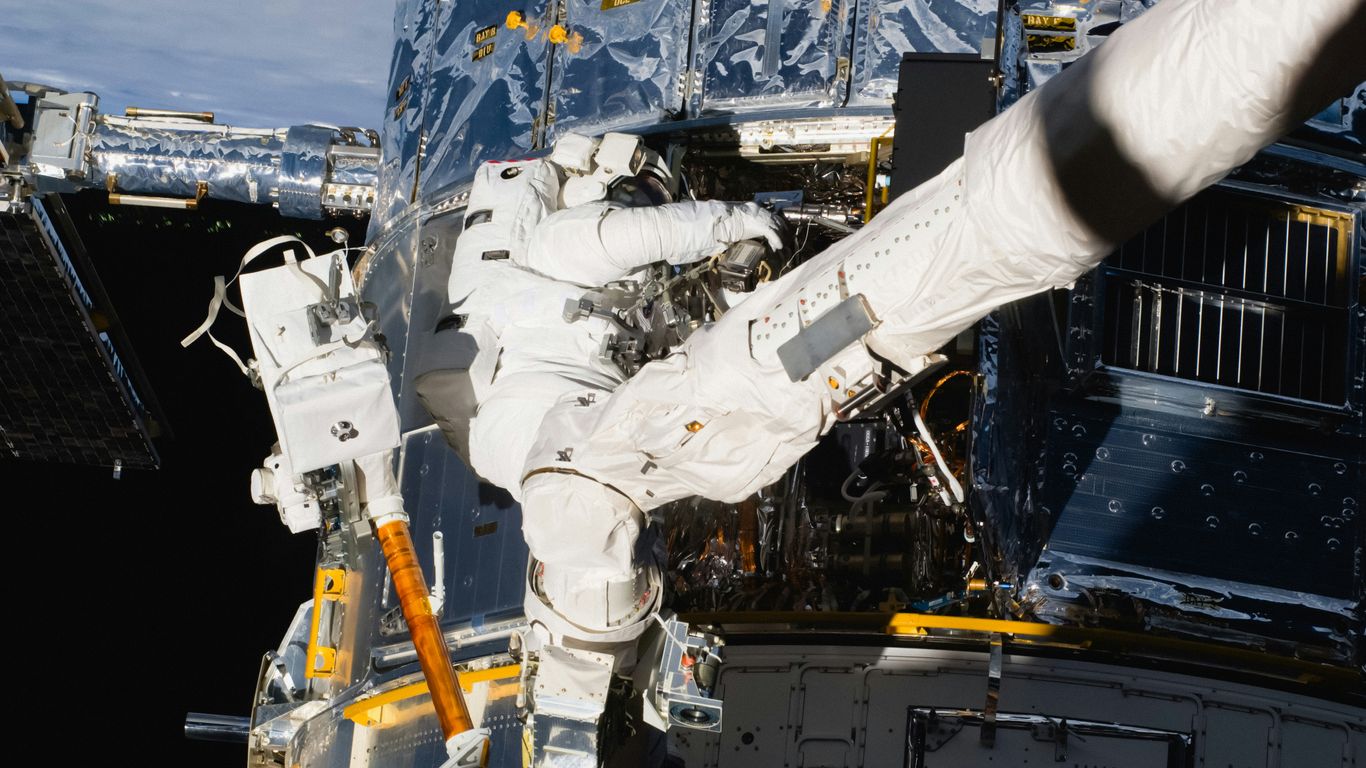
So, we’ve talked about how much it cost to build the International Space Station, but that was just the beginning. Keeping this giant laboratory in orbit is a whole other ballgame, and it costs a pretty penny every single year. Think of it like owning a really, really big house – you’ve got the mortgage, sure, but then there’s the constant upkeep, the utilities, and all the little things that break.
Annual Budget for Station Operations
NASA, along with its international partners, has to budget a significant amount annually just to keep the ISS running. This isn’t just about paying salaries; it covers a huge range of things. We’re talking about keeping the lights on (literally, with power systems), maintaining life support, managing communications, and all the ground control staff who are monitoring everything 24/7. Back in the day, there was an agreement for a fixed annual budget, around $2.1 billion, which seemed like a lot then, but the costs have definitely evolved since then. It’s a complex financial dance to keep everyone contributing and the station operational.
Resupply Missions and Consumables
Astronauts can’t just pop down to the corner store for more food or spare parts. Everything they need has to be launched from Earth. This means regular resupply missions, often using cargo spacecraft like the Russian Progress vehicles or commercial cargo craft. These missions carry food, water, oxygen, scientific equipment, spare parts for repairs, and even personal items for the crew. Each launch is incredibly expensive, and the sheer volume of supplies needed for a long-duration mission adds up fast. We’re talking about tons of cargo needing to be carefully packed and launched.
Crew Support and Training
Keeping a crew of astronauts healthy, safe, and productive in space is a massive undertaking. Before they even get to the station, astronauts go through years of rigorous training. This includes learning to operate complex systems, practicing emergency procedures, and getting physically conditioned for spaceflight. Once on board, their well-being is paramount. This involves providing medical support, psychological care, and ensuring they have the resources to conduct their research and maintain the station. Even simple things like exercise equipment to combat muscle and bone loss are vital and require ongoing support and maintenance.
Factors Influencing The International Space Station’s Value
When we talk about the International Space Station (ISS), it’s easy to get caught up in just the numbers – the billions spent, the years of construction. But its real worth goes way beyond the price tag. It’s about what it represents and what it allows us to do.
Technological Advancements and Scientific Research
The ISS is basically a giant laboratory in orbit, and that’s where a lot of its value comes from. Think about all the experiments that have happened up there. Scientists have been studying everything from how our bodies react to being in space for long periods to testing new materials and technologies that could be used back on Earth.
- Materials Science: Testing how metals and alloys behave in microgravity can lead to stronger, lighter materials for everything from airplanes to buildings.
- Human Health: Understanding bone density loss and muscle atrophy in astronauts helps us develop better treatments for conditions like osteoporosis and sarcopenia here on the ground.
- Earth Observation: The ISS provides a unique vantage point for monitoring our planet’s climate, weather patterns, and natural disasters.
The data gathered from these experiments is invaluable for pushing the boundaries of human knowledge and improving life on Earth. It’s not just about space; it’s about using space to solve problems right here.
International Collaboration and Diplomacy
This is a big one. The ISS is a project involving five space agencies: NASA (USA), Roscosmos (Russia), JAXA (Japan), ESA (Europe), and CSA (Canada). Building and operating something this complex together is a huge diplomatic achievement. It shows that nations can work together on massive, long-term projects, even when there are political tensions on the ground.
- Shared Goals: All partners contribute resources, expertise, and hardware, working towards common scientific and exploratory objectives.
- Trust Building: Regular cooperation on such a high-stakes endeavor helps build relationships and understanding between participating countries.
- Global Presence: It provides a platform for countries to have a presence in space and participate in cutting-edge research, regardless of their individual launch capabilities.
This kind of cooperation is pretty rare on such a grand scale, and it sets a precedent for future international endeavors, not just in space but in other scientific fields too.
Long-Term Viability and Future Potential
The ISS wasn’t just built to last a few years; it was designed for decades of operation. Its modular design means parts can be replaced or upgraded, extending its life. This long-term presence in orbit is crucial for several reasons:
- Continuous Research: It allows for ongoing, long-term studies that wouldn’t be possible with short-duration missions.
- Gateway to Deeper Space: The ISS serves as a testbed for technologies and procedures needed for future missions to the Moon, Mars, and beyond. Astronauts can practice living and working in space for extended periods.
- Inspiration: Its continued operation inspires new generations of scientists, engineers, and explorers, keeping the dream of space exploration alive.
While the station itself has a finite lifespan, the knowledge gained and the infrastructure developed will pave the way for whatever comes next in space exploration. It’s an investment in our future in space.
The True Cost: Beyond the Billions
So, we’ve talked a lot about the money – the billions spent on building and running the International Space Station. But honestly, that’s just part of the story. It’s like looking at the price tag on a fancy car and thinking that’s all it costs. You forget about the gas, the insurance, the repairs, and all the little things that add up.
The Price of Innovation and Exploration
Building something as complex as the ISS is a massive undertaking. It pushes the boundaries of what we know how to do. Think about all the new technologies that had to be invented or improved just to make it happen. We’re talking about advanced materials, life support systems that can keep people alive in space for months, and robotics that can assemble giant structures in orbit. These aren’t just expenses; they’re investments in our ability to do more in space.
- New Materials: Developing lighter, stronger materials that can withstand the harshness of space.
- Life Support: Creating closed-loop systems that recycle air and water, making long-duration missions possible.
- Robotics: Building sophisticated robotic arms and tools for construction and maintenance.
- Communication: Advancing satellite communication to keep constant contact with the station.
Economic Impact and Job Creation
All that spending doesn’t just disappear into the void. It goes to companies and people. Thousands of engineers, scientists, technicians, and support staff have worked on the ISS over the years. These jobs aren’t just in the US; they’re spread across all the partner countries too. It’s a huge economic engine, driving innovation and creating opportunities in fields that might not otherwise exist.
| Sector | Estimated Jobs Supported |
|---|---|
| Aerospace Manufacturing | 15,000+ |
| Research & Development | 10,000+ |
| Operations & Support | 5,000+ |
The Intangible Value of Space Exploration
And then there’s the stuff you can’t put a price tag on. The ISS is a symbol of what humanity can achieve when we work together. It’s a place where astronauts from different countries live and work side-by-side, sharing a common goal. That kind of international cooperation is pretty rare, and it sends a powerful message. Plus, the scientific discoveries made up there, even the ones that seem small now, could lead to big breakthroughs down the road. It’s about pushing our limits and learning more about our universe, and ourselves.
So, What’s the Final Tab?
Looking back at the whole picture, figuring out the exact cost of the International Space Station is pretty complicated. It wasn’t just one price tag from the start; it grew and changed over years of planning and building. We’ve seen numbers ranging from the initial estimates to the final build-up and ongoing operations. It’s a massive project, involving many countries and a lot of technology. While the exact dollar amount might keep shifting depending on what you include, one thing’s for sure: it’s a huge investment in what we can do up there. It really makes you think about the value of space exploration and what it takes to make something like the ISS a reality.