Hey everyone, let’s talk about the Tesla Optimus humanoid robot progress update. It seems like Tesla’s been busy behind the scenes, and the latest news shows some pretty big jumps in what this robot can do. Remember those early videos? Well, things are moving fast, and the robot is looking a lot more capable than before. We’re seeing advancements in how it moves, how its hands work, and even plans for making a lot more of them. It’s kind of wild to think about where this is all heading.
Key Takeaways
- Optimus is showing off much smoother and quicker movements, thanks to training in simulations using reinforcement learning, and these improvements are being directly applied to the real robot.
- The new hands on the Optimus robot look incredibly similar to human hands, suggesting a major step forward in the robot’s ability to perform delicate tasks.
- Tesla is planning to ramp up production significantly this year, aiming for thousands of units, with plans to start selling to other companies next year.
- The robot is expected to start by doing repetitive or slightly risky jobs in Tesla’s own factories, helping to improve efficiency and gather data for further development.
- Looking ahead, the goal is for Optimus to help out in homes and potentially even be used for tasks beyond Earth, highlighting a very ambitious long-term vision.
Optimus Demonstrates Enhanced Agility Through Simulation
Real-Time Dance Moves Showcase Fluidity
Remember those videos of robots moving a bit stiffly? Well, Tesla’s Optimus is changing that picture. A recent clip showed the robot doing some surprisingly fluid dance moves, and Elon Musk himself mentioned it was all happening in "real real-time." This isn’t just a party trick; it shows how much faster the robot’s movements are becoming. It’s like watching something that used to be clunky suddenly find its rhythm. The progress here is pretty noticeable, moving beyond just basic walking to more complex, dynamic actions.
Reinforcement Learning Drives Dexterity
So, how is Optimus getting so much better at moving? A lot of it comes down to how it’s trained. Milan Kovac, who works on the Optimus engineering team, explained that the robot’s new skills were "Entirely trained in simulation with RL," which stands for Reinforcement Learning. Basically, they let the robot practice millions of times in a virtual world, learning from its mistakes and successes without any risk of breaking itself. This method is key to developing those more natural, human-like movements.
Sim-to-Real Training Optimizations
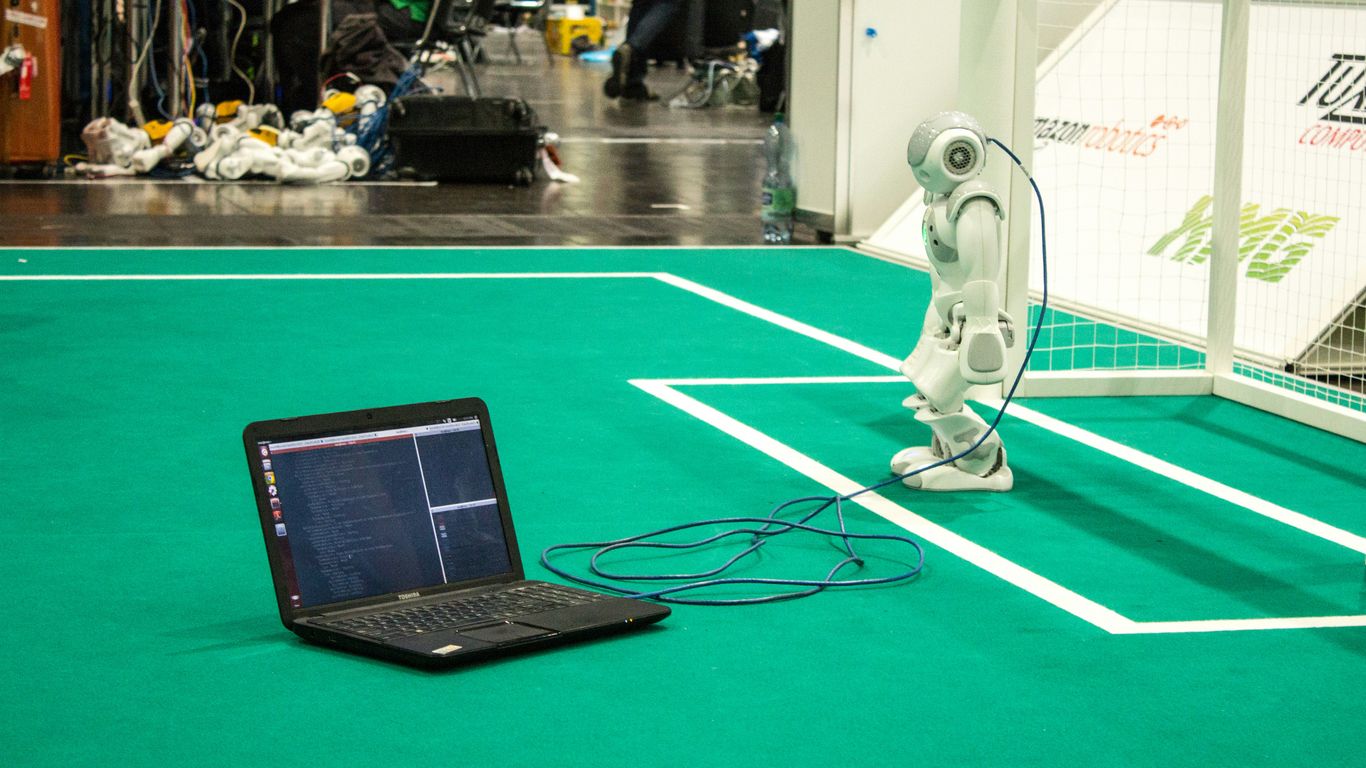
Getting a robot to perform well in the real world after training it in a simulation is a big challenge. Tesla seems to be making good headway here. Kovac mentioned "Many optimizations and fixes have been put in place in our sim-to-real training code." This means they’ve figured out better ways to transfer what Optimus learns in its virtual practice sessions into actual, physical actions. The video showed a cable attached for safety during falls, but it wasn’t actually holding the robot up, which is a good sign that the training is making it more stable on its own. They expect these improvements to become even more apparent very soon.
Biomimetic Hands Signal Leap in Dexterity
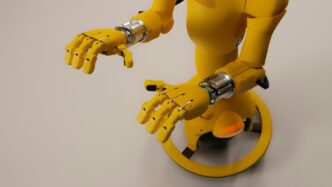
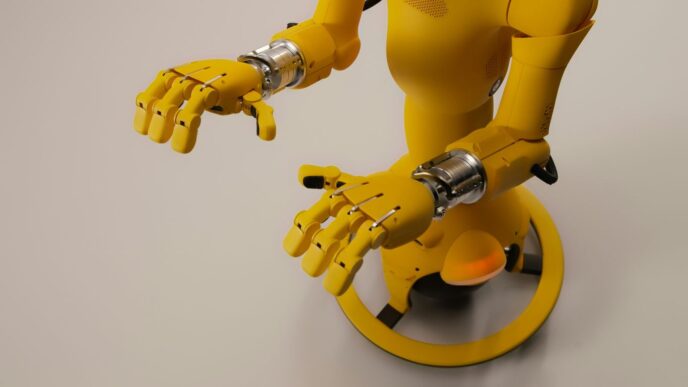
Okay, so let’s talk about the hands. This is a big deal, honestly. For a while now, the hands on the Optimus robot looked… well, a bit clunky. Like something you’d see in an old sci-fi movie. But the latest images? They show hands that look remarkably like ours. This isn’t just about looks; it’s about what the robot can actually do.
Human-Like Proportions and Articulation
When you look closely, the proportions are spot on. The fingers, the knuckles – they seem to mimic human anatomy pretty closely. Previous robotic hands often went for simpler designs, maybe a basic pincer or just bulky fingers. But these new hands appear to have individual finger segments, much like our own bones. This suggests a much higher degree of movement and flexibility. Think about how many ways you can move your fingers; that’s the kind of versatility Tesla is aiming for. It’s a huge step up from the metallic, almost skeletal look of earlier prototypes. The goal is to have hands that can handle everything from heavy lifting to very delicate tasks, much like human hands.
Advanced Tactile Sensing Capabilities
Movement is only half the story, though. The real magic happens when the robot can actually feel what it’s touching. The new hands seem to have a different surface material, hinting at advanced sensors. We’re talking about being able to detect pressure, texture, and even if something is about to slip. This is where the AI really comes into play. Tesla’s using its supercomputer, Dojo, to train neural networks. The idea is that the robot learns how to grip things by seeing tons of examples, rather than being programmed for every single scenario. This sensory feedback is key for interacting safely and effectively in unpredictable environments.
Bridging Hardware and Software Goals
It feels like the hardware is finally catching up to the software ambitions. For a long time, the challenge has been packing all the necessary motors and sensors into a small, human-like hand. These new hands suggest Tesla has figured out how to create powerful, precise actuators that are also lightweight. This synergy between advanced hardware and sophisticated AI is what will allow Optimus to perform complex tasks. It’s not just about building a robot; it’s about building a robot that can truly work alongside us, starting with tasks that are currently tedious or dangerous on the factory floor.
Accelerated Production and Deployment Plans
Things are really picking up speed when it comes to getting Optimus out the door. Tesla’s internal plans are pretty ambitious, aiming to build a significant number of robots this year. While hitting an exact target of 10,000 units by year’s end might be a stretch, the goal is to produce several thousand and have them doing useful work within Tesla’s own factories. This hands-on experience is key, as it directly informs the design for the next iteration, Production Design 2, which is expected to launch sometime next year, possibly early on.
The real game-changer will be the production lines themselves. Current lines are being designed for about 1,000 Optimus units per month. However, the next phase is a massive jump, with plans for lines capable of producing 10,000 units monthly, and eventually, lines for 100,000 units a month. This kind of scaling is what sets Tesla apart; it’s not just about the robot’s design, but the ability to manufacture them at an unprecedented scale. This focus on industrialization is something many others in the field seem to miss.
Here’s a look at the production ramp-up:
- Current Production Line: Designed for approximately 1,000 units/month.
- Next Generation Line: Targeting 10,000 units/month.
- Future Production Lines: Aiming for 100,000 units/month.
This rapid scaling means that while internal use is the immediate focus, external deliveries are also on the horizon. Rough estimates suggest that Optimus robots could start being delivered to companies outside of Tesla in the latter half of next year. It’s a bit like building the train, the station, and the tracks all at once, so exact timelines are tricky, but the trajectory is clear. The goal is to run Optimus production faster than anything seen before, aiming for an order-of-magnitude ramp per year. It doesn’t take long with that kind of growth before we’re talking about making millions of these robots annually. This rapid evolution is why Tesla’s Optimus robot is slated for high-volume production by 2027.
Transformative Applications in Manufacturing
Addressing Tedious and Dangerous Tasks
Optimus is being eyed for jobs that are just no fun for people. Think about the repetitive, mind-numbing tasks on an assembly line, or the jobs where you’re constantly exposed to fumes or heavy machinery. These are exactly the kinds of roles Optimus could step into. It’s not about replacing people entirely, but about taking on the work that’s hard on the body and the mind. This frees up human workers for more complex problem-solving and oversight roles. It’s a way to make the factory floor safer and more engaging for the people who work there.
Improving Efficiency on the Gigafactory Floor
Tesla’s own Gigafactories are set to be the first real proving ground for Optimus. There are still plenty of tasks in car manufacturing that are tricky for current automation. We’re talking about things like carefully guiding flexible wiring harnesses through tight spots in a car’s frame, or placing delicate interior parts without scratching them. Even picking up oddly shaped pieces from a bin can be a challenge. With hands that can move like ours, Optimus can handle these kinds of jobs. This means fewer mistakes, faster assembly times, and a smoother production flow overall.
Continuous Improvement Through Real-World Data
Putting Optimus to work in the factories isn’t just about getting tasks done; it’s also about learning. Every time Optimus picks up a tool or moves a part, its sensors are gathering information. This data on how it interacts with the physical world gets sent back to Tesla. The company can then use this information to train and improve the robot’s AI. It’s like a constant feedback loop: the robot works, it gathers data, the AI gets smarter, and the robot becomes more capable. This cycle of real-world testing and AI refinement is key to making Optimus better and better over time.
The Future Vision: Domestic and Beyond
Enabling Ubiquitous Household Assistance
Tesla Optimus isn’t stopping at the factory—it aims to be a central part of everyday life at home. The big idea is to have a robot that picks up after you, cooks simple meals, maybe even helps with pet care or laundry. What’s striking is how Optimus is being designed with hands and movement meant to handle things like dishes, plants, and delicate fabrics instead of just repetitive assembly lines. It’s not hard to imagine asking Optimus to unload the dishwasher, carry groceries, or assist an elderly person getting to the couch.
Everyday household tasks Optimus could take on soon:
- Sorting and folding laundry
- Prepping salads or meals
- Cleaning up messes from kids and pets
- Organizing pantries and closets
Navigating Unstructured Domestic Environments
The challenge is real: homes are a mess, at least from a robot’s perspective. Chairs, toys, steps, rugs—nothing is in the same place twice. Unlike factories, homes aren’t set up with robots in mind. Optimus will need to read its surroundings, handle unexpected spills, and walk around obstacles (like that chair someone moved again). There’s talk about using advanced vision systems, touch sensors, and clever software tricks to let the robot adapt on the fly.
Here’s what makes domestic environments unpredictable:
- Furniture gets moved all the time.
- Random objects appear on surfaces—mail, shoes, keys, whatever.
- Lighting changes and pets roam around.
For the robot, this means constantly learning and updating its behavior.
Potential for Multi-Planetary Existence
Tesla’s not shy about big dreams. Elon Musk has said more than once that Optimus could help on Mars someday. This might sound wild now, but the logic is pretty simple: a robot that can manage a home could also help set up habitats or life-support systems for humans before they arrive.
Potential uses for Optimus on other planets:
- Assembling shelter and equipment
- Maintaining life support, water, and air systems
- Performing remote repairs where conditions might be unsafe for humans
| Vision Target | Features Needed | Example Tasks |
|---|---|---|
| Household | Soft touch, dynamic movement | Cooking, cleaning |
| Home assistance | Adaptive AI, safety protocols | Elder care, organizing |
| Off-world habitat | Endurance, self-sufficiency | Habitat assembly, repair |
The path to this future is still winding, but Tesla is putting down stepping stones. For now, getting a robot to handle spilled cereal or fold a T-shirt is already a huge leap forward. And if you believe the hype, tomorrow’s Optimus might be helping humans whether they’re here on Earth or somewhere a lot farther away.
Competitive Landscape and Industry Advancements

It’s pretty wild how fast things are moving in the world of humanoid robots right now. Tesla’s Optimus is definitely making waves, but they’re not the only ones pushing the envelope. We’re seeing a bunch of other companies and research labs showing off some seriously cool stuff.
Industry-Wide Progress in Humanoid Robotics
Lots of groups are working on making robots more agile and capable. A big trend seems to be using computer simulations for training. This is how Optimus learned its dance moves, and other companies are doing similar things. For instance, some Chinese robotics firms have shown robots doing complex, almost dance-like routines. They talk about super-precise joints and advanced control systems that let them move really smoothly. It feels like everyone’s figuring out that training in a virtual world first, then transferring that to the real robot, is a smart way to go.
Key Technologies Driving Development
Several technologies are really making this progress possible. Simulation and reinforcement learning, which we’ve seen Tesla use a lot, are huge. They let robots learn complex tasks without needing a human to guide every single step. Then there’s the hardware side – better motors, more sensitive sensors, and improved battery tech all play a part. The combination of smarter software and more capable physical bodies is what’s really accelerating things. We’re also seeing a lot of focus on tactile sensing, especially for robotic hands, so they can feel what they’re touching and adjust their grip. It’s like giving robots a sense of touch, which is a pretty big deal.
The Dynamic Evolution of Robotic Capabilities
Here’s a quick look at what’s happening:
- Simulation Training: Robots are learning complex movements and tasks in virtual environments before trying them in the real world. This speeds up learning and reduces the risk of damage.
- Advanced Actuators and Sensors: New hardware allows for more precise movements and better feedback from the environment, like improved touch sensitivity.
- Reinforcement Learning (RL): This AI technique lets robots learn through trial and error, figuring out the best way to perform tasks on their own.
- Sim-to-Real Transfer: Developing methods to make sure what a robot learns in simulation works effectively when it’s operating in the physical world.
It’s a really exciting time. While Optimus is showing off some impressive feats, the whole field is buzzing with innovation. It’s going to be interesting to see how all these different approaches play out and which ones lead to the most practical and widespread applications down the line.
Wrapping Up: What’s Next for Optimus?
So, it looks like Tesla’s Optimus robot is really picking up speed. We’ve seen it do some pretty cool moves, and the new hands they showed off? They look a lot like ours, which is a big deal for doing all sorts of tasks. It’s not just about making robots dance, though. The real goal is to have them help out in factories, doing jobs that are tough or boring for people. And down the road, maybe even helping out at home. It’s still early days, and there’s a lot to figure out, but it feels like we’re getting closer to seeing these robots become a real part of our world. Keep an eye on this space, because things are moving fast.
Frequently Asked Questions
What’s new with the Tesla Optimus robot?
The latest updates show Optimus doing more complex dance moves in real-time, which means it’s getting much better at moving smoothly and quickly. Its new hands look a lot like human hands and can do very detailed tasks. Tesla is also planning to make a lot more of these robots soon.
How is Optimus learning to move so well?
A lot of Optimus’s training happens in a computer program that acts like a practice world, called simulation. It uses a learning method called reinforcement learning, where it tries things and learns from its successes and mistakes. This helps it get better at moving without needing to practice physically all the time.
Why are the new hands on Optimus so important?
These new hands are designed to be very similar to human hands, with lots of small joints and sensors. This means Optimus can pick up and handle objects with much more care and precision, which is needed for tricky jobs in factories and eventually in homes.
When will Tesla make a lot of Optimus robots?
Tesla hopes to build several thousand Optimus robots this year and is setting up bigger production lines to make thousands each month. They plan to start selling them to other companies outside of Tesla sometime next year.
Where will Optimus robots be used first?
The first place Optimus robots will work is in Tesla’s own factories. They will help with jobs that are boring, repetitive, or a little bit dangerous for people. This helps Tesla make cars more efficiently and also provides a real-world test for the robots.
What is the long-term goal for Optimus?
Tesla’s big dream is for Optimus robots to help out in people’s homes, doing chores and assisting with daily tasks. Eventually, they even imagine robots like Optimus helping humans live and work on other planets.