Understanding Automated Material Handling Systems
So, what exactly are we talking about when we say ‘automated material handling systems’? Basically, it’s about using machines, robots, and smart software to move, sort, and store stuff in places like warehouses or factories. Think of it as giving your operations a mechanical brain and a tireless set of arms. The main goal is to take over the repetitive, heavy, or time-consuming tasks that people used to do. This isn’t just about making things faster, though that’s a big part of it. It’s also about making operations smoother, more accurate, and safer.
What Is An Automated Material Handling System?
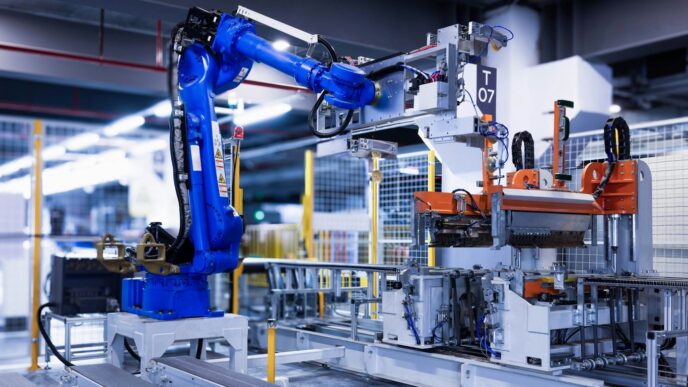
An automated material handling system (AMHS) is a setup that uses technology to manage the flow of materials within a facility. Instead of people manually pushing carts, lifting boxes, or walking long distances to grab items, machines do the heavy lifting and moving. This can range from simple conveyor belts moving products from one station to another, to complex robotic arms picking and placing items with incredible speed and precision. The whole point is to reduce human effort in moving goods, which in turn helps businesses operate more efficiently and often, more profitably.
Key Components Of Automated Material Handling Systems
These systems aren’t just one big robot; they’re made up of several parts working together. You’ve got the hardware, like the robots and conveyors, and then you’ve got the brains, which is the software that controls everything.
Here are some of the main pieces:
- Automated Equipment: This is the physical stuff that does the moving and storing. It includes things like conveyor belts, automated guided vehicles (AGVs), autonomous mobile robots (AMRs), and automated storage and retrieval systems (AS/RS).
- Control Systems: This is the software that tells the equipment what to do, when to do it, and where to go. Think of Warehouse Management Systems (WMS) or specialized software that manages the robots and conveyors.
- Sensors and Tracking: These are the eyes and ears of the system, often using things like barcode scanners or RFID tags to keep track of where everything is at all times.
Material Transport Technologies
When we talk about moving materials automatically, there are a few main ways it gets done. Each has its own strengths, and often, a facility will use a mix of them.
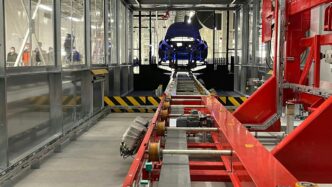
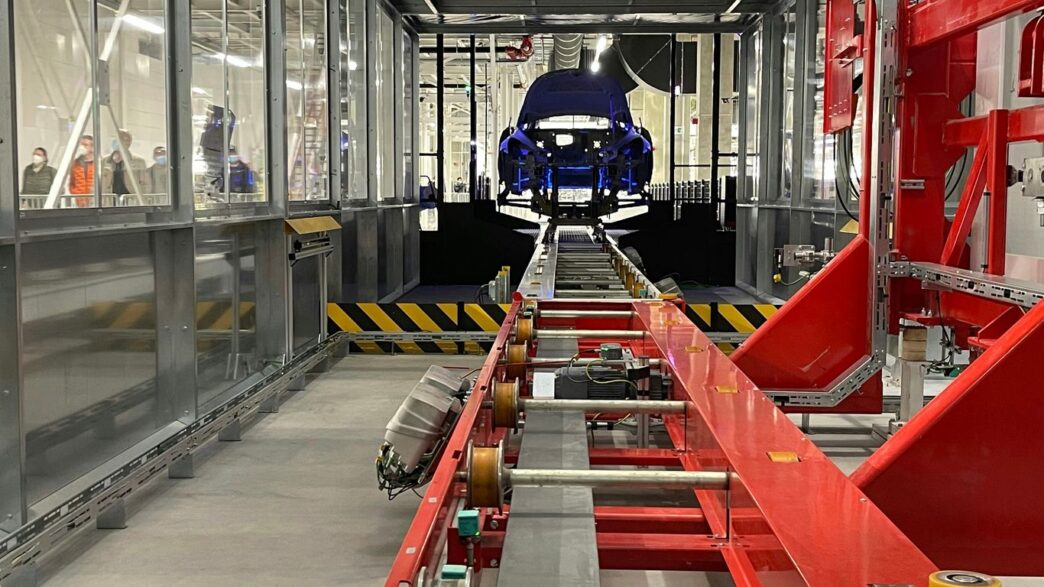
- Conveyor Systems: These are probably the most common. They’re great for moving items in a predictable path, like from a receiving dock to a sorting area, or from a production line to packaging. They can be belt conveyors, roller conveyors, or even overhead systems.
- Automated Guided Vehicles (AGVs): These are like self-driving carts. They follow a set path, often using magnetic strips on the floor or laser guidance, to move pallets or large loads around a facility. They’re good for moving heavy things over longer distances.
- Autonomous Mobile Robots (AMRs): These are a bit smarter than AGVs. AMRs use sensors and AI to navigate dynamically, meaning they can figure out their own path and avoid obstacles like people or other equipment in real-time. They’re more flexible and can handle more complex tasks, like bringing shelves of goods to a human picker.
These technologies are the backbone of modern automated material handling, making operations faster and more reliable.
Benefits Of Automated Material Handling Systems
So, why should a business even think about bringing automated material handling systems into their operations? It’s not just about having fancy robots zipping around; there are some really solid advantages that can make a big difference to the bottom line and how smoothly things run day-to-day.
Efficiency Gains And Faster Throughput
This is probably the most obvious win. When you automate the movement of goods, things just move faster. Think about it: machines don’t need breaks, they don’t get tired, and they can often work at speeds humans just can’t match consistently. This means less time waiting around for items to get from point A to point B, whether that’s from receiving to storage, or from storage to packing. This continuous flow significantly boosts how many orders or products you can process in a given time, especially during busy periods. It helps get rid of those bottlenecks that can really slow everything down.
Labor Savings And Reduced Costs
Let’s be real, labor is a huge part of operating costs for most businesses. Automated systems can take over a lot of the repetitive, physically demanding tasks that people used to do. This doesn’t necessarily mean getting rid of all your staff, but it does mean you can redeploy people to more complex jobs that require human judgment, like quality control or customer service. Plus, by reducing the need for manual labor in certain areas, you can cut down on expenses related to wages, benefits, and even the costs associated with employee turnover and training for those specific roles.
Improved Accuracy And Inventory Control
Humans are great, but we all make mistakes. Misplaced items, incorrect counts, or wrong shipments can happen. Automated systems, with their sensors, scanners, and integrated software, are designed for precision. They can track inventory in real-time, ensuring that what the system says is in stock actually is. This leads to fewer errors in picking and shipping, which means happier customers and less money spent on returns or correcting mistakes. It’s like having a super-organized assistant who never forgets where anything is.
Enhanced Safety And Ergonomics
Manual material handling often involves heavy lifting, repetitive motions, and working in busy areas with moving equipment like forklifts. These activities can lead to injuries, both short-term and long-term. By automating these tasks, you remove workers from potentially hazardous situations. Robots can handle the heavy lifting, and automated systems can manage the flow of goods, creating a safer environment for everyone. This not only reduces the risk of accidents but also improves the overall working conditions, making the workplace more comfortable and less physically taxing for your team.
Types Of Automated Material Handling Systems
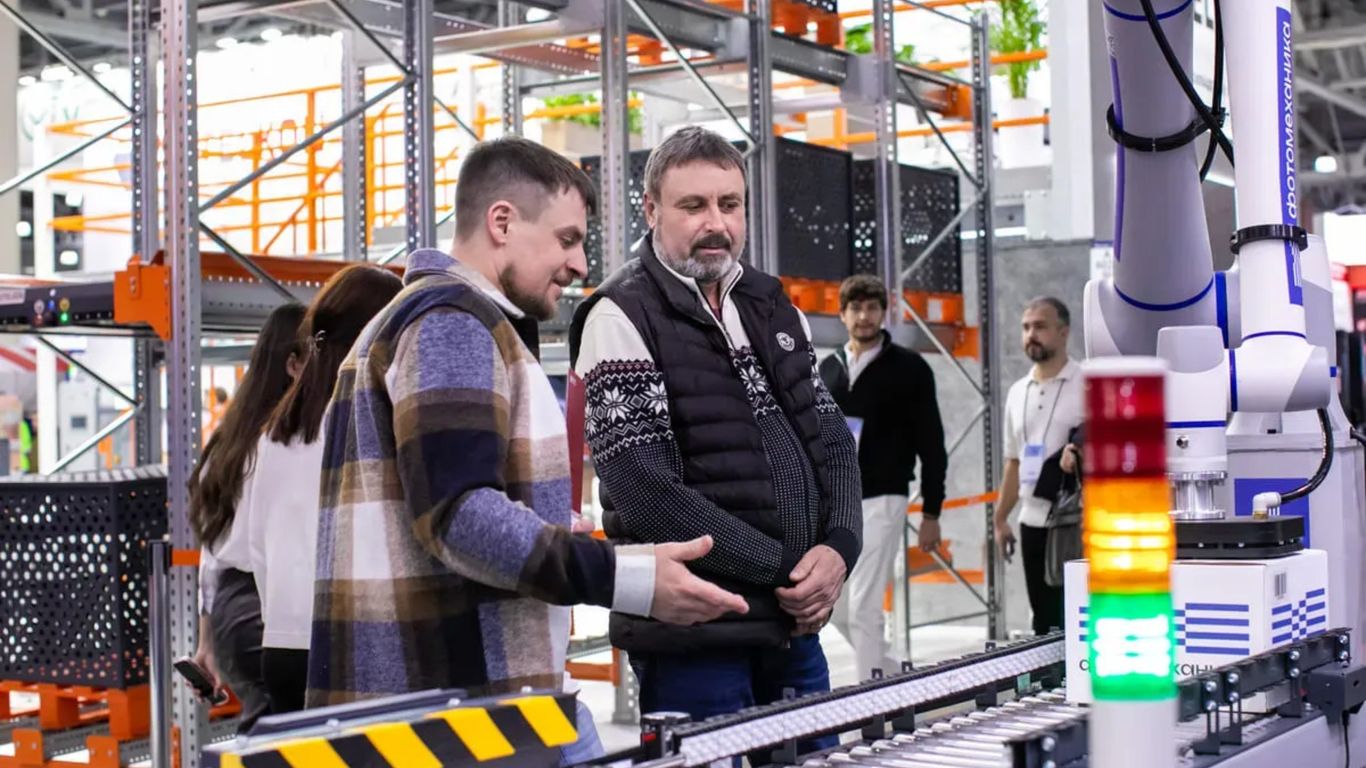
So, you’re looking into automating how stuff moves around your warehouse or factory? That’s smart. There are a bunch of different ways to do it, and picking the right one really depends on what you’re moving, how much, and the space you’ve got. It’s not a one-size-fits-all deal, that’s for sure.
Automated Material Handling Conveyors
Conveyors are probably the most familiar type of automated system. Think of them as the highways for your goods within a facility. They’re great for moving items consistently from one point to another, especially in high-volume situations. They can be set up in straight lines, curves, or even inclines to fit your layout. Some are designed to just keep things moving, while others have special features to stop items temporarily, which helps avoid jams. They really cut down on people having to haul things manually, saving time and reducing the risk of injuries from lifting.
- Belt Conveyors: These are super common and work well for moving individual items or bulk materials. They’re pretty straightforward.
- Roller Conveyors: Good for heavier items like boxes or pallets. The rollers make it easy to slide things along.
- Overhead Conveyors: These hang from the ceiling, which is a neat trick to save floor space. They can follow complex paths and are good for lighter items.
Automated Guided Vehicles (AGVs)
AGVs are like self-driving carts. They follow a set path, usually marked by magnetic strips on the floor, wires, or even laser guidance systems. They’re a step up from manual forklifts because they can operate more consistently and in areas where forklifts might be too risky. AGVs are excellent for repetitive tasks and moving large, heavy loads like pallets. They’re programmed to go from point A to point B without a human driver.
- Pallet AGVs: Designed to pick up and move entire pallets.
- Tugger AGVs: These can pull a train of carts, moving multiple loads at once.
- Unit Load AGVs: Suitable for carrying bins, totes, or individual items.
Autonomous Mobile Robots (AMRs)
AMRs are the newer, smarter cousins of AGVs. Instead of following fixed paths, AMRs use sensors and AI to navigate dynamically. They can ‘see’ their surroundings, avoid obstacles like people or unexpected items on the floor, and even reroute themselves on the fly if their path is blocked. This makes them way more flexible than AGVs. They’re really good at adapting to changing warehouse layouts or unexpected situations.
- Goods-to-Person AMRs: These robots bring shelves or bins directly to a human worker for picking, cutting down on walking time.
- Pick-Assist AMRs: They work alongside human pickers, carrying items and reducing the physical strain on workers.
- Sortation AMRs: Used to move items to different sorting destinations within a facility.
Automated Storage and Retrieval Systems (AS/RS)
AS/RS are all about making the most of your storage space and getting items in and out quickly and accurately. These systems use robots, often cranes or shuttles, to automatically store and retrieve items from high-density storage racks. They’re fantastic for warehouses that need to manage a lot of inventory in a small footprint. AS/RS significantly boosts inventory accuracy and reduces the space needed for storage.
- Unit Load AS/RS: Handles large items like pallets or full containers.
- Mini-Load AS/RS: Designed for smaller items, like individual cases or bins, often used in e-commerce fulfillment.
- Vertical Lift Modules (VLMs): These are tall, vertical units that use trays to store items, maximizing vertical space in a facility.
Challenges And Considerations For Implementation
So, you’re thinking about bringing some automation into your material handling. That’s great! It can really change how things run for the better. But, like anything big, it’s not just a simple plug-and-play situation. There are definitely some hurdles to jump over and things to think about before you dive in.
High Initial Investment And ROI
Let’s get the big one out of the way first: the cost. Automated systems, whether it’s a fleet of AGVs or a fancy AS/RS, don’t come cheap. You’re looking at a significant chunk of change upfront. This means you really need to crunch the numbers and figure out your Return on Investment (ROI). How long will it take for the system to pay for itself through savings in labor, fewer errors, and faster processing? It’s not just about the sticker price; you’ve got to consider installation, training, and ongoing maintenance too. Sometimes, it’s wise to start with a smaller pilot project to prove the concept and get a clearer picture of the actual costs and benefits before going all-in.
System Compatibility And Integration
Your new automated gear isn’t going to operate in a vacuum. It needs to talk to your existing systems, like your Warehouse Management System (WMS) or Enterprise Resource Planning (ERP) software. This is where things can get tricky. Getting different software and hardware from various vendors to play nicely together can be a real headache. You need a solid integration plan from the get-go. If your systems can’t communicate effectively, you’ll end up with data silos, manual workarounds, and a system that’s less efficient than you hoped. Working with a systems integrator who has experience with multiple vendors and technologies can be a lifesaver here. They can help bridge the gaps and make sure everything flows smoothly.
Workforce Training And Change Management
This is a biggie that often gets overlooked. Your team is going to be working alongside, or operating, these new machines. They need to know how. Simply installing the tech isn’t enough; you need a robust training program. This isn’t just about showing people how to press buttons. It’s about helping them understand the new workflows, how to troubleshoot basic issues, and how to work safely with automated equipment. Beyond just training, there’s the whole aspect of change management. People can be resistant to new technology, especially if they feel it threatens their jobs. It’s important to communicate openly, involve your team in the process, and highlight how automation can actually make their jobs easier or lead to new, more skilled roles. Think about it like this:
- Communicate Early and Often: Let everyone know what’s coming and why.
- Involve Key Staff: Get input from the people who will use the system daily.
- Provide Thorough Training: Don’t skimp on teaching people how to use the new tools.
- Highlight Benefits for Workers: Focus on how it can improve safety or reduce tedious tasks.
Layout And Space Constraints
Automated systems often have specific space requirements. AGVs need clear paths to travel, AS/RS units take up a lot of vertical space, and robots might need dedicated zones. You can’t just plop a complex automated system into any old corner. You’ll need to assess your current facility layout. Does it have the right floor space, ceiling height, and power infrastructure? Sometimes, you might need to reconfigure your existing layout or even consider facility modifications. It’s worth mapping out your current operations and then seeing how the proposed automated system fits in. You might find that the ideal automated solution requires a bit of a physical overhaul of your workspace.
Real-World Applications And Use Cases
Automated material handling systems aren’t just theoretical concepts; they’re actively transforming how businesses operate across various sectors. Seeing these systems in action really drives home their impact.
E-commerce Fulfillment Centers
This is where automated material handling truly shines. Think about the sheer volume of orders that need to be picked, packed, and shipped, especially during peak seasons. Companies like Amazon and Alibaba are prime examples, using a mix of automated storage and retrieval systems (AS/RS), smart conveyors, and autonomous mobile robots (AMRs) to keep things moving 24/7. This setup helps them meet tight delivery windows even when demand spikes. For instance, one company saw a 250% boost in picking efficiency and cut labor costs by half after implementing a goods-to-person AS/RS. It’s all about speed and accuracy to keep customers happy.
Manufacturing and Production Lines
In factories, these systems are critical for ensuring a smooth flow of parts and products. Automated guided vehicles (AGVs) and robotic arms shuttle components between different stages of production, like machining, assembly, and packaging. This just-in-time delivery minimizes costly line stoppages. Imagine an automotive plant where robotic transfer arms precisely deliver the right part at the exact moment it’s needed on the assembly line. It makes the whole process much more efficient and less prone to delays.
Distribution and Logistics Hubs
These are the central points where goods are sorted, stored, and prepared for their final destinations. Automated sortation systems, for example, can process thousands of packages per hour, a task that would require a massive human workforce. These systems use conveyors, scanners, and diverters to send items to the correct outbound lanes. It’s not just about speed; it’s about managing complexity and ensuring that products get to the right retail stores or directly to consumers without getting lost in the shuffle. The ability to handle large volumes with high accuracy is a game-changer for logistics operations.
Future Trends In Automated Material Handling
The world of automated material handling isn’t standing still, not by a long shot. Things are moving pretty fast, and a couple of big ideas are really shaping what’s next: making things more adaptable and doing it all with a lighter touch on the planet. Businesses are starting to think more about how their operations affect the environment, and honestly, it makes good business sense too. We’re seeing more equipment that uses less power, like conveyors designed for efficiency, and even some systems that can run on solar. Plus, there’s a push to use materials that can be recycled and cut down on waste, which automation helps with by being more precise.
AI-Driven Optimization and Predictive Analytics
Artificial intelligence is really starting to change the game for how warehouses plan and run things. Think about algorithms that can figure out the best way to spread out the work, tell those mobile robots where to go to avoid traffic jams, and even predict when a piece of equipment might need maintenance before it breaks down. This means things keep moving without those annoying, unplanned stops. It’s all about making operations smarter and smoother.
5G, IoT Connectivity, and Real-Time Tracking
This is where things get really connected. With 5G and the Internet of Things (IoT), we’re talking about super-fast data sharing. This allows for tracking goods and equipment in real-time, which is a big deal for knowing exactly where everything is at any moment. It helps make decisions faster and keeps everything coordinated.
Robotics-as-a-Service (RaaS) Models
Instead of buying a whole system outright, which can be a huge upfront cost, RaaS is becoming a popular option. It’s kind of like a subscription service for robots and automation. Companies can pay as they go, which makes advanced technology more accessible, especially for smaller businesses or those who want to try things out without a massive investment. This model also often includes maintenance and support, which is pretty handy.
Sustainability and Energy-Efficient Technologies
This ties back to that idea of a lighter environmental footprint. The focus is on automation that doesn’t just work well but also uses energy wisely. This includes things like smart power management, systems that can recapture energy when they brake, and planning routes so robots don’t waste power going back and forth unnecessarily. As environmental goals become more important, expect to see even more innovation in this area.
Wrapping It Up
So, we’ve gone over how automated material handling systems can really change the game for businesses. They help speed things up, cut down on mistakes, and make workplaces safer. Plus, with new tech like AI and better connectivity on the way, these systems are only going to get smarter and more adaptable. It’s not just about keeping up anymore; it’s about getting ahead. Investing in these tools now means your operation will be ready for whatever comes next, running smoother and more efficiently for years to come.