The Evolving Landscape Of Self-Driving Camera Technology
Self-driving cars seem less like science fiction every year. There’s real momentum now, especially around camera technology, which is doing some heavy lifting. But as cool as it all sounds, the road to true autonomy has been anything but smooth.
Advancements Driving Autonomous Capabilities
In just a few years, self-driving cameras have gone from simple lane-keeping aids to being the eyes of increasingly capable vehicles. The pace is wild—cars now use multiple cameras stitched together, putting digital eyes in every direction. It’s not unusual for a new car to have:-
- Three or more front-facing cameras for long-distance spotting
- Multiple side-facing cameras for blind-spot and cross-traffic detection
- Rear cameras that help with reversing and parking
Table: Typical Automotive Camera Arrangement
| Camera Position | Main Use | Typical Range |
|---|---|---|
| Front-facing | Lane, vehicles, obstacles | 250 meters |
| Side-facing (front) | Cornering, cross-traffic | 80 meters |
| Side-facing (rear) | Blind spots | 80 meters |
| Rear-facing | Reverse, following traffic | 100 meters |
These cameras aren’t just capturing video. Advanced software now processes these feeds in milliseconds to identify cars, people, animals, traffic signs—you name it. The tech is basically acting like a co-driver, catching what you miss. And with each update, these systems get smarter at high speeds and under rougher conditions.
The Role Of Sensors In Perception
Cameras are just one piece of the sensing puzzle, but they do a ton. They work together with:
- Radar (helps in low-visibility settings, like fog)
- Ultrasonic sensors (short-range, for parking and avoiding close bumps)
- Advanced AI chips (to analyze data faster than any human)
The magic happens when all these sensors team up, giving the car a map of everything around it—cars, cyclists, even wayward shopping carts. If a camera can’t see a faded lane line, maybe radar can spot a nearby car. If there’s a sound you miss, maybe the sensors pick it up.
Challenges In Camera-Based Systems
Nothing’s perfect and self-driving cameras are no exception. Some pretty big headaches still remain:
- Weather plays tricks: Rain, snow, or direct sunlight can trip up a camera’s vision.
- Dirty or foggy lenses mean missed signals and, at worst, system shutdowns mid-drive.
- Odd events, like poorly painted lane markings or construction zones, sometimes leave the system clueless.
Engineers are working hard on backup plans, mixing sensors and creating smarter software to deal with these curveballs. But for now, even the best cameras can have off days. Getting reliability in all situations is still the name of the game.
All in all, it’s a thrilling time if you follow car tech. Cameras are finally good (and cheap) enough to make the dream of self-driving feel possible, but they’re still running into the messiness of the real world. That’s both the challenge—and the excitement—of the technology right now.
Understanding The Hardware Behind The Self-Driving Camera
Multi-Camera Systems For 360° Vision
So, how do these cars actually ‘see’ everything around them? It’s not just one camera, like the one on your phone. Think of it more like a whole crew of eyes, all working together. Many self-driving systems use a bunch of cameras placed strategically around the vehicle. You’ll find cameras facing forward, often with a pretty long range, maybe up to 250 meters. Then there are side cameras, both front and rear, giving the car a wide view of what’s happening next to it. And of course, a rear camera to keep an eye on what’s behind. This setup is designed to give the car a complete, 360-degree picture of its surroundings. It’s like having a built-in security system that never blinks.
Complementary Sensors: Radar And Ultrasonic
Cameras are great, but they can get confused. Bright sun glare, heavy rain, or even just fog can make it hard for them to see clearly. That’s where other sensors come in to help out. Radar is one of them. It uses radio waves to detect objects and measure their distance and speed, and it works pretty well even when visibility is bad. Then you have ultrasonic sensors. These are like the car’s parking assistants, using sound waves to detect objects very close to the vehicle, usually within a few meters. They’re really good for low-speed maneuvers and avoiding those fender benders in tight spots. By combining cameras with radar and ultrasonic sensors, the car gets a more robust and reliable understanding of its environment.
The Power Of On-Board Computing
All these sensors are collecting a massive amount of data, constantly. Imagine trying to process all that information in real-time – it’s a huge task. That’s why self-driving cars need serious computing power right on board. We’re talking about specialized computers, sometimes called ‘supercomputers’ for cars, that can crunch numbers incredibly fast. These systems take all the data from the cameras, radar, and other sensors and figure out what it all means. They decide if there’s a car ahead, a pedestrian on the sidewalk, or a lane change needed. This on-board brain is what allows the car to make quick decisions, often in fractions of a second, which is absolutely necessary for safe driving.
LiDAR: A Key Enabler For Self-Driving Vision
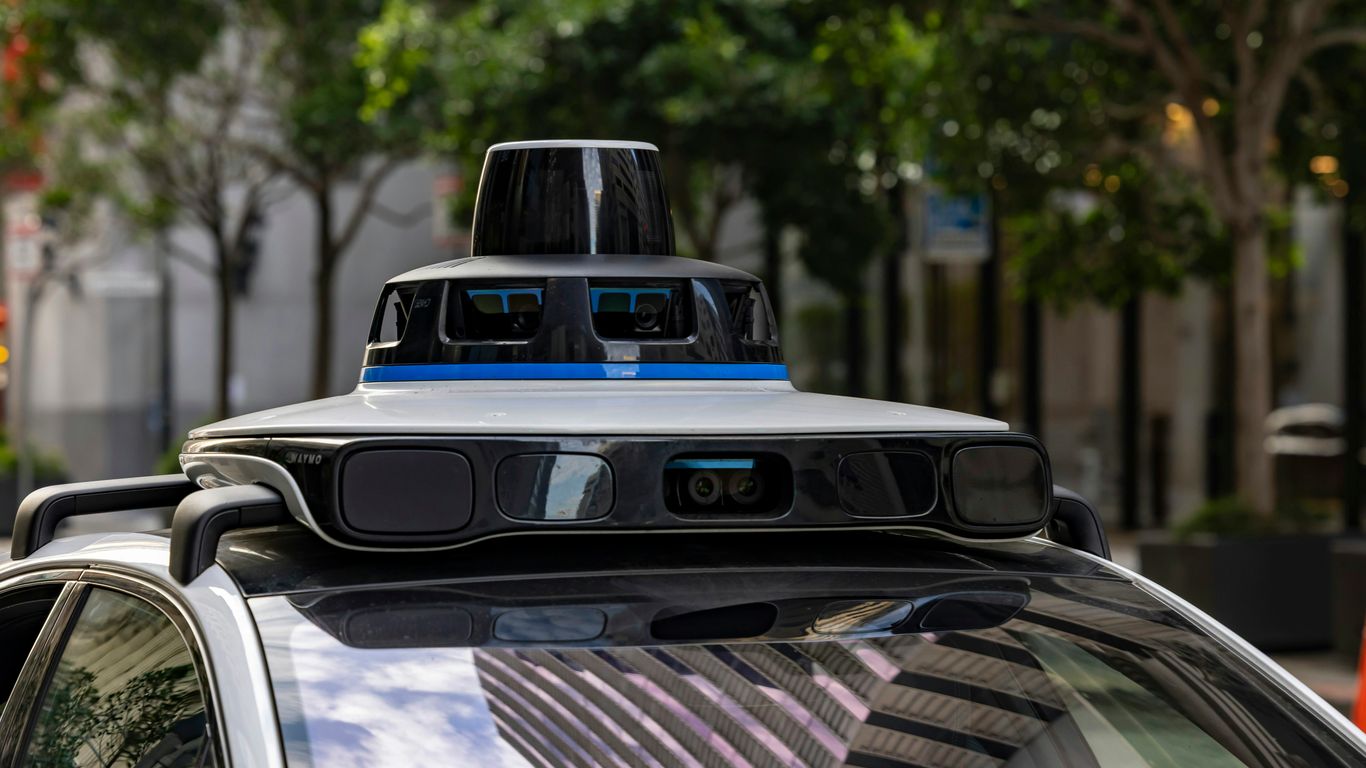
How LiDAR Maps The Environment
LiDAR—short for Light Detection and Ranging—works by sending out rapid pulses of laser light and measuring how long it takes for each pulse to bounce back after hitting an object. This lets a vehicle create a detailed 3D map of its surroundings almost instantly. Unlike regular cameras that just see colors and contrast, LiDAR picks up shapes and distances, even in low light or darkness. The process is a bit like bats using echolocation—except, instead of sound waves, it’s using safe, invisible light beams. LiDAR systems typically use:
- A laser emitter
- A rotating mirror or scanning mechanism
- Receivers to capture reflected light
- Software for building real-time maps
All this gear works together to tell the vehicle exactly where objects are and how far away they are, giving the car a new level of ‘spatial awareness.’
LiDAR’s Contribution To Vehicle Safety
When it comes to safety, LiDAR is a heavy hitter. It doesn’t just map out where things are; it also helps cars identify fast-moving risks—like sudden lane changes, debris, or a cyclist appearing out of nowhere. Here are three key ways LiDAR adds to vehicle safety:
- Detects objects quickly, regardless of light levels or shadows
- Measures distances with high precision, reducing blind spots
- Helps avoid collisions by giving the car a heads-up on sudden obstacles
Some newer LiDAR even works in rain or light fog, outperforming many cameras and sensors that can get confused by glare or low contrast.
| Sensor Type | Detects In Low Light? | Measures Distance Accurately? | Handles Adverse Weather? |
|---|---|---|---|
| LiDAR | Yes | Yes | Sometimes |
| Camera | No | No | No |
| Radar | Yes | Yes | Yes |
Limitations And Future Of LiDAR
LiDAR isn’t magic, and it’s got a few stumbling blocks. For starters, it’s not always great in thick fog, heavy rain, or snow—lots of bouncing light can confuse the system. Then there’s the cost; those fancy spinning lasers aren’t cheap, though prices keep dropping year over year. The moving parts can also wear out, which is why developers are turning to solid-state LiDAR with no moving pieces.
But the future looks pretty interesting. Upgrades in laser technology and on-board computers are making LiDAR smaller, faster, and more reliable. Here’s where things are heading:
- Solid-state LiDAR with no moving parts for longer life
- Cheaper, mass-produced units for affordable self-driving cars
- Smarter software to handle poor weather and tricky road conditions
For now, LiDAR gives self-driving vehicles a kind of eyesight that no human can match. But it’s clear—just like everything in tech—LiDAR is still a work in progress.
Precise Positioning: The Unsung Hero Of Autonomy
When we talk about self-driving cars, it’s easy to get caught up in the flashy stuff – the cameras seeing everything, the fancy sensors. But there’s a quiet player that’s absolutely critical, something most people don’t even think about: knowing exactly where the car is. I’m talking about precise positioning, and it’s a big deal for making cars drive themselves, even just a little bit.
GNSS For Centimeter-Accurate Location
Think about the GPS on your phone. It’s pretty good, right? It can tell you if you’re on Elm Street or Oak Avenue. But for a car that needs to stay perfectly in its lane, or merge onto a highway without a hitch, that’s not nearly good enough. Standard GPS can be off by several meters. That’s a huge margin of error when you’re talking about driving.
This is where precise Global Navigation Satellite Systems (GNSS) come in. These systems are way more accurate, getting down to just a few centimeters. It’s like upgrading from a blurry map to a high-definition blueprint of the road. This level of accuracy is what allows advanced driver-assistance systems (ADAS) to do things like keep you centered in your lane, even when the lane lines are faded or it’s pouring rain. It provides a reliable anchor, a constant confirmation of the car’s exact spot on the road, which helps the car’s computer make better decisions.
Here’s a quick look at how much better it gets:
| System Type | Typical Accuracy |
|---|---|
| Standard GPS | 3-10 meters |
| Precise GNSS | 0.02-0.1 meters (2-10 centimeters) |
Bridging ADAS And Full Autonomy
So, how does this super-accurate positioning help us get from today’s cars to tomorrow’s self-driving ones? Well, it’s not really an overnight switch. Most car companies are focusing on improving the systems we already have, like advanced cruise control and lane keeping. These are often called Level 2+ systems.
Precise GNSS is a key piece of the puzzle for these systems. It helps them work better in more situations. For example:
- Reliable Driving in Bad Weather: Cameras can struggle when it’s sunny, rainy, or snowy. Precise GNSS helps the car know where it is even when the cameras are having trouble seeing.
- Smoother Lane Changes: Navigating tricky highway exits or changing lanes on a busy road requires knowing your exact position relative to other cars and the road markings. Precise GNSS makes these maneuvers much safer and smoother.
- Working with Simpler Maps: High-definition maps are expensive to make and update. Precise GNSS can work with less detailed, standard maps because it provides the pinpoint accuracy needed, making advanced features more affordable for regular cars.
This gradual improvement is what’s really changing how we drive, making cars safer and more comfortable, even if they still have a steering wheel.
Scalable Solutions For Mass Adoption
Making these advanced features available to everyone is the next big challenge. The technology for precise positioning is getting cheaper and more accessible. Companies are developing systems that are certified for automotive safety and can be easily integrated by major car manufacturers. This means that instead of just being in fancy concept cars, centimeter-accurate location is starting to show up in millions of vehicles on the road today.
It’s not just about making robotaxis work; it’s about making the cars we drive every day smarter and safer. By providing this reliable, accurate positioning, precise GNSS is quietly enabling a whole new generation of driving features, paving the way for a future where cars can handle more of the driving tasks, making our journeys better.
The Quiet Revolution: Level 2+ Systems And Beyond
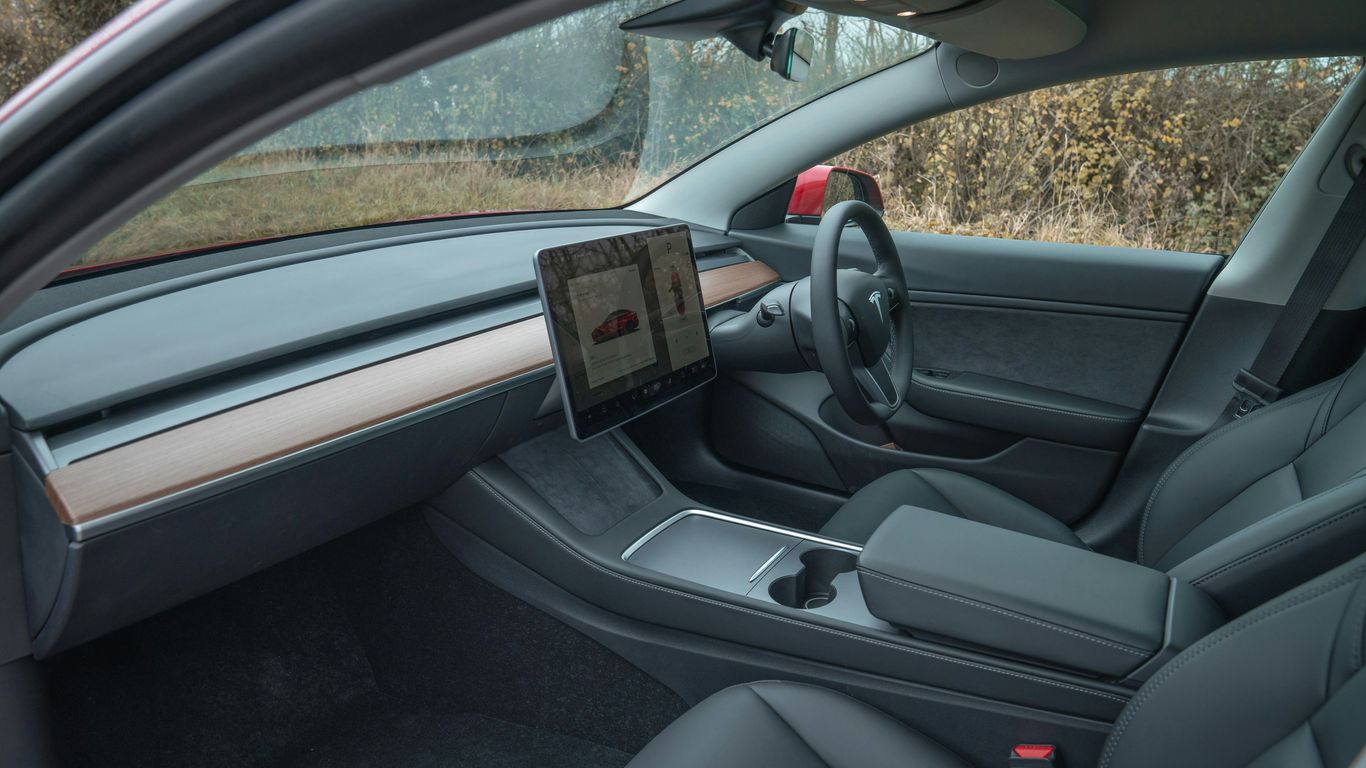
When most people think about self-driving cars, they picture something straight out of a sci-fi movie – a car with no steering wheel, just whisking you away. That’s the big, flashy goal, and it’s definitely getting a lot of attention lately with new robotaxi services popping up. But honestly, the most significant changes happening right now aren’t about cars driving themselves completely. Instead, it’s about the steady improvement of the driver assistance features we already have, often called Level 2+ (L2+) systems.
Maturation Of Advanced Driver Assistance
These L2+ systems are getting seriously good. Think about features like adaptive cruise control that adjusts your speed based on traffic, or lane-keeping assist that gently nudges you back into your lane. Automakers are packing more and more of these capabilities into new cars. The real story is how these systems are becoming more reliable and useful in everyday driving. They’re not just for highways anymore; they’re starting to handle more complex situations, making driving less of a chore and, importantly, safer.
Hands-Free Driving Experiences
What does this mean for you? It means you’re starting to see cars that can handle steering, accelerating, and braking for you on certain roads, like highways. You can take your hands off the wheel for periods, though you still need to pay attention. It’s a big step up from older systems. Many car companies are focusing on this because it offers a tangible benefit to drivers right now, without the massive complexity and cost of full Level 3 or Level 4 autonomy. It’s a smart way to bring advanced features to more people.
Expanding Operational Design Domains
One of the biggest challenges for these systems has been their limitations. They might work great on a sunny day with clear lane lines, but struggle in fog, heavy rain, or even bright sunlight. The push with L2+ is to expand what’s called the "Operational Design Domain" (ODD). This basically means making the systems work well in a wider variety of conditions and places. It’s about making them more dependable so you can actually trust them when you need them. This expansion is key to making these advanced features a common part of driving, not just a novelty.
The Future Of The Self-Driving Camera In The Cabin
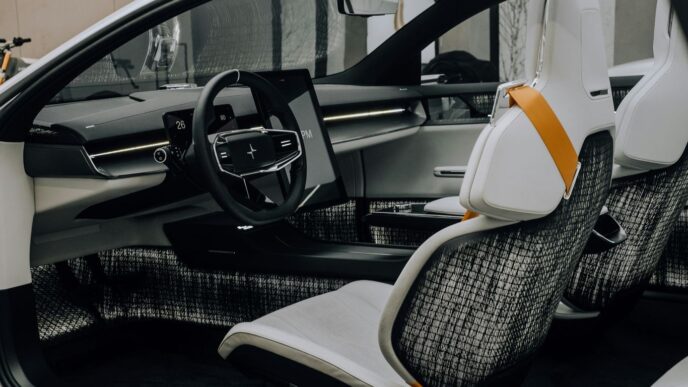
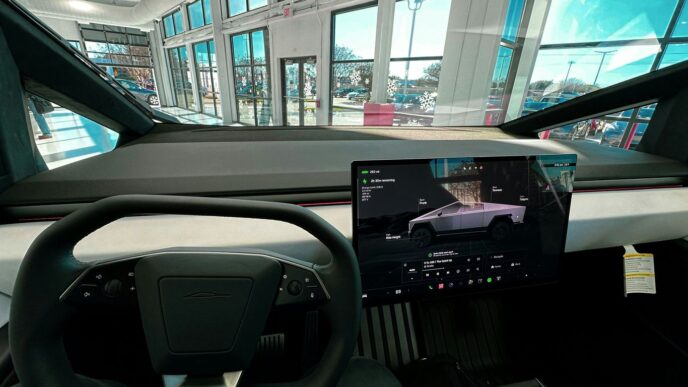
So, what’s next for the cameras inside our cars? It’s not just about seeing the road anymore. The cabin is becoming a whole new space for tech, and cameras are right in the middle of it. Think about it: your car is getting smarter, and it’s starting to pay attention to you and your passengers.
AI-Powered In-Cabin Experiences
This is where things get really interesting. Companies are working on systems that use cameras to understand what’s happening inside the car. Imagine your car’s interior lighting changing to match the mood of a movie you’re watching, or even adjusting the temperature based on who’s sitting where. It’s like having a personal assistant that knows what you like before you even ask. Some systems can even create custom themes for all your screens, turning your car’s dashboard into a beach scene or a favorite sports stadium. The goal is to make your time in the car feel more personal and engaging.
Gesture Control And User Interaction
Forget fumbling for buttons or shouting commands. Cameras are starting to recognize hand gestures. Early versions might let you zoom in on a map or rotate a 3D model just by moving your hand. It’s still pretty new, but the idea is that you’ll be able to control things like music volume or climate settings with simple, intuitive movements. This could make interacting with your car’s systems much quicker and less distracting.
Personalized Entertainment Systems
Road trips are about to get a lot more fun. New systems allow passengers to easily join in on the entertainment. You could send a link to friends, and they can use their phones as controllers for games played on the car’s screens. They can even contribute their favorite music or podcasts to the main sound system. It’s like everyone gets their own little control panel, making shared experiences much better. Some systems are even looking at ways to integrate video games directly into the car, using the vehicle’s movement to add to the gameplay. It sounds a bit wild, but it’s definitely a peek into how we might entertain ourselves on the go in the coming years.
The Road Ahead
So, what does all this mean for us? It’s pretty clear the future of driving is changing, and fast. We’re not talking about some far-off sci-fi dream anymore. These self-driving cameras and the smart systems behind them are already here, making our cars safer and, honestly, a lot more interesting. While we might not have cars with no steering wheels just yet, the steps we’re taking now with advanced driver assistance are huge. It’s a gradual shift, sure, but it’s leading us toward a future where our cars do more, help us out more, and maybe even give us back some time. It’s exciting to think about what’s next, and it seems like the journey is just getting started.