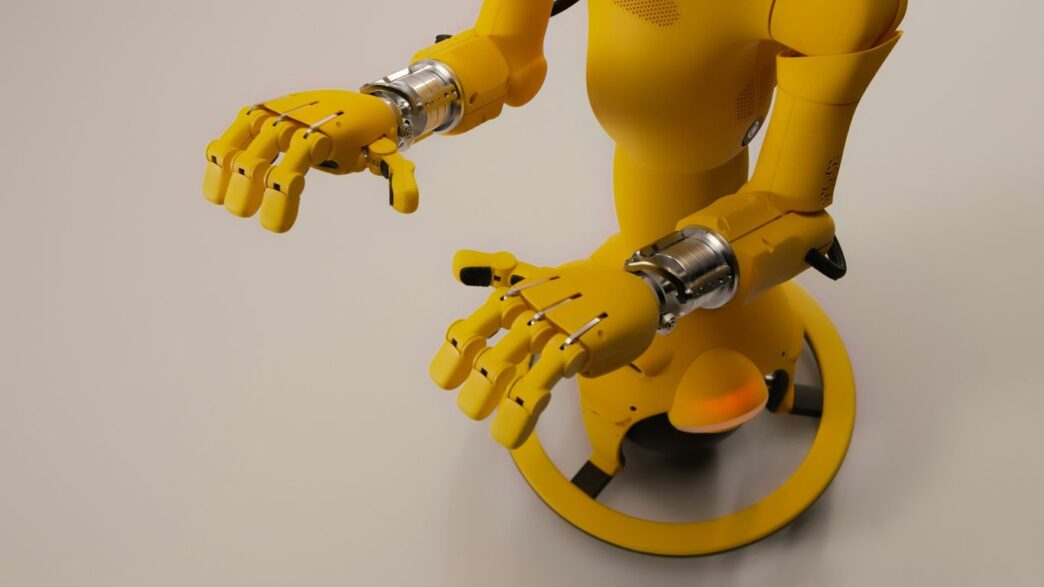
Advancements in Dexterous Robotics
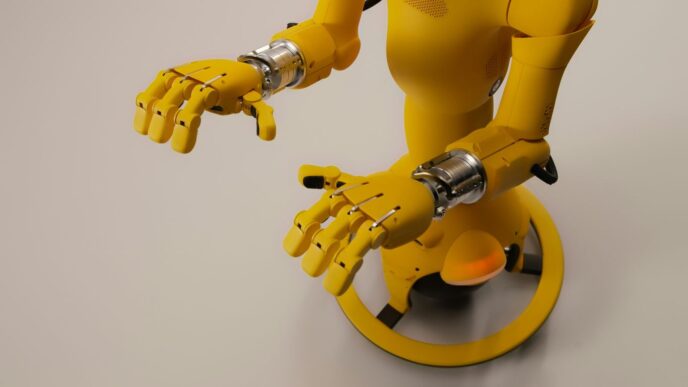
Robots are getting way better at using their hands, and it’s pretty exciting to see. We’re moving beyond simple pick-and-place tasks. Think about it: robots are starting to do things that require a lot of fine motor skills, like assembling tiny electronics or even performing delicate surgical procedures. This leap forward is thanks to a few key areas of innovation.
Structural Evolution and Material Innovations
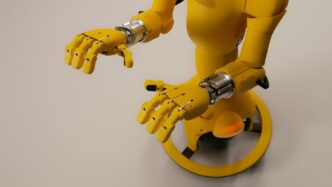
Robotic hands aren’t just clunky metal claws anymore. Engineers are designing them with lighter, stronger materials, which makes a big difference in how agile and balanced they can be. We’re seeing new types of actuators and micro-motors that pack more power into smaller packages. This means robots can make more precise movements without being weighed down. It’s like upgrading from a heavy wrench to a set of precision tools.
AI-Enhanced Sensory Perception and Control
This is where things get really interesting. Modern robotic hands are getting smarter with advanced sensors. They can feel textures, measure pressure, and even ‘see’ what they’re doing with cameras. All this information is fed into AI systems that learn how to control the hand. This allows robots to adjust their grip on the fly, preventing dropped items or crushed objects. It’s a huge step towards robots that can interact with the world more like we do.
Adaptive Motion Planning and Learning
Robots are no longer just following pre-programmed steps. With new AI techniques, like reinforcement learning, robotic hands can now figure out the best way to grab and move objects based on their surroundings. If something unexpected happens, like an object shifting, the robot can adapt its plan. This means they can work more effectively in unpredictable environments, which is a game-changer for many industries.
Expanding Applications of Dexterous Hands
It’s pretty wild how far robotic hands have come, right? They’re not just for picking up boxes on an assembly line anymore. We’re seeing these incredibly precise hands pop up in all sorts of places, making tasks that used to be impossible for robots suddenly doable. The real game-changer is how these hands are starting to mimic human-like dexterity, opening doors we didn’t even know were there.
Precision in Industrial Automation
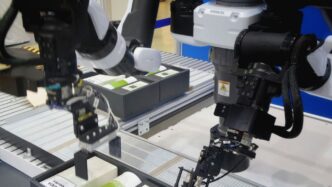
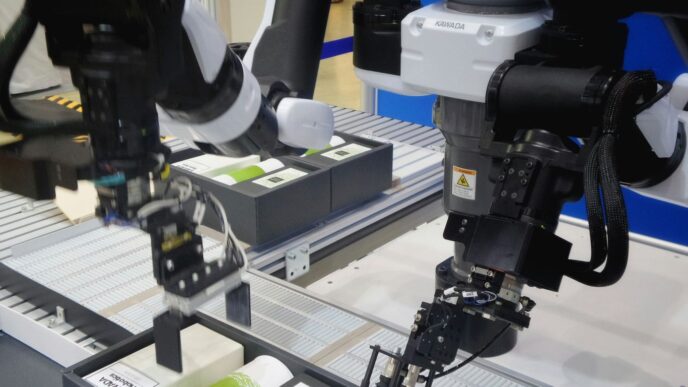
In factories, these advanced hands are taking over the really fiddly jobs. Think about assembling tiny electronic components or handling delicate materials that a standard gripper would just crush. They can work with incredible accuracy, reducing errors and speeding up production. Plus, they can handle tasks in environments that are too dangerous for people, like working with chemicals or in extreme temperatures. This means fewer accidents and more consistent output.
- Fine Assembly: Putting together small parts in electronics or medical devices.
- Quality Control: Inspecting products with a level of detail humans might miss.
- Hazardous Material Handling: Safely manipulating substances that pose risks to human workers.
Revolutionizing Healthcare and Prosthetics
This is where things get really personal. For people who have lost limbs, advanced robotic hands are offering a new level of independence. These aren’t the clunky prosthetics of the past. We’re talking about hands that can feel textures, adjust grip strength automatically, and respond to subtle user commands. It’s about restoring not just function, but a sense of natural interaction with the world. In surgery, robotic hands allow surgeons to perform incredibly delicate procedures with greater precision and less invasiveness, leading to faster patient recovery.
Enabling Consumer and Service Robotics
As robots move out of factories and into our homes and public spaces, dexterous hands become essential. Imagine a robot that can actually help you cook, fold laundry, or even just hand you a tool. These hands are what make robots more useful and interactive in everyday life. They’re key to developing service robots that can perform a wide range of tasks, from assisting the elderly to providing information in public venues. The goal is to make robots that can truly integrate into our daily routines and offer practical help.
Overcoming Dexterity Challenges
Building robots with hands that can do all the things ours can is tough. Seriously tough. Even with all the cool tech we’re seeing, there are some big roadblocks.
Addressing High Development and Production Costs
Let’s face it, making these super-dexterous robot hands isn’t cheap. You’ve got advanced materials, super-precise engineering, and all that smart AI software. It all adds up. This means that for a lot of businesses, especially those watching every penny, buying these hands just isn’t in the cards right now. It’s a big reason why we don’t see them everywhere yet.
Enhancing Durability and Reducing Maintenance
These hands have a lot of tiny moving parts, right? Think gears, joints, sensors. All that complexity means they can break down. When they do, fixing them can be a real headache and cost a lot of money. Plus, nobody wants a robot that’s always out of commission. We need hands that can take a beating and keep on working, or at least be easy and cheap to fix when they do need attention.
Simplifying Control Complexity for Real-World Use
Getting all those fingers, joints, and sensors to work together perfectly, in real-time, is a massive puzzle. While AI is helping a ton, making it simple enough for everyday use is still a work in progress. The goal is to make controlling these hands as intuitive as using your own. Right now, fine motor skills are still a big step behind what humans can do without even thinking about it. We need systems that are easier to manage and adapt quickly to new situations without needing a team of engineers.
The Role of AI in Robot Dexterity
Artificial intelligence is really the secret sauce that’s making robots more capable with their hands. It’s not just about programming a robot to do one thing perfectly; it’s about teaching them to learn and adapt, much like we do. Think about it, we don’t need a step-by-step manual for every single action we perform. AI is starting to give robots that same kind of flexibility.
Learning Complex Tasks from Demonstrations
One of the coolest ways AI is helping robots get better is by learning from watching us. Instead of writing thousands of lines of code for every possible scenario, researchers are developing systems where robots can learn by observing human actions. This is called imitation learning. For example, a robot might watch a person tie a shoelace or assemble a small part. The AI then figures out the sequence of movements and forces needed. This approach is a big step forward because it means robots can learn tasks that are really intricate and require a lot of fine motor control, things that are super hard to program directly. We’re seeing robots learn to do things like hang clothes or even fix other robots, all by watching demonstrations.
Bridging the Simulation-to-Real World Gap
Training robots in the real world can be slow and expensive. Imagine crashing a robot arm a hundred times while it’s learning to pick up an egg – that’s not ideal. So, a lot of training happens in computer simulations. The tricky part is that what works perfectly in a simulation doesn’t always translate well to the physical world. AI is helping to close this gap. New techniques allow robots to learn in simulation and then perform those tasks with high accuracy in reality. This involves things like making the simulation more realistic or using AI to adjust the learned actions based on real-world feedback. It’s like practicing a video game and then being able to play the actual sport almost as well.
Agentic AI for Autonomous Operation
Beyond just learning from demonstrations or simulations, AI is pushing robots towards more independent action. This means robots won’t just follow pre-programmed instructions; they’ll be able to make decisions on their own to achieve a goal. Think of a robot tasked with tidying a room. Instead of being told exactly where each item goes, an agentic AI could figure out the best way to pick up objects, navigate around obstacles, and place them in appropriate locations. This move towards more autonomous operation is what will truly make robots useful in unpredictable environments, like our homes or busy workshops. It’s about giving robots the intelligence to handle the unexpected and operate effectively without constant human supervision.
Market Dynamics and Future Outlook
Investment Trends in Dexterous Robotics
The money flowing into dexterous robotics is pretty interesting. While the overall market for industrial robots is hitting big numbers, like $16.7 billion in 2026, the specific market for dexterous hands is projected to reach over $3 billion by 2030. It’s not a small number, but it’s definitely smaller than the buzz you hear about early-stage investments. We’re seeing a lot of focus on AI and automation, which makes sense. Companies are pouring cash into making robots smarter and more capable of doing delicate tasks. Think about it, if a robot can handle intricate assembly or even help in surgery, that’s a huge deal. This investment is driven by the need to fill jobs that are hard to staff and to make manufacturing more efficient. Plus, there’s a growing interest in how these robots can help in everyday life, not just in factories.
Projected Market Growth and Drivers
So, where is this all heading? The market for robots that can do fine motor tasks is set to grow quite a bit. What’s pushing this? A few things, really. First off, there’s a big push for automation in industries that need precision, like making electronics or handling sensitive materials. Then you have healthcare – think advanced prosthetics that feel and move almost like real limbs, or robots assisting in surgeries. That’s a massive area for growth. Consumer robots, like the ones you might see in homes or for services, are also becoming more common, and they need good hands to interact with the world. The biggest driver, though, seems to be the ongoing shortage of skilled labor combined with the desire for more efficient and consistent production. Companies are looking for ways to keep up with demand without breaking the bank on human workers for every single task.
The Convergence of IT and OT in Robotics
This is a pretty big shift happening right now. You’ve got Information Technology (IT) – that’s the data, the software, the networks – and Operational Technology (OT) – that’s the actual physical stuff, the machines, the factory floor. They’re starting to merge. For dexterous robots, this means they can get real-time data about what they’re doing and use that information instantly to adjust their movements. It’s like the robot’s brain (IT) is directly connected to its hands (OT) and can make super-fast decisions. This integration is key for things like Industry 4.0, making factories smarter and more connected. It allows for better control, more advanced analysis of what the robot is doing, and ultimately, makes the robots much more versatile. Instead of just doing one programmed task, they can adapt and respond to changing conditions on the fly, which is exactly what you need for complex manipulation.
Humanoid Robots and Dexterous Manipulation
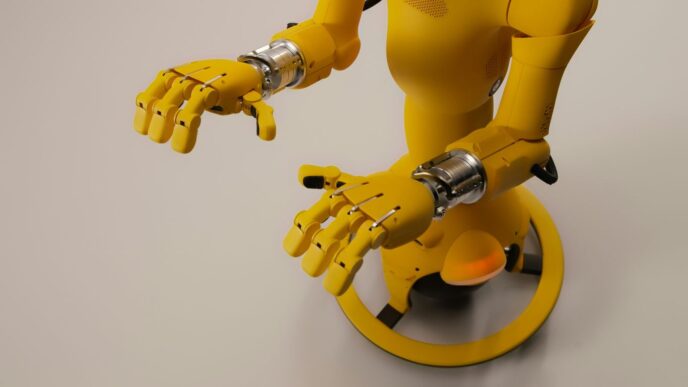
When we talk about the future of robots, it’s hard not to picture the humanoids – those robots built to look and act a bit like us. And at the heart of making them truly useful is their hands. Getting a robot hand to do what ours can, with all its fine motor skills and adaptability, is a massive engineering challenge. It’s why these dexterous hands are often the most expensive part of a humanoid robot, and why a lot of money is being poured into making them better.
The Pursuit of Human-Level Dexterity
We’re not just talking about picking up a box anymore. The goal is to get robots to do things like tie shoelaces, assemble tiny electronic components, or even perform delicate surgical tasks. This requires hands that can sense texture, adjust grip pressure on the fly, and move with incredible precision. Think about how many different ways you can hold a pen – a simple task for us, but a complex problem for a robot. Researchers are using AI, especially machine learning, to teach robots these skills. They learn from watching humans, or from simulations that mimic real-world physics. It’s a slow process, but the progress is noticeable.
Reliability and Efficiency in Industrial Humanoids
For robots to be practical in factories or warehouses, they need to be reliable and efficient. They have to keep up with production lines, not break down often, and use energy wisely. Companies are moving beyond just building prototypes; they’re deploying humanoids in real work environments. This means the robots need to meet tough industry standards for how long they last, how safe they are, and how consistently they perform. If a humanoid robot is going to replace or assist human workers, it needs to be just as productive, if not more so, and that all comes down to its ability to manipulate objects effectively.
Versatile Hands for Diverse Applications
What’s really exciting is how these advanced hands are opening up new possibilities. Beyond industry, imagine prosthetics that give amputees a much greater sense of touch and control, almost like a natural limb. Or service robots in homes and public spaces that can handle a wider range of tasks, from serving food to helping with household chores. The key is creating hands that aren’t just good at one thing, but can adapt to many different situations and objects. This versatility is what will make humanoid robots truly integrated into our daily lives.
Looking Ahead
So, we’ve seen how robot hands are getting way better, learning to do all sorts of tricky things that used to be just for people. It’s not just about making factories more efficient anymore; these advanced hands could really change how we help people with disabilities or even how we do chores around the house. Sure, there are still big challenges, like making them cheaper and more reliable, but the progress is undeniable. With AI getting smarter and new designs popping up, it feels like we’re on the edge of robots becoming much more useful and integrated into our daily lives. It’s an exciting time to watch this field grow.