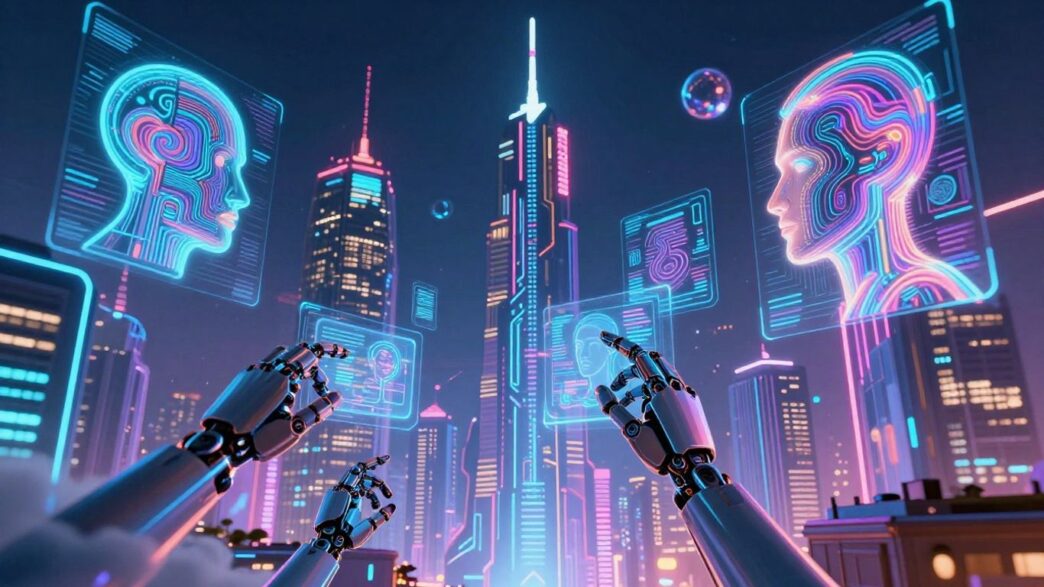
Right then, let’s have a look at what’s been going on in the world of artificial intelligence lately. It feels like every other day there’s some new development, doesn’t it? From making our phones smarter to helping doctors figure out what’s wrong, AI is really starting to pop up everywhere. It’s not just science fiction anymore; it’s actually changing how we do things. We’re going to break down some of the latest bits of ai news that are shaping things up.
Key Takeaways
- Big tech companies like Meta are creating their own AI chips to reduce reliance on others, showing a shift in hardware development.
- AI is being used to make commercial vehicle fleets more efficient, with systems analysing vast amounts of data to help businesses save money.
- In healthcare, AI is helping to spot hidden risks in heart scans and speed up patient discharges from hospitals, making things run smoother.
- Companies are using AI to improve how we interact with technology, like making smart glasses better for hearing or using AI assistants for writing help.
- There’s a growing focus on how we should use AI responsibly, looking at the ethics involved and how it might change jobs in the future.
The Evolving Landscape Of AI News
It feels like just yesterday that artificial intelligence was something we only saw in science fiction films. Now, it’s woven into the fabric of our everyday lives, and the news surrounding its advancements is coming thick and fast. We’ve moved beyond theoretical discussions to witness AI actively shaping industries and our personal experiences.
From Sci-Fi Dreams to Daily Realities
Remember those old movies where robots did all the chores? Well, we’re not quite there yet, but AI is certainly making big strides. Think about the apps on your phone that suggest what to watch next, or the smart assistants that can answer your questions. These aren’t futuristic fantasies anymore; they’re here, and they’re getting smarter all the time. The pace at which AI is becoming a normal part of our routines is quite something. It’s less about a distant future and more about what’s happening right now.
The Acceleration of AI Integration
What’s really striking is how quickly AI is being adopted across different sectors. It’s not just the big tech companies anymore. We’re seeing AI pop up in unexpected places, from helping doctors diagnose illnesses to optimising delivery routes for businesses. This rapid integration means that staying informed about AI news isn’t just for tech enthusiasts; it’s becoming important for everyone. The way businesses operate is changing, and understanding these shifts is key. For instance, many states are now looking at how to manage this rapid technological progress through practical governance, aiming to keep regulations aligned with advancements [3d09].
Key Innovations Driving the AI Revolution
Several key developments are really pushing the boundaries. We’re seeing new hardware designed specifically for AI tasks, making these systems more powerful and efficient. Software is also evolving at an incredible rate, with AI models becoming better at understanding and generating human-like text and images. This combination of better hardware and smarter software is what’s fuelling the current AI revolution. It’s a dynamic field, and keeping up with the latest breakthroughs is a full-time job for many.
- New AI Chips: Companies are developing specialised processors to handle complex AI calculations faster.
- Advanced Language Models: AI can now understand and generate text with remarkable nuance.
- Robotics and Automation: AI is making robots more capable and adaptable in various environments.
- AI in Creative Fields: Tools are emerging that assist in art, music, and writing.
The speed at which AI capabilities are developing means that what seems cutting-edge today might be commonplace tomorrow. This rapid evolution presents both opportunities and challenges for society as a whole.
Groundbreaking AI Innovations Unveiled
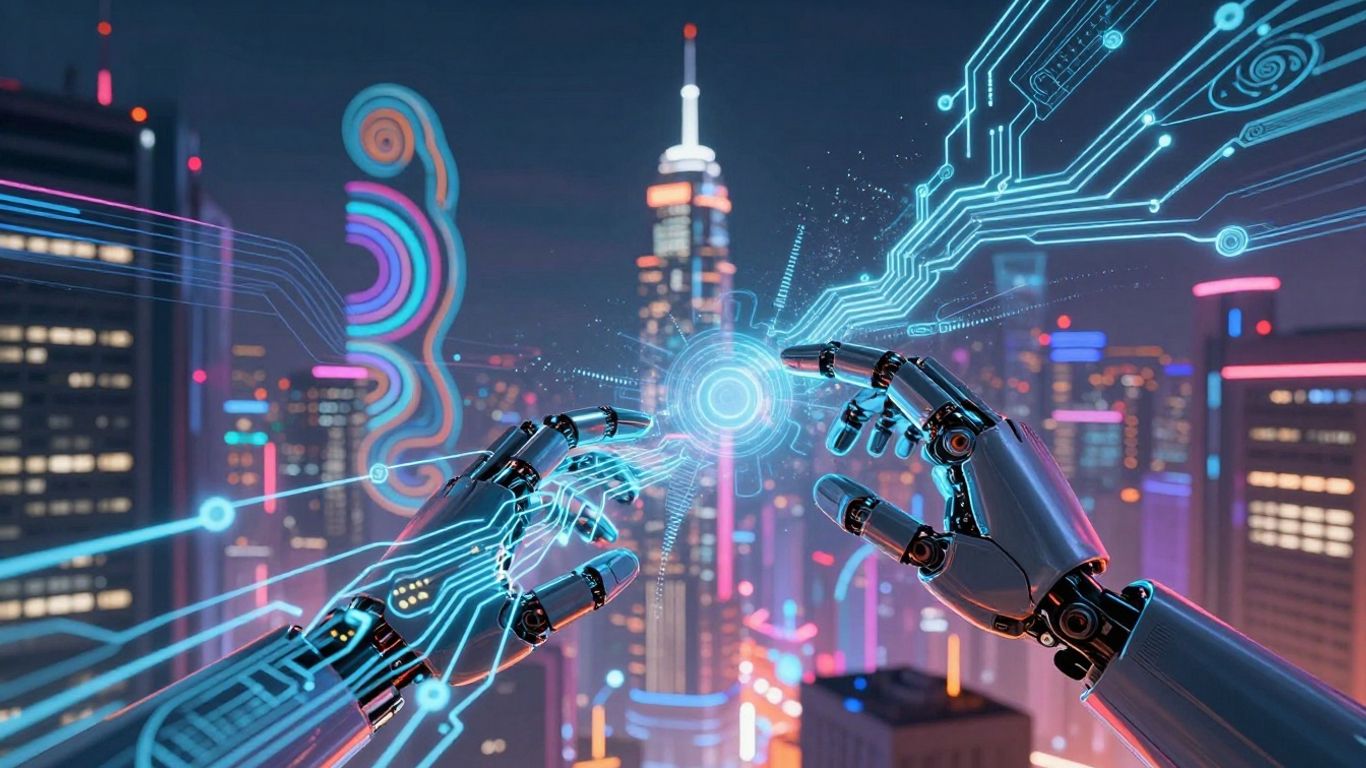
It feels like every week there’s some new AI development that makes you stop and think, ‘Wow, that’s a big deal.’ This past month has been no exception, with some seriously impressive tech hitting the scene. Companies are really pushing the boundaries, not just in software but in hardware too.
Meta’s Custom AI Chips Challenge Nvidia
Meta has been busy, and they’ve just announced a whole new family of in-house AI chips. We’re talking about the MTIA 300, 400, 450, and 500 series, all set to roll out across their data centres by the end of 2027. The big idea here is to cut down on their reliance on companies like Nvidia and, hopefully, save a bit of cash while they’re at it. These chips are designed for all sorts of tasks, from sorting through content to running those fancy generative AI models. The MTIA 400 is already being tested, and Meta reckons it can go toe-to-toe with the best chips out there. It’s a bold move, showing they’re serious about building their own AI infrastructure.
Ford Pro AI Optimises Commercial Fleets
For anyone running a business with a fleet of vehicles, this next bit is pretty interesting. Ford has launched something called ‘Ford Pro AI’. It’s basically an AI assistant built right into their commercial vehicles. Imagine having something that looks at over a billion data points every single day – things like how often seatbelts are used, how much fuel is being used, and the general health of the vehicle. This system takes all that complex information and turns it into useful advice. It can even help draft emails suggesting ways to cut costs. And the best part? It’s included at no extra charge for their existing Pro Telematics subscribers. It’s a smart way to get more out of your fleet.
Nvidia’s Robotics ‘Computer Brain’
Nvidia, a name you hear a lot in AI, has also been cooking up something new. They’ve shown off their latest robotics platform, which they’re calling a robot ‘brain’. It’s a mix of new hardware and generative AI that’s meant to give robots real-time intelligence. Think of it as giving robots the ability to make decisions and interact with the world much faster. This new offering combines Nvidia’s AI models with software for robotics, aiming to blend the physical and digital worlds for AI. It’s all part of their ‘Graphics 3.0’ vision, and it could really speed up how robots learn and operate in everyday situations. This kind of tech is what’s helping to create an AI ecosystem for life sciences.
The pace of innovation in AI hardware and its application in robotics and fleet management is truly remarkable. These aren’t just theoretical concepts anymore; they are practical tools being deployed to solve real-world problems, from reducing operational costs to making robots more capable.
It’s clear that AI is moving beyond just software and into the physical world in some pretty significant ways. We’re seeing custom chips being developed, smarter vehicles on the road, and robots that can think and act more independently. It’s an exciting time to see how these advancements will shape industries and our daily lives.
AI’s Impact On Healthcare And Diagnostics
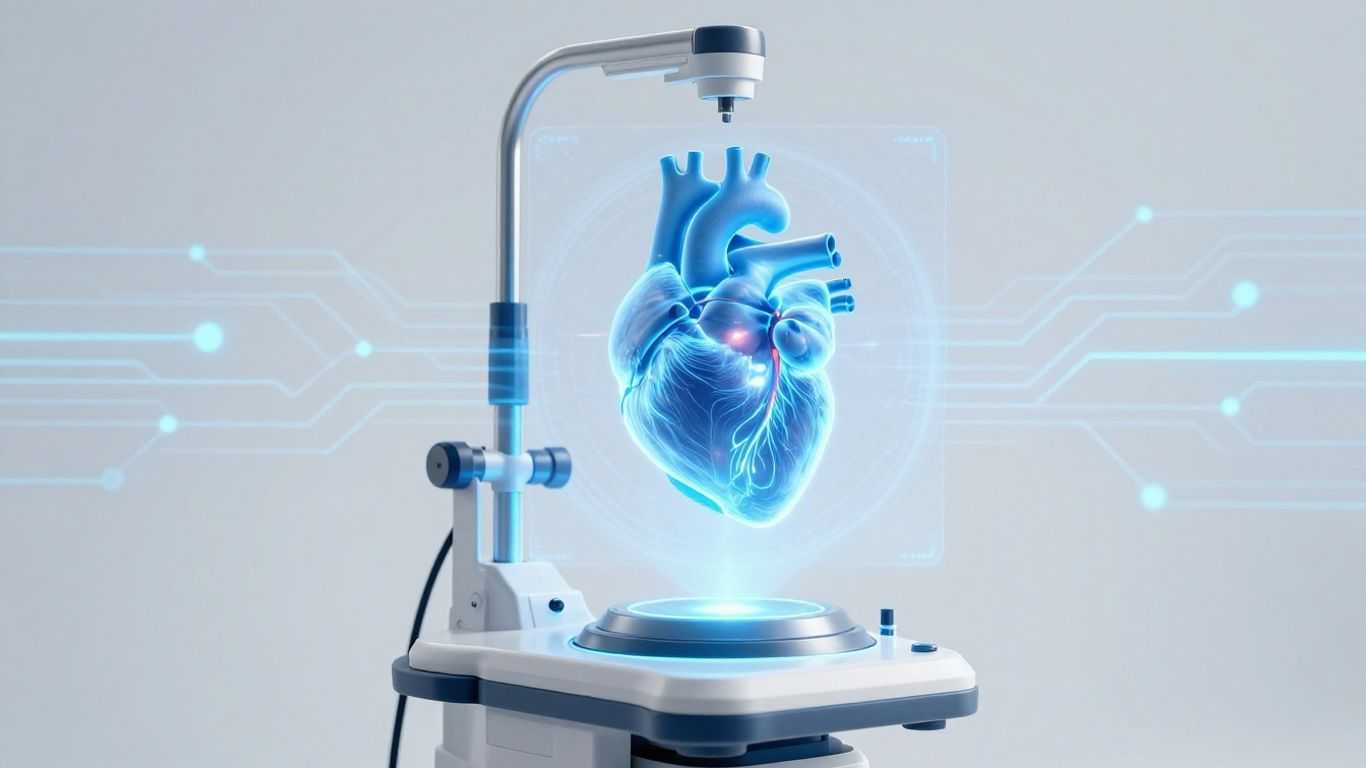
It feels like every week there’s some new AI development, and the medical world is no exception. We’re seeing some pretty significant shifts happening right now, moving beyond just theoretical possibilities into actual patient care. It’s quite something to think about how quickly things are changing.
AI-Powered Cardiac Imaging Reveals Risks
One area where AI is making a real difference is in looking at heart scans. New imaging techniques, combined with smart algorithms, can spot problems that might otherwise be missed. These systems can analyse coronary arteries in incredible detail, identifying blockages and plaque build-up that standard methods might overlook. This means doctors can get a much clearer picture of a patient’s cardiovascular health, potentially preventing serious events like heart attacks before they happen. It’s a bit like having a super-powered magnifying glass for your heart.
London Hospital Pilots AI for Patient Discharges
Over in London, a hospital is trialling an AI system to help speed up patient discharges. The idea is to use AI to sort through patient data and figure out the best and quickest way to get people home safely. This could really help ease the pressure on hospital beds and make sure patients aren’t staying in longer than they need to. It’s all about making the whole process smoother and more efficient, which is something we could all do with more of in healthcare.
AI-Designed Drugs Enter Clinical Trials
Developing new medicines has always been a long and expensive game. But AI is starting to change that. We’re now seeing drugs that have been designed with the help of AI actually entering human trials. These AI models can simulate how different compounds might interact and predict their effectiveness, cutting down the time it takes to find promising new treatments. This could be a game-changer for conditions that have been difficult to treat, offering new hope to patients. It’s amazing to think that AI is now helping to create the very medicines that could save lives. Artificial Intelligence (AI) is transforming healthcare by tackling issues like inadequate infrastructure, a shortage of doctors, and limited accessibility. AI is transforming healthcare.
The pace of innovation in AI for healthcare is really picking up. From spotting heart disease risks to streamlining hospital operations and even designing new drugs, the applications are becoming more sophisticated and integrated into daily medical practice. It’s a complex field, but the potential benefits for patient outcomes and healthcare efficiency are considerable.
Transforming Industries With AI
It’s pretty wild how AI is changing the way businesses operate, isn’t it? We’re not just talking about big tech companies anymore; AI is filtering down into all sorts of sectors, making things run smoother and, frankly, a bit smarter. It feels like just yesterday we were reading about AI in science fiction, and now it’s helping deliver our groceries or manage traffic.
Atlassian Pivots to AI Development
Software company Atlassian, known for its work tools like Jira and Confluence, has made a significant shift. They’re now putting AI front and centre in their product development. The idea is to make teamwork and project management even more intuitive. Imagine your software suggesting the best way to tackle a task or automatically summarising long project discussions. That’s the kind of thing they’re aiming for. It’s about making the tools we use every day more helpful without us even having to ask.
Deutsche Telekom Leverages AI for 5G
Telecommunications giant Deutsche Telekom is using AI to get the most out of its 5G network. Think about how complex mobile networks are. AI can help manage all those moving parts, predicting where demand will be highest and optimising signal strength. This means fewer dropped calls and faster internet speeds for all of us. It’s a behind-the-scenes kind of innovation, but it makes a big difference to our daily digital lives.
Debenhams Launches AI Skills Academy
Retailer Debenhams has taken a different approach, focusing on its people. They’ve set up an AI Skills Academy, investing in training their staff. The goal is to get over a thousand employees up to speed on things like AI literacy and how to work with AI tools. It’s a smart move, preparing their workforce for a future where AI will be a standard part of many jobs. They see it as key to staying competitive and driving their own digital transformation.
The integration of AI across various industries isn’t just about new gadgets or faster processes. It’s fundamentally changing how businesses function, how employees work, and how we interact with technology on a daily basis. This shift requires adaptation, from companies investing in new tech to individuals learning new skills.
It’s clear that AI is no longer a niche technology. It’s becoming a core component in how businesses across the board are innovating and preparing for the future. Whether it’s improving internal operations or creating new customer experiences, the impact is widespread.
Advancements In Human-AI Interaction
It feels like just yesterday we were talking about AI as something from science fiction, and now it’s popping up everywhere, even in how we chat and get things done. The way we interact with machines is changing, and it’s happening fast.
Think about your phone’s voice assistant, or how your email suggests the next word. These are simple examples, but they show how AI is becoming a part of our daily conversations. Now, things are getting even more interesting. We’re seeing AI move beyond just responding to commands and starting to act more like partners.
Grammarly’s AI Agents Aid Students
Students are finding new ways to get help with their writing thanks to AI. Tools like Grammarly are rolling out AI agents that can do more than just check for typos. These agents can help brainstorm ideas, structure essays, and even offer feedback on clarity and tone. It’s like having a writing tutor available 24/7. This could really change how students learn to write, making the process less of a solo struggle and more of a collaborative effort with a smart assistant. The goal is to help students improve their skills, not just to do the work for them.
Meta’s Smart Glasses Enhance Hearing
Meta’s latest smart glasses are stepping into a new area: hearing assistance. These aren’t just for taking photos or getting directions anymore. They’re being developed with features that can help people with mild hearing loss. By using AI to process sounds around the wearer, the glasses can selectively amplify speech and reduce background noise. This could be a game-changer for people who find noisy environments difficult. It’s a subtle way AI is being integrated to improve everyday experiences, making the world a bit easier to hear.
IBM Pilots AI Commentary for Tennis
Imagine watching a tennis match with commentary that’s generated on the fly by AI. IBM is testing this out, and it’s pretty wild. The AI listens to the game, understands the action, and then creates spoken commentary. This isn’t about replacing human commentators entirely, but it shows how AI can add new dimensions to how we consume sports. It could provide real-time insights or even commentary in multiple languages instantly. While some, like Joe Rogan, worry about AI taking over jobs, this kind of application seems more about augmenting the experience. The future of human-AI interaction is about finding ways for us to work together, not just be replaced.
The line between human and machine interaction is blurring. AI is moving from simple tools to more active participants in our lives, from helping us write and hear better to even commenting on our favourite sports. This evolution brings both exciting possibilities and important questions about how we want these relationships to develop.
Here’s a look at how these interactions are shaping up:
- Personalised Assistance: AI agents are becoming more capable of understanding individual needs and preferences, offering tailored support.
- Augmented Senses: Technologies are emerging that use AI to improve or supplement human senses, like advanced hearing aids.
- Creative Collaboration: AI is starting to assist in creative processes, from writing to generating commentary, acting as a co-creator.
- Ethical Considerations: As AI becomes more integrated, discussions around privacy, control, and the authenticity of AI-generated content are becoming more important. This is a key area for future AI development.
It’s a fascinating time to see how these technologies are not just tools, but becoming more like partners in our daily lives.
The Future Of AI And Its Societal Implications
Right then, where are we heading with all this AI business? It’s not just about smarter gadgets or faster computers anymore, is it? We’re talking about some pretty big shifts in how we live, work, and even how we get along with each other. It’s a future that’s arriving faster than many of us expected.
Ethical Considerations in AI Deployment
This is a big one. As AI gets more involved in our lives, we’ve got to think hard about what’s fair and what’s not. For instance, when AI is used for things like hiring or loan applications, we need to be absolutely sure it’s not unfairly biased against certain groups of people. It’s like trying to bake a cake – if your ingredients are off from the start, the whole thing’s going to taste wrong.
- Bias in Algorithms: AI learns from the data we give it. If that data reflects existing societal prejudices, the AI will just repeat them, sometimes even making them worse.
- Privacy Concerns: With AI systems collecting and analysing vast amounts of personal information, keeping that data safe and using it responsibly is a massive challenge.
- Accountability: When an AI makes a mistake, who’s to blame? The programmer? The company that deployed it? The AI itself? Figuring this out is tricky.
We’re building tools that can make decisions, and we need to make sure those decisions are just and transparent. It’s a bit like giving a child a powerful new toy; you need to teach them how to use it safely and wisely.
Workforce Redistribution Challenges
Let’s be honest, jobs are going to change. Some tasks that people do now might be taken over by AI and robots. This isn’t necessarily a bad thing in the long run – it could mean fewer dull, repetitive jobs and more focus on creative and strategic work. But in the short to medium term, it means we’ll have to help people adapt.
- Skills Gap: Many existing jobs will require new skills, and we’ll need training programmes to help people learn them.
- New Job Creation: While some jobs disappear, AI will also create entirely new roles that we can’t even imagine yet.
- Economic Inequality: If the benefits of AI aren’t shared widely, it could lead to a bigger gap between the rich and the poor.
Embracing AI Responsibly for a Better Future
So, what’s the takeaway? AI isn’t going away, and frankly, it has the potential to do a lot of good. Think about breakthroughs in medicine, solutions for climate change, or just making our daily lives a bit easier. The key is how we approach it. We need to be curious, open to learning, but also cautious and thoughtful.
It’s about finding that sweet spot where we can use AI to solve big problems and improve lives without creating new ones. This means open conversations, smart regulations, and a commitment to making sure AI benefits everyone, not just a select few. It’s a journey, and we’re all part of it.
The Road Ahead
So, there you have it. AI isn’t just some far-off idea anymore; it’s really here, changing how we do things every single day. From helping doctors spot problems earlier to making our online shopping feel a bit more personal, it’s quietly getting woven into the fabric of our lives. Of course, it’s not all smooth sailing. We’ve got to think about the tricky bits, like making sure it’s used fairly and keeping our private information safe. But the potential for good – making things more efficient, helping us be more creative, and even looking after our planet – is pretty massive. Staying curious and open to how this tech develops seems like the best way forward as we step into this new, smarter world.
Frequently Asked Questions
What exactly is Artificial Intelligence (AI)?
Think of AI as making computers smart enough to do things that usually need human brains, like learning, solving problems, and understanding what we say. It’s not just about robots; it’s in your phone’s assistant, the recommendations you get online, and even helps doctors spot problems in scans.
How is AI changing things right now?
AI is popping up everywhere! Companies are using it to make their businesses run smoother, like Ford using it to manage delivery trucks or Deutsche Telekom using it to make their mobile networks better. Even shops like Debenhams are teaching their staff about AI to get ready for the future.
Are there new AI tools that help people directly?
Yes, definitely! Grammarly now has AI helpers that can assist students with writing and checking their work. Meta’s smart glasses can now help people hear better in noisy places by focusing on the person they’re looking at. It’s all about making technology more helpful in our daily lives.
How is AI being used in hospitals and for health?
AI is making a big difference in healthcare. Special AI tools can look at heart scans to find hidden risks that doctors might miss. Hospitals are also trying out AI to help get patients ready to leave faster, cutting down on waiting times. Plus, AI is helping design new medicines that are now being tested on people.
Are there any new computer chips just for AI?
Big tech companies are working on their own special computer chips for AI. Meta, for example, has made its own chips to do AI tasks faster and cheaper, so they don’t have to rely so much on other companies like Nvidia. Nvidia is also creating powerful ‘brains’ for robots.
What are the main worries about AI?
As AI gets more powerful, people are thinking about making sure it’s used fairly and safely. We also need to consider how jobs might change as AI takes over some tasks. The goal is to use AI in ways that help everyone and make the world a better place, but we have to be careful and thoughtful about it.