
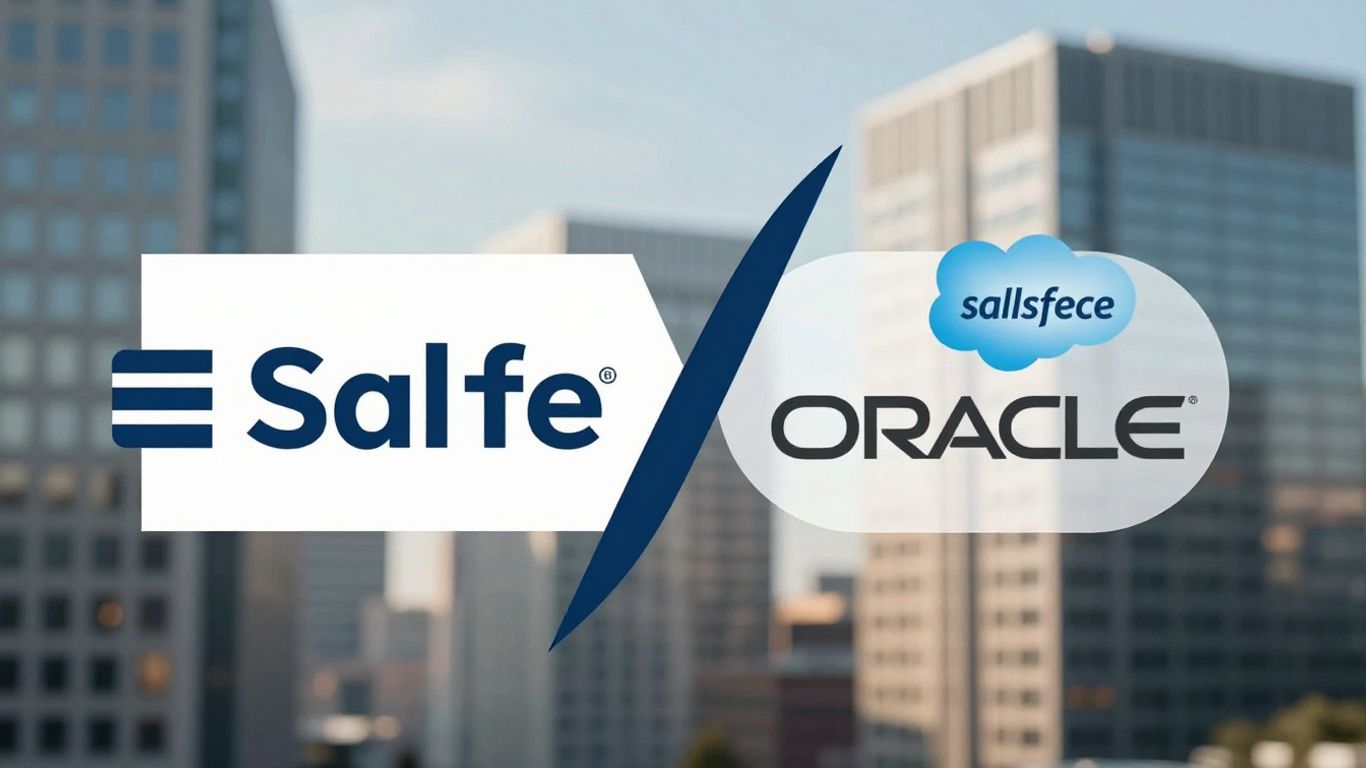
There’s been a lot of chatter lately about Salesforce potentially buying Oracle. It sounds like a huge deal, and honestly, who knows if it’ll actually happen? But it’s interesting to think about what it could mean for the tech world. Both companies are big players, and their services do overlap in some areas. Let’s break down what all the fuss might be about, and what it could mean for businesses down the line. The idea of a salesforce oracle acquisition is definitely something to keep an eye on.
Key Takeaways
- The potential salesforce oracle acquisition could bring together two major cloud and data players, but the actual benefits and synergies are still unclear.
- Businesses are investing heavily in AI, but the real returns are still hard to pin down, leading to more cautious tech spending.
- Oracle’s push to bring cloud services on-premises with Cloud@Customer is a significant move for companies that want cloud benefits without leaving their own data centres.
- Recent tech acquisitions show that these big deals can shake things up for customers, who need to adapt their own strategies.
- The whole enterprise software landscape is changing, with a move towards ‘service as software’ and AI agents playing a bigger role in how businesses operate.
The Salesforce Oracle Acquisition: A Strategic Imperative?
Examining the Rationale Behind a Potential Salesforce Oracle Acquisition
Whispers of a potential acquisition of Oracle by Salesforce have been circulating, and it’s worth digging into why such a move might make sense for both tech giants. For Salesforce, a company that has built its empire on customer relationship management and cloud-based services, acquiring Oracle could mean a massive expansion of its enterprise software portfolio. Think about it: Oracle has a huge presence in database technology, enterprise resource planning (ERP), and cloud infrastructure. This would give Salesforce a much broader footprint across the entire enterprise stack, moving beyond just customer-facing applications. It’s a bit like trying to build a complete house – Salesforce has the living room and kitchen sorted, but Oracle brings the foundations, plumbing, and electricity.
The sheer scale of such a deal would reshape the enterprise software landscape, creating a formidable competitor to established players like Microsoft and SAP. It’s not just about adding more services; it’s about creating a more integrated ecosystem for businesses.
Synergies and Overlaps in Cloud and Data Offerings
When you look at what Salesforce and Oracle actually do, there are some interesting overlaps and, more importantly, potential synergies. Salesforce is all about the customer journey, using its CRM, marketing, and service clouds to manage interactions. Oracle, on the other hand, has deep roots in managing business operations and data. Imagine combining Salesforce’s customer insights with Oracle’s robust data management capabilities. This could lead to some seriously powerful analytics and business intelligence tools. Of course, there are also areas where they compete, particularly in the cloud infrastructure space, but the idea here is to combine strengths rather than just eliminate competition.
Here’s a quick look at where their services align:
- Customer Relationship Management (CRM): Salesforce’s core strength, with Oracle also having offerings in this area.
- Cloud Infrastructure: Oracle’s Cloud Infrastructure (OCI) and Salesforce’s own cloud services.
- Data Management: Oracle’s database and data warehousing solutions versus Salesforce’s Data Cloud.
- Enterprise Applications: Oracle’s ERP and HCM suites alongside Salesforce’s business applications.
Market Reactions to the Salesforce Oracle Acquisition Rumours
Naturally, when rumours like this start flying around, the market tends to react. Investors and analysts are always trying to figure out the ‘what ifs’. Would this be a smart move? What would it cost? How would it affect the stock prices of both companies, and indeed, the wider tech sector? Early reactions often involve a lot of speculation about the financial implications and the strategic fit. Some might see it as a bold, game-changing move, while others might worry about the complexity and the potential for integration issues. It’s a big gamble, and the financial world is watching closely to see if these rumours amount to anything concrete. For those interested in the financial side of things, looking at how analysts view Salesforce and Oracle as investment opportunities can offer some perspective on their individual strengths and market positions.
Navigating the Generative AI Landscape
Enterprise AI Adoption: Returns and Expectations
It feels like just yesterday that generative AI burst onto the scene, and suddenly everyone was talking about chatbots and AI art. That initial wave of excitement, while understandable, is starting to give way to a more grounded view of what AI can actually do for businesses. We’re moving past the ‘wow’ factor and into the ‘how do we make this work?’ phase. Companies are looking for real returns, not just cool demos. The big question now is how to integrate these powerful tools into everyday operations to see actual improvements in productivity and efficiency. It’s not just about having AI; it’s about making AI pay for itself.
Here’s a look at what businesses are expecting:
- Increased Efficiency: Automating repetitive tasks and speeding up workflows.
- Better Decision Making: Using AI to analyse data and provide insights.
- New Product/Service Development: Exploring AI’s potential for innovation.
- Improved Customer Experience: Personalising interactions and support.
Salesforce’s Vision for the Agentic Enterprise
Salesforce is really pushing the idea of an ‘agentic enterprise’. Think of it as an organisation where AI agents can handle complex tasks on their own, coordinating across different systems and data sources. It’s a big leap from just asking a chatbot a question. They’re talking about AI that can proactively manage customer relationships, streamline sales processes, and even predict potential issues before they happen. This vision hinges on AI having access to and understanding vast amounts of business data. It’s about making software work smarter, not just faster. The goal is to have AI agents that can act with a degree of autonomy, freeing up human workers for more strategic tasks.
Oracle’s AI Strategy and Data Cloud Integration
Oracle, meanwhile, is focusing heavily on integrating AI directly into its existing cloud infrastructure and data platforms. Their approach seems to be about making AI accessible where the data already lives. This means embedding AI capabilities into their database services, their Fusion applications, and their industry-specific cloud solutions. The idea is that by keeping data and AI together, businesses can get more accurate and relevant insights without the hassle of moving data around. They’re also big on the ‘Data Cloud’ concept, aiming to create a unified view of customer data that AI can then operate on. It’s a practical approach, aiming to build on their strong enterprise customer base.
The journey towards truly intelligent, autonomous systems within businesses is complex. It requires not just advanced AI models, but also a significant overhaul of how data is managed, secured, and governed. Enterprises need to prepare their infrastructure and their people for this shift, which will likely take years to fully mature.
Cloud Infrastructure and Data Platforms in Flux
The world of cloud infrastructure and data platforms is certainly not standing still, is it? It feels like every week there’s some new development or a shift in how businesses are thinking about their digital foundations. The global cloud infrastructure market is expected to grow significantly, showing just how important this area is becoming. We’re talking about a massive expansion over the next decade, moving from hundreds of billions to potentially over a trillion dollars.
Oracle’s Cloud@Customer On-Premises Strategy
Oracle’s approach with Cloud@Customer is an interesting one. They’re essentially bringing their cloud services into a company’s own data centre. This is a big deal for organisations that have strict data residency rules or just prefer to keep their hardware in-house but still want access to modern cloud tech. It’s a way to get the best of both worlds, really. They’re trying to bridge that gap between public cloud flexibility and the control that comes with on-premises setups. This strategy aims to simplify things for businesses that might be hesitant about moving everything to a public cloud.
The Evolving Role of Data Platforms like Snowflake
When you think about data, Snowflake often comes up. It’s a platform designed to make using data simpler for organisations. While it’s faced some market ups and downs, its core mission remains. The idea is to provide a way to manage and analyse vast amounts of data without all the usual headaches. It’s part of a broader trend where specialised platforms are emerging to handle the sheer volume and complexity of modern data. These platforms are trying to break free from older, more rigid database structures, offering more agility.
Competitive Dynamics in the Cloud Market
The cloud market itself is a real battleground. We’ve seen hyperscalers like AWS, Azure, and Google Cloud continue to grow, even with economic headwinds. They’re constantly innovating, with companies like AWS, for example, pushing new architectural ideas. It’s not just about raw computing power anymore; it’s about specialised designs and making things more efficient. There’s also a lot happening at the network edge, with companies like Cloudflare building out global networks that could rival the big cloud providers. It’s a dynamic space, and the competition is fierce, driving a lot of the innovation we’re seeing.
The convenience of online access to bank accounts, payment apps, crypto exchanges and other transaction systems has created enormous risks, which the vast majority of individuals either choose to ignore or simply don’t understand. The Internet has become the new private network and unfortunately, it’s not so private. Open APIs, scripts, spoofing, insider crime, sloppy security hygiene by users and
It’s clear that the way we store, process, and access data is changing rapidly. Whether it’s through hybrid cloud models, specialised data platforms, or the ongoing competition among major cloud providers, businesses need to keep a close eye on these shifts. The underlying infrastructure is in constant flux, and understanding these changes is key to staying competitive.
Mergers and Acquisitions in the Enterprise Software Arena
Lessons from Recent Tech Acquisitions
The world of enterprise software is always on the move, and a big part of that movement is companies buying other companies. It’s not just about getting bigger; it’s often about grabbing new technology or a bigger slice of the market. We’ve seen some pretty significant deals shake things up recently. Take Broadcom’s move on VMware, for instance. It’s a classic example of a larger player absorbing a key technology provider. Customers often have to adapt quickly, figuring out new pricing and support structures. It shows that even established software giants aren’t immune to major shifts.
Then there are deals driven by specific needs, like Arm buying Treasure Data. This was about Arm getting a handle on big data management, which is pretty vital these days, especially with the rise of AI. It wasn’t a huge, headline-grabbing deal like some others, but it made strategic sense for Arm’s future plans.
Here’s a quick look at how some recent acquisitions have played out:
- Broadcom acquires VMware: Focus shifted to cost discipline and integration. Customers are evaluating their options, with critical workloads often staying put while less vital ones are moved.
- Insight Partners acquires Veeam: A significant private equity play in the data protection space, signalling confidence in that market segment.
- Arm acquires Treasure Data: A move to bolster capabilities in big data management, crucial for IoT and AI initiatives.
The sheer pace of technological change means companies can’t afford to stand still. Acquisitions are a way to quickly gain new capabilities, enter new markets, or consolidate existing ones. It’s a high-stakes game where success depends on smart integration and understanding customer needs.
The Impact of Acquisitions on Customer Strategies
When a big software company buys another, it’s rarely a simple ‘business as usual’ for the customers. Suddenly, you might be looking at different support teams, new licensing models, or even a change in the product’s direction. For example, after Broadcom took over VMware, many customers found themselves needing to re-evaluate their contracts and understand the new terms. It can mean a lot of extra work, trying to figure out what’s best for your own business continuity.
Sometimes, an acquisition can actually be a good thing. If a smaller, innovative company gets bought by a larger one, its technology might get more resources and reach a wider audience. But there’s always that worry about whether the new parent company will keep the product focused on what customers actually need, or if it will be changed to fit a broader, less specific strategy. It’s a balancing act for the acquiring company, and a constant point of attention for the customers.
Assessing the Regulatory Landscape for Tech Deals
It’s not just about the companies involved; governments and regulators are paying much closer attention to big tech mergers these days. They’re worried about too much power ending up in the hands of just a few companies, which could stifle competition and innovation. We’re seeing more scrutiny from bodies like the Department of Justice and the Federal Trade Commission, especially for deals involving AI or cloud infrastructure. They want to make sure these mergers don’t end up hurting consumers or other businesses in the long run. This means that potential buyers have to think not just about the business case, but also about whether the deal will even get approved. It adds another layer of complexity to an already complicated process.
The Future of Enterprise Applications
It feels like enterprise software is on the cusp of a pretty big shift, doesn’t it? We’re not just talking about incremental updates anymore. The way businesses operate, the tools they use, and even how they think about their IT infrastructure is changing, and fast. It’s a bit like when the internet first became a thing, or when everyone suddenly needed a smartphone – a real game-changer.
The Shift Towards ‘Service as Software’
Marc Benioff, one of the big brains behind Salesforce, has been talking a lot about this. He reckons we’re moving beyond just ‘Software as a Service’ (SaaS) to something he calls ‘Service as Software’. The idea is that AI agents will become so good they can actually perform tasks and augment business processes, rather than just being tools we use. Imagine AI assistants working alongside your teams, handling routine jobs and freeing people up for more complex stuff. This could fundamentally redefine how applications function in the workplace. It’s a bold vision, and it suggests that the companies that dominate the enterprise platform layer, like Salesforce and Oracle, are well-placed to shape this future [7013].
Agentic Systems and Their Transformative Potential
These ‘agentic systems’ are the real stars of the show here. They’re not just chatbots; they’re designed to act autonomously to achieve specific goals. Think of them as digital workers that can interact with various systems, process data, and make decisions. This could lead to entirely new types of applications that we haven’t even thought of yet. It’s a bit like looking at the early days of the web and not quite grasping how much it would change everything.
Here’s a quick look at what these agentic systems might bring:
- Automation of Complex Workflows: Handling multi-step processes that currently require human intervention.
- Personalised User Experiences: Tailoring interactions and services to individual user needs in real-time.
- Proactive Problem Solving: Identifying and addressing potential issues before they impact operations.
- Enhanced Data Analysis: Extracting deeper insights from vast datasets with less human effort.
Data Resilience as a Core Service Layer
As all this gets more complex, with AI agents and new application types, keeping data safe and accessible becomes even more important. It’s not just about backups anymore; it’s about making sure data is resilient, reliable, and available when and where it’s needed. This resilience is becoming a foundational part of the tech stack, almost like a utility service. Without it, all the fancy new applications and AI agents wouldn’t have a solid base to work from.
The move towards agentic systems and ‘Service as Software’ isn’t just a tech trend; it’s a fundamental rethinking of how businesses will operate. It means that the underlying platforms and data infrastructure need to be robust, adaptable, and intelligent enough to support these new capabilities. The companies that can successfully integrate these elements will likely lead the next wave of enterprise innovation.
It’s going to be interesting to see how this all plays out, especially with big players like Salesforce and Oracle potentially making moves. The landscape is definitely changing, and keeping up is half the battle. We’re seeing predictions about enterprise tech that are hard to measure, but the direction seems clear: more automation, more intelligence, and a greater reliance on resilient data foundations. It’s a lot to take in, but it’s also pretty exciting.
So, What’s the Takeaway?
Right then, it’s been a bit of a whirlwind thinking about Salesforce and Oracle potentially joining forces. On one hand, you’ve got Oracle’s solid enterprise roots, especially with their cloud-on-premises stuff, and on the other, Salesforce pushing hard with their AI agent ideas. It’s not a done deal, of course, and there are always a million things that could happen between now and then. But if it did go through, it would certainly shake things up in the tech world. We’ll just have to wait and see how it all plays out, won’t we?
Frequently Asked Questions
What’s all the fuss about Salesforce possibly buying Oracle?
There’s a lot of talk that Salesforce might buy Oracle. This would be a massive deal in the tech world. People are wondering if it makes sense for both companies and what it would mean for their customers and the market.
Why would Salesforce want to buy Oracle?
Salesforce is known for its customer relationship management (CRM) software. Oracle is famous for its database technology and enterprise software. Combining them could mean they offer a wider range of services, especially in cloud computing and handling lots of data. It’s about bringing their strengths together.
What is ‘Generative AI’ and how does it fit in?
Generative AI is a type of artificial intelligence that can create new things, like text or images. Both Salesforce and Oracle are looking at how to use this powerful technology. If they join forces, they could build even smarter tools for businesses.
How might this affect cloud services and data handling?
Oracle has a special way of offering its cloud services for companies that want to keep some data on their own servers. Salesforce also has its own cloud offerings. A merger could change how these services work together and how companies manage their important information.
What are people saying about this potential deal?
The tech world is buzzing with speculation. Some think it’s a brilliant move that could shake up the industry, while others are more cautious. It’s important to watch how the market reacts and what experts think about the potential benefits and challenges.
Are big tech company buyouts common?
Yes, big companies buying other big companies happens quite a bit in the tech industry. It’s often about companies wanting to grow faster, get new technology, or reach more customers. But these deals also face strict rules and checks from governments.