

If you’ve been following smart homes news lately, you know things are changing fast. A few years ago, having a voice-controlled light was a big deal. Now, homes can learn your routine, help keep your family safe, and even save you money on energy bills. Every room in the house seems to have a smart upgrade, and manufacturers are hustling to keep up. Whether you’re just curious or thinking about building your own smart home setup, there’s a lot to keep track of. Here’s what’s happening in the world of smart homes right now.
Key Takeaways
- Smart homes are moving from simple, command-based gadgets to systems that can learn and adapt to your habits.
- Interoperability is now expected—devices from different brands need to work together easily, thanks to standards like Matter.
- AI is making home security smarter, but it also means manufacturers need to pay more attention to privacy and data protection.
- Faster internet and better connectivity are making smart home devices more reliable and user-friendly than ever before.
- Sustainability is a growing focus, with more devices designed to help save energy and support eco-friendly living.
The Evolving Landscape Of Smart Homes News

It feels like just yesterday we were talking about smart speakers that could play music on command. Now, things have really shifted. We’ve moved past simple voice commands to homes that actually seem to understand what we need before we even ask. This isn’t science fiction anymore; it’s the reality of today’s smart homes.
From Command-Based Devices to Adaptive Smart Homes
Remember when your smart lights only turned on when you said "lights on"? That was the early days. Now, devices are getting smarter, learning our habits and adjusting automatically. Think about your thermostat knowing when you usually leave for work and adjusting the temperature to save energy, or your lights dimming on their own as evening approaches. This shift from just reacting to commands to anticipating needs is a huge leap forward. It’s all thanks to advances in AI and how devices can now process information about our routines.
Interoperability: The New Standard for Smart Homes
One of the biggest headaches in the past was getting devices from different companies to talk to each other. You’d buy a smart plug from one brand and a smart bulb from another, only to find they wouldn’t play nice. That’s changing, thankfully. Standards like Matter are making it much easier for devices to connect and work together, no matter who made them. This means you can finally build a smart home without worrying about a bunch of incompatible gadgets. It’s about creating a connected home that just works, simplifying setup and reducing frustration. You can find a wide range of smart home products that have been tested for compatibility across many categories.
AI-Driven Security Enhancements in Smart Homes
Security is always a big concern, and smart homes are no exception. AI is stepping up here in a big way. Cameras can now do more than just record; they can identify people, pets, or even packages, sending more useful alerts to your phone. Biometric locks are becoming more common, adding a layer of security that’s hard to beat. But with all this intelligence comes responsibility. Manufacturers are focusing more on protecting your data, using strong encryption, and making sure the software on these devices is secure and updated regularly. It’s a constant effort to keep our connected homes safe.
Key Innovations Driving Smart Home Advancements
It feels like just yesterday we were telling our lights to turn on and off. Now, things are getting way more interesting. Smart home tech isn’t just about following commands anymore; it’s starting to think for itself, in a good way.
Faster Connectivity and Its Impact on User Experience
Remember when your smart speaker took a solid minute to even register what you said? Yeah, me neither, but it wasn’t that long ago. The big jump in how fast our devices can talk to each other and the internet is a game-changer. This means less waiting around for your thermostat to adjust or your music to start playing. It makes the whole experience feel smoother, almost like the house knows what you want before you even ask. Think about it: you walk in the door, and the lights are already on, the temperature is just right, and your favorite playlist is softly playing. That’s the power of better connectivity.
Sustainability as a Core Design Requirement
We’re all trying to be a bit more eco-friendly these days, and thankfully, our homes are starting to catch up. Manufacturers are realizing that making smart devices that also help save energy isn’t just a nice bonus; it’s becoming a must-have. This means smart thermostats that learn your schedule to avoid heating an empty house, or lighting systems that dim automatically when no one’s in the room. It’s about making technology work for us and the planet.
Here are a few ways sustainability is showing up:
- Energy Monitoring: Devices that track your power usage, helping you spot where you can cut back.
- Smart Grids: Homes that can communicate with the power company to use energy when it’s cheapest and greenest.
- Efficient Appliances: Refrigerators and washing machines that use less water and electricity without sacrificing performance.
The Rise of Smart Kitchens and Wellness Integration
Your kitchen is becoming the new command center, and not just for cooking. We’re seeing more appliances that can talk to each other. Imagine your oven preheating itself because your smart fridge knows you’re planning to bake. Beyond just convenience, there’s a growing focus on wellness. Think air purifiers that adjust based on air quality sensors, or smart scales that sync with your health apps. It’s about creating a home environment that actively supports your health and well-being, making everyday tasks easier and healthier.
Manufacturer Realities In The Smart Home Sector
The world of smart homes is more than just flashy gadgets—it’s a grind for manufacturers trying to keep up with rising consumer expectations, security concerns, and the wild pace of tech change. Today, nobody wants a glorified light switch; people expect their devices to play nice with others, stay updated, and never, ever leak their data.
Designing for Security and Long-Term Support
Security in smart home devices isn’t something you bolt on at the end—it’s baked in from day one. Manufacturers have to think about encrypted communication, secure firmware updates, and user data protection even before a prototype is built. Why? Because one security slip, and trust is gone. And then there’s the commitment: regular updates and long-term support, which is essential if you want anyone to trust you in their home. If a device stops working or goes unpatched after a couple of years, users remember, and it hurts the brand.
There’s a lot to juggle here:
- Building in security from the very first design draft
- Setting up a plan for updating devices already in the field
- Making sure every device can be patched quickly if new vulnerabilities show up
You can see how connectivity, machine learning, and robust design strategies must be woven tightly together just to stay in the game; according to recent smart home market analysis, single-function devices aren’t enough anymore.
Addressing Manufacturing Challenges for Connected Products
Getting connected products out the door is never as easy as it sounds on paper. There are some big hurdles:
| Challenge | Why It Matters |
|---|---|
| High production costs | Advanced chips, antennas, and compliance all add up. |
| Security during manufacturing | Flawed hardware puts whole networks at risk. |
| Dealing with interoperability | Products must work across ecosystems, not just one. |
A lot of great ideas have fizzled out because the people making them didn’t solve these roadblocks early enough. Manufacturing readiness—lining up reliable suppliers, choosing proven components, and testing compatibility—makes or breaks a product line. If your device only works with one platform or fails in real-world homes, people move on fast.
The Importance of Scalability in Sustainable Design
Everyone talks about sustainability now, but there’s an extra layer for smart home makers: the solutions have to scale. It’s not enough to have a prototype that’s eco-friendly or power-efficient if you can’t repeat the success a million times over.
Steps most successful brands are taking:
- Choosing materials that are both eco-friendly and widely available
- Designing software to extend device life and reduce waste
- Planning ahead for repairs and upgrades so products don’t wind up in landfills
And—here’s the kicker—the greenest design doesn’t count for much if it can’t be produced in large enough numbers to make an impact. Sustainable innovation and production volume go hand-in-hand.
In summary, for smart home manufacturers, every decision—from a device’s security features to its ability to scale up—matters. Smart home winners in 2026 are those who’ve got eyes on secure design, realistic manufacturing, and thoughtful sustainability, all at once.
Enhancing Home Living With Smart Devices
So, you’re thinking about making your home a bit smarter, huh? It’s not as complicated as it sounds, and honestly, it can make a real difference in your day-to-day life. We’re talking about making things easier, more comfortable, and even a little more energy-efficient. Let’s break down some of the key areas where smart tech is really shining.
Smart Lighting Solutions for Modern Living Rooms
Forget fumbling for light switches in the dark. Smart lighting is a game-changer for any room, but especially the living area. You can control your lights right from your phone or with a simple voice command. Want to dim the lights for movie night? Done. Need to turn them all off when you’re already cozy in bed? Easy. Plus, many smart bulbs use less energy than old-fashioned ones and last way longer, which is a nice bonus for your wallet and the planet. Some even let you pick from millions of colors, so you can set the mood for any occasion. It’s a simple upgrade that adds a lot of convenience.
Connected Thermostats for Energy Efficiency
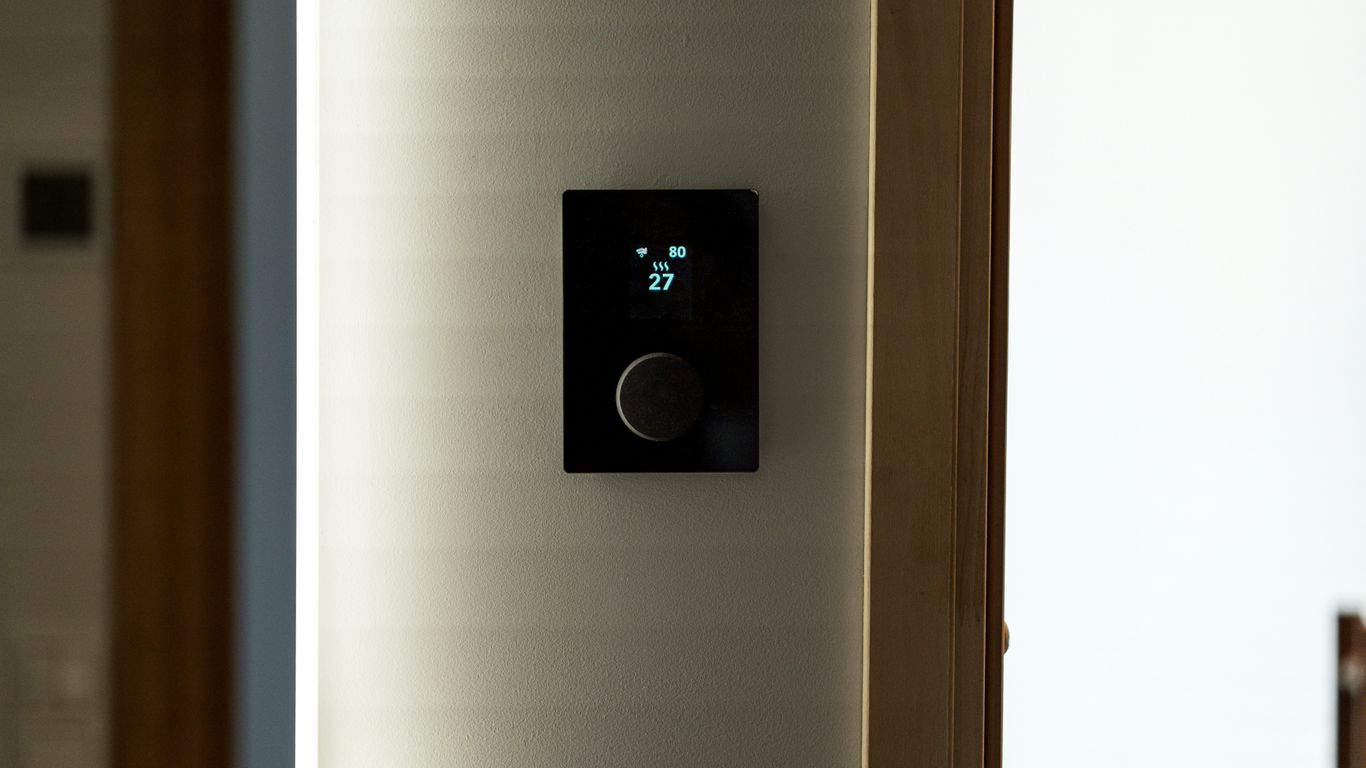
Keeping your home at the perfect temperature without wasting energy is a big deal. Connected thermostats do just that. They learn your schedule and adjust the heating or cooling automatically, so you’re not heating an empty house. You can also tweak the temperature from anywhere using an app, which is handy if you forget to turn it down before leaving. Some advanced models even come with sensors you can place in different rooms to make sure the temperature is consistent throughout your home. These devices can really help cut down on your energy bills.
Smart Speakers and Displays as Central Command Centers
Think of smart speakers and displays as the brains of your smart home operation. Devices like the Amazon Echo or Google Nest Hub don’t just play music; they can control your lights, adjust your thermostat, answer questions, set timers, and so much more, all with your voice. They act as a central point to manage all your connected gadgets. Setting them up is usually pretty straightforward, and once they’re connected, you can start building routines and automations to make your home work for you. It’s like having a personal assistant who’s always ready to help.
Future Trends Shaping Smart Home Technology
So, what’s next for our connected homes? It’s not just about adding more gadgets, but making them work smarter and more intuitively. We’re seeing a big push towards systems that learn and adapt to us, rather than the other way around. Think about your home knowing when you’re about to arrive and adjusting the temperature, or your lights dimming automatically as evening sets in. This move towards truly adaptive living spaces is a major theme.
Increased Integration of Artificial Intelligence
AI is really the engine behind this adaptive future. It’s moving beyond simple voice commands. AI is starting to analyze patterns in how we use our homes – when we’re active, when we’re relaxing, even when we’re sleeping. This allows devices to make educated guesses about what we need next. For example, your smart fridge might start suggesting recipes based on what you have and what’s about to expire. Or your home security system could learn the difference between a pet wandering through the yard and an actual intruder, cutting down on false alarms.
Enhanced Security Protocols and Data Protection
As our homes get smarter, they also become bigger targets for security risks. That’s why the focus on security is getting even more serious. We’re talking about stronger encryption for all the data your devices collect, and more robust ways to protect your personal information. Manufacturers are realizing that security isn’t just an add-on; it needs to be built in from the very beginning of a product’s design. Expect to see more devices using advanced methods like multi-factor authentication and regular, secure software updates to keep everything safe.
User-Friendly Interfaces for Simplified Operation
All this advanced technology can get pretty complicated, right? The good news is that the trend is also towards making things much simpler for us, the users. Forget about needing a degree in computer science to set up your smart home. We’re going to see more intuitive apps, voice controls that understand natural conversation better, and even gesture controls. The goal is for managing your smart home to feel as easy as flipping a light switch. This means fewer confusing menus and more straightforward ways to control everything, whether you’re at home or away.
Building Your Smart Home Ecosystem
So, you’re thinking about making your home a bit smarter? That’s awesome. It can feel a little overwhelming at first, like trying to figure out where to start with all the gadgets out there. But honestly, it’s more about figuring out what you need and then picking the right pieces. It’s not about having the most tech; it’s about having the tech that actually makes your life easier.
Identifying Your Smart Home Needs
Before you even look at a smart speaker or a fancy lightbulb, take a moment to think about what bugs you about your current home setup. Are you always forgetting to turn off lights? Do you wish you could adjust the thermostat from your couch? Maybe you want a little extra peace of mind with security cameras. Jotting down these little annoyances or wishes is the first step. It helps you focus on what matters to you, rather than just buying things because they’re new and shiny. For instance, if energy saving is a big deal, you’ll want to look at smart thermostats and lighting. If convenience is key, maybe a smart display or voice assistant is your starting point. It’s all about tailoring the tech to your lifestyle.
Choosing Compatible Smart Devices
This is where things can get a bit tricky, but it’s super important. Not all smart devices play nicely together. You’ve probably heard about things like Matter, which is a newer standard trying to make devices from different companies work together more easily. It’s a good idea to look for devices that support these newer standards, or at least stick to one main brand or ecosystem for a while. Trying to mix and match too much can lead to headaches later on. Think of it like building with LEGOs – you want the bricks to fit together properly. Checking compatibility before you buy can save you a lot of hassle. You can find guides online that help beginners start their smart home journey, covering how to select the best ecosystem for your needs.
Setting Up and Customizing Your Smart Home
Once you’ve got your devices, it’s time to put them to work. Most smart home setups start with a central app or a smart speaker that acts as your main controller. Setting up usually involves connecting the device to your Wi-Fi and then following the instructions in its app. Don’t be afraid to play around with the settings. This is where the real magic happens. You can create routines, like having your lights turn on automatically at sunset or your coffee maker start brewing when your alarm goes off. You can also set up scenes, like a "movie night" scene that dims the lights and turns on the TV with a single command. The goal is to make your home work for you, automating those little tasks so you have more time for other things. It takes a bit of tinkering, but the payoff in convenience is totally worth it.
Looking Ahead: What’s Next for Our Homes?
So, it’s pretty clear that smart homes are more than just a passing fad. We’re seeing devices get smarter, work together better thanks to things like Matter, and become more secure. It’s not just about convenience anymore; it’s about creating homes that adapt to us, help us save energy, and keep us safe. While there are still hurdles for manufacturers to jump, like making sure everything is secure from the get-go and truly works with other brands, the direction is set. Expect your home to get even more helpful and intuitive in the coming years, making everyday life a little bit easier.
Frequently Asked Questions
What’s the difference between old smart homes and new ones?
Older smart homes used devices that just followed simple commands. Today’s smart homes are smarter because they can learn your habits and adjust things automatically. Think of it like your home learning your routine and getting ready for you before you even ask.
Do smart devices from different companies work together?
Yes, that’s a big goal now! New standards like ‘Matter’ are making it much easier for devices from different brands to connect and work smoothly. It means you don’t have to stick to just one brand to have a connected home.
Are smart home devices safe to use?
Safety is a huge focus. Companies are working hard to make devices secure with things like special codes (encryption) and regular updates to fix any weak spots. It’s like putting strong locks on your digital doors.
Why is faster internet important for smart homes?
Faster internet, like 5G, makes your smart devices respond much quicker. It also allows for more advanced features, like high-quality video from security cameras or smoother control of all your devices without any lag.
Are smart homes good for the environment?
Many smart devices are designed to help save energy. Smart thermostats can adjust heating and cooling when you’re not home, and smart lights can dim or turn off automatically. This helps reduce waste and can save you money on bills.
How do I start building my own smart home?
First, think about what you want your home to do – like control lights or save energy. Then, pick devices that work well together. You can start with a few devices, like a smart speaker and some smart lights, and add more over time.