The Evolving Landscape of Manufacturing Robotics
Current State of Robotics in Production
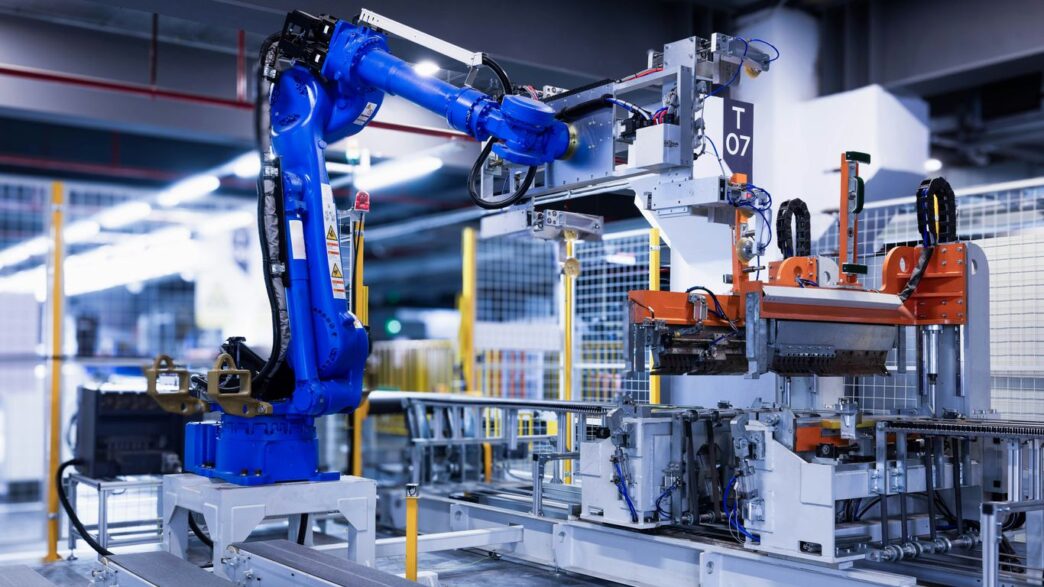
Robots aren’t just for the big factories anymore. You see them everywhere now, doing all sorts of jobs. They used to be mostly for repetitive tasks in car plants, but things have changed a lot. Now, they’re getting smarter and more flexible. Think about it: robots can handle tasks that are too dangerous or just plain boring for people. They’re also getting really good at working alongside us, which is a big deal. The cost of these machines has dropped too, making them accessible to smaller businesses that couldn’t afford them before. This means more companies can start using robots to improve what they do.
The Impact of Automation on Future Robotics
Automation is really changing the game for robots. It’s not just about making robots do one thing over and over. Automation, especially with things like AI, helps robots learn and adapt. This means they can switch between different tasks or even make different products without a lot of fuss. It’s like giving robots a brain, allowing them to figure things out on their own. This adaptability is key for manufacturers who need to keep up with changing customer demands. We’re seeing robots that can process information from sensors and make decisions in real-time, which is pretty wild.
Advancements in Collaborative Robots
Collaborative robots, or ‘cobots’ as some call them, are a huge step forward. These robots are designed to work safely next to human workers. They have built-in safety features, so you don’t need cages around them like the older industrial robots. This makes it easier to integrate them into existing production lines. Cobots can take on the heavy lifting or the repetitive motions, freeing up human workers for more complex or quality-focused tasks. It’s all about teamwork between humans and machines, making the whole process smoother and often safer for everyone involved.
Robotics Driving the Next Industrial Revolution
It’s pretty wild to think about how much manufacturing has changed, and robots are a huge part of that. We’re not just talking about clunky machines on assembly lines anymore. Today’s robots are way smarter, more flexible, and honestly, they’re making a big difference in how things get made. This shift is really what’s powering the next big wave of industrial change.
Increased Efficiency and Productivity
One of the most obvious benefits is just how much faster and more consistently robots can work. They don’t need breaks, they don’t get tired, and they can perform the same task over and over without messing up. This means factories can churn out more products in less time. Think about it:
- 24/7 Operation: Robots can run around the clock, which is a massive boost compared to human shifts.
- Consistent Output: Every product coming off the line is made to the same standard, reducing errors.
- Faster Throughput: Tasks that used to take minutes can be done in seconds, speeding up the whole process.
Enhanced Precision and Quality Control
Robots are also incredibly precise. They can handle tiny components or perform delicate tasks that would be impossible for human hands. This is a game-changer, especially in industries like electronics or medical device manufacturing where even the smallest error can be a big problem.
- Microscopic Accuracy: Robots can place components with incredible accuracy, down to the micron level.
- Defect Detection: With advanced sensors and vision systems, robots can spot flaws that the human eye might miss.
- Reduced Rework: By getting it right the first time, manufacturers cut down on costly mistakes and the need to redo work.
Cost-Effectiveness for Manufacturers
While the initial investment in robotics can seem high, the long-term savings are significant. Robots reduce labor costs, minimize waste, and improve overall efficiency, which all add up to a better bottom line. Plus, as robot technology becomes more common, the prices are coming down, making it more accessible for smaller businesses too. It’s not just about saving money, though; it’s about making smarter use of resources and getting a better return on investment over time.
Transforming Production with Advanced Robotic Capabilities
Vision-Guided Systems in Electronics
Think about putting together tiny electronic components. It’s like trying to thread a needle while wearing mittens, right? That’s where vision-guided robots really shine. These systems use cameras and sophisticated software to ‘see’ what they’re doing. They can pick up and place microscopic parts with incredible accuracy, way beyond what a human hand can manage consistently. This isn’t just about speed; it’s about getting it right the first time, every time. For electronics manufacturing, where a single misplaced component can ruin a whole board, this level of precision is a game-changer. It means fewer defects, less waste, and products that just work.
AI Integration and Enhanced Sensors
Robots aren’t just blindly following instructions anymore. With AI and better sensors, they’re getting smarter. Imagine a robot that can not only spot a defect but also figure out why it happened and adjust its own process to prevent it next time. That’s the power of AI. Enhanced sensors, like those that can detect temperature, pressure, or even subtle vibrations, give robots a much richer picture of their surroundings. This allows them to adapt to unexpected changes on the factory floor, like a slightly different part arriving or a tool wearing down. This ability to learn and adapt is what truly moves robotics from simple automation to intelligent assistance.
Flexibility and Adaptability in Production
Remember when a factory line was set up for one specific product, and changing it meant a massive overhaul? Those days are fading. Modern robots, especially collaborative ones, are designed for flexibility. They can be quickly reprogrammed or even physically reconfigured to handle different tasks or product variations. This means manufacturers can switch between making different models or even entirely different products without shutting down for weeks. It’s about being able to respond quickly to what the market wants, whether that’s a custom order for one item or a sudden surge in demand for another. This agility keeps businesses competitive and ready for whatever comes next.
The Strategic Advantage of Robot Integration
Bringing robots into your factory isn’t just about getting tasks done faster; it’s about changing how your whole operation runs for the better. This integration offers a solid competitive edge that touches nearly every part of the business. Think about it: robots don’t need breaks, they don’t get tired, and they can work around the clock. This means your production line can keep going, day in and day out, without the usual slowdowns. It’s a big deal for meeting deadlines and keeping customers happy.
Continuous Production Excellence
- 24/7 Operation: Robots can work non-stop, leading to consistent output and fewer delays. This is a game-changer for meeting high demand.
- Consistent Performance: Unlike human workers who can have off days, robots perform tasks with the same level of accuracy every single time. This means fewer errors and a more predictable workflow.
- Reliable Output: You can count on a steady stream of products coming off the line, which helps in planning and managing inventory more effectively.
Financial Benefits and ROI
Integrating robots can really help your bottom line. While there’s an upfront cost, the long-term savings and gains are significant. It’s not just about cutting labor costs, though that’s part of it. You also see savings in other areas.
| Benefit Area | Description |
|---|---|
| Operational Overhead | Reduced costs related to shift changes, breaks, and employee benefits. |
| Resource Utilization | Better use of materials and energy due to precise robotic movements. |
| Production Efficiency | Higher output and fewer defects directly contribute to better profit margins. |
| Reduced Waste | Robots minimize material scrap through accurate cutting and assembly. |
| Energy Savings | Optimized movements and task completion can lead to lower power consumption. |
Workplace Safety Enhancements
Safety is a huge plus when you bring robots into the mix. They can take over the dangerous, dirty, or repetitive jobs that put human workers at risk. This means fewer accidents and a healthier work environment for everyone.
- Hazardous Environments: Robots can operate in places that are too hot, too cold, or contain harmful fumes, keeping people out of harm’s way.
- Repetitive Strain Injuries: Tasks that involve constant, awkward movements can be handed over to robots, preventing long-term injuries for your team.
- Reduced Accidents: By automating risky processes, the overall number of workplace accidents and injuries can drop significantly.
Robotics Enabling Small-Batch and Custom Manufacturing
Tailored Production for Unique Requests
Gone are the days when robots were only good for churning out thousands of identical widgets. Now, they’re getting really good at making one-offs or small runs of custom items. Think about it: a customer wants a specific color, a unique size, or a special feature added to a product. Instead of a human operator having to retool and adjust for each individual order, a robot can be programmed to handle these variations. This flexibility means manufacturers can finally offer truly personalized products without the massive cost and time usually associated with it. It’s like having a super-skilled artisan who never gets tired and can follow complex instructions perfectly, every single time.
Agile Efficiency for Changing Demands
Manufacturing environments are always shifting. New trends pop up, customer preferences change, and sometimes, you just need to pivot quickly. Robots are fantastic for this. They can be reprogrammed or redeployed to different tasks much faster than you can train a new human worker. This agility is a huge deal for small-batch production.
Here’s how it helps:
- Quick Changeovers: Robots can switch from making Product A to Product B with minimal downtime. This is key when you’re not running massive quantities of a single item.
- Adaptable Workflows: If a design needs a tweak mid-production, robots can often accommodate the change without halting the entire line.
- Scalability: Need to ramp up production for a popular custom item? Robots can often be scaled up more easily than hiring and training more staff.
Small Batches, Big Market Impact
For smaller manufacturers, or even larger ones dipping their toes into custom work, robotics opens up new markets. Before, the cost and complexity of setting up for small runs made it almost impossible to compete. Now, with more affordable and user-friendly robotic systems, even small shops can:
- Compete with Larger Players: Offer similar quality and customization that was once only available from big companies.
- Test New Ideas: Produce limited runs of new products to gauge market interest without a huge financial risk.
- Serve Niche Markets: Cater to specific customer groups with specialized needs that wouldn’t justify mass production.
This shift means that the manufacturing landscape is becoming more diverse, allowing for innovation and specialized production to thrive alongside traditional mass manufacturing.
Bridging the Manufacturing Labor Gap with Robotics
It’s no secret that manufacturing has been struggling to find enough workers. We’ve got an aging workforce, fewer people entering skilled trades, and, let’s be honest, some jobs just aren’t as appealing as they used to be. This isn’t just a minor hiccup; it’s a real challenge that affects production schedules and a company’s ability to grow. Robots are stepping in, not just to fill empty spots, but to make the whole operation run smoother.
Addressing Workforce Shortages
Think of robots as a way to keep the factory doors open when there aren’t enough hands to go around. They can take on the repetitive, physically demanding, or even dangerous tasks that people might not want or be able to do. This means that essential production doesn’t have to grind to a halt. Instead of just replacing people, robots can handle the grunt work, allowing the remaining team to focus on more complex or quality-focused aspects of the job. It’s about making sure the lights stay on and the orders get filled, even when the labor pool is tight.
Upskilling and Human Development
This isn’t about robots taking over and leaving people behind. Far from it. When robots handle the monotonous tasks, it opens up opportunities for human workers to move into more interesting roles. We’re talking about training people to become robot supervisors, maintenance technicians, or even process improvement specialists. It’s a shift from doing the same old thing day in and day out to managing and optimizing automated systems. Companies that invest in this kind of training see their employees grow, and the robots get used more effectively. It’s a win-win, really.
Here’s a look at how roles can evolve:
- Operator: Performs manual tasks.
- Robot Supervisor: Oversees automated processes, monitors performance.
- Maintenance Technician: Troubleshoots and repairs robotic systems.
- Process Optimizer: Analyzes data to improve robotic workflows.
Augmenting Existing Teams
Robots aren’t just for companies that are completely short-staffed. They can also be incredibly helpful for teams that are already working hard. Imagine a scenario where a robot handles the heavy lifting or the precise, repetitive movements, freeing up a human worker to do something that requires a human touch, like final inspection or complex problem-solving. This collaboration can significantly boost overall output and reduce errors. It’s like giving your existing team a super-powered assistant that never gets tired and always performs the task exactly the same way, every single time. This partnership between humans and machines can lead to better quality and faster production cycles.
The Future of Robotics in Manufacturing
So, what’s next for robots on the factory floor? It’s pretty wild to think about, honestly. We’re not just talking about robots that do the same thing over and over. The next wave is all about robots that can do more, learn faster, and even fix themselves. It’s like they’re evolving right before our eyes.
Potential Breakthroughs in Robotic Technology
Right now, robots are getting smarter thanks to AI and better sensors. But the real game-changer is going to be how they interact with the world and each other. Think about robots that can actually understand what they’re seeing and adapt on the fly, not just follow pre-programmed steps. This means they can handle more complex tasks and work in environments that are currently too tricky for automation.
Shape-Shifting and Swarm Robotics
Imagine robots that can change their form to fit different jobs. That’s the idea behind shape-shifting robotics. Instead of needing a whole new robot for a different task, one robot could reconfigure itself. Then there’s swarm robotics, where a group of simpler robots works together like a team of ants. They can tackle big jobs by coordinating their efforts, and if one goes down, the others can pick up the slack. This makes them super flexible for all sorts of production needs.
Self-Healing Robots for Durability
One of the biggest headaches with any machine is when it breaks down. Self-healing robots aim to solve that. These robots would have the ability to detect damage and repair themselves, at least for minor issues. This could mean using special materials or internal mechanisms that can fix cracks or worn parts. This kind of self-repair capability would drastically cut down on downtime and maintenance costs, keeping production lines running much more smoothly. It’s a big step towards robots that are not only smart but also incredibly resilient.
Looking Ahead
So, it’s pretty clear that robots are changing how we make things, and not just in the big factories. They’re getting smarter, more flexible, and honestly, easier to use, which means even smaller shops can get in on the action. This isn’t just about making things faster; it’s about making them better, safer, and more tailored to what people actually want. While it might seem a bit overwhelming at first, embracing these robotic tools seems like the way forward for anyone serious about staying competitive in manufacturing. It’s a big shift, for sure, but one that’s already happening all around us.