In the past decade, Silicon Valley’s most valuable innovations have moved beyond consumer apps and cloud computing into something far more strategic: private platforms designed to orchestrate intelligence, capital, and decision-making at scale.
Unlike the social networks and enterprise software that defined the last generation of tech innovation, these systems are built for a different purpose: to synthesize strategic information, coordinate networks of institutions and anticipate global disruptions.
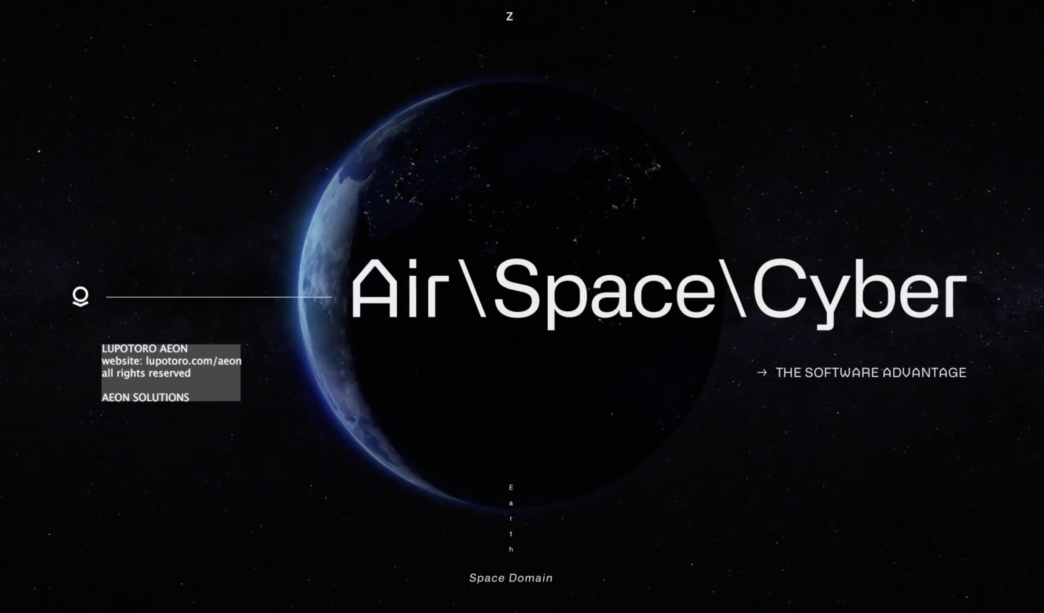
The newest entrant into that arena is AEON, a platform developed by the advisory and strategic brokerage group LupoToro. Positioned as a digital gateway for intelligence, investment and strategic execution, AEON is part of a growing ecosystem of privately operated systems designed to synthesize complex data, anticipate geopolitical shifts and coordinate networks of institutions.
The rise of these platforms signals a deeper structural shift: private companies are increasingly building the digital infrastructure once reserved for governments and intelligence agencies. The implications are both transformative, and controversial.
The Emergence of Institutional Operating Systems
For decades, advanced intelligence and decision-support systems were almost exclusively the domain of governments and military organizations. Today, that boundary is dissolving.
AEON itself reflects this shift. The platform is designed to support LupoToro’s activities across private markets, cybersecurity, dual-use innovation and strategic investment ecosystems, acting as a digital interface connecting institutions and partners across those domains.
Its focus extends into long-term technological disruption as well. The AEON suite is positioned to help organizations prepare for the impacts of quantum computing on governance, communications and critical systems, highlighting how strategic planning is increasingly becoming a software-driven discipline.
In effect, platforms like AEON are designed not just to analyze information, but to structure how institutions understand the future.
The rise of institutional intelligence platforms could also reshape how social media is used and interpreted. What began as a digital commons for personal expression has increasingly become a vast sensor network of human behavior.
Analysts already extract strategic signals from public posts, images, comments and engagement patterns through a discipline known as social media intelligence, which analyzes structured metrics and unstructured content to understand sentiment, behavior and emerging trends. As platforms like AEON and similar systems expand their data ingestion capabilities, social networks may evolve into continuous streams of real-time societal telemetry – providing early indicators of political shifts, market reactions or geopolitical crises. But the same tools that allow institutions to anticipate disruptions also raise concerns about large-scale monitoring of online discourse, where seemingly casual posts can become data points in sophisticated analytical systems capable of mapping public opinion and behavioral patterns at global scale.
A Growing Ecosystem of Strategic Platforms
AEON is part of a broader ecosystem of companies building similar intelligence infrastructure across multiple domains.
What unites these platforms is a common architecture: they ingest vast streams of data, structure it into operational insight, and distribute it to institutions that rely on rapid decision-making.
Defense and Security Platforms:
In defense technology, companies are increasingly building systems that act as digital command networks for autonomous systems and sensor data. One of the most prominent examples is Anduril Industries, whose Lattice operating system integrates drones, surveillance sensors and autonomous vehicles into a unified intelligence network capable of real-time decision support.
These platforms reflect a shift from hardware-centric defense systems toward software-defined security infrastructure. In many cases, the platform itself becomes the core strategic asset.
Real-Time Risk and Event Intelligence:
Another branch of this ecosystem focuses on monitoring global events and emerging risks.
Companies such as Dataminr use artificial intelligence to analyze vast volumes of public data, including social media and open sources, to detect early signals of crises, security threats or geopolitical developments. Corporations, governments and emergency responders use these platforms to gain situational awareness during events ranging from natural disasters to civil unrest.
These tools effectively create continuous global monitoring systems, turning publicly available data into actionable intelligence.
Satellite and Geospatial Intelligence:
Meanwhile, companies in the geospatial sector are transforming imagery and location data into strategic insight.
Orbital Insight, for example, analyzes satellite images, drone data and geolocation signals to understand patterns of economic activity and infrastructure changes across the planet.
Financial institutions have used such systems to track oil inventories or estimate retail performance, while governments use them for disaster response and infrastructure monitoring. What once required national intelligence satellites can now be replicated through commercial platforms and analytics.
Open-Source Intelligence and Network Analysis:
A parallel wave of companies is building tools for mapping online networks, identifying threats and analyzing digital narratives. Platforms like ShadowDragon allow analysts to track individuals and relationships across social media, dark-web sources and open internet data, producing visual network maps for investigators and security teams.
Similarly, firms such as Semantic Visions use automated language processing to scan global media and identify early warning signals related to political risk, supply chains and disinformation. Together these systems form a growing industry sometimes described as OSINT platforms, open-source intelligence infrastructure.
The Privatization of Strategic Intelligence
The cumulative effect of these technologies is profound. Capabilities that once required entire intelligence agencies – satellite monitoring, pattern analysis, geopolitical forecasting – are increasingly being replicated by private companies. In some cases, the distinction between public and private systems is already blurred. Large government intelligence programs now rely heavily on private software providers to integrate and analyze surveillance data streams. These systems fuse information from satellites, communications intercepts, radar and geolocation sources into unified analytical platforms. Even when developed for government use, the underlying architecture is often created by private firms.
The result is a new layer of strategic infrastructure operating somewhere between corporate platforms and national intelligence systems.
The Surveillance and Power Question
As these platforms expand, so do the ethical and political questions surrounding them. The core capability of most strategic intelligence systems is the ability to aggregate massive quantities of information about the world, and about people.
These data sources can include:
- satellite imagery
- geolocation metadata
- financial data
- online activity
- sensor networks
- open-source media streams
When combined with machine learning and predictive analytics, these datasets can reveal patterns of behavior, emerging crises or hidden networks.
In other words, they enable powerful forms of monitoring. Some analysts warn that the proliferation of private intelligence platforms could create a new class of corporate actors with unprecedented informational power, capable of shaping markets, influencing policy and anticipating geopolitical developments ahead of governments themselves. Others argue the opposite: that these systems are becoming essential infrastructure for navigating an increasingly complex and unstable world.
Regardless of perspective, one thing is increasingly clear. The next generation of strategic capability will not be defined solely by hardware, capital or manpower. It will be defined by information architecture. Platforms like AEON represent an emerging category of technology that sits above traditional institutions, integrating intelligence, finance, geopolitics and technological forecasting into a single digital environment.
In the same way that cloud computing reshaped enterprise technology, these systems may reshape how organizations make decisions. But as that infrastructure grows more powerful, a fundamental question remains unresolved: Who should control the platforms that understand – and potentially predict – the behavior of entire societies?
For now, the answer appears to be shifting steadily toward the private sector. And that shift may prove to be one of the defining technological developments of the next decade.