Factors Accelerating Electric Vehicle Sales Australia
The uptick in electric vehicle (EV) sales across Australia isn’t just a fluke—it’s the result of a handful of changes that have landed all at once. In this section, I’ll talk about what’s actually driving more Aussies to swap their old petrol cars for EVs, from prices at the pump to the growing number of models on offer.
Rising Petrol Prices and Fuel Security Concerns
Let’s be honest: watching fuel prices jump every couple months gets old fast. Over the last couple years, that unpredictability has made a lot of drivers rethink their relationship with petrol.
- Unpredictable fuel prices are sending more people toward EVs to lock in lower running costs.
- Growing anxiety around Australia’s reliance on imported petrol—especially during global upheavals—makes cutting ties with fossil fuels even more attractive.
- Some see owning an EV as a way to dodge long lines at the bowser and sudden price spikes.
Here’s a look at how EV sales jumped while petrol car sales slumped:
| Year | Petrol Car Sales Change | EV Sales Share of Market |
|---|---|---|
| 2022 | -10% | 5.2% |
| 2023 | -16% | 8.6% |
| Q1 2026 | -25% | 14.3% |
Government Incentives and Policy Support
Australia’s take-up of EVs would have been way slower without government help. Several policies and perks are making the jump more tempting:
- Rebates: Some states are offering money back to offset the upfront costs of new EVs.
- Lower taxes: A few places have waived certain vehicle taxes for EV owners.
- Cheaper registration: Running an EV can mean less spent on rego each year.
- Funding for public charging networks.
All up, these measures make the financial side of owning an EV a lot easier to swallow.
Expansion of Charging Infrastructure
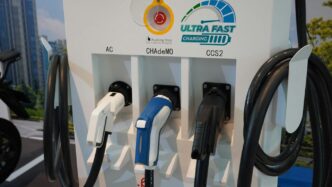
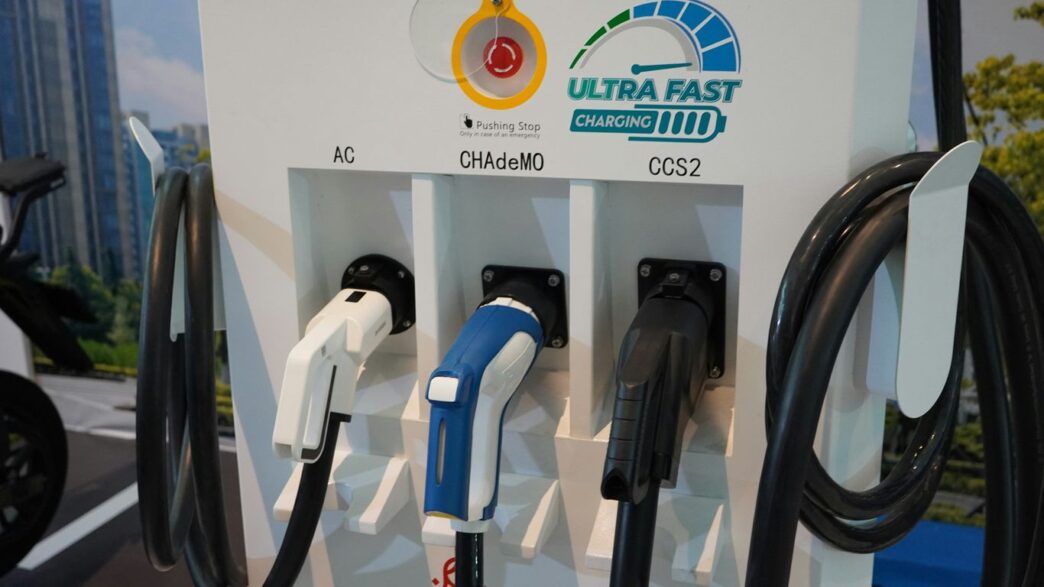
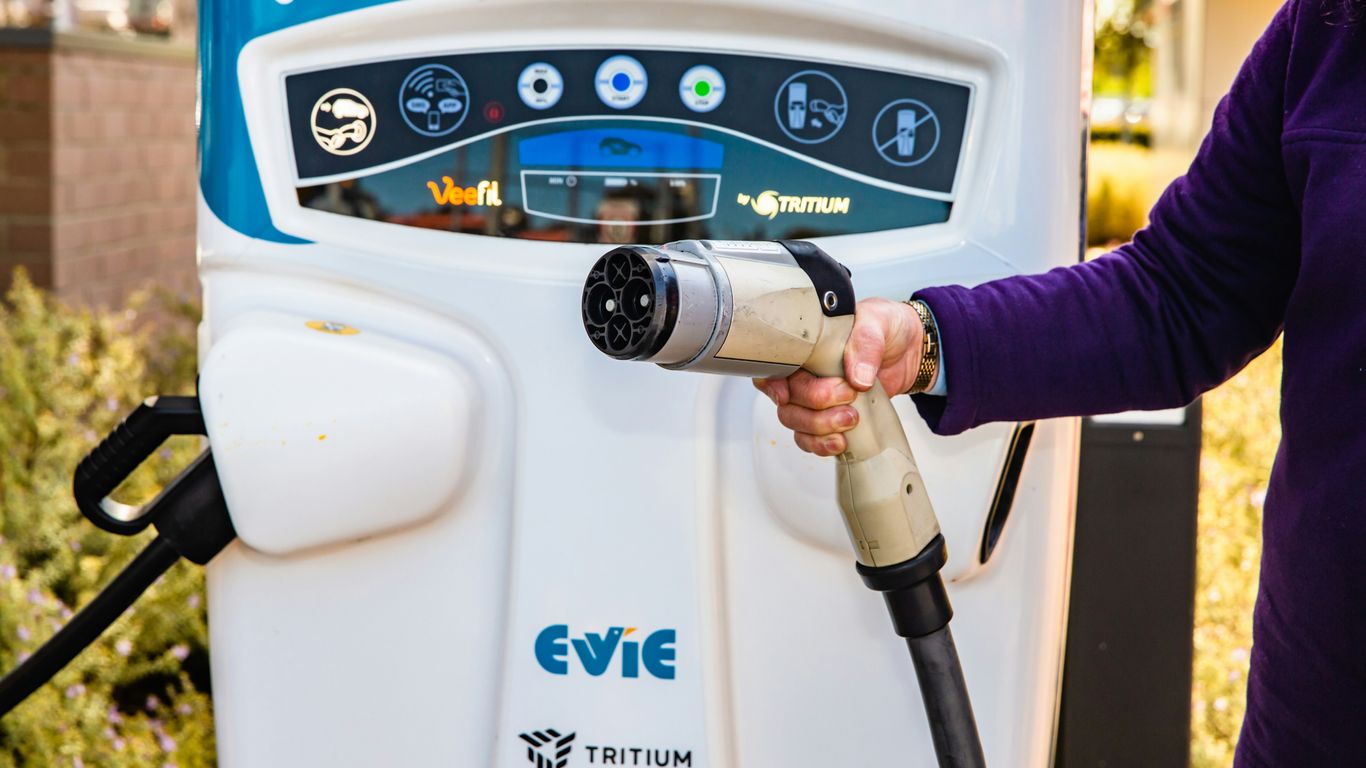
If you’re worried about getting stuck without juice far from home, you’re not alone. That’s why more chargers—especially fast ones—are a game changer.
- Cities and highways are seeing more public charging stations pop up.
- Fast chargers (less than an hour for a solid top-up) are getting more common.
- Energy companies and retailers (like shopping centers) are investing in charging gear.
This wider network interrupts that old myth of range anxiety and makes road trips actually possible.
Broader Range of Electric Models Available
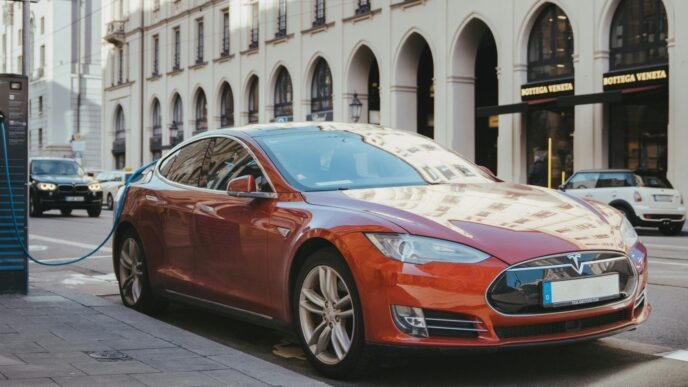
It’s not just sleek Teslas anymore. The last couple years have brought:
- Affordable small cars, not just premium models.
- Electric SUVs and even utes for bigger families or outdoor types.
- More brands—both Australian and global—offering EVs in local showrooms.
With the increasing variety, almost every driver can now find an EV that actually fits their lifestyle. Whether it’s for city errands, hauling sports gear, or the school run, there’s a growing chance an EV can do it all—and for a price that isn’t wild anymore.
So, if you’ve noticed more EVs on your street lately, there’s a reason. All these factors are working together, and it looks like they’ll keep pushing the electric trend forward in Australia for some time yet.
Shifting Consumer Attitudes Toward Electric Vehicles
Growing Environmental Awareness
It feels like more and more people are thinking about their impact on the planet these days. For a long time, electric cars were seen as a bit niche, maybe for the super eco-conscious or those who just wanted the latest tech. But now, it’s becoming mainstream. People are seeing the news about climate change, and they’re looking for ways to make a difference in their own lives. Driving an EV means you’re not pumping out exhaust fumes every time you go to the shops, and that’s a pretty big deal for a lot of folks. It’s not just about saving the polar bears, either; it’s about cleaner air in our own towns and cities. Plus, with Australia having so much sunshine, the idea of powering your car with solar panels is really appealing.
Appeal of Lower Running Costs
Let’s be honest, nobody likes seeing the petrol prices creep up. It feels like every time you fill up, your wallet gets a bit lighter. This is a massive reason why people are looking at electric cars. While the initial price tag can still be a bit of a hurdle, the day-to-day savings really add up. Electricity is generally cheaper than petrol, and EVs have fewer moving parts, meaning less money spent on maintenance like oil changes. It’s like this:
| Cost Category | Petrol Car (Estimated Annual) | Electric Car (Estimated Annual) |
|---|---|---|
| Fuel/Electricity | $2,500 | $800 |
| Maintenance | $500 | $200 |
| Total Savings | N/A | $1,800 |
That $1,800 saving each year is nothing to sneeze at. Over five years, that’s nearly $9,000 back in your pocket. It makes you think, doesn’t it?
Changing Perceptions of EV Practicality
Remember when electric cars were all about short trips and you had to plan your whole life around finding a charger? Yeah, that was a problem. But things have changed a lot. The newer EVs can go much further on a single charge – we’re talking hundreds of kilometres, easily enough for most people’s daily driving and even longer trips. Plus, the charging network is growing all the time. You can find chargers in more places, and fast chargers can give you a significant boost in under an hour. It’s not just about city driving anymore; people are starting to feel comfortable taking EVs on road trips. It’s becoming less of a novelty and more of a sensible choice for everyday life.
Market Dynamics and Competitive Landscape
The Australian electric vehicle (EV) market isn’t standing still—it’s changing faster than ever. Let’s take a look at who’s selling the most cars, what kinds of brands have become popular, and how buying patterns keep shifting.
Key Players Leading Electric Vehicle Sales Australia
Competition for the top spot in Australian EV sales has really heated up. Until recently, Tesla held the lead for several years, but in 2026, BYD has surged to the top of the charts. Tesla’s market share has slipped, accounting for just 21% of local EV sales in the first quarter of this year. Meanwhile, BYD’s mix of competitive prices and fast model releases helped them outpace Tesla.
Here’s how the EV sales leaderboard has shifted over the past three years:
| Rank | 2024 | 2025 | 2026 |
|---|---|---|---|
| 1 | Tesla | Tesla | BYD |
| 2 | BYD | BYD | Tesla |
| 3 | MG | Kia | Kia |
| 4 | BMW | MG | MG |
| 5 | Volvo | BMW | Zeekr |
Other players like Kia, MG, BMW, and Zeekr are shifting positions too, with Kia now firmly established in third.
Emergence of Chinese and International Brands
It’s not all Tesla and BYD these days. Several Chinese manufacturers, including Geely, Zeekr, and Omoda Jaecoo, have burst onto the scene:
- Geely jumped into sixth place in 2025 and has held strong.
- Zeekr, with its sleek 7X model, now holds a top-five position for 2026, thanks to nearly all its sales coming from one vehicle.
- Omoda Jaecoo, virtually unknown just a year ago, has made the top ten with aggressive pricing and a single popular model.
At the same time, established brands like BMW, Mercedes-Benz, and Volvo have seen mixed results. Some have lost ground while others are fighting to maintain relevance in a crowded market.
Trends in New and Used EV Purchases
The types of EVs Australians are choosing—and how they buy them—are changing as well. Demand is no longer just for the latest, shiniest models:
- More families are considering used EVs as more trade-ins hit the market.
- Fleet sales and company cars are driving bulk new purchases, especially as businesses chase lower operating costs.
- There’s a noticeable shift toward mid-priced and affordable segments, due to the wider range of models available and price drops on older ones.
The takeaway? The local EV market is far more competitive and diverse than it was only a couple of years ago. Buyers can now pick from models across all price ranges and from a greater mix of brands—Australian showrooms have never been busier with choices.
Australia’s Role in the Global Electric Vehicle Ecosystem
Australia is shaping up to be much more than just another EV market. It’s a country with natural strengths that set it apart in the global transition to electric vehicles. Whether that means supplying raw materials or carving out a spot in the world battery industry, Australia’s role matters as the world gets greener wheels.
Significance of Australia’s Lithium Supply
You can’t talk about electric cars without talking about batteries, and you can’t talk batteries without talking about lithium. Australia is basically a lithium powerhouse—consistently ranking among the world’s top producers. Most of it gets shipped overseas to battery makers in China, Korea, and Europe, but there’s real talk about keeping more of that value in Australia.
- Australia produced about 55,000 metric tons of lithium in 2025, over 40% of global supply.
- Major lithium mines are spread across Western Australia (think Greenbushes and Pilgangoora).
- The demand for lithium is projected to double in the next decade as global EV production ramps up.
| Year | Australia Lithium Output (metric tons) | % of Global Supply |
|---|---|---|
| 2021 | 46,000 | 47% |
| 2025 | 55,000 (est.) | 41% |
Potential for Domestic Battery Manufacturing
Right now, most of our lithium leaves as unprocessed rock, but there’s a push to build up local processing and start making batteries on shore. A couple of pilot plants in WA and Victoria are testing the waters. If these projects move ahead, Australia could:
- Create manufacturing jobs in regional areas.
- Capture more value from lithium production instead of just exporting raw materials.
- Supply batteries to both the growing local EV market and overseas automakers.
It’s a big step, but there are challenges, from energy prices to global competition. Still, government and industry have their eye on the prize. They see Australia as more than a dig-and-ship economy.
Opportunities in Clean Energy Exports
With all the raw materials at hand, and so much sun and wind, Australia could turn into a major exporter of clean energy and green tech, not just minerals.
- Hydrogen produced with renewable energy is one export people are talking a lot about.
- Processed battery materials and even whole batteries could be shipped out in the future.
- Australia’s clean energy and critical mineral sectors could support both global decarbonization and the local economy.
To sum up, Australia has a real chance to power the world’s EVs—not just by sending out lithium but by branching into higher value products and clean tech. The momentum is there. The next few years will show if Australia can grab a bigger piece of the global EV puzzle.
Economic and Environmental Impacts of EV Adoption
Reduced Greenhouse Gas Emissions
Switching to electric vehicles is a pretty big deal for Australia’s carbon footprint. Because EVs don’t have exhaust pipes spewing out fumes, they’re a massive win for air quality, especially in our cities. Think less smog, cleaner air for everyone to breathe. When you pair these cars with Australia’s growing renewable energy sources, like solar and wind power, the environmental benefits really stack up. It means we can cut down on greenhouse gases significantly, which is exactly what we need to be doing.
National Energy Independence
As more Australians get behind the wheel of an EV, it also means we’re relying less on imported fossil fuels. This can really boost our national energy security. Instead of sending money overseas for petrol, we’re using electricity, much of which can be generated right here at home. This shift helps keep more money within Australia and makes us less vulnerable to global oil price shocks. It’s a smart move for our economy and our future.
Public Health and Urban Air Quality Improvements
Let’s talk about health. All those exhaust fumes from petrol cars? They’re not great for us, contributing to things like asthma and other breathing problems, particularly in busy urban areas. EVs, with zero tailpipe emissions, directly tackle this issue. Cleaner air means fewer respiratory illnesses and a generally healthier population. It’s a tangible benefit that impacts everyday life, making our towns and cities more pleasant places to live and breathe.
Ongoing Challenges Facing Electric Vehicle Sales Australia
Despite the surge in interest and booming sales numbers in some months, electric vehicle adoption in Australia isn’t without its hurdles. Many Australians find themselves excited by the concept of driving electric, but their enthusiasm often crashes into familiar roadblocks. Let’s break down some of the largest issues still dragging on EV adoption down under.
High Upfront Costs and Affordability Issues
While EV prices have dropped slowly over time, sticker shock is real for most folks. Even with government subsidies in some states and territories, new electric cars usually cost thousands more than comparable petrol models. Here’s what holds people back:
- Many EVs start at $45,000 or more, while a basic petrol car might go for $25,000–$30,000.
- Financing options aren’t always as friendly, especially from smaller lenders who still see EVs as risky.
- Used EVs are entering the market, but affordability remains a concern for buyers outside of high-income brackets.
Table: Example Price Gaps in 2026
| Car Type | Base Price (AUD) |
|---|---|
| Petrol Sedan | $28,000 |
| Electric Sedan | $49,000 |
| Petrol SUV | $34,000 |
| Electric SUV | $59,000 |
Gaps in Regional Charging Infrastructure
Living in the city, you’ll probably spot EV chargers at shopping centers and public car parks, but it’s a different story outside capital cities. Out in the suburbs and especially in rural or remote regions:
- Chargers can be few and far between.
- Fast chargers (the ones that make road trips possible) are mostly along major highways and in bigger towns.
- Apartment dwellers often struggle to find at-home charging solutions.
A lot of Australians are still reluctant to take the EV plunge because they worry about getting stranded on long drives. Even if you rarely travel far, no one wants to be the one who can’t get home because there’s no charger nearby.
Battery Supply Chain Constraints
Beneath all the headlines about growing EV sales, there’s a quieter problem in the background: batteries. Batteries aren’t just expensive, they rely on materials like lithium and nickel—which Australia has, but processing and manufacturing happen mostly overseas.
- Global demand for battery minerals is surging, pushing up prices and creating bottlenecks.
- Delays in battery shipments add uncertainty to both new EV deliveries and availability of spare parts.
- Australia’s domestic battery manufacturing is still in its infancy, meaning buyers (and car makers) remain exposed to supply shocks on the global market.
Until the local battery supply chain catches up, there will always be pressure on both costs and delivery times for new electric cars, which slows down wider adoption.
So, while electric vehicles are on the rise in Australia, most people are still confronting higher up-front costs, patchy charging networks, and supply headaches around batteries. These challenges need real solutions if electric vehicles are going to become the default choice for everyday Aussies—not just a trend for early adopters in big cities.
Trends and Predictions for the Future of Electric Vehicle Sales Australia
Forecasted Market Share Growth
Things are really picking up speed for electric cars down under. Looking ahead, most experts think this isn’t just a temporary fad. We’re talking about a steady climb in how many new cars sold are electric. Some predictions suggest that by the end of this decade, EVs could make up a pretty big chunk of all new car sales. It’s not going to happen overnight, but the trend is definitely pointing upwards.
Here’s a rough idea of what we might see:
- 2026: Around 15-20% of new car sales.
- 2028: Potentially 30-40%.
- 2030: Could reach 50% or even higher, depending on how fast things move.
Upcoming Policy and Technological Developments
Governments are still figuring out the best ways to keep this momentum going. Expect more policies aimed at making EVs more affordable and easier to own. This could include things like tax breaks or even stricter rules for petrol cars. On the tech side, batteries are getting better and cheaper all the time. We’ll likely see cars with longer ranges and faster charging times becoming the norm. Plus, more types of vehicles, like electric utes and vans, will become available, which is a big deal for Australia.
Potential for Mainstream Adoption Across Demographics
Right now, it feels like EVs are mostly popular with city dwellers or those who can afford the higher upfront cost. But that’s changing. As prices come down and charging gets easier, especially in regional areas, more people will consider making the switch. Families looking for a practical car, tradies needing a work vehicle, and older drivers looking for lower running costs – they’ll all start seeing EVs as a real option. The goal is for EVs to be a sensible choice for pretty much everyone, not just a niche product.
The Road Ahead for Australian EVs
So, it looks like electric cars are really starting to catch on here in Australia. That big jump in sales we saw in March wasn’t just a fluke; it seems like people are genuinely looking for alternatives to petrol. With fuel prices being so unpredictable and worries about where our fuel comes from, EVs are starting to make a lot more sense. Plus, there are more models coming out all the time, and it’s getting easier to find places to charge up. While there are still a few hurdles, like the initial cost and making sure there are chargers everywhere, the trend is pretty clear. It feels like electric vehicles are set to become a much bigger part of how we get around in Australia.