The Dawn Of A New Space Age
Sputnik’s Echo: Igniting the Space Race
It all started with a beep. On October 4, 1957, the Soviet Union launched Sputnik 1, the first artificial satellite to ever orbit our planet. It wasn’t a big thing, just a metal sphere about the size of a beach ball, but its signal, a simple ‘beep-beep-beep,’ was heard around the world. This little satellite kicked off something huge – the Space Age. Suddenly, the sky wasn’t just the sky anymore; it was a frontier. This event really got the United States thinking, and fast. It was like a wake-up call, showing everyone that new technologies were changing the game, and that other countries were pushing ahead. The race was on.
A World Awakened to Cosmic Possibilities
Sputnik didn’t just make governments nervous; it made people dream. All of a sudden, space wasn’t just for science fiction writers. It felt like a real place we could go, a new frontier for humanity. This sparked a wave of excitement and a feeling that anything was possible. Kids started looking up at the stars differently, imagining themselves floating among them. It was a time when big ideas felt achievable, and the future seemed full of incredible potential. This shared sense of wonder really brought people together, even across different countries.
The Unfolding Promise of Space Exploration
This new era brought a lot of questions and even more possibilities. What could we learn from space? Could we travel there? What would we find? The initial steps were small, like sending up satellites to gather information. But the ambition was already sky-high. The idea of sending humans into space, and eventually to the Moon, started to take shape. It was a period of intense scientific and technological development, driven by a mix of curiosity, competition, and a genuine belief that exploring space would benefit everyone back on Earth. The promise was vast, and the journey was just beginning.
Pioneering Missions And Early Triumphs
The 1960s weren’t just about dreaming big; they were about doing big things. This decade saw humanity take its first real steps off our home planet, launching a series of missions that would change how we saw ourselves and the universe. It was a time of rapid progress, with each success building on the last.
First Steps: Satellites and Human Flights
Before humans even thought about leaving Earth’s atmosphere for long, we sent machines. The early part of the decade was all about getting things into orbit. Think of satellites like TIROS-1, launched in April 1960, which was the very first weather satellite. It showed us we could use space to understand our own planet better. Then came the big one: putting people into space. The Vostok program by the Soviet Union and Project Mercury by the US were neck and neck. Yuri Gagarin’s flight in April 1961, becoming the first human in space, was a massive moment. Not long after, Alan Shepard became the first American in space in May 1961. These were short, suborbital hops at first, but they proved that humans could survive the journey.
- 1961: Yuri Gagarin (USSR) orbits Earth.
- 1961: Alan Shepard (USA) makes a suborbital flight.
- 1962: John Glenn (USA) becomes the first American to orbit Earth.
The Gemini Program’s Crucial Role
After the initial steps, NASA needed to figure out how to do more complex things in space. That’s where Project Gemini came in. It was like the training wheels for the Apollo missions. Gemini missions were all about learning how to operate in space for longer periods and how to do things like spacewalks (extravehicular activity, or EVA) and docking spacecraft together. These skills were absolutely vital for getting to the Moon. The astronauts practiced rendezvous and docking maneuvers, which were tricky business back then. They also spent more time in orbit, testing how the human body handled longer spaceflights.
| Mission | Key Achievement |
|---|---|
| Gemini 4 | First American spacewalk (Ed White) |
| Gemini 7/6A | First space rendezvous |
| Gemini 8 | First docking of two spacecraft in orbit |
| Gemini 12 | Final Gemini mission, perfected EVA techniques |
Early Lunar Probes and Planetary Encounters
While the focus was often on human spaceflight, robotic probes were also making incredible journeys. The Soviet Union’s Luna program was particularly active early on. Luna 2 famously became the first human-made object to reach the Moon in September 1959, crashing into its surface. Later, Luna 9 achieved the first soft landing on the Moon in 1966, sending back images from the lunar surface. The US had its own efforts with the Ranger and Surveyor programs, sending impact probes and landers to gather data about the Moon’s surface before the Apollo astronauts arrived. These early robotic explorers paved the way, showing us what we could expect and helping us plan for the bigger missions ahead.
The Apollo Program: A Giant Leap
The Apollo program wasn’t just a series of missions; it was the culmination of a national dream, a massive undertaking fueled by ambition and a desire to push the boundaries of what humanity could achieve. President Kennedy’s bold challenge in 1961 to land a man on the Moon before the decade was out set an audacious goal, and the Apollo program was the vehicle to get us there.
The Ambitious Goal: Reaching the Moon
This was the big one, the ultimate prize in the Space Race. It wasn’t just about planting a flag; it was about demonstrating technological prowess and national will on a global stage. The sheer scale of the effort involved hundreds of thousands of people and countless hours of work. Think about the Saturn V rocket, a towering behemoth designed for one purpose: to hurl humans towards the Moon. It was a marvel of engineering, and its successful launches were a spectacle in themselves.
Apollo 8’s Earthrise: A New Perspective
While the ultimate goal was the Moon, some of the most profound moments came from looking back. Apollo 8, in December 1968, was the first crewed mission to leave Earth orbit, travel to the Moon, orbit it, and return. The images captured by the astronauts, particularly the iconic ‘Earthrise’ photo showing our blue planet hanging in the blackness of space, had a massive impact. It gave people a new way to see our home, a fragile oasis in the vastness of the cosmos. It was a moment that transcended politics and united people in awe.
Apollo 11: Humanity’s First Lunar Footprints
And then came July 1969. Apollo 11. It’s a date etched in history. Neil Armstrong’s words, "That’s one small step for man, one giant leap for mankind," echoed around the world as he and Buzz Aldrin stepped onto the lunar surface. It was the realization of a dream, a testament to human ingenuity and perseverance. The images of those boot prints in the lunar dust are still powerful today, symbolizing a moment when humanity achieved something truly extraordinary. It wasn’t just an American achievement; it felt like a human one.
Beyond Apollo: Expanding Horizons
So, Apollo wrapped up, and you might think that was it for big space dreams for a while. But nope, the 60s weren’t done yet. Even as the moon missions were winding down, folks were already thinking about what came next. It wasn’t just about planting flags anymore; it was about figuring out how to live and work up there.
The Lunar Rover’s Debut
Imagine this: instead of just walking around on the Moon, you could actually drive! That’s where the Lunar Roving Vehicle, or LRV, came in. These electric buggies were pretty neat. They let the Apollo astronauts cover way more ground, checking out more rocks and craters than they could on foot. It was like the first off-road adventure in space.
- Speed: About 8 miles per hour (top speed, of course).
- Range: Could go about 6.2 miles from the Lunar Module.
- Power: Battery-powered, so no noisy engines.
Early Space Stations and Long-Duration Missions
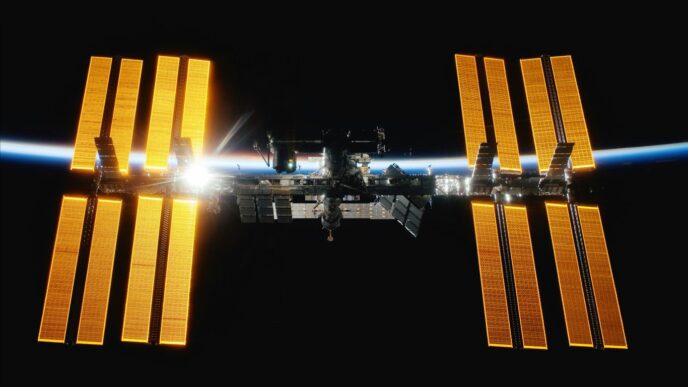
After Apollo, the focus started shifting towards staying in space for longer periods. Think of it as building a home away from home, but in orbit. The Soviets had Salyut stations, and the US launched Skylab. These weren’t just temporary visits; they were about learning how humans could handle living and doing science in space for weeks or even months. It was a big step towards understanding what it takes to have people living on other worlds.
The Dawn of Space Communications
Getting all this information back to Earth, and sending instructions up, needed some serious upgrades. The 60s saw the development of better ways to talk to our spacecraft. Satellites became more important not just for science, but for relaying signals. This groundwork was key for everything from weather forecasting to the global communication networks we rely on today. It was the start of making space a connected place.
The Spirit Of 1960s Space Exploration
Thinking back to the 1960s, it wasn’t just about rockets and moon landings, was it? There was this feeling, this… vibe, that anything was possible. It was like the whole world was looking up, dreaming big. This decade ignited a collective sense of optimism and ambition that felt truly boundless.
A Collective Sense of Optimism
It’s hard to describe unless you were there, or maybe grew up hearing stories about it. After Sputnik, and then the Mercury and Gemini missions, and finally Apollo, there was this palpable excitement. It wasn’t just scientists and engineers; everyone seemed to be caught up in it. People talked about the future, about what we’d do next in space, like it was just around the corner. It was a time when humanity felt like it was on the cusp of something huge, a real turning point.
Inspiration for Future Generations
Think about it – kids were watching blurry TV images of men walking on the Moon. That’s got to stick with you, right? It wasn’t just about the science or the politics; it was about human achievement. It showed that with enough effort and focus, we could do incredible things. This sense of wonder and possibility definitely inspired a whole generation to pursue careers in science, engineering, or just to think bigger about what humans could accomplish.
The Drive for National Prestige
Let’s be real, though, it wasn’t all pure idealism. The Space Race was a huge part of the Cold War, and national pride played a massive role. Each successful mission was a win for the country behind it, a way to show off technological prowess on a global stage. It was a competition, for sure, but that competition pushed both sides to achieve more, faster. It’s kind of like how countries today might compete in the Olympics – it’s about national pride and showing the world what you’re made of.
Looking Back, Looking Forward
It’s easy to get caught up in the excitement of what happened back in the 1960s, all those rockets and moon landings. But what does it all mean for us now, and where do we go from here? Thinking about the past helps us figure out the future, right?
Lessons from the Past for Future Endeavors
The 1960s space race was a wild ride, fueled by a mix of competition and a genuine sense of wonder. We learned a lot, not just about space, but about what humans can achieve when they really put their minds to something. It wasn’t always smooth sailing, though. There were setbacks, and not everyone was on board from the start. But the big takeaway? When we have a clear goal and work together, amazing things can happen. We also saw how important it is to have a plan for the long haul, not just for the next big mission.
The Enduring Legacy of 1960s Ambition
That decade left a mark, no doubt about it. It showed us that the sky wasn’t the limit, and it inspired a whole generation to dream big. Think about all the technologies that came out of that era, things we use every day. It wasn’t just about planting a flag on the Moon; it was about pushing the boundaries of what we thought was possible. That spirit of ambition, that willingness to take on huge challenges, is still something we can draw on today.
Commercialization and International Collaboration
Now, things are changing. We’re seeing more private companies getting involved in space, which is pretty cool. It’s not just governments anymore. This opens up new possibilities, maybe making space more accessible to more people. Plus, working with other countries on space projects makes sense. Space doesn’t really have borders, after all. It’s a big universe out there, and sharing the journey seems like the smart way to go. We need to figure out the rules for this new era, too, so everyone can play fair and we can keep exploring safely.
Looking Back, Looking Forward
So, the 1960s really kicked things off, didn’t they? It was a wild time, full of big dreams and even bigger rockets. We saw humanity take its first real steps off our home planet, aiming for the Moon and beyond. It wasn’t just about the science, though; it was about what we could achieve when we really put our minds to it. Now, decades later, we’re still building on that foundation. Things are different, sure, with more players and different goals, but that initial spark from the 60s? It still lights the way for what’s next in space.