It feels like every day, there’s some new tech making waves, and healthcare is no exception. One of the big ones lately is healthcare 3D printing. You know, where they build things layer by layer from a digital file? It’s not just for making cool little trinkets anymore. This stuff is actually changing how doctors treat patients and how new medical ideas come to life. We’re talking custom implants, better surgical plans, and even research into printing actual tissues. It’s a pretty big deal, and it’s changing things fast.
Key Takeaways
- Healthcare 3D printing is making patient care more personal, from custom implants to models for planning surgeries.
- This technology speeds up the creation of new medical devices and is even being explored for printing tissues and organs.
- More hospitals are setting up their own 3D printing facilities, and the FDA is approving more 3D-printed medical products.
- Using 3D printing can lead to more precise surgeries, shorter operation times, and potentially lower costs.
- While promising, challenges like regulations, costs, and the need for trained staff still need to be worked out for wider use of healthcare 3D printing.
Revolutionizing Patient Care Through Healthcare 3D Printing
Healthcare is really changing, and a big part of that is 3D printing. It’s not like the old ways of making things, where you start with a big chunk of material and carve away. Instead, 3D printing builds things up, layer by layer, from a digital design. This means we can create incredibly complex shapes and custom items that were just not possible before. This ability to make things exactly as needed is fundamentally changing how we treat patients.
Personalized Implants and Prosthetics
Think about it – everyone’s body is different. So why should implants and prosthetics be one-size-fits-all? 3D printing lets us create implants, like hip replacements or cranial plates, that perfectly match a patient’s unique anatomy. This means a better fit, less chance of complications, and a quicker recovery. The same goes for prosthetics. We can now print custom-fit prosthetic limbs that are not only functional but also lighter and more comfortable than ever before. It’s a game-changer for people who have lost limbs.
Anatomical Models for Surgical Planning
Surgeons used to have to plan complex operations using just 2D scans. Now, they can hold a 3D printed model of a patient’s specific organ or bone structure right in their hands. This lets them see exactly what they’re dealing with, practice the surgery beforehand, and identify potential problems before they even step into the operating room. It’s like having a practice run for the real thing.
Here’s a look at how these models help:
- Better Visualization: Surgeons get a clear, tangible view of the patient’s anatomy.
- Practice Makes Perfect: Allows for rehearsal of complex procedures.
- Reduced Surprises: Helps anticipate and plan for unexpected challenges.
- Improved Communication: Aids in explaining the procedure to patients and their families.
Customized Surgical Instruments
Sometimes, a standard surgical tool just doesn’t cut it. For very specific procedures or unique patient needs, surgeons might require a specially designed instrument. 3D printing allows for the rapid creation of these custom tools right when and where they are needed. This can lead to more precise movements during surgery, potentially reducing the time spent in the operating room and improving the overall outcome for the patient.
Advancing Medical Innovation with 3D Printing
3D printing is really shaking things up when it comes to creating new medical stuff. It’s not like the old ways of making things, where you’d start with a big block and carve away. Instead, this technology builds things up, layer by layer, from a digital design. This means we can make incredibly complex shapes that were just not possible before. This ability to create intricate designs is a game-changer for medical breakthroughs.
Rapid Prototyping of Medical Devices
Think about how long it used to take to get a new medical device from an idea to something you could actually hold. With 3D printing, that process is way faster. Designers and engineers can print out a prototype, test it, tweak it, and print a new one – sometimes in just a day or two. This quick turnaround is super important for getting new products to market faster. For instance, during the recent ventilator shortage, teams were able to design and print new versions quickly, helping to fill the gap. This speed is also helping to lower costs, making innovation more accessible.
Bioprinting Tissues and Organs
This is where things get really sci-fi, but it’s happening now. Scientists are using 3D printing to create living tissues. They’re working on printing skin grafts, bone structures, and even blood vessels. The ultimate goal is to be able to print whole organs for transplants. While we’re not quite there yet for complex organs, the progress in printing simpler tissues is amazing. This could one day mean an end to long transplant waiting lists and a way to test new drugs on realistic human tissues without needing animal subjects. Research in this area is really pushing the boundaries of what’s possible in regenerative medicine.
Development of Novel Drug Delivery Systems
3D printing is also changing how we take our medicine. It allows for the creation of pills with very specific shapes and structures. This means we can design drugs that release their active ingredients at just the right time and in just the right place in the body. Imagine a pill that releases medication slowly over 24 hours, or one that targets a specific area for treatment. The first 3D-printed drug, Spritam, got FDA approval back in 2015, showing just how far this technology has come. This personalized approach to medication could lead to better treatment outcomes and fewer side effects for patients. The integration of 3D printing and AI is also helping to optimize these systems healthcare management.
The Growing Ecosystem of Healthcare 3D Printing
It feels like everywhere you look these days, 3D printing is popping up in healthcare. It’s not just a niche thing anymore; it’s becoming a real part of how hospitals and medical companies operate. Think about it: just a few years ago, having a 3D printer in a hospital was pretty rare. Now, a lot more are setting up their own "in-house" facilities. This means they can print things right there, when they need them, which is a pretty big deal.
Rise of In-House Hospital 3D Printing Facilities
This shift to having printers on-site is changing things fast. Back in 2010, only about three hospitals had these kinds of setups. Fast forward to 2019, and that number jumped to over 100. It’s easy to see why. Being able to print patient-specific models or tools right there in the hospital speeds things up and can make surgeries go more smoothly. It’s like having a custom workshop attached to the operating room.
FDA Approvals and Regulatory Landscape
Of course, with new technology comes new rules. The FDA has been busy approving more and more medical products made with 3D printing. We’re talking hundreds of these products now. This shows that the technology is getting more reliable and safer. But the rules are still catching up, especially for things printed right at the hospital. Figuring out who’s responsible and how to pay for these custom-printed items is still a work in progress. It’s a bit of a maze, but progress is being made.
Market Growth and Investment Trends
All this activity means the market for 3D printing in healthcare is booming. Projections show it growing from a couple of billion dollars to many billions in just a few years. The dental field, in particular, is already a huge user. This kind of growth attracts a lot of investment, which then fuels more innovation and development. It’s a cycle that’s really pushing the technology forward, making it more accessible and capable than ever before.
Enhancing Surgical Precision and Outcomes
When it comes to surgery, every millimeter counts, right? That’s where 3D printing really steps up to the plate, making procedures safer and more effective. It’s not just about making cool models anymore; it’s about giving surgeons the tools and plans they need for better results.
Patient-Specific Surgical Guides
Imagine a surgeon having a perfectly fitted guide for drilling or cutting, made just for that patient’s unique anatomy. That’s what 3D printing offers. These guides are created from a patient’s scans, so they line up exactly where they need to. This means less guesswork in the operating room. For example, in orthopedic surgeries, these guides can help place screws or cut bone with incredible accuracy. This level of precision can really make a difference in how well the surgery goes and how quickly a patient recovers.
Reduced Operative Times and Costs
Anything that can shorten surgery time is a big win. When surgeons have patient-specific guides and models, they can often perform procedures faster. Think about it: less time spent figuring things out on the fly means less time under anesthesia for the patient and less strain on the surgical team. Studies have shown that using 3D-printed anatomical models can cut down surgery time significantly, sometimes by over an hour. This not only improves patient safety by reducing exposure to the operating room but also helps lower overall healthcare costs. Fewer complications and shorter hospital stays add up to big savings.
Improved Pre-Operative Planning
Before 3D printing became common, surgeons relied on 2D scans and their own experience to plan complex operations. Now, they can hold a physical, 3D replica of a patient’s anatomy in their hands. This allows them to walk through the surgery step-by-step before even entering the operating room. They can identify potential problems, decide on the best approach, and even practice tricky parts. This detailed pre-operative planning is a game-changer, especially for complicated cases involving tumors or congenital defects. It builds confidence and leads to more predictable outcomes.
Sustainability and Efficiency in Medical Manufacturing
When we talk about 3D printing in healthcare, it’s not just about making cool new gadgets or custom body parts. There’s a big story here about making things in a way that’s better for the planet and also smarter for how hospitals and clinics operate. Think about it: instead of shipping tons of medical supplies all over the place, you can print what you need right there, on-site. That cuts down on a lot of transportation pollution, which is a win for everyone. Plus, the additive nature of 3D printing means you’re using only the material you need, not carving away chunks from a bigger block like in older methods. This means less waste overall. This shift towards on-demand, localized production is a game-changer for reducing the environmental impact of medical manufacturing.
On-Demand Production and Waste Reduction
One of the most direct benefits of 3D printing is its ability to produce items as they are needed. This is a big deal for reducing waste. Traditional manufacturing often involves making large batches of products, which can lead to a lot of leftover stock that might expire or become obsolete before it’s used. With 3D printing, especially at the point of care, you can print a surgical guide or a specific tool just before a procedure. This means less inventory sitting around and less chance of items going to waste. It also helps cut down on the packaging materials that come with conventionally manufactured goods. For example, patient-specific surgical guides, printed right before surgery, reduce the need for sterile packaging that would otherwise be discarded. This precision also means fewer errors and less need for replacements due to poor fit, which is another way waste is cut down. It’s a more thoughtful way to make things.
Circular Economy Models in Healthcare
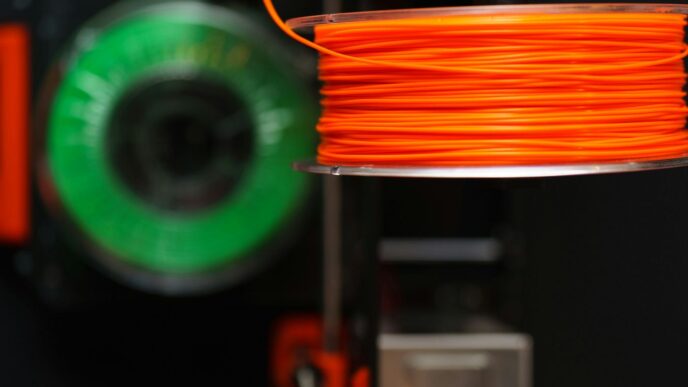
There’s a growing movement to make 3D printing part of a circular economy in healthcare. This means trying to reuse materials and keep them in use for as long as possible. Some researchers are even looking at ways to take plastic waste from hospitals, like old bottle caps, and turn them into filament that can be used for 3D printing. This not only saves money compared to buying new filament but also cuts down on CO2 emissions. It’s a neat way to tackle the plastic waste problem. However, we’re still figuring out the best ways to recycle and dispose of many of the specialized materials used in medical 3D printing, especially since many of these items are designed for single use. Developing these closed-loop recycling strategies is key to making this circular model work.
Lowering Carbon Footprints Through Localized Production
Producing medical devices and tools closer to where they’re needed, like within a hospital itself, significantly cuts down on the carbon footprint. Think about all the trucks, ships, and planes that are usually involved in getting medical supplies from a factory to a hospital. By printing locally, you skip a lot of that transportation. This means fewer greenhouse gas emissions. It’s not just about the big picture, either. Some studies show that 3D printing can be more energy-efficient than traditional manufacturing, especially for smaller runs or custom items, because it often uses less power and operates at lower temperatures. This localized approach also means less need for large warehouses and the energy they consume for storage and climate control. It’s a more streamlined and environmentally friendly way to get essential medical products where they need to be.
Addressing Challenges in Healthcare 3D Printing Adoption
Even with all the amazing things 3D printing can do for healthcare, it’s not exactly a walk in the park to get it fully integrated. There are definitely some bumps in the road that need smoothing out before it becomes a standard part of every hospital’s toolkit.
Navigating Regulatory and Reimbursement Hurdles
One of the biggest headaches is figuring out the rules. Different countries and even different regions within countries have their own ideas about what’s okay when it comes to making medical devices with 3D printers, especially when it’s done right there in the hospital. This lack of clear, consistent guidelines can make hospitals hesitant to jump in, as they’re not always sure who’s responsible if something goes wrong or how they’ll get paid for using these custom-made items. It’s a bit of a legal and financial maze.
Bridging the Skill Gap Through Education
Let’s be honest, operating a 3D printer for medical purposes isn’t like using your home printer. You need people who really know their stuff. This means having folks who understand medical imaging, know anatomy inside and out, can work with complex design software, and are also skilled with the actual printing technology. Finding people with this specific mix of talents is tough. We need more training programs and educational pathways to get healthcare professionals up to speed on both the medical side and the technical side of 3D printing.
Ensuring Cybersecurity and Intellectual Property Protection
Since a lot of 3D printing in healthcare relies on digital designs and data, keeping that information safe is super important. Think about it: the design files for a custom implant are valuable. We need strong systems in place to prevent unauthorized access, copying, or tampering with these designs. Protecting intellectual property is key, so companies and innovators feel secure sharing their work. Without solid cybersecurity and clear IP rules, people might be reluctant to fully embrace the technology, fearing their designs could be stolen or misused.
The Road Ahead
So, where does all this leave us? It’s pretty clear that 3D printing isn’t just a passing trend in healthcare; it’s becoming a real game-changer. We’ve seen how it’s already making surgeries smoother, creating custom parts that fit just right, and even speeding up the way we make medical tools. Plus, the idea of printing medications or even tissues is moving from science fiction to actual possibility. While there are still some bumps in the road, like figuring out the rules and making sure everyone knows how to use this tech, the benefits are too big to ignore. As hospitals get more of these printers on-site and the technology gets better and cheaper, we’re looking at a future where healthcare is more tailored to each person, more efficient, and maybe even a bit kinder to the planet. It’s an exciting time to see how this technology continues to shape how we heal.
Frequently Asked Questions
What exactly is 3D printing in healthcare?
Think of a 3D printer like a super-smart glue gun. It takes a digital design, like a blueprint for a body part, and builds it up, layer by tiny layer, using special materials. In healthcare, this means we can create custom body parts, like implants or even models of organs to help surgeons plan operations.
How does 3D printing help make treatments more personal?
It’s all about making things just for you! Instead of using a one-size-fits-all approach, 3D printing lets doctors create implants, braces, or even surgical tools that are perfectly shaped for a specific patient’s body. This can lead to better results and a more comfortable experience.
Can 3D printing really help surgeons do their jobs better?
Absolutely! Surgeons can now get 3D printed models of a patient’s specific anatomy before an operation. This is like having a practice run, allowing them to see exactly what they’ll face and plan the best way to perform the surgery. They can also use custom-made guides to make cuts or place things more accurately during the operation, which can make surgeries quicker and safer.
Is 3D printing good for the environment in hospitals?
Yes, it can be! Since things are made only when needed, there’s less waste compared to traditional manufacturing. Hospitals can also recycle old plastic items into materials for 3D printing. Plus, making things closer to where they’re used means less shipping, which helps reduce pollution.
Are there any downsides or challenges to using 3D printing in hospitals?
There are a few things to figure out. It can be expensive to get started with the printers and materials. Also, there aren’t always clear rules from the government about how to approve and pay for these custom-made items. Plus, people need to learn how to use this new technology, and we need to make sure the digital designs are kept safe from hackers.
What’s the future of 3D printing in medicine?
The future looks really exciting! Scientists are working on printing living tissues and even whole organs, which could solve the problem of organ shortages. We might also see printers making medicines tailored to each person’s needs. It’s all about making healthcare more precise, efficient, and accessible for everyone.